
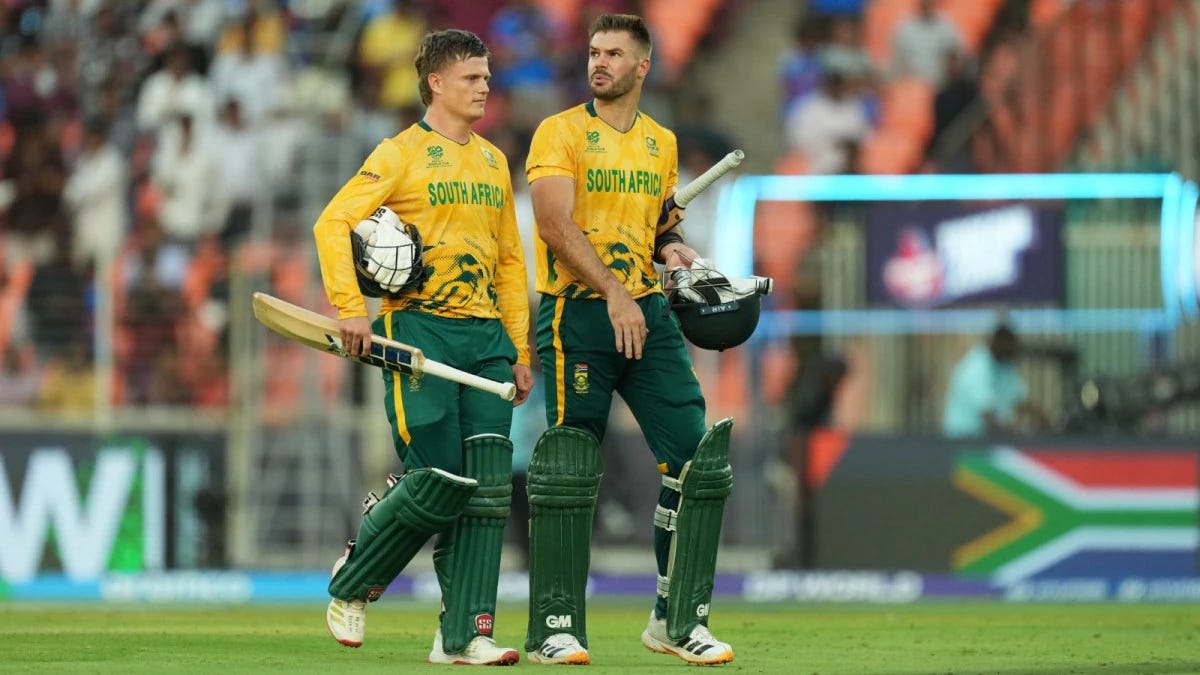
SA beat WI by 9 wickets, confirming their semifinal spot (and potentially their favourite status?) while the IND-WI game on Sunday is now just a straight shot eliminator for the final knockout place.
But, what happened beyond the headlines?
-
📊 SA’s high risk-high reward PP strategy pays off…just.
-
💻 WI’s dot-or-six strategy is a data revolution.
-
🏏 WI underestimated Markram’s improvements versus pace.
If you’re reading this online, remember: you can get it via WhatsApp or direct to your email👇!
✍️ Written by Dom Murray, who runs Beyond Cow Corner.
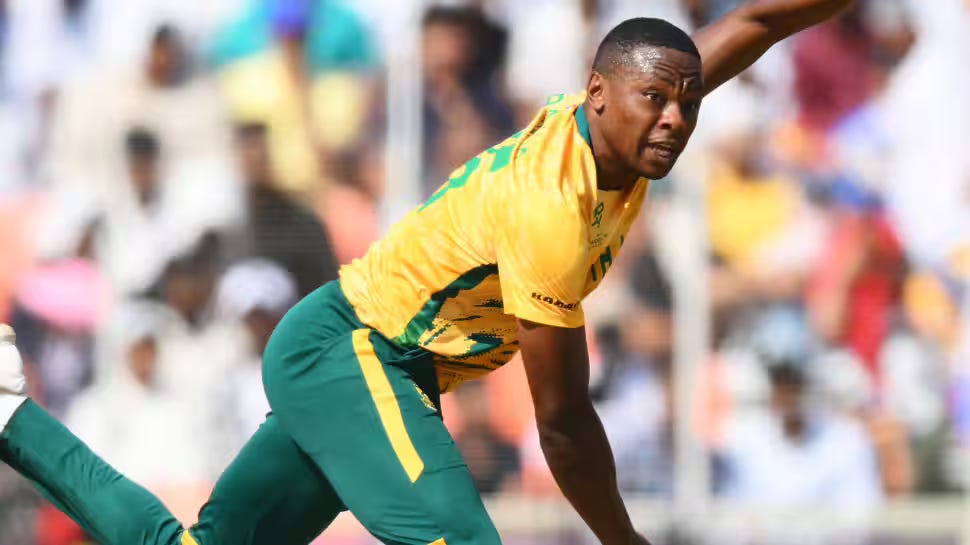
We have a misguided notion that all wickets are equal in T20 cricket. We continue to reward top tournament wicket takers with coloured hats, after all. Nothing could be further from the truth: not all T20 wickets are of equal value. A first-ball wicket can be game-changing, whereas a last-ball wicket is a glorified dot, with others on a spectrum in between.
We know, statistically, that powerplay wickets have a far greater impact on a team’s expected total than either middle overs or death wickets. There’s never a bad time to take a wicket, but getting them early is far more impactful.
No World Cup team understands this better than SA. When it comes to bowling economy rate in the powerplay, SA doesn’t seem to be all that bothered. It’s not that they don’t want to keep the runs down, it’s just that economy isn’t their top priority. They concede 8.08 runs an over, which ranks 6th of the Super 8 teams.
Rather, SA embraces all-out attack with the ball in the first 6 overs, seeking to kill games before they even begin. Largely, they’ve done just that, reducing IND to 31/3 after the powerplay, NZ to 58/3, AFG to 56/3, and now, WI to 52/4. As every commentator ever will tell you, losing 3+ powerplay wickets decreases your chances of winning dramatically.
Accordingly, no team has taken more powerplay wickets than SA’s 19 in this tournament, while no team takes their powerplay wickets at a better strike rate than SA’s 11.37 (a wicket every 2 overs).
Both sides of this strategy were on full display against the WI today: taking powerplay wickets, while still conceding runs.
Even though it ultimately backfired, SA’s willingness to bowl Keshav Maharaj in the first over is indicative of their aggressive, wicket-first thinking; Brandon King has had his struggles against left-arm orthodox bowlers in the past, averaging just 5.4 against them in 2024.
Still, after two overs, with the West Indies flying at 29/0, it looked like this approach might finally backfire on SA, until Kagiso Rabada decided to come to the World Cup party. Before this game, it’s fair to say Rabada had been having a challenging tournament, taking just two wickets at more than 80:
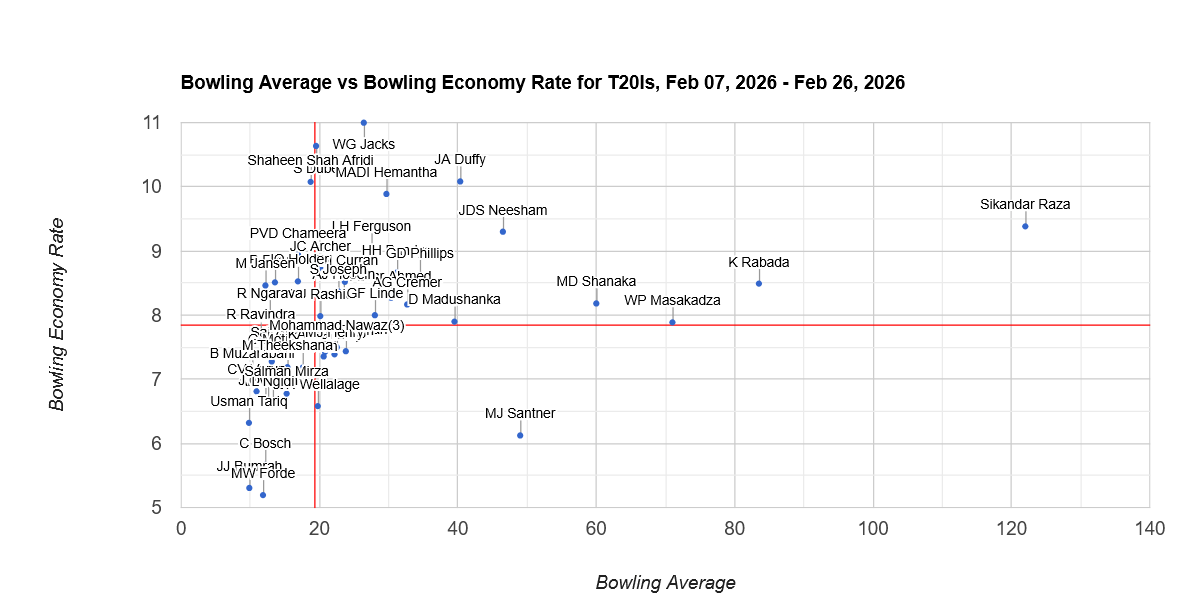
Admittedly, he’d had some poor luck with dropped catches, but still, for a bowler of Rabada’s immense quality, the above graphic makes for ugly reading. Not today, as he’d double that wicket tally within four balls.
Immediately, Rabada honed in on an area just back of a length, and boy did it pay off. First, Shai Hope failed to learn his lesson, flashing outside the off stump and edging behind in a near action replay of Rabada’s first ball. Then, Rabada had Shimron Hetmyer dropped first ball, as Bosch mistimed his jump at mid-on. At that point, you’d be right to think ‘uh oh’ as a South African fan, given Hetmyer’s outstanding form so far this tournament.
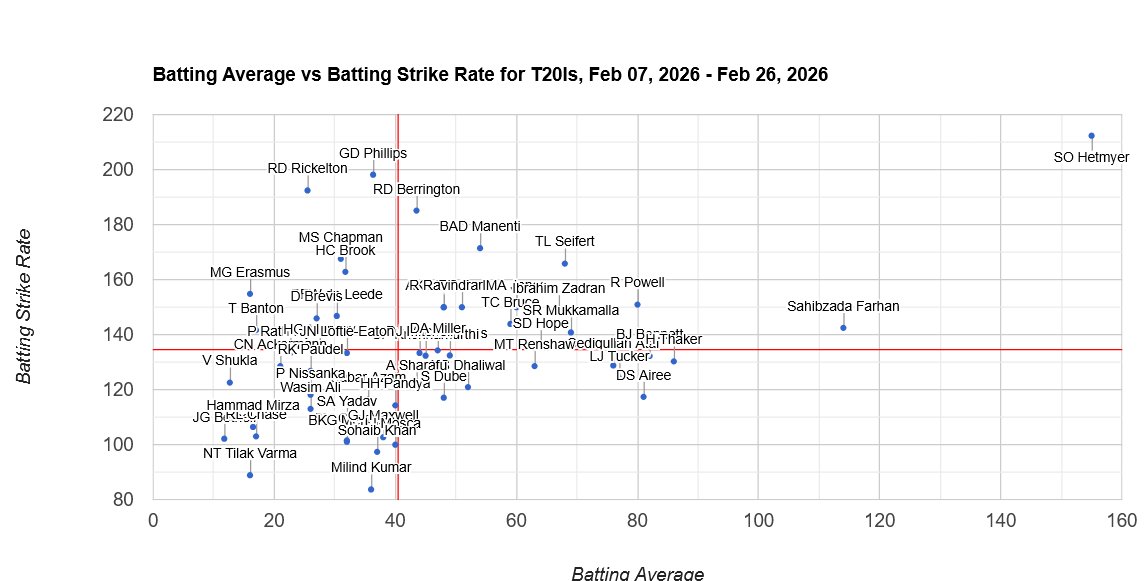
There are outliers, and then there’s whatever Hetmyer has been doing in the middle overs, where he is so far undismissed in this World Cup while striking at more than two runs per ball. This time, Rabada didn’t give him a chance to get to the middle overs, banging another one in back of a length, as Hetmeyer spooned a catch to Maharaj at midwicket.
Not to be outdone, Lungi Ngidi quickly got in on the party. Ngidi has been outstanding in the powerplay this tournament, averaging 10.5 and striking every 7.7 balls, and today it took him just four.
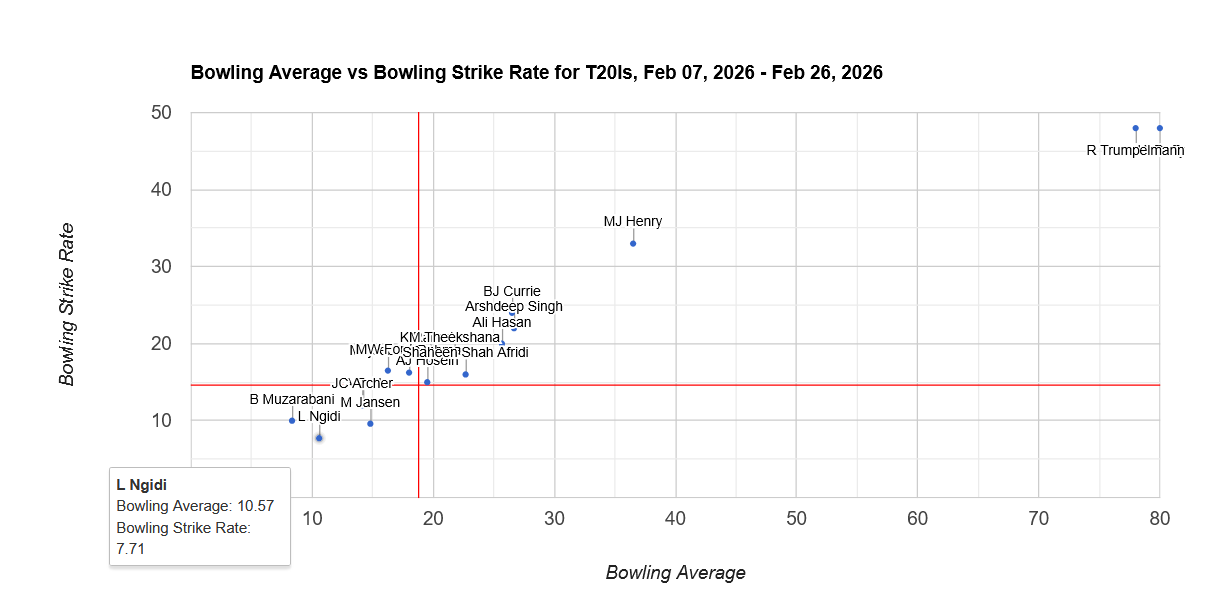
Following Rabada’s lead, Ngidi banged in two more balls back of a length; first getting Brandon King to edge one behind, then, two balls later, angling one back into the stumps viciously to get Roston Chase to chop on.
Even then, SA continued to concede runs in search of wickets: WI took 52 runs from their powerplay, which, for a team that has struck at just 120.37 (equivalent to 43.33 runs) in the powerplay this tournament–the worst of any Super 8 team–is above par.
Ultimately, I could analyse SA’s powerplay bowling till the cows come home, but sometimes, a picture is worth a thousand words. So, here are three:
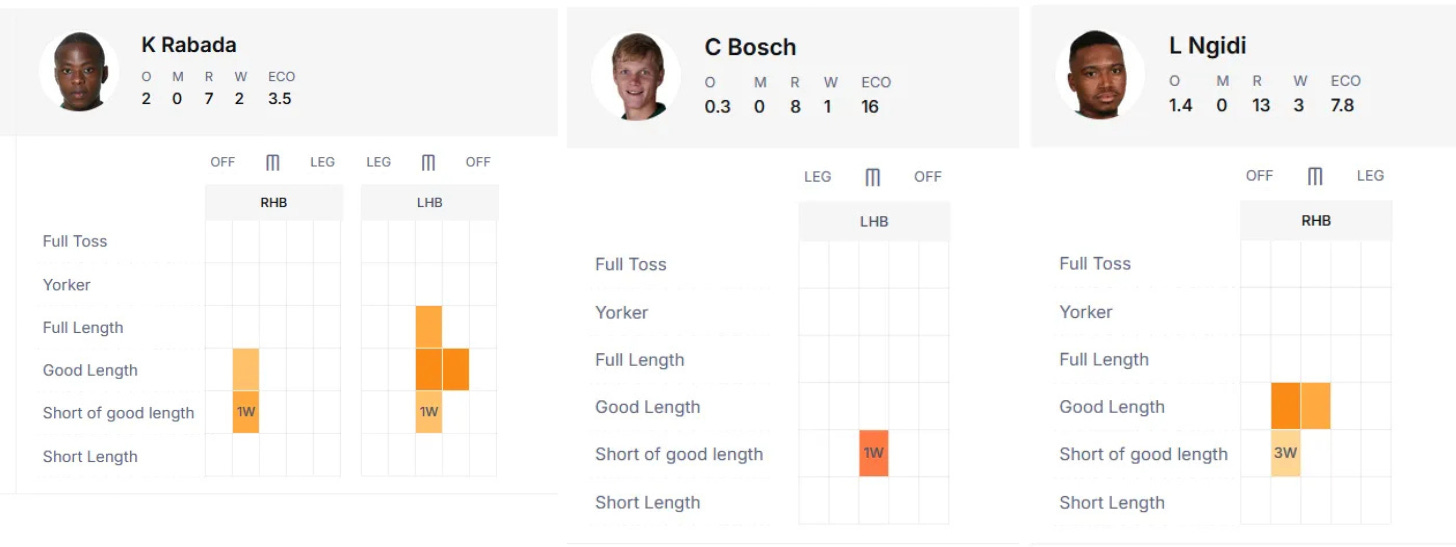
SA’s first 6 wickets all came from back-of-a-length deliveries, and five of them were pitched on or just outside off stump. After Marco Jansen was guilty of both over pitching and dropping one too short in his first over, Rabada came in and found the Goldilocks length. The other SA bowlers were happy to follow his lead.
Sometimes, you can know exactly what’s coming and still have no answer. Today, WI had no answer to SA’s hard powerplay lengths. However, equally, with SA failing to finish the job in the middle overs and the WI having a cushion to rebuild thanks to an above par powerplay in terms of runs, we saw both sides of SA’s high-octane strategy.
Data from ESPNcricinfo & Cricmetric.
If you’re reading this online, remember: you can get it via WhatsApp or direct to your email👇!
✍️ Written by Tarutr Malhotra, who runs Best of Cricket.
A couple of decades ago, a basketball executive called Daryl Morey made a startling discovery; three is a bigger number than two.
Basketball’s three point-line is between 22 to 24 feet from the basket, but a lot of players would take shots from the 16-21 foot mid-range region. Everyone had grown up watching Michael Jordan shoot from those spots, and everyone wanted to be like Mike.
To Morey, this made no sense. Why take a 21-foot shot that might get you 2 points, instead of a 22-foot shot that might get you 3 points? It sounds stupid, but no one had been brave enough to order his team to live off either 3-pointers, or under the basket dunks. Maximise the best close range opportunities (dunks), or maximise the best long-range opportunities (3s).
Why muck about with the mathematically crap mid-range options when you can maximise your scoring opportunities instead?
The reason I bring up Morey’s philosophy – which came to be known as basketball’s analytics revolution – is because this WI batting order has a very similar tinge of that data-first thinking. Six is a bigger number than one.
So, why muck about with the mathematically crap mid-range options when you can maximise your scoring opportunities instead?
Tonight, Romario Shephard and Jason Holder brought up a record 8th wicket stand in T20Is, scoring 89 (57). Normally, falling to 71-6 would be reason for panic. For WI, it was just another day at work. Against ENG, earlier this tournament, they salvaged a similarly poor start; going from 77-4 in 9.3 overs to 196-6 by the end of the innings.
Before today, WI have averaged the worst starts of any Super 8 team in the tournament, registering an average powerplay score of just 43.33 runs and average PP wickets lost of 2. And, it doesn’t matter because they’ve embraced the analytics. Six is bigger than one.
In an interesting piece during the group stage, Kartik Kannan covered the outlier strategy that WI have followed since (at least) July 2024. They are very happy to endure dots – averaging 48 to 52 a game in this period! – if it means it gives them more 6s.
WI would rather swing and miss, then nudge and run. If you can swing and hit a 6 once every 5 balls (or a 4 once every 3 balls), you’re scoring at more than a-run-a-ball – which makes it a better analytical strategy than looking for quick singles.
Six is a bigger number than one.
Since 2024, WI have played the most dots by far (PAK are the closest at under 36 a game), but have destroyed the bowling on every other ball. They have a non-dot ball strike rate of 275 – which is a per ball value of 2.75 runs.
For 52 dot balls of their innings, WI are okay to score 0 runs – because for the remaining 68 balls of their innings, they score at 2.75 a ball. That’s an average of 187 runs per innings, despite not scoring a single run on ~43% of their balls.
There’s one obvious flaw to the swing-and-miss theory of cricket analytics. If you keep missing, eventually you’re going to get bowled or caught off a mishit. WI have solved this problem by picking massive hitters all the way down to their 11th batter.
Every single player in WI’s lineup today has a T20I career SR of at least 133.3 – apart from Roston Chase’s 119.9 (which was also up to 130.69 in 2025). The worst career balls per boundary rate in today’s XI is 6.00 – of 11th man Shamar Joseph.
Literally every other WI player hits a boundary more often than once in 6 balls for their entire T20I career.
As Arnav Jain pointed out in an analysis in mid-2025, WI pack their team with very similar batters throughout the order. Everyone else looks for a combination of anchors, variation players, good runners, and more. WI look for just boundary-hitters.
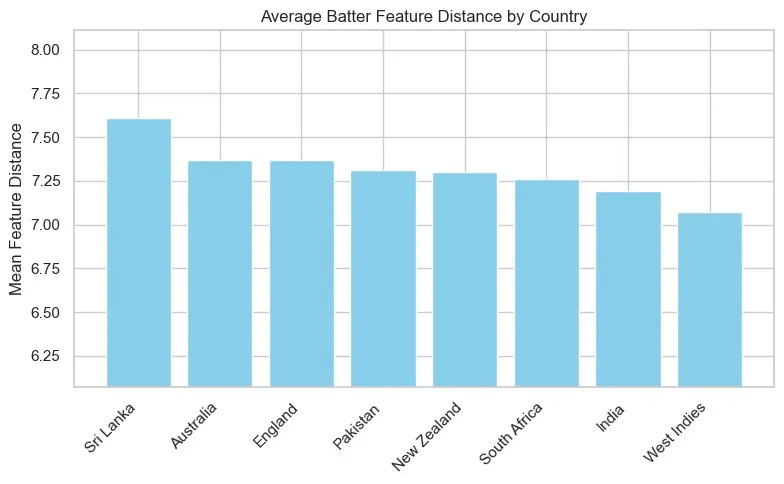
Arnav’s graph does some fancy math, but the conclusion is simple. He’s tracked how many different shots (types, placement, etc.) each country’s batters have made over a ten-year period (2015-2025). WI’s batters (the entire 1-11) have all hit very similar shots – which tracks with this six-or-dot strategy. Six is a bigger number than one.
This strategy played out in today’s innings as well. WI hit eleven 6s and fifteen 4s against SA. That’s 126 runs in just 26 balls – or 72% of their runs in just 22% of their balls. Despite conceding 53 dot balls tonight, WI still scored at an RPO of 8.8.
Here’s a ridiculous stat for you that highlights this insane all-or-nothing strategy; Marco Jansen bowled 12 dots tonight (that’s literally half his balls!) but still got hit for an economy of 12.5. They scored at a 250 SR in their non-dot balls, with 10 boundaries in their 12 run-scoring balls faced v Jansen.
This strategy is obviously not perfect. WI still lost today, and they lost quite handily. Their bowling looked laughably bad, on a surface where SA barely got to 187 against Afghanistan two weeks ago. But, that shouldn’t take away from this bold experiment WI are running.
Daryl Morey has yet to win an NBA title, despite ushering in the basketball analytics revolution. Instead, he’s watched teams with better three-point shooters maximise his strategy. Put another way, he’s Brad Pitt in Moneyball – the stats guru who revolutionises a sport, but doesn’t have the best resources to take advantage of his own insights.
Darren Sammy might just be this World Cup’s version of Daryl Morey or Brad Pitt. WI may not win it all (or even make it out of the Super 8s), but they deserve credit for trying to maximise their resources in a unique way.
Data from ESPNcricinfo, plus the aforementioned articles by Jain & Kannan.
If you’re reading this online, remember: you can get it via WhatsApp or direct to your email👇!
✍️ Written by Dom Murray, who runs Beyond Cow Corner.
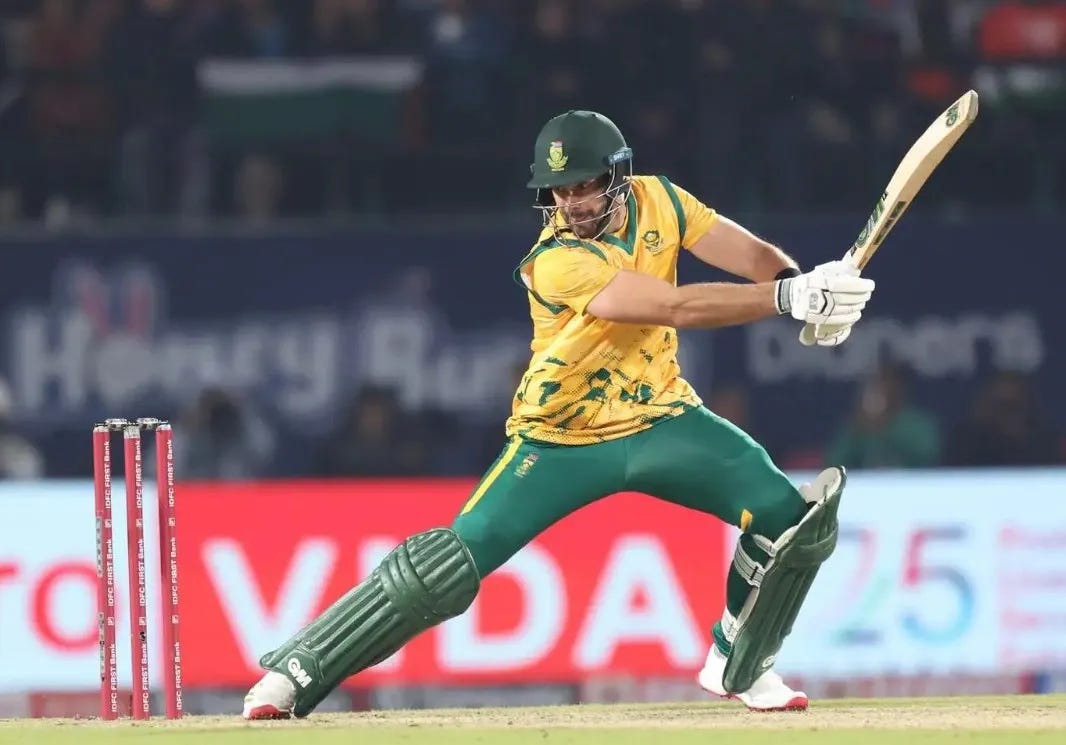
If you’re going to be a batter in cricket, the absolute last thing you want is to have a weakness against right-arm pace bowlers, by far the most common type of bowler. This is doubly true if you’re a top order batter. It’s triply true if you’re an opening batter in T20 cricket.
Yet, for the longest time, this was the position Aiden Markram found himself in. In the powerplay in all T20 cricket, Markram struck at just 83 against right-arm pace in 2022, scoring 40 (48) with a dot ball percentage of 52.1%. In 2023, Markram wasn’t much better against right-arm pace in the powerplay, striking at 116.2, scoring 115 (92). In 2024, this dropped back to 93.4, scoring 99 (106).
All told, across this three-year sample size, Markram scored 254 (246) against right-arm pace in the powerplay in all T20s, striking at just 103.25. You don’t need me to tell you that these were abysmal numbers, and something had to give.
And, finally, something did give, as in 2025, Markram got a move on and struck at 147 against right-arm pace in the powerplay, scoring 193 (131) and getting his dot ball percentage down to 46.6%.
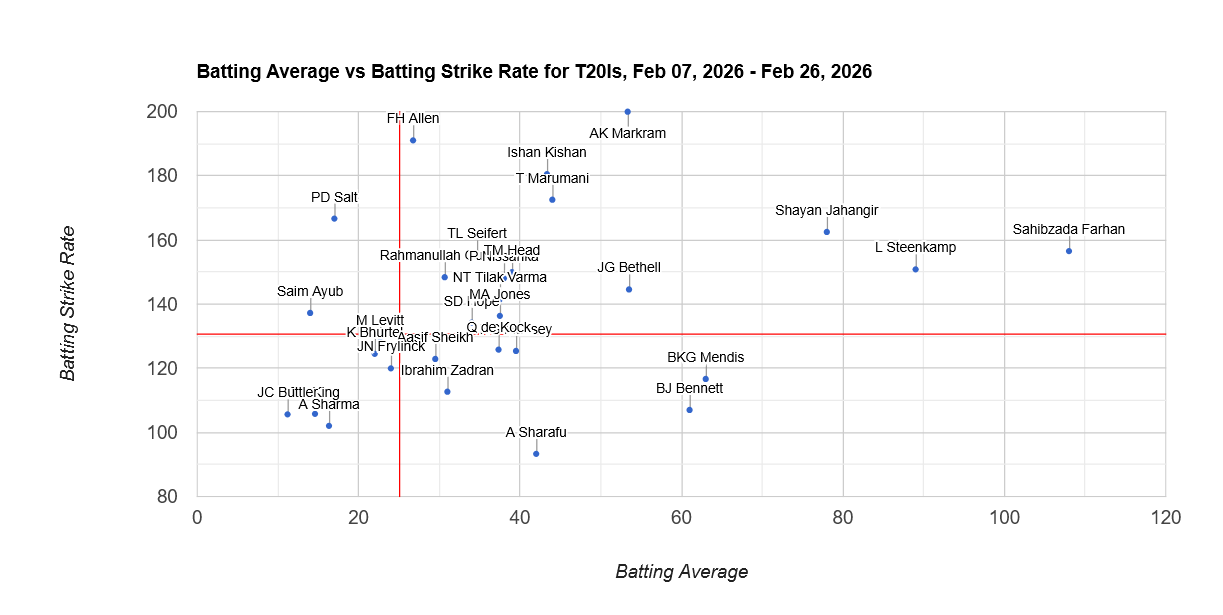
But, as we saw today, that’s still nothing compared to what Markram has been doing against right-arm pace in the powerplay in 2026. From barely striking at a run a ball between 2022 and 2024, Markram is now striking at exactly 200 against right-arm pace in the powerplay in 2026, so far scoring 210 (105) and dropping his dot ball percentage dramatically to 35.2%.
Largely, this improvement has come off the back of Markram pummelling 4s. So far in 2026, he has hit 33 powerplay boundaries against right-arm pace in 13 innings. For comparison, in 2025, he hit 23 in 21 innings, while from 2022-2024, he only hit 32 powerplay boundaries against right-arm pace combined.
Unsurprisingly, Markram is currently the fastest-scoring powerplay batter in this World Cup (min. 45 balls faced).
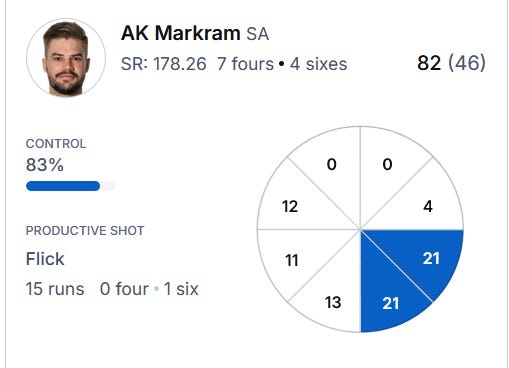
This improvement was on full display against the West Indies today, as Markram was brutal on Holder, Forde, and Shepherd in the powerplay, taking them for 9 (5), 23 (12), and 11 (3) respectively, including six fours and a six.
One of the most impressive aspects of this was Markram’s ability to score around the ground. In front of the wicket, Markram’s scoring zones were fairly evenly distributed, scoring 21 through midwicket, 34 down the ground, 11 through the covers, and 12 through point, manipulating the field beautifully when he wasn’t outright ignoring it and hitting over the top.
Perhaps the greatest irony, though, is that while Markram has improved drastically against right-arm pace, he is equally weak against left-arm orthodox bowlers in the powerplay. Yet, WI decided to leave out their powerplay gun Akeal Hosein, instead preferring Roston Chase – who Markram struck at 172.73 against today.
In comparison, Markram struck at just 108 against left-arm orthodox bowlers in the powerplay in 2025. This year, he has been dismissed three times by SLAs in the powerplay, averaging just 11.3.
WI fans may want to look away now. One of those dismissals was when Hosein dismissed Markram for just 2 (4) when the two teams met before the tournament – and yet, Hosein was dropped today.
It’s easy to say in hindsight, but, knowing how destructive Markram has been in the powerplay and how crucial it was to get him early, this game may have been defined as much by who the West Indies left out as who they played.
Data from ESPNcricinfo & Cricmetric.
If you’re reading this online, remember: you can get it via WhatsApp or direct to your email👇!