

Seattle Neighborhood Greenways is now the Seattle Streets Alliance.
“It’s a better explanation of who we are and what we’re about,” said Streets Alliance Executive Director Gordon Padelford. It’s true. The organization convenes coalitions around safe streets and transit and housing. They have led and helped lead major pushes to increase the size of multiple transportation levies and then helped gather support to pass those levies. They have advocated around boosting public benefits from major projects like the Convention Center Expansion. They have led efforts to craft transportation equity policies and best practices. They have helped organize memorial walks and bike rides for people who have been killed in traffic. The partner groups that make up the Streets Alliance advocate to fix local issues, like more and better crosswalks. They help the city craft biking and walking improvements that are informed by the detailed knowledge and experiences of people who live near them. The name “Seattle Neighborhood Greenways” has not really fit their work for a long time.
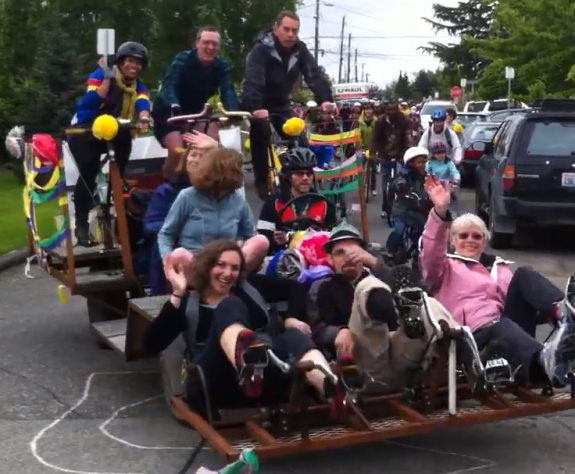
The organization started as a handful of neighbors on Beacon Hill and in Wallingford who were attempting to get the city to start building neighborhood greenways to make it easier for people to walk and bike around their own neighborhoods. So much of the focus around bike projects to that point had been on cross-city commute routes, and these groups wanted the city to also pay attention to routes between homes and schools and parks and business districts. In 2010 when the organization started to form, the city had not yet built such a project. They quickly found success. Spokespeople in Wallingford, led by Cathy Tuttle, convinced the city to create a pilot neighborhood greenway on N 44th Street in Wallingford while Beacon BIKES (which long ago changed its name to “Beacon Hill Safe Streets“) won a grant to hire a design firm to create an entire neighborhood circulation plan focused on walking and biking. That plan still forms the skeleton of the city’s bike facilities plan for Beacon Hill. The Beacon Hill group created the template for other groups to try to follow. They valued community building as much or more than the technical details of a design plan. To advocate for their preferred route for the neighborhood’s first neighborhood greenway, they held a community parade along the route, including Councilmembers Sally Bagshaw and Transportation Committee Chair Tom Rasmussen riding an eight-seated pedal-powered parade float (the driver has a steering wheel, brake pedal and clutch because this thing is a stick shift and can only be driven if you have enough people to pedal it). It wasn’t about taking away space from cars, it was about creating space for joy and community.
— Advertisement —

The Beacon Hill and Wallingford successes inspired other neighborhoods to get together and form their own groups, and Tuttle saw the need for a new non-profit organization to support all these neighborhood groups and help them share resources. So she became the founding executive director of Seattle Neighborhood Greenways, which followed an unusual but powerful philosophy of being a bottom-up organization where the work of the satellite groups informs the work of the central organization. Rather than having HQ send orders and tasks down to the smaller groups, HQ exists to support the work of the independent groups that are most comprised of volunteers. The idea set off an explosion of neighborhood-level organizing in all corners of the city as folks got together to commiserate about annoying and scary streets or crossings they have to use every day and then come up with ideas for how to fix them. Padelford called this alliance of neighborhood groups “our secret sauce,” which is why their new name uses that term.
Almost immediately after forming, Seattle Neighborhood Greenways and its growing number of member groups were advocating for changes beyond neighborhood greenways. The neighborhood greenway was a solid and achievable grounding task that a new group could rally around, but sometimes the biggest neighborhood safety need was a bike lane or a crosswalk or curb cuts or a traffic signal. Sometimes what was really needed was a neighborhood celebration. The exact infrastructure wasn’t really as important as the end goal of creating safer streets for people of all ages and abilities.
The first internal document discussing the need to change the name of Seattle Neighborhood Greenways is from 2014, Padelford said. They picked the issue back up 2019, but it fizzled out. It’s a lot of work to change a name once it is established, and it kept getting kicked to the to-do list as more pressing work got priority. But when Joshua Holland came on board as Communications Director, he finally saw it through. “Credit to Josh Holland for keeping up on task,” said Padelford.
— Advertisement —

Several of the neighborhood groups are using this as an opportunity to also change their names, though it was not a requirement. Here’s the updated list of group officially part of the alliance:
- Ballard Fremont Green Streets
- Beacon Hill Safe Streets
- Central Seattle Streets for All
- Downtown Seattle Greenways
- Duwamish Valley Safe Streets
- First Hill Improvement Association
- Green Lake Wallingford Safe Streets
- Lake City Streets Alliance
- Northeast Safe Streets
- Northwest Greenways
- Queen Anne Streets Alliance
- Rainier Valley Safe Streets
- West Seattle Bike Connections
If you’re interested in become part of the effort to make your neighborhood’s streets safer, you can find info on each group on the Seattle Streets Alliance website. As with any volunteer-led effort, some groups are very active while others are in need of more leaders and volunteers. So if you aren’t seeing very much on the calendar in your neighborhood, then maybe you can be the next person to step up and make things happen.