
There might suddenly be a huge calendar gap after this weekend’s Japanese Grand Prix – but that hasn’t stopped Formula 1 teams from already finding performance gains with their 2026 cars.
So after two revealing hours of practice, based on our analysis of the on-track running plus what the drivers and teams said, here’s everything we learned from Friday at Suzuka.
A McLaren-Mercedes difference
McLaren and Mercedes may have the same power unit, but in Japan they are doing things very differently when it comes to how they are using their energy.
After Oscar Piastri topped the Friday times from Mercedes’ Kimi Antonelli, a closer look at their data exposed alternative approaches in unleashing their battery power.
The McLaren was going full beans down the start-finish straight and was much quicker through Turn 1 – giving it a hefty advantage at the start of the lap.
Mercedes was electing to hold back on using its deployment for the back straight run from Spoon to 130R, allowing it to haul itself back to within touching distance of the McLaren.
The difference then came down in the exit from the chicane – as McLaren was able to unleash power that Mercedes did not have as it was regularly hitting its recharge limit.
This different approach between cars that end up with similar laptimes opens the door for some yo-yo racing, and could put McLaren in a place to cause some annoyances for Mercedes on Sunday. – Jon Noble
Where F1 2026 has neutered Suzuka
Watch the onboard of Oscar Piastri’s fastest lap from Friday practice at Suzuka and it’s not the extreme mess of energy harvesting, extreme super clipping and sudden decelerations we saw in Australia particularly.
There will, of course, be variations up and down the grid, depending particularly on power unit characteristics, where individual teams choose to trade off harvesting and deploying energy, and how changeable grip levels then affect that strategy and the driving.
On the best lap anyone did on Friday you could see Piastri’s McLaren clipping its top speed approaching Turn 1 and running muted through the Esses. There is definitely a ramp-down approaching Degner 1, and the first part of Spoon is now basically a deceleration zone for the second part rather than a corner you attack.
And, of course, the cars are then basically coasting from 130R to the chicane, which is where you can see and hear the most extreme power losses.
It’s a shame to see bits of Suzuka neutered in this way, but it doesn’t look as bad as it could have done, thanks mainly to that energy harvesting limit being dropped from 9MJ to 8. George Russell said the FIA could have gone further to make things even smoother.
Maybe that trade-off between outright power/speed and how the cars look on track is worth it?
Carlos Sainz, someone who has been vocal in arguing the engines are creating fundamental problems with the look and feel of this new generation of F1 cars, certainly feels Suzuka has so far been a step in the right direction.
But the underlying problems remain, he feels, especially when the cars are deliberately running only on their combustion engines to preserve battery power, as is the case through the Esses.
“The problems we saw in China, with having to drive always the same without getting surprises with the deployment, they’ve obviously stayed,” Sainz said.
“I think every team has decided not to deploy [in the Esses] to save the battery for the straights, so it’s not good enough, not as good as it used to be. Is it a disaster? No, but it’s not what F1, I think, should be. It needs to get better than this.
“In going into Suzuka, it is true that compared to what we had in the simulator with the amount of super clipping, reducing the harvest has definitely helped and now at least super clipping seems more controlled.
“Still the amount of speed that we lose on the 130R when the SLM [straightline mode] closes and the battery cuts, and into Spoon 1 and Degner 1, in my opinion is a bit too much – but it’s getting to a level that I hope with a couple of more tweaks it can get to a level that hopefully we stop talking about it.” – Ben Anderson
Red Bull’s stuck in the midfield (again)
“You just have to look at our relative position. It’s not the standards we set ourselves or those that Max sets us.”
That was Red Bull chief engineer Paul Monaghan’s accurate summary of Red Bull being stuck in the midfield for the second consecutive weekend.
He says the team has “identified a few things that are wrong” with the RB22 at Suzuka, but whether the team can correct them in time for qualifying is a different matter.
It tried experimenting across the practice sessions, with Verstappen saying Red Bull tried “two opposites today, we went from one extreme to another” but neither worked.
He doesn’t think “it will be a particularly easy fix” and identified sector one as the main weakness.
Monaghan believes that’s because “sector one has more corners” so it’s punishing a Red Bull that appears to be lacking the aerodynamic load of the top three teams.
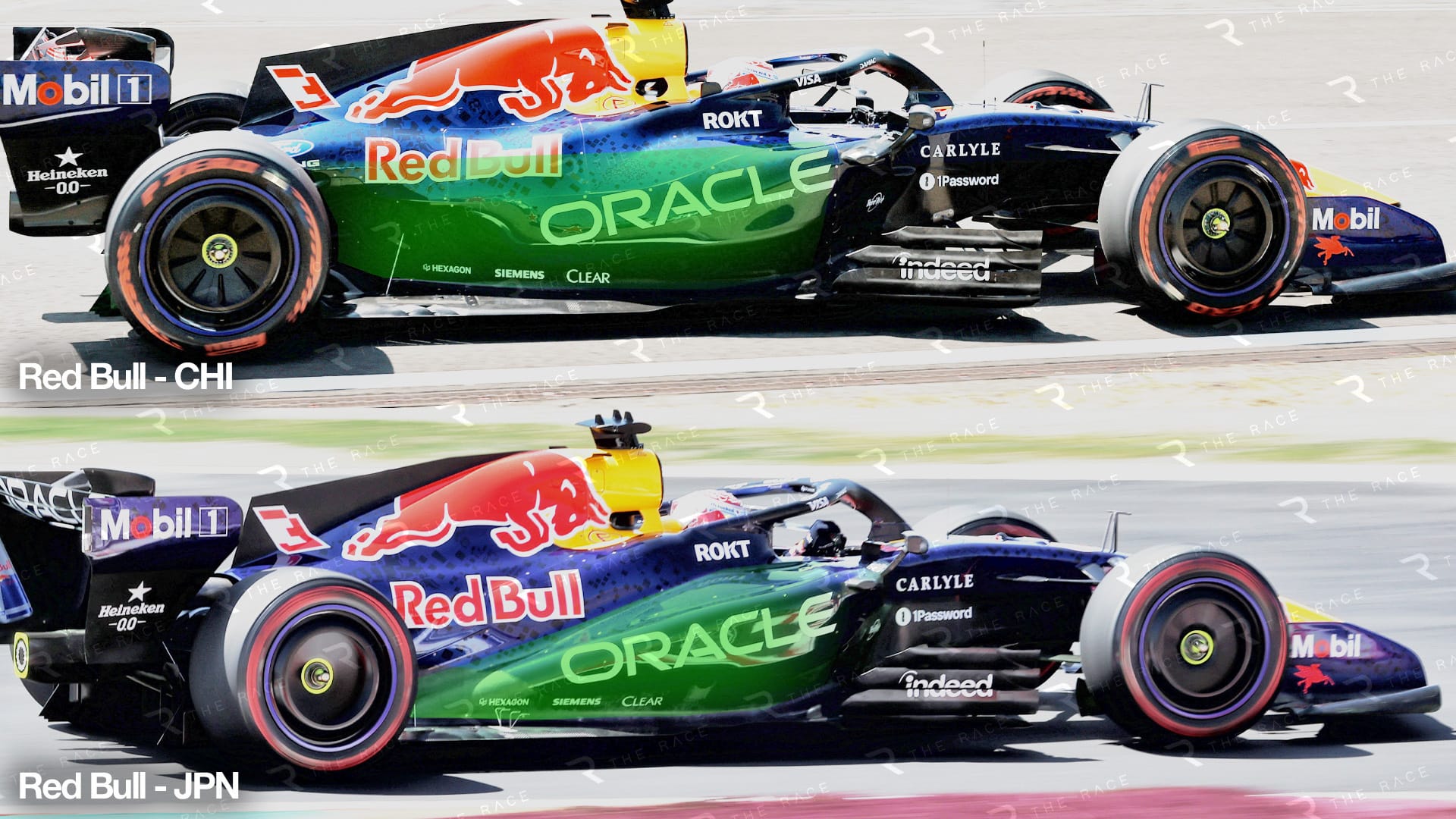
It did bring an upgrade package (sidepod inlet, floor and engine cover) to Suzuka and there’s no red flags from that. It’s just that there are “other aspects of the car that are currently not very happy and those are the ones we’ve got to try and correct for tomorrow”. – Josh Suttill
Alpine’s ‘injury’ has flared back up
Alpine rising to the top of the midfield with Haas in China made it easy to forget it’s carrying a significant self-described aero ‘injury’ with its A526.
That relates to a weakness in high-speed corners that produces too much understeer, one that was masked by China’s wide variety of low- to medium-speed corners.
But with high-speed corners at Suzuka, the Alpine’s main weakness has been more exposed and it’s dropped to the back of the midfield group.
In fact, over one lap, it’s at risk of being sniped by Williams – and Alpine managing director Steve Nielsen is concerned that could leave its cars out of position on the grid versus their stronger race pace.
“We need to try and fix sector one where we’re losing a lot of time,” he said.
“And if we can do that, I think we can qualify well. But our long-run, high-fuel pace is pretty good, competitive, against Audi and Haas, who are probably our biggest competitors at the moment.
“But single-lap pace…it’s important we qualify as high up as we can so we’re racing from lap one. I don’t want to spend half the race getting back into the top 10.” – JS
Verstappen issue exposes 2026 engine ‘glitch’
Verstappen had a brief scare in second practice when his Red Bull lost power due to what the four-time world champion called a “glitch” in the 2026 engine designs.
Verstappen got “stuck” after slowing to let a car pass on a flying lap in the first third of FP2.
He crawled through the first sweeps in the first sector, fearing he would never get power back – but it did eventually kick in, as Red Bull said it would, after “waiting for the time to pass”.
This all relates to an “FIA setting”, Verstappen says, that means if the engine revs drop too low there is no power for a certain amount of time.
“It mainly happens when you’re driving slowly and you try to let another car by on a fast lap and you don’t downshift quick enough,” he said.
“You go into a safety mode or whatever and then it takes like 10, 15, 20 seconds before then suddenly you have power again.” – Scott Mitchell-Malm
WIlliams can escape Q1…but has race pace trouble
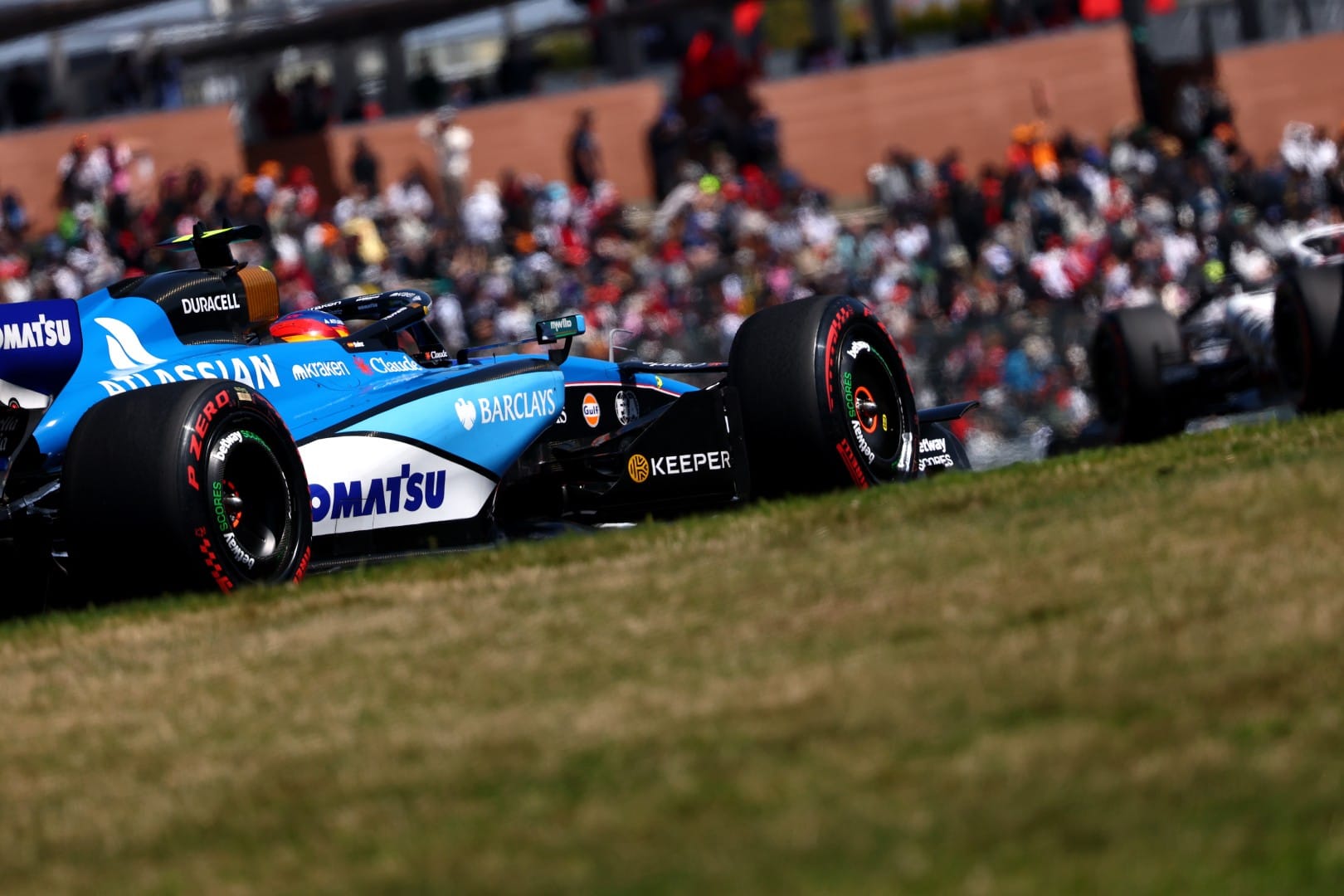
The ceiling of the Williams FW48 in qualifying so far this year has been 17th place and the top of Q1, as the only occasion when it has reached the second stage of qualifying was largely courtesy of circumstances in Australia. Speaking on Thursday, Carlos Sainz described Williams as being “in no-man’s land” and said he expected a similar level of performance this weekend. Yet Alex Albon ended FP2 eighth-fastest and second-quickest of the midfield pack with his team-mate only a tenth behind.
“We have to be realistic in that I think that’s probably a bit stronger than where we’re going to be tomorrow,” said Albon of his eighth place. “But at least on the positive side, the car is feeling better”.
That’s a reference to the car problems he had in China that now appear to have been solved. But the more pressing question is the lack of long-run pace for Williams, which appeared to put it back in usual territory between the midfield quartet, then Cadillac and Aston Martin behind. There was not an obvious tyre degradation pattern that explained this, suggesting this reflected the pace of the Williams at high fuel, which would further compound the fact the car is already overweight.
“It seemed like at least on the low fuel and short runs we were at least playing around in the midfield and mixing it up with them,” said Sainz. “Unfortunately, when we moved to high fuel it was a of a shocker how much of a step backwards we took again. As a team we need to analyse what’s making us more competitive in low fuel this weekend and then what is then bringing us back to China level in high fuel – or even worse than China in high fuel.
“So some good and bad there, maybe bit more good than bad.” – Edd Straw
Cadillac’s first meaningful upgrade is working
Cadillac’s steadily impressive start to life in F1 has continued on the first day of the Japanese Grand Prix, bar the communication (and driver) error that led to Sergio Perez colliding with Albon in FP1.
Perez lost time in FP2 because of that, but otherwise Cadillac enjoyed an incredibly smooth day.
In fact, team-mate Valtteri Bottas went as far as to call it “the best day we’ve had so far on a race weekend” after FP2.
He was a modest 2.4 seconds off the pace, saying: “It seems like we’ve closed the gap a bit to pretty much all the cars ahead.
“Today, actually on my side of the garage, for the first time in the race weekend, was a day that there was not a single issue.
“We could just completely focus on performance, on the set-up work and not fixing issues. That was good. I think both one lap pace, race pace, we are still a bit off from Williams but seem to be ahead of Aston.”
And most encouragingly of all, it marked a strong debut for Cadillac’s first proper F1 upgrade, a modified diffuser, which Bottas says has added more load and stability.
Engineering consultant Pat Symonds is “reasonably hopeful that as we get into the next batch of races, we’ll have a bit of a performance improvement” and Cadillac can continue to chip away at the gap to the midfield. – JS