
This is late because these whacky new formats are ridiculous. Thursday night final? These extended Masters are a viewing/fan disaster but that’s another piece.
This quick recap is less chronological, and more thematic in my takeaways.
Ben Shelton defeated Karen Khachanov 6/7 6/4 7/6 in the final of the Toronto Masters on Thursday to claim his first 1000 title. The win nudges Shelton up to #6 in the rankings ahead of Cincinnati and the US Open. Khachanov moves up four places to #12.
On paper, you’d be forgiven for thinking that six-foot-six-inch Russian Karen Khachanov is a ball-crunching winner machine. However, the reality is starkly different. A look at the 2024 forehand winner-percentage to in-percentage from Tennis Insights had Khachanov squarely tucked away in the low-winner-percentage section.
Perhaps in a bid to get more juice out of his game, Khachanov is another recent convert to the blacked-out prototype racquet movement of 2025 (the other notables being Bublik and Tsitsipas), leaving his artisanal Wilson Blade for a aero-ey prototype I can only imagine is more powerful.
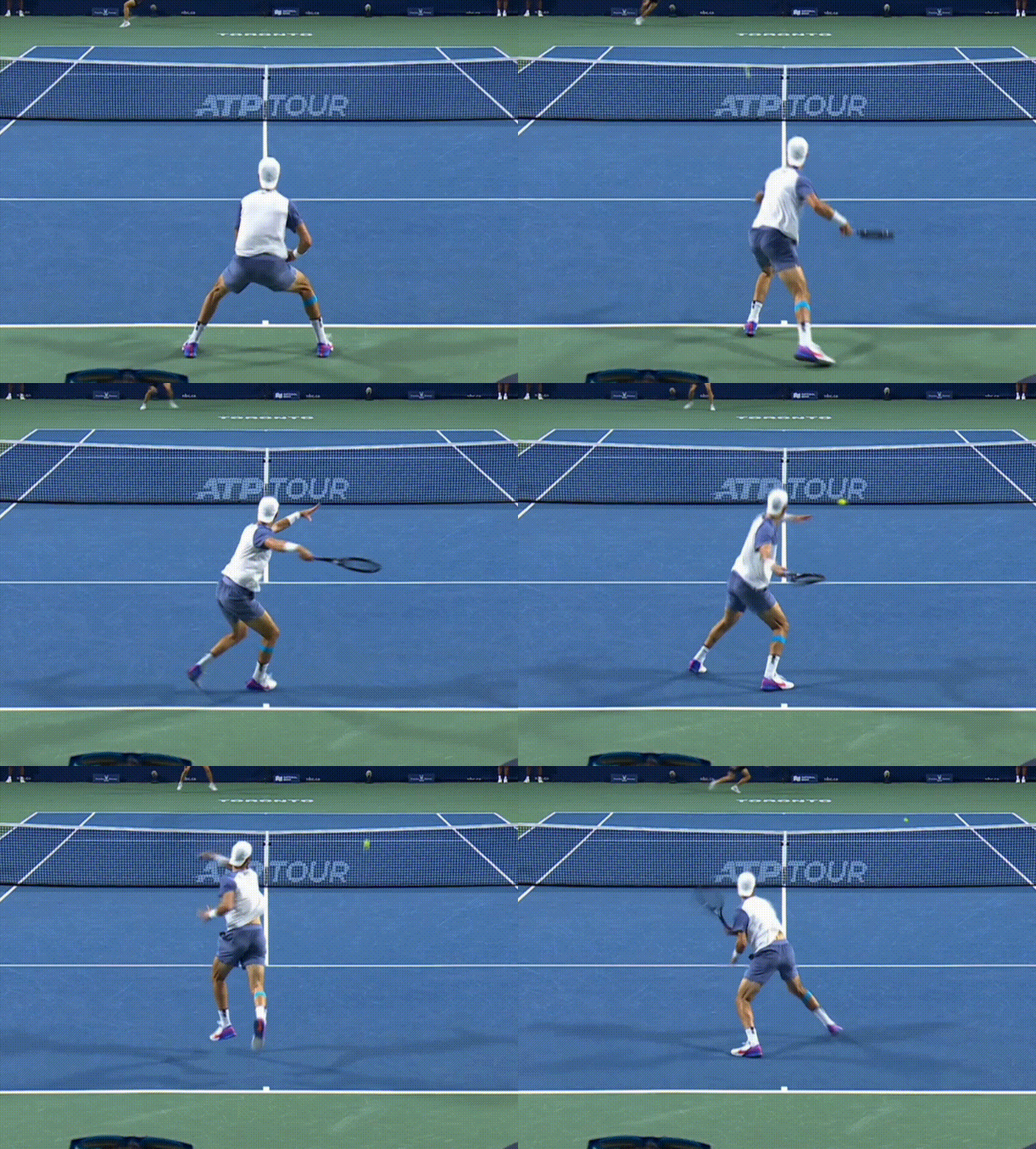
But the limiting factor in his forehand is really the tech in his swing, rather than his racquet. The Russian’s forehand is a gulf-winged Western, with the racquet tip kept low and outside in the backswing coupled with that trademark flexed wrist. While such a low and compact setup helps to get the racquet and hand at ball level more quickly — a plus for receiving quick and lower shots — I think this can often lead to a weaker flip and stretch in the forearm and ultimately create a short motion — a minus for projecting your own shots quickly (and sometimes receiving them as well).
From the 2023 Australian Open semifinals:
Wally Masur: “I gotta say sitting court-side so close to the action, I’m a bit surprised about how he [Khachanov] just doesn’t generate pace as well as I had expected from either wing really.”
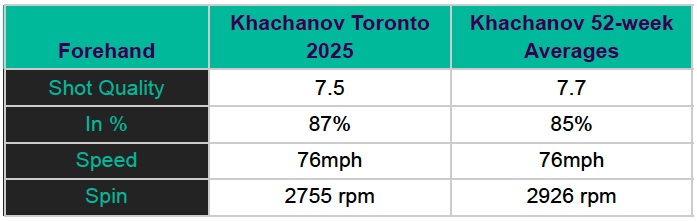
Thus, we get Karen Khachanov the steady baseliner workhorse. Given his lack of elite movement or serve, Khachanov ultimately becomes a player who is good at everything but great at nothing, and while such a recipe has earned him many deep runs and deep pockets, his 16-56 record against top 10 opposition is reflective of that (0-14 against top 8 players at Slams as well). New racquet in hand, his Toronto speed and spin data are similar to his 52-week averages, but his 9+ shot win percentage was very healthy in every match save a near-even split with Zverev (no shame there). Here were his numbers through to the quarterfinals courtesy of TennisViz.
It must be noted that the Russian did thoroughly out-winner Shelton on the forehand in this final. It’s hard to tell how much of that was a result of Shelton willing to play more defense and offer up more short balls as a tradeoff; he was constantly trading from behind TORONTO on much of his return points.
If we now shift our attention to the Shelton forehand, we see that the American’s scissor-lift setup has the racquet and hitting hand comparably low (read: set at ball/contact height more quickly), but with the hitting elbow drawn much farther back.


Watch that elbow get pulled back, creating a naturally longer, more in-to-out swing, more extension in the elbow on the forward swing, as well as a better coil in the upper body.

And that lateral elbow pull with the lowered racquet head setup has become more common in this era of faster game play:


For a video that contrasts that style against the more traditional setup this one is great:
Back to the match, and it didn’t take long for Shelton to display his firepower on that wing, launching this on the opening point:
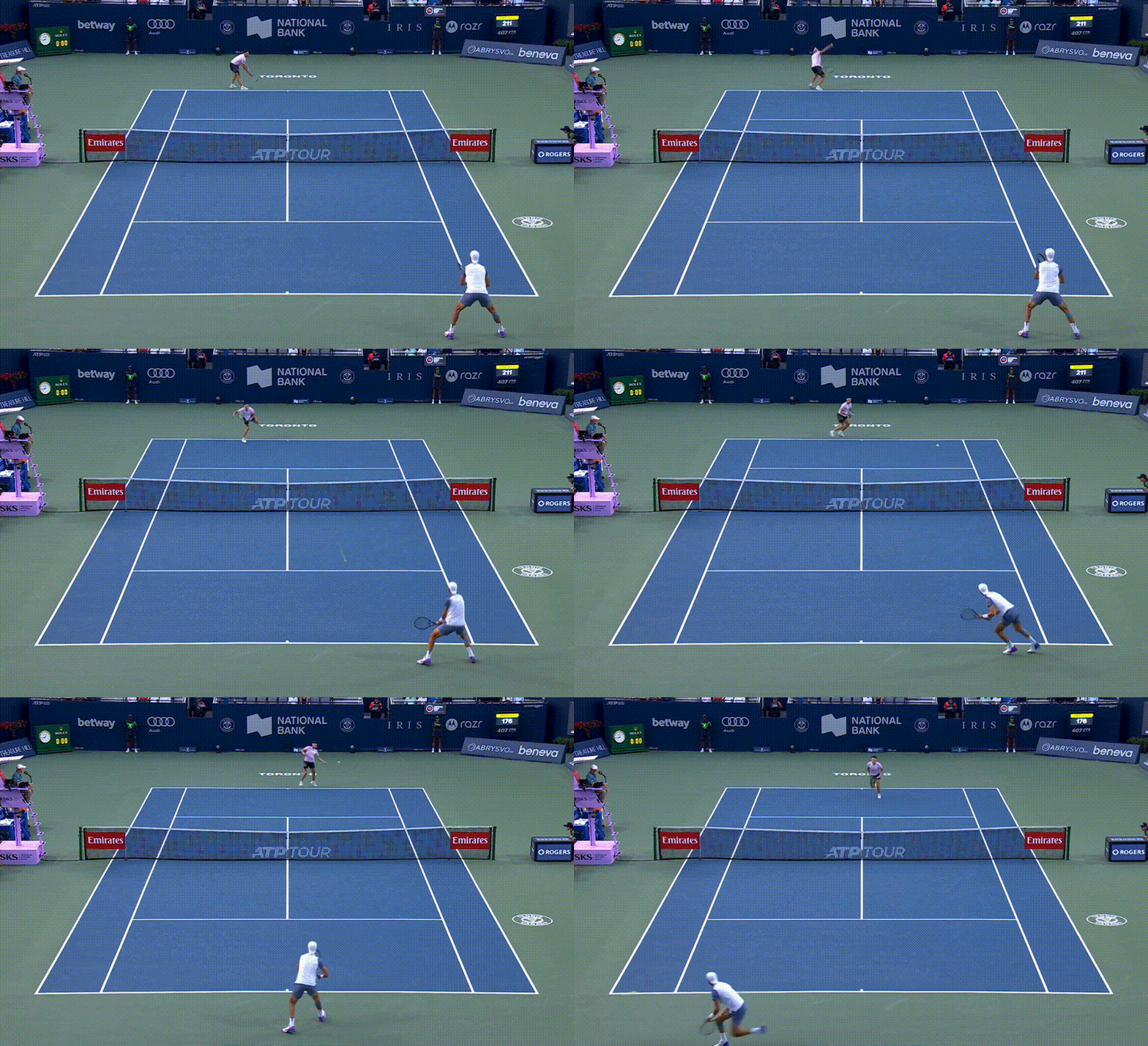
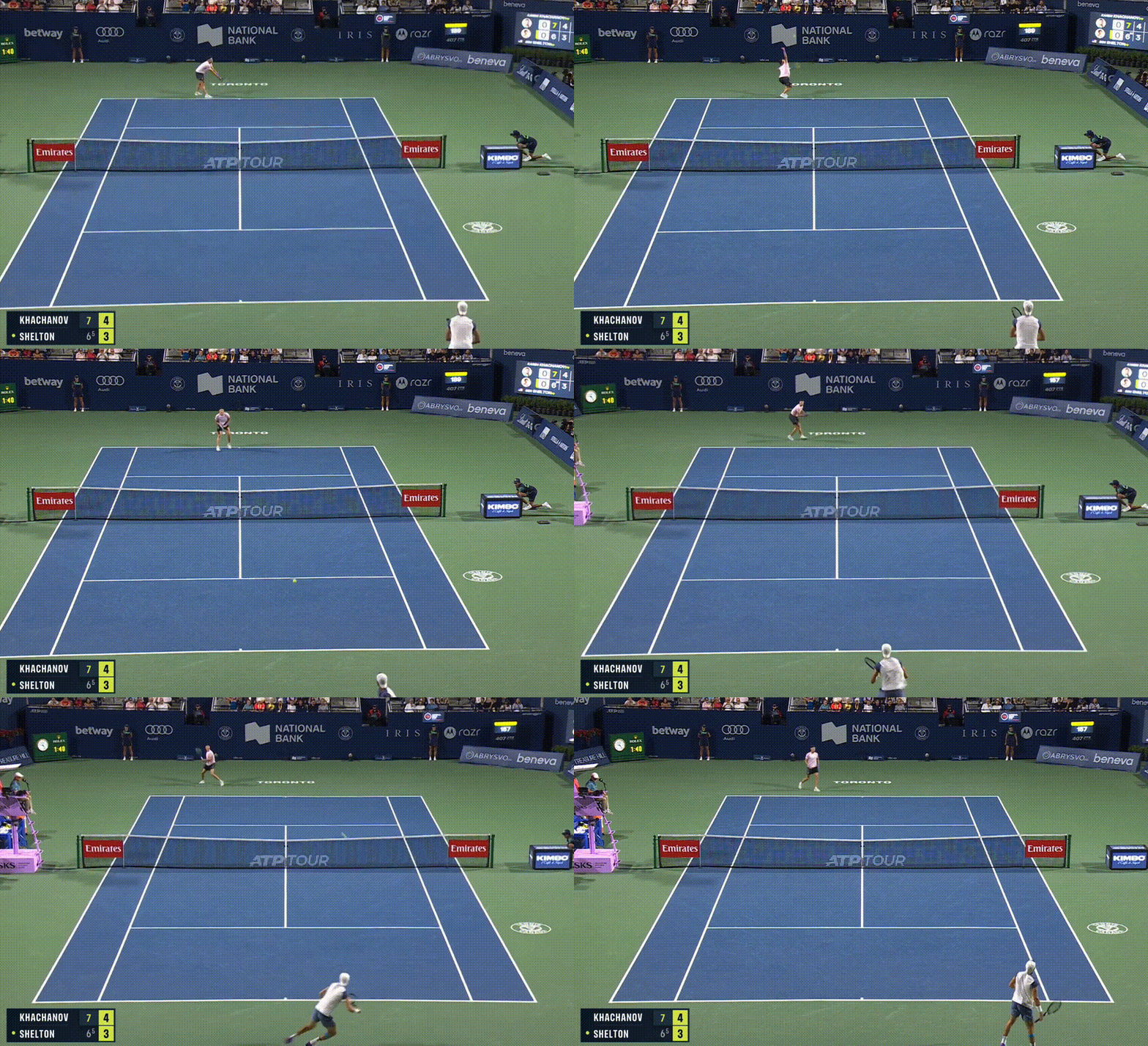
The American dominated the 0-4 shot category (78 to 54), largely due to the serve, but also the plus-one firepower his forehand can bring:
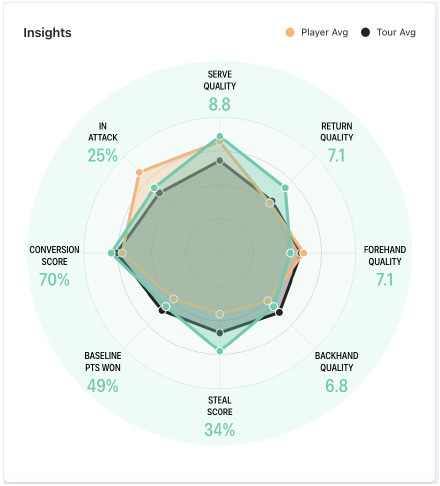
The return has always been the glaring weakness in Shelton’s game. According to Tennis Insights Shelton’s 52-week Return Score places him at 50th. However, this week in Toronto the American punched his way into the top 15 with a 7.1. That, and the the steal score, are reflective of the improved defense and patience he displayed this past fortnight:
He’s essentially running the peak Medvedev playbook here: serve big and play in-attack behind your own pitch, then knuckle down and build pressure after a quick hold. Andy Roddick used to talk about trying to make his service games feel quick — minimal routine, bang down aces, and put the balls in the other guys pockets — then fight tooth and nail to draw out the opponents return games with a more defensive and patient baseline game. I like the idea, but I’m just not sure this is where Shelton makes up ground against the elite competition that have stopped him in slams recently (Sinner and Alcaraz).
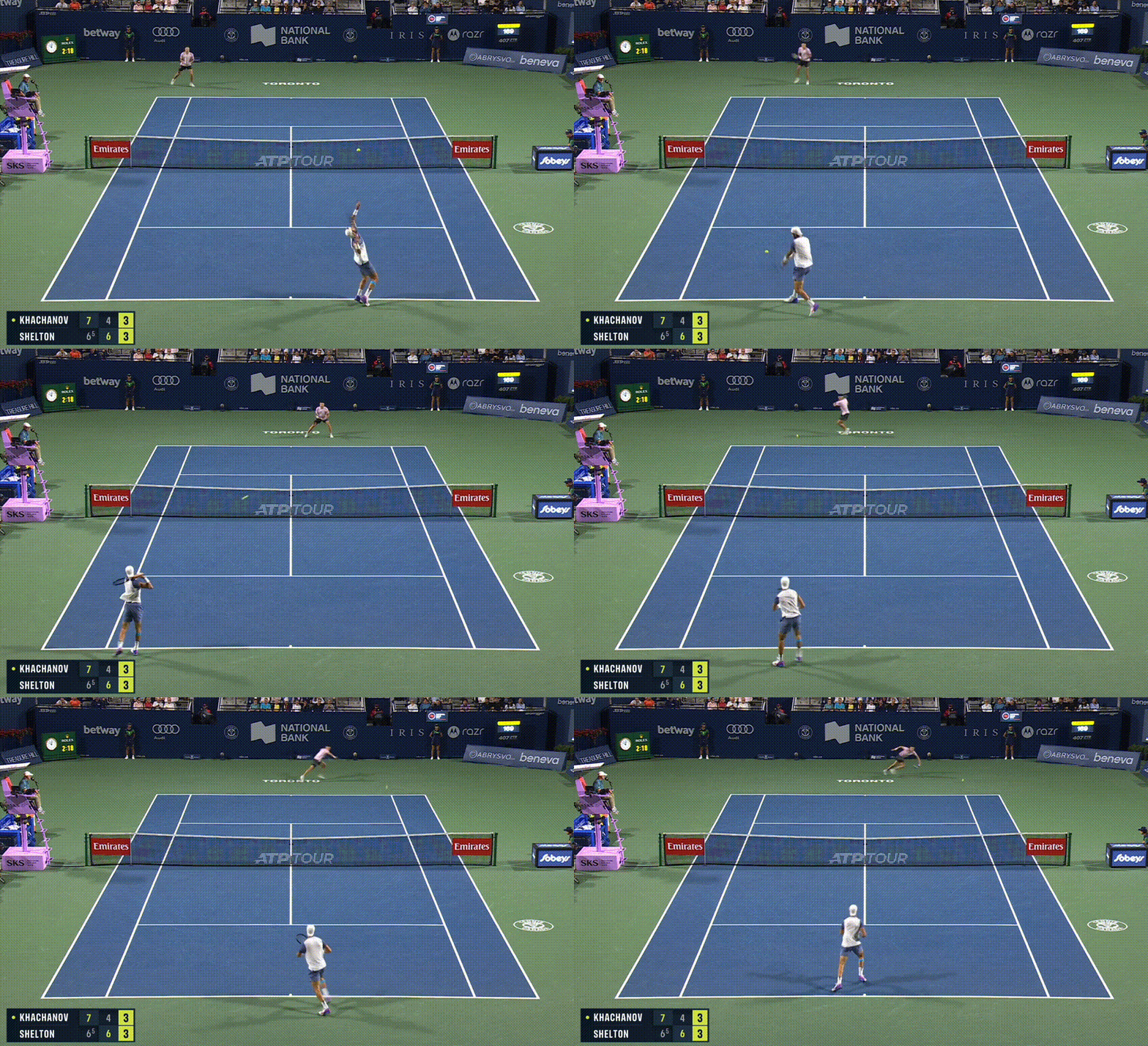
One of the things I’ve noticed that Shelton doesn’t do (besides run really fast) that any great return-points-won player does is be able to play on the outside leg off both wings. Specifically here I’m talking about backhands because of course everyone can play open-stance forehands, but Shelton rarely plants the outside leg and hits his backhand like these guys. So often he plays a cross-over step when pushed wide, meaning he takes an extra step away from centre than necessary:
And here is an example from the earlier GIF point I used to highlight Khachanov’s forehand (now you’ll see why I think Khachanov’s forehand winners were inflated):
While it clearly worked this week, I think Shelton needs to get more offensive on returns against the top guys, not less. Developing a crush-and-rush, or returning deep on second serves with the intent of hitting an aggressive ball like Alcaraz does with his North-South game. He needs to find more ways to move forwards, not sideways.
You could be critical of Shelton for underperforming outside of slams against lower calibre players, and in that sense this style may certainly bring some stability to his results that would help bolster his ranking, but I want to see Shelton lean into his variety and instinctive game closer to the net. I think he is very athletic, but less in a “let’s run side-to-side for 10 balls kind of way”, and more in a “let’s crush the ball and get forward, lunge at a volley, and mince an overhead” way.
Less Daniil Medvedev, more Jan-Lennard Struff.
Behind his own serve Shelton has been willing to move forward. In this match he came in several times behind his second serve and played some Alcaraz-esque short volleys against the deep return position that his nasty kick serve necessarily brings out in opponents.
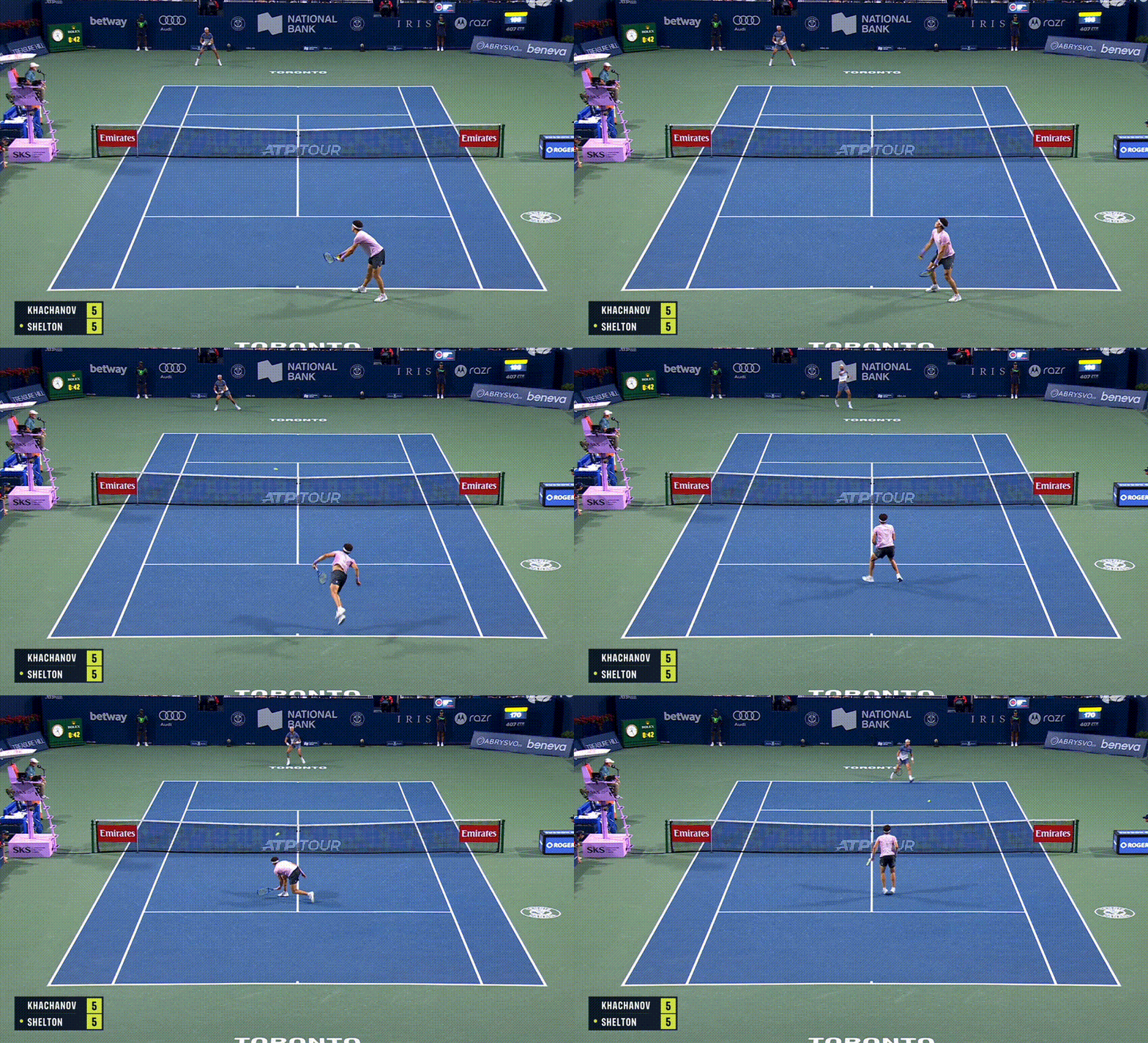
The finesse in that area of the game is still a work in progress, but I’m always bullish on players who are brave enough to try it in big moments. Here he didn’t quite get the feel on an important first point in the breaker.
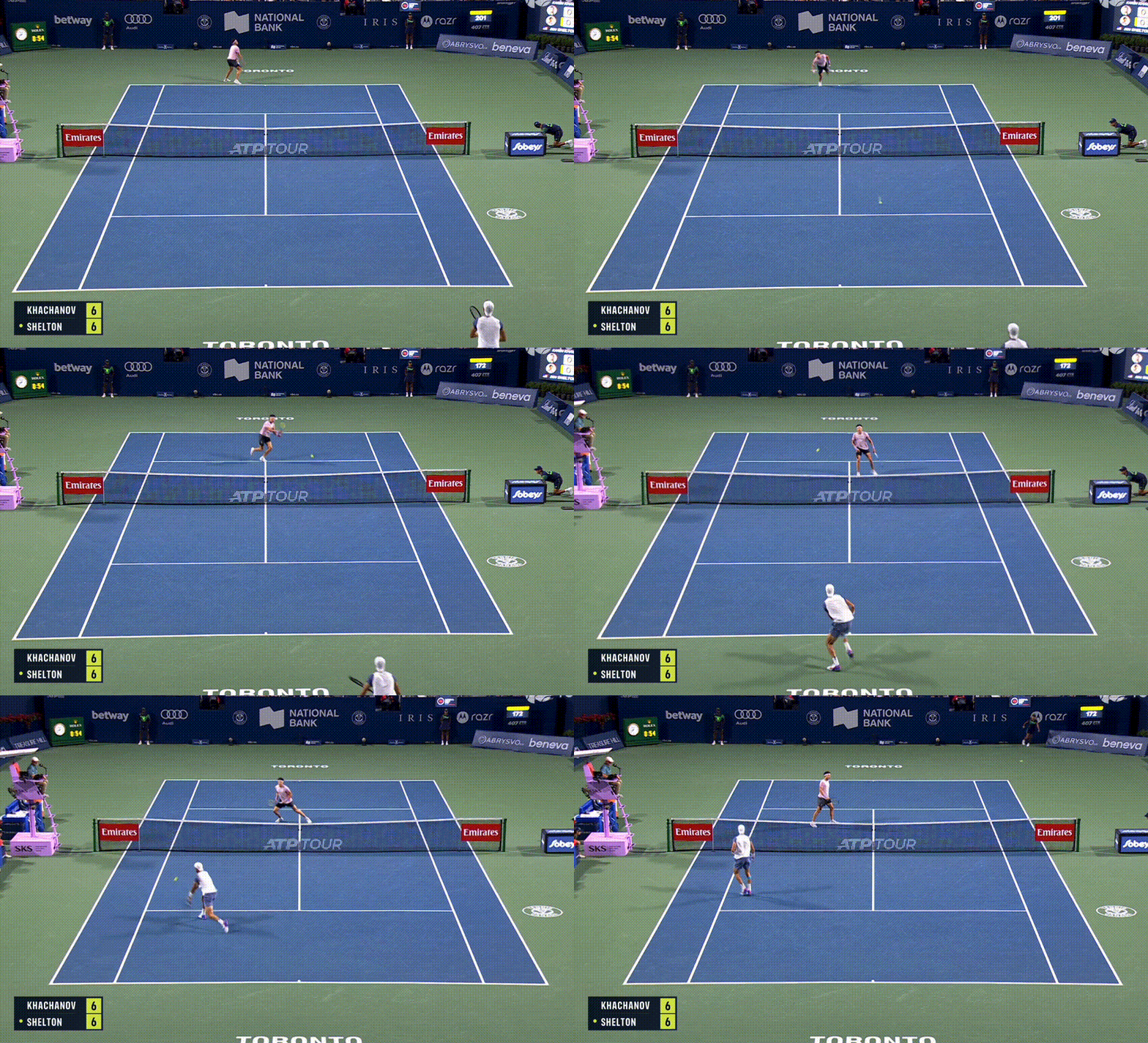
And this needed to be a shorter, more feathered angle forehand drop volley, or hard back behind Khachanov. You just can’t volley hard open court in this era; good movers love that:
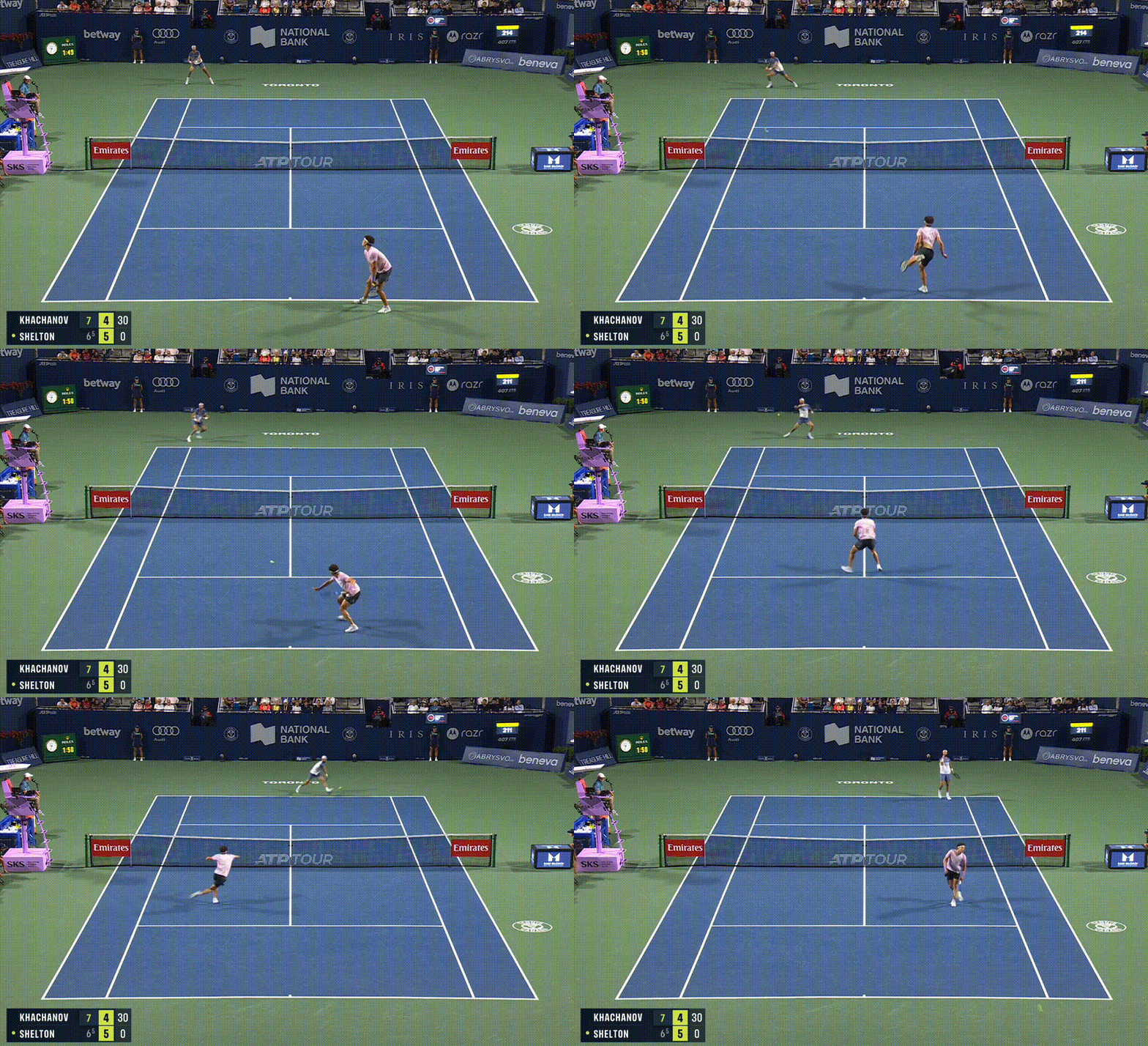
But that net game is where I think Shelton has the biggest upside against the Sinner’s and Alcaraz’s of the world. You want to create less rhythm against those two, and throwing in more net points, more drop shots, and more aggressive returning, along with the 150 mph serves and torched forehands, is where I think Shelton can be most dangerous.
I’ll see you in the comments. HC.