

Shimano’s GRX Di2 RX717 derailleur and shifter set bring it’s wireless electronic shifting to its most affordable price yet. Here’s what’s included, how it compares to RX827, and complete pricing details.
(Photo: Shimano)
Updated December 16, 2025 06:00PM
Shimano says it has just released a new version of Shimano GRX Di2, though calling it “new” requires some asterisks.
The GRX Di2 RX717 “groupset” is now the least-expensive way to get Shimano’s Di2 electronic shifting on a gravel bike, coming in at nearly 1/3rd less expensive than the existing GRX Di2 RX827 groupset. The word groupset is loosely used here, however, as Shimano achieved these lower prices by rebranding existing components from its road and mountain bike component lineups.
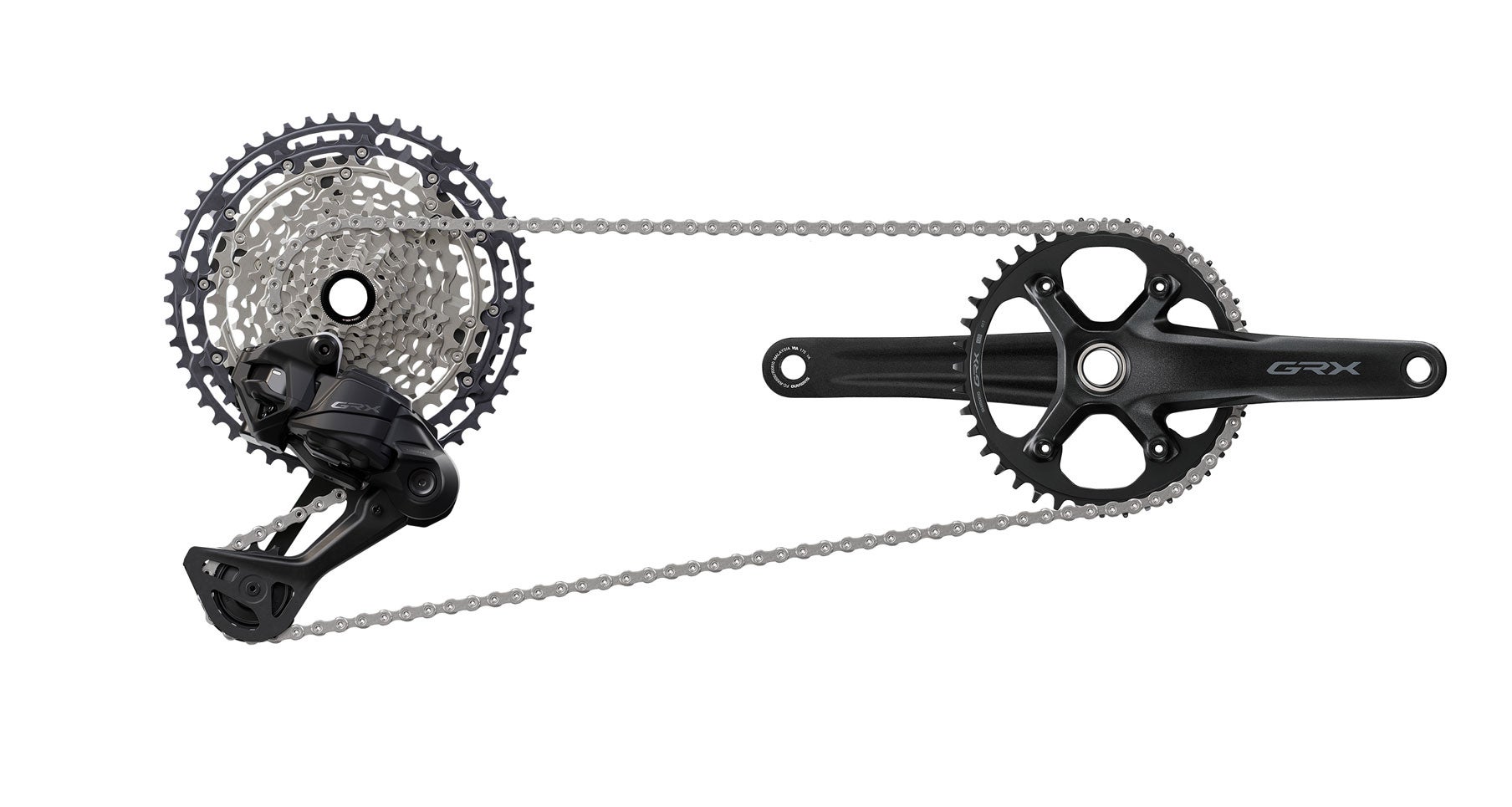
The RX717 rear derailleur shares construction that is awfully similar to a Deore Di2 M6250 mountain bike derailleur, just with GRX graphics. The same goes for the GRX RX715 levers, which look an awful lot like existing Shimano 105 Di2 levers, just with a new finish.
This isn’t the first time Shimano has shared components across groupsets, often to great effect. Here’s what you need to know about Shimano’s latest groupset addition, a set of components we’re sure will show up on future gravel bikes soon enough.
Is this version of Shimano GRX Di2 completely new?
Not really, at least not in the traditional sense of “new.”
The GRX Di2 RX717 isn’t a next-generation update to existing GRX components. It’s a new tier positioned below the existing GRX Di2 RX827 system, creating more options within Shimano’s already-complex gravel lineup.
Shimano now offers nine different sets of GRX dual control levers and eleven different GRX rear derailleurs when you factor in 10-speed, 11-speed, and 12-speed options. There are 1x and 2x chainring configurations, several cassettes, and even crank tiers. That’s before you even consider Shimano CUES, a lower-tier groupset that still manages to impress.
The smattering of components feels confusing from the outside. To be fair, SRAM’s ability to mix and match with its MTB components can make things confusing, too. But the ability to mix and match under a cohesive groupset name means product managers spec’ing complete bikes can offer something for everyone. Budget-conscious builds can get 10-speed mechanical groups, while elites at Big Sugar Gravel can use Shimano Dura-Ace cranks with an XTR rear derailleur and call it a day, too. This newest version of Shimano GRX RX717 slots into the electronic side of that spectrum as the most affordable wireless option, positioned below the RX827 and RX825 Di2 systems but above all the mechanical alternatives.
So, what’s changed?
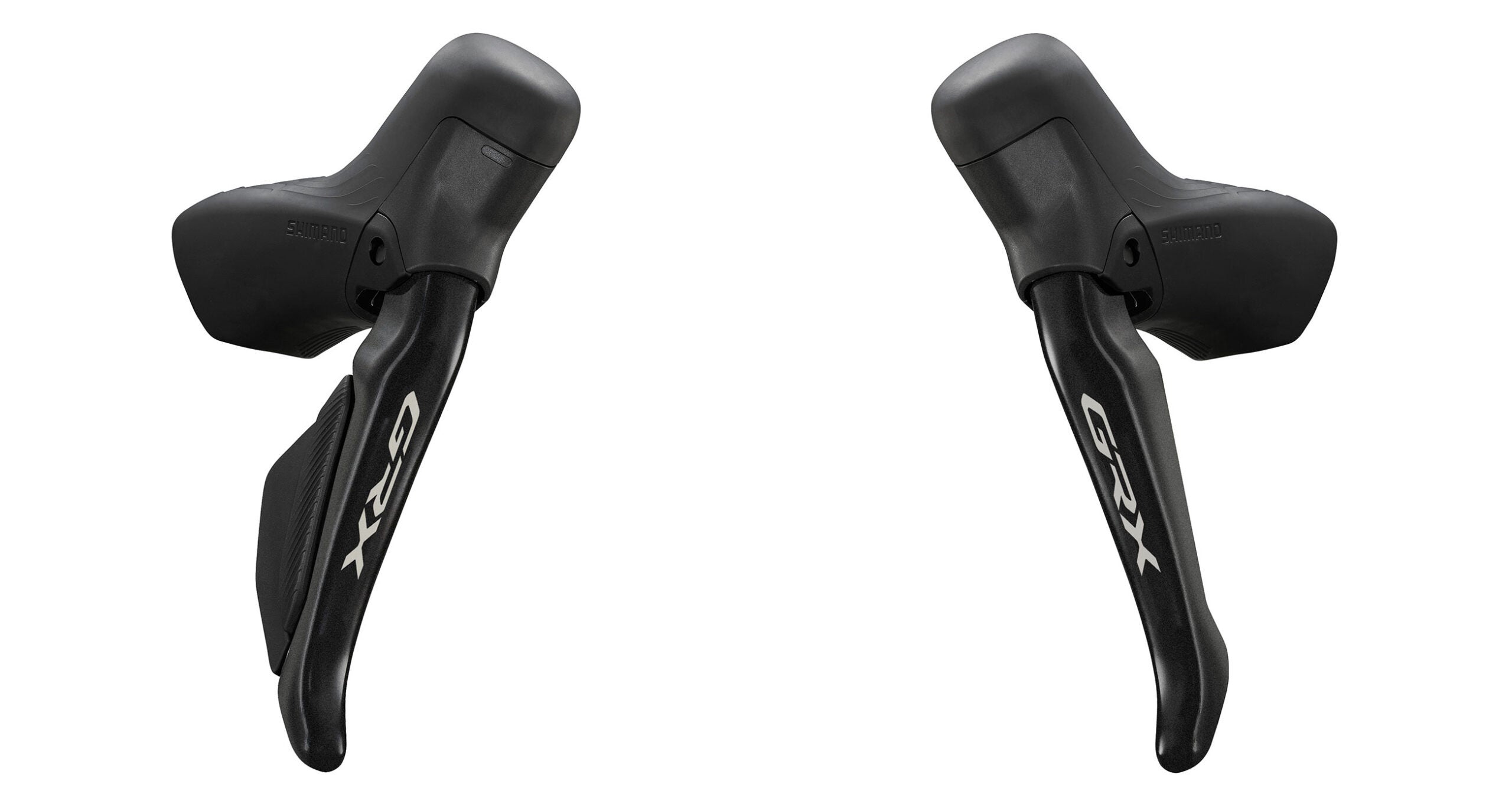
This iteration of Shimano GRX RX717 system consists of three newly branded components: the RD-RX717 rear derailleur, the ST-RX715-R right-hand dual control lever, and two left-hand brake-only lever options (BL-RS717 with GRX branding or BL-RS717-LS with Shimano branding).
The Shimano GRX RD-RX717 rear derailleur features the same automatic impact recovery as the nicer GRX derailleur that returns the derailleur to position after an impact (like a rock strike or a hit). It also gets the same solid pulley wheel construction and compatibility with Shimano’s 10-51T 12-speed cassettes. It also receives the impressive 700 to 1000 km (435 to 620 miles) battery life, which we’ve found to be accurate in our time with Shimano GRX Di2 1x. Besides finish, the key difference you’ll find here is the use of a steel cage, rather than the alloy pulley cage found on GRX Di2 1x.
Then there are the GRX ST-RX715 levers, which are slightly different than Shimano’s 105 Di2 levers. The basic shape, ergonomics, and internals are the same, and they’re similarly compatible with all Shimano 12-speed wireless 1x drivetrains. The buttons are the same, too, at least on the right side, as the left side lever lacks the electronic internals or shift buttons behind the brake lever blades.
Builds, specs, and pricing
Here’s where the RX717 system makes its case: significant cost savings compared to higher-tier Di2 options.
Pricing the derailleur, cassette, and levers against an equivalent Shimano GRX Di2 1x RX827 groupset cuts pricing from to roughly $870 from $1160 for an equivalent RX827/RX825 setup. Riders trying to decide between Shimano GRX Di2 1x RX717 and SRAM Rival XPLR will find the pricing to be surprisingly competitive, too; a Rival XPLR groupset with rotors, cassette, a bottom bracket, and battery costs at least $200 more than an equivalent GRX Di2 1x RX717 groupset.
Will this be Shimano’s ticket back to leading the midrange gravel electronic groupset market? That remains to be seen, but the lower price point and promise of equal performance to its more expensive sibling is a great place to start.
See our first look review of Shimano GRX Di2 1x RX827 here.