
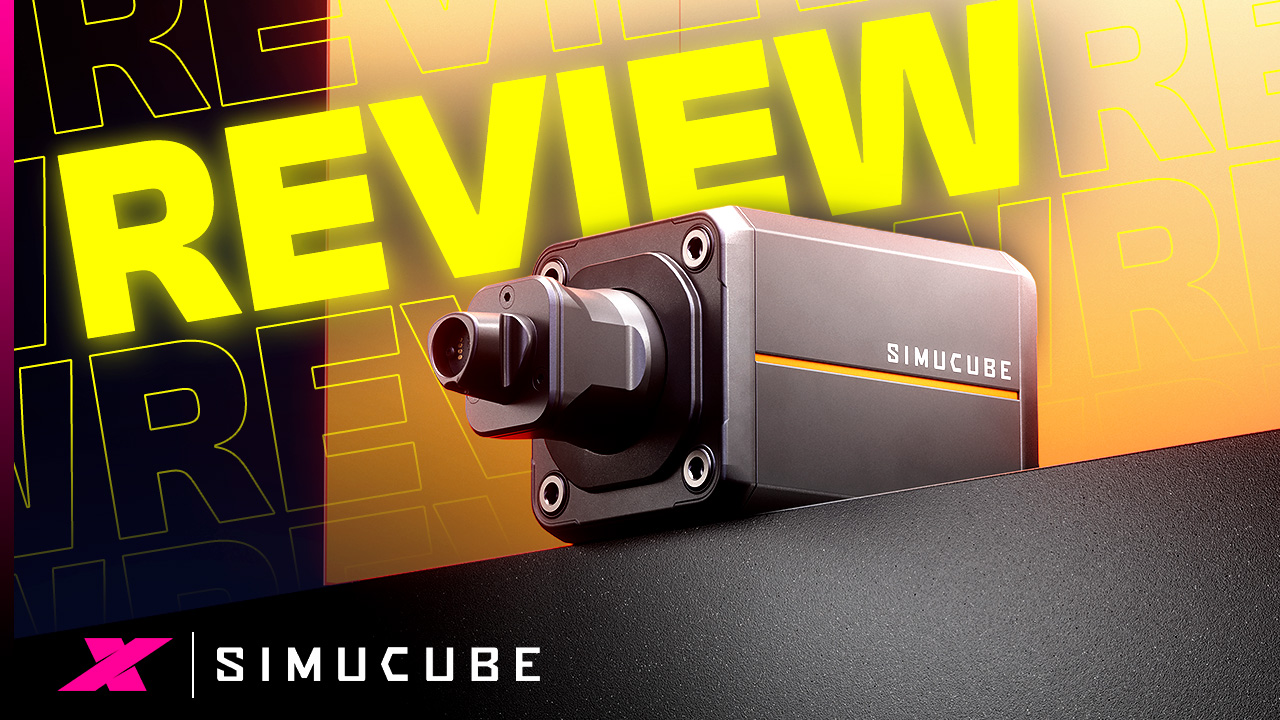
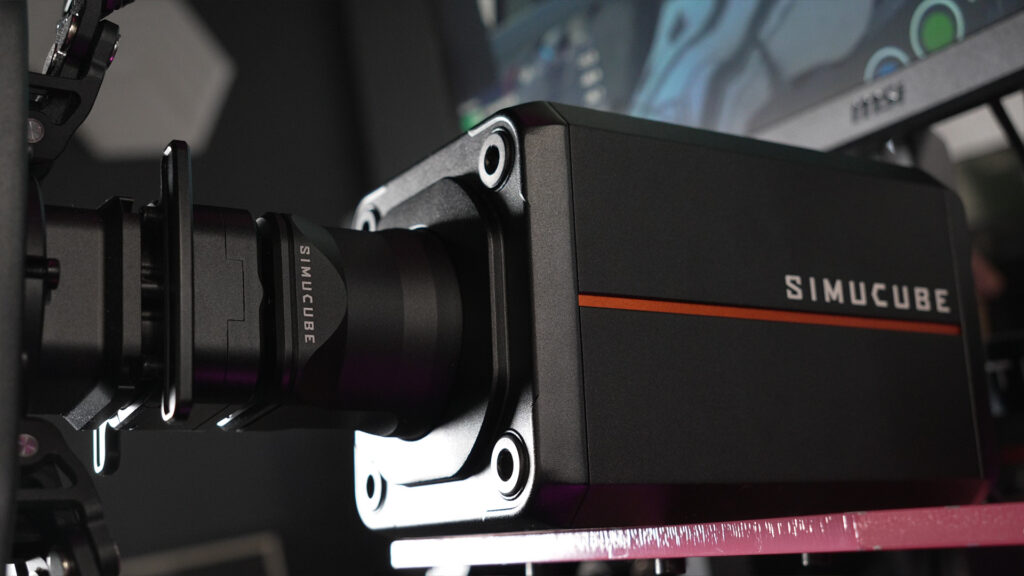
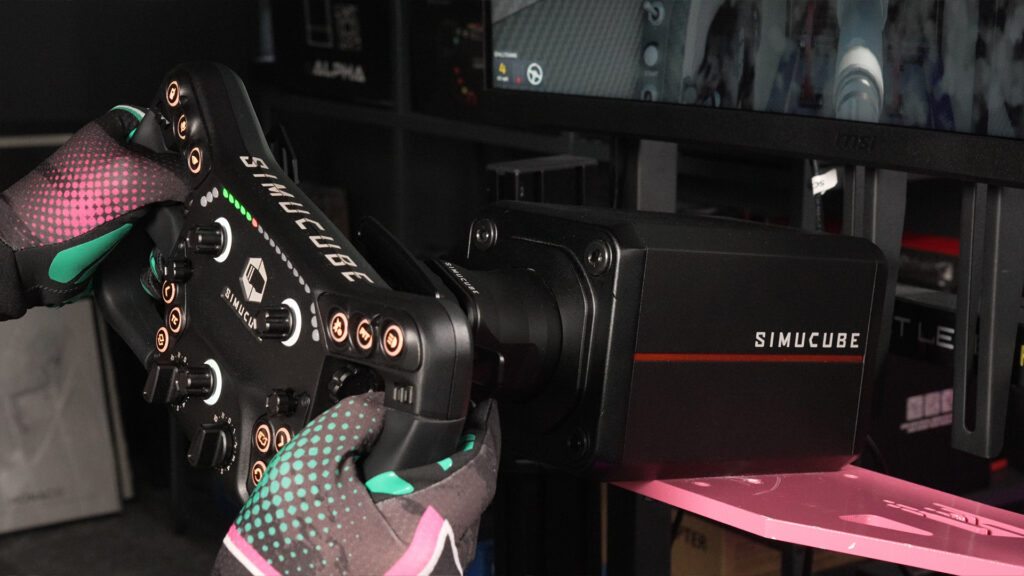
I have been using a Simucube 3 wheelbase (specifically, the Simucube 3 Pro) for weeks now, and fundamentally, it is a step up from a level that already felt close to the sim racing ceiling. But good things in life are rarely quite that simple….
“If you stand still, you go backwards”, or something along those lines. A phrase muttered by pretty much every dominant sports team, from Formula 1 to football. And it’s equally relevant in the business world, where innovation is a necessity not only to reach the top, but also to stay there.
Simucube was already considered to be a standard-setting destination brand in the sim racing space, with 2019’s Simucube 2 direct-drive wheelbase range universally revered.
Rather than resting on its laurels, the Finnish company has decided to forge a new path, one that inevitably comes with risks.
Another common phrase springs to mind here… “If it ain’t broke, don’t fix it”… So let’s see…
Limited carry-over
It is worth noting that some things haven’t changed.
The Simucube 3 range consists of three models, as with the Simucube 2. Despite this review focusing on the mid-tier 25nm Pro model (and when I say mid-tier, I mean mid-tier within a fully premium range), there is also the cheaper and shorter Sport model with 15nm of peak torque, and the more expensive and longer Ultimate model, with 35nm of peak torque, which isn’t available just yet.
The Simucube 3 Sport comes in at between £1,159.00 and £1,242.35, the Simucube 3 Pro is £1,399.00 – £1,482.35 and the Simucube 3 Ultimate ranges from £2,899.00 to £2,982.35 (prices correct as of 7th April 2026).
The Pro is labelled as the ‘best value’ of the three by Simucube itself. And on paper, for your average committed simracer, this checks out. A sustained maximum torque output of 25nm can be achieved, which is more than enough for any sim racing experience, including sensible headroom.
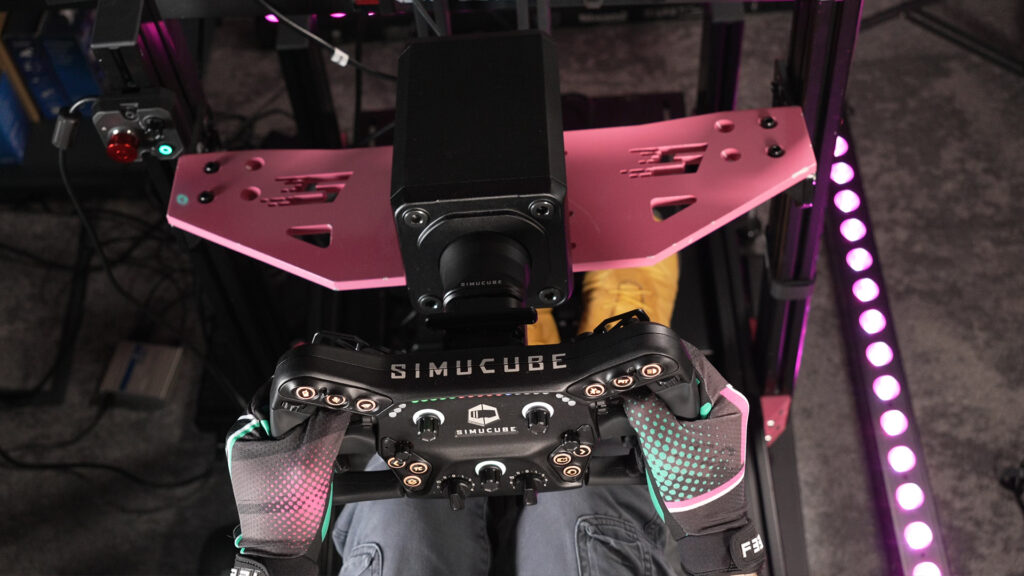
But far more important than a torque figure is how that feedback is controlled and delivered. This is one of the many areas in which Simucube excelled with its previous range, and it strives for even more this time around.
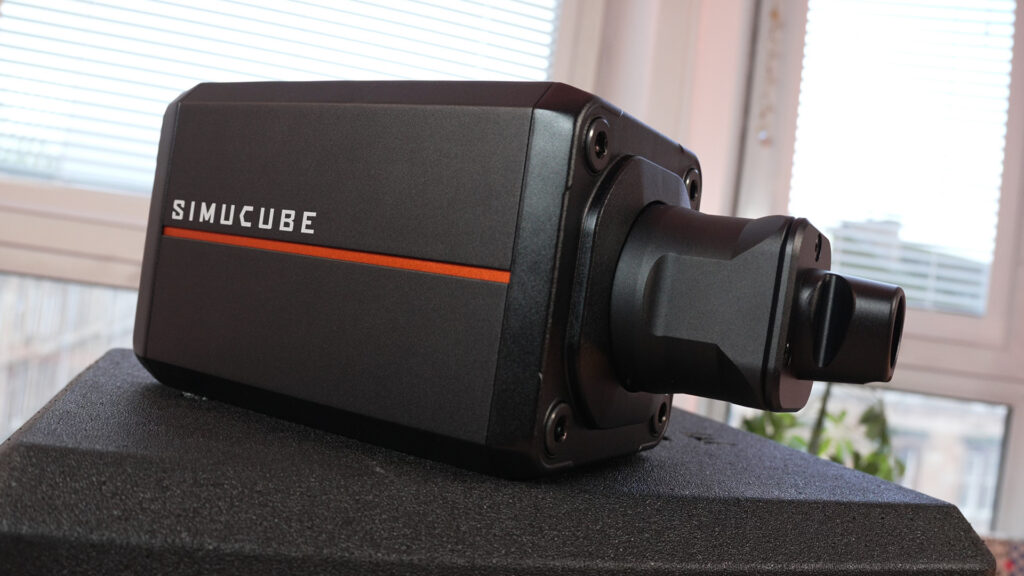
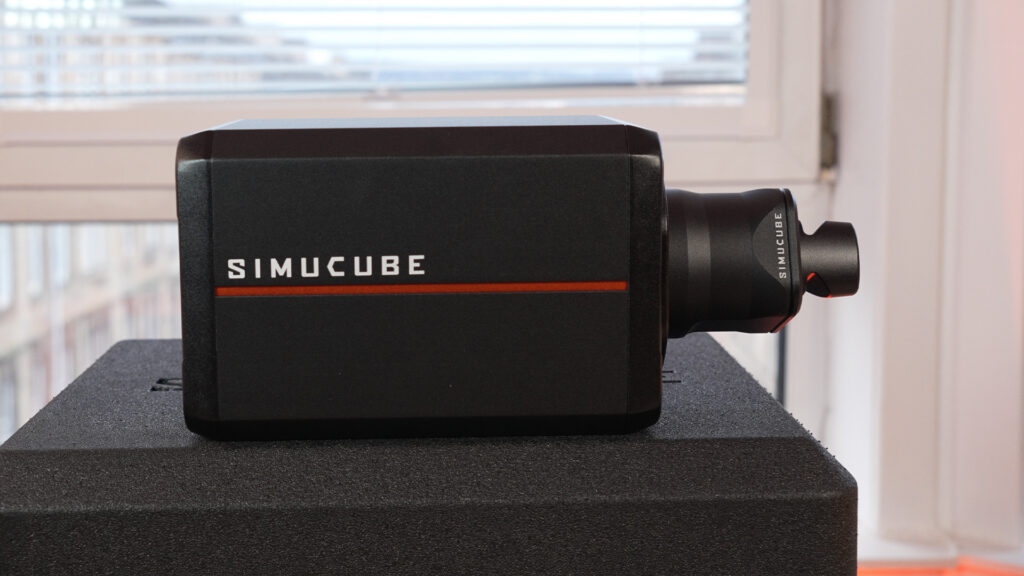
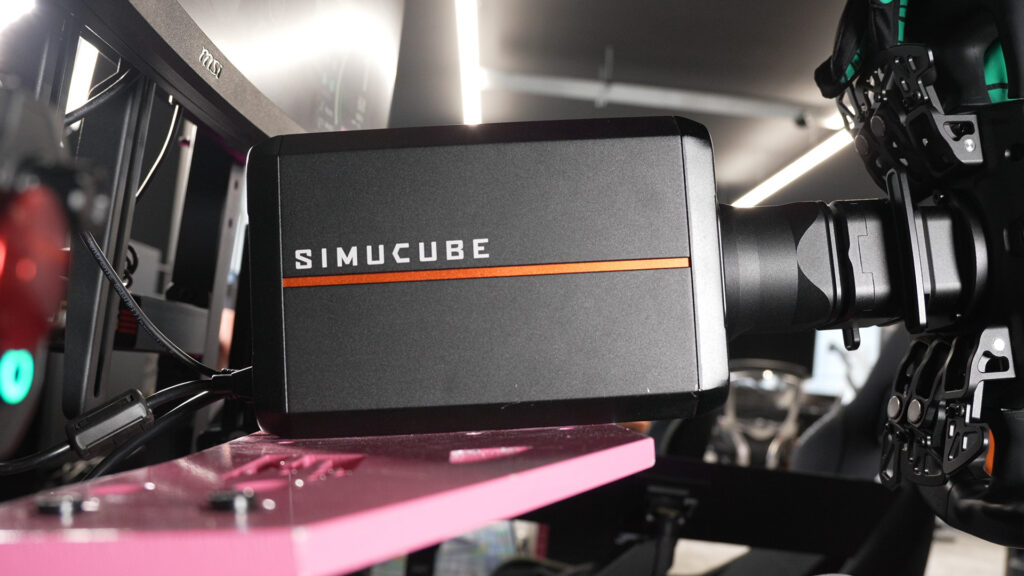
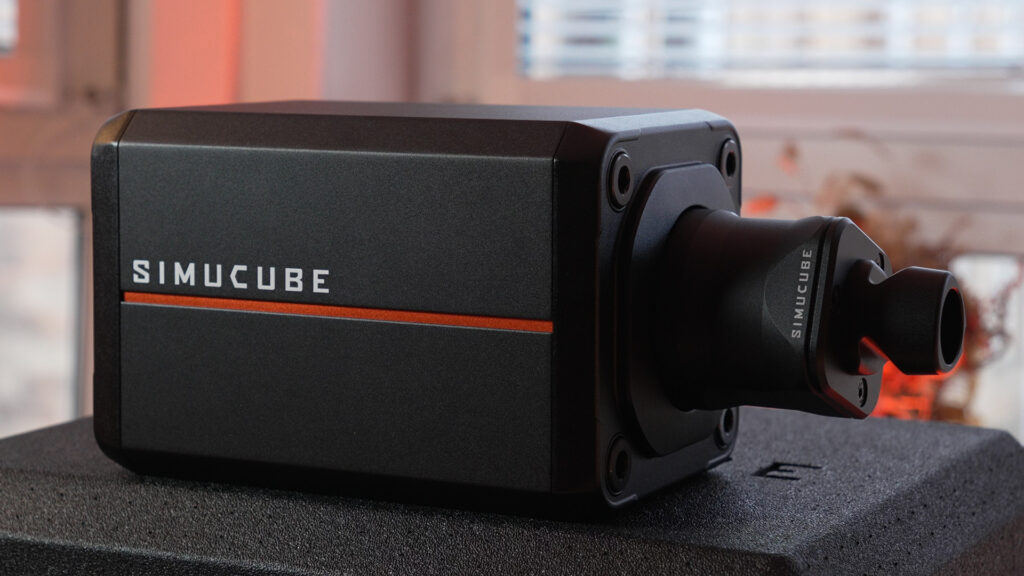
Before diving into this, a couple of admirable tweaks that deserve a mention are the improved, sleeker looks of the base itself and the new T-nut channels on its underside, meaning it can be bottom-mounted as well as front-mounted.
The Important Stuff
While many of the same construction materials are used and the odd component is carried over, there are noticeable differences in how this base performs compared to its predecessor. I never complained about the immediacy or quality of the force feedback, but somehow, the 3 manages to find another gear.
Without overusing any software filters, any feeling is instantaneous. The force feedback doesn’t necessarily feel like a cleaner interpretation of the signal from your chosen sim, but it does feel tangibly more controlled, with an inevitable silky smoothness to it all.
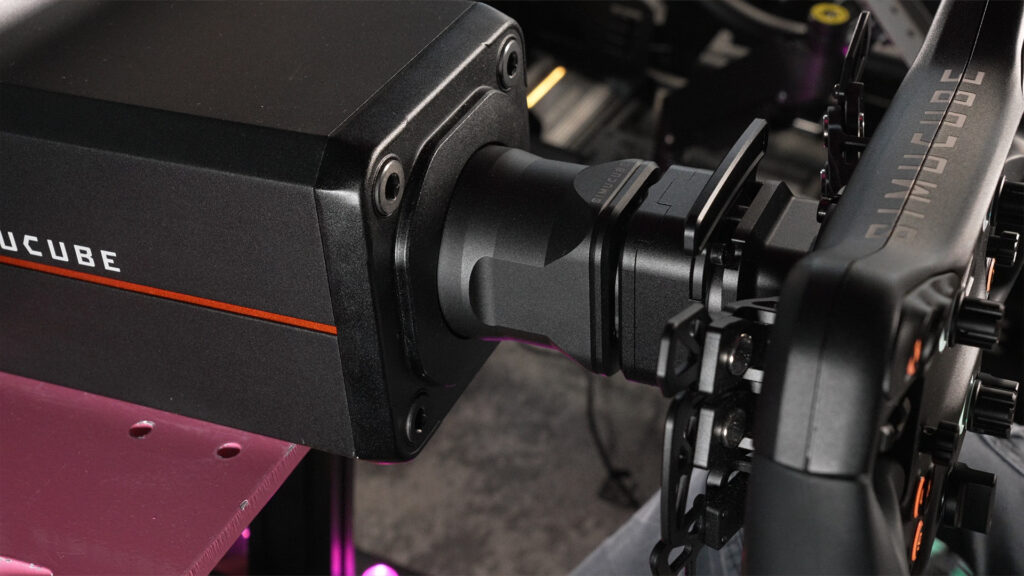
I can confidently say after some back-to-back testing that with the same basic settings and none of the fancy new telemetry-based adjustments (more on that later), the 3 felt subtly more responsive and precise. I think the clearest example of this was in iRacing, where straight out of the box, the immediacy and slickness caught my attention. It’s all pretty nuanced at this level, of course, but yes, you can feel the difference, and there are several design choices you can look to for the ‘why’.
Maybe the smoothness comes from the shape of the new quick-release system, and its “infinite contact patches”. Or maybe it’s the re-engineered control algorithm, which involves unique laser scans for each device and the creation of bespoke digital twins. But the why is sort of irrelevant… What matters is the outcome, and I have no complaints about its performance or feel.
Finding that Feel
Another important element of any direct-drive wheelbase is how easily and successfully you can tweak the feel. After all, feel is subjective; one driver chases the ultimate lap time, needing the important details with none of the fluff, while simultaneously, another driver seeks an enjoyable and immersive experience above all else. And in this department, Simucube 3, via the latest version of its tuner software, is yet again an upgrade versus its predecessor.
On first glance, this may seem a strange statement, as not only do the regular mechanical adjustments all look very similar, but some settings have actually been removed. However, the addition of telemetry force-feedback, compatible with most popular simulations, gives you more transformative options to work with.
Effects include ABS vibrations, enhanced road texture feedback, engine vibrations, gear change jolts and a horrible one called cornering intensity…. Let me be clear – These won’t make you faster. However, with a few subtle boosts to anything but cornering intensity, the base really comes alive. It becomes more apparent when you turn them all off, and all of a sudden, the feedback feels a little bare, and you miss these effects. Again, top-level esports teams around the world will most likely turn all of this stuff off to reduce any chances of additional latency, but…. Not everyone is in a top-level esports team….
I have found myself using them on iRacing for nothing other than a richer driving experience and as a better alternative to the in-game effect options in Assetto Corsa EVO, which, in some cases (most notably road-feel), created unwanted sensations. Weirdly, these were worse with SC3 than they were with SC2 (so perhaps some more game-specific optimisation is required somewhere in the chain). I was therefore grateful to have these new alternative tuning options – I can have all the information without the unpleasant extras.
To be clear, not every game will support these telemetry-based effects, and while some titles such as iRacing, Raceroom and the Assetto Corsa games support them straight out of the box, others like Le Mans Ultimate and Automobilista 2 require some manual setup. It’s all pretty straightforward, thankfully, with compatibility information and clear setup instructions available via Simucube’s online guide.
Perhaps as a direct consequence of these new telemetry sliders, I do feel it takes a bit of time to find that sweet spot for each sim. Profiles from SC2 don’t carry over for instance, but generally speaking, a new wheelbase with lots of adjustment options will take time to maximise regardless. It’s not a complaint, just an observation.
But the AC EVO example I mentioned earlier – the strange in-game road feel effects, which are also apparent with the original Assetto Corsa, do highlight that when it comes to optimisation, improvements can still be made. It just takes a bit of trial and error at times to find where the unwanted sensation is coming from and rectify it.
On a simpler note, it would be remiss of me not to praise the new control box. It does need to be mounted within arm’s reach, as it contains the emergency stop and the power switch for your wheelbase, but you can then benefit from the new adjustment dial.
This not only allows you to tweak your maximum torque on the fly but also lets you view insightful live graphs of your pedal inputs and force feedback readings.
Buzz LightBridge
Arguably, the most important innovations here are the shape of a small plastic box (one that has already existed for more than two years) and a new technology that sounds like a knock-off cartoon superhero.
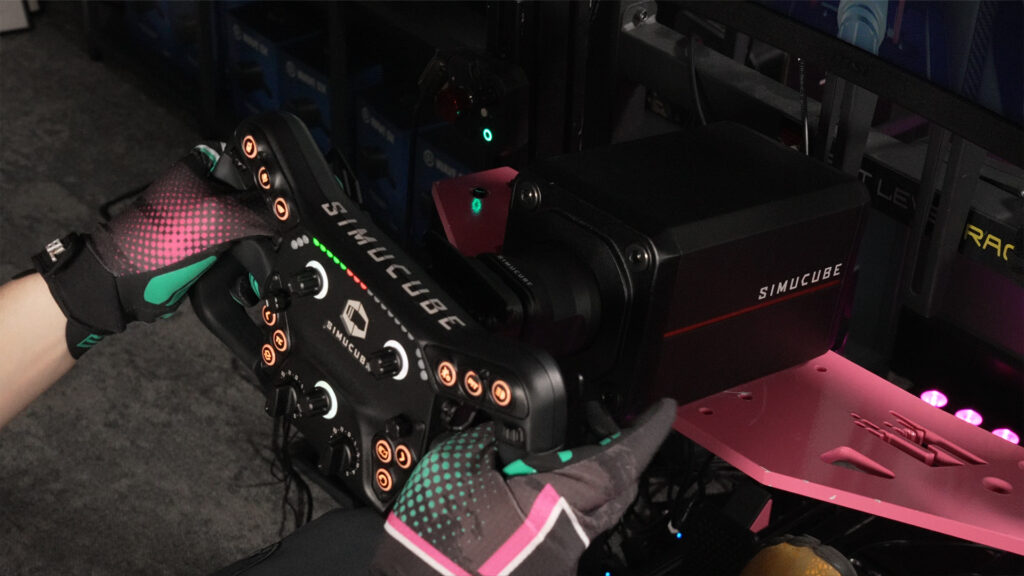
LightBridge technology in the new quick-release system can transfer both power and data between the Simucube 3 base and compatible steering wheels, meaning that these latest steering wheels don’t need any cables or batteries. The science behind it, involving inward-facing infrared lighting and magnetic fields, feels like engineering artistry.
Having the option to take battery-related fears and maintenance out of the equation can only be a good thing, as can reducing cables wherever possible, given the ever-increasing complexity of home sim racing setups. Hold that last thought until a bit later on…
The box, coined Simucube Link Hub (not to be confused with the new Simucube Link Quick Release), is Simucube’s answer to a USB problem it clearly felt needed solving.
Regardless of how many ActivePedals you have on your rig, Simucube devices from 2024 onwards only require one USB cable connected to the PC, which comes from the link hub itself. Instead, these devices connect directly to a powered Ethernet switch via RJ45 cables, which then connect to the link hub, all in the name of eliminating the risk of electromagnetic interference (EMI). If that all sounds a bit untidy and cable-heavy, it is. Sorry LightBridge!
I now have cables running from a control box into a base, the base to a power plug socket, the base to an ethernet switch, the ethernet switch to a power socket, the ethernet switch to an ActivePedal, the ActivePedal to a power socket, the ethernet switch to the Simucube link box, and the Simucube link box to the pc via USB.
It’s not as if Simucube is the only manufacturer trying to eliminate EMI, either; others are just taking vastly different approaches. I am not an engineer, and I don’t know which approach works best. I just know that I haven’t had any EMI issues yet, and this is a lot of cables.
At What Cost?
The cost of eliminating EMI doesn’t end there; these mostly mandatory parts (depending on your setup) add a three-figure sum to your total expenditure.
You buy the base, but you will also need to buy a link hub. And if you add another Simucube product in the future, like an ActivePedal, you will also need an Ethernet switch to increase your port count. Then, it’s steering wheels. You need a steering wheel, and while the new quick-release is beautiful, it is also unique.
So, unless you buy a new wheel that supports this system from the outset, you will need to buy a wheel-side adapter for your existing wheel. This is noticeably more expensive than many other QR solutions as it stands, but your older wheel won’t magically gain any new wireless benefits it didn’t already have.
The good news is that third-party steering wheel manufacturers are already developing compatible wheels for this new base, so there are options outside of Simucube’s in-house ecosystem.
And I should also mention, Simucube will soon launch a base-side adapter, giving your Simucube 3 a Simucube 2-style quick-release system. So if you already have multiple wheels and want a cheaper quick-release option, you can do this instead. But you will, of course, also relinquish any benefits from the polygon shape and the Lightbridge technology.
It very much depends on whether this is a first-time direct-drive purchase for you or an upgrade from an existing setup of a similar ilk, but this future-proofing innovation minefield clearly comes at a price, which floats well beyond the base alone.
But I will acknowledge that Simucube has never positioned itself as a ‘budget’ ecosystem, despite offering a range of bases. It has always been uncompromising in that regard.

Aside from cost, any new technology platform comes with a layer of risk. It might improve reliability and mitigate risk in the long run, but that doesn’t mean there haven’t been unforeseen teething troubles.
To be clear, our review unit was sent out before the public launch of this wheelbase, and every issue I encountered was solved by Simucube and permanently rectified at factory level for release. But I think it’s fair to say that the launch itself felt rushed.
Some of it was hardware-related, some of it was tuner software-related, but I had issues with the control box, force-feedback inconsistencies and the new sleep mode. Simucube support was fantastic, with all issues explained at a technical level and resolved through software updates and replacement parts, which have been integrated since launch.
Closing Thoughts
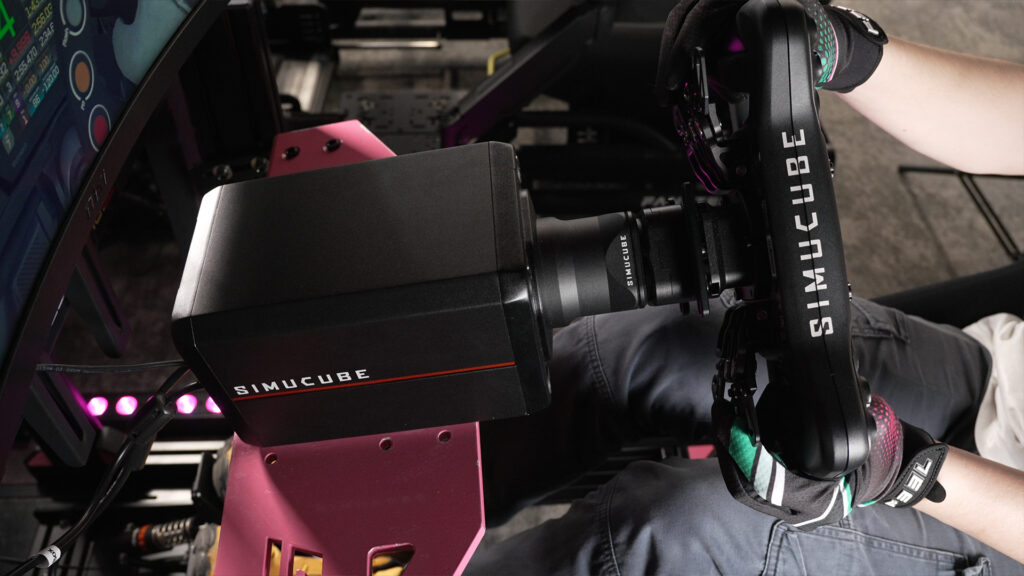
Simucube appears to have taken a risk here. Fundamentally, this is a top-tier wheelbase that feels amazing to use and improves on something I never thought needed improvement. Of course, the reality is that there is always room for improvement, so the Finns deserve kudos for taking an innovative, but risky, approach in their new product line.
But this much innovation can also pose a risk to potential buyers. Perhaps time will tell whether this was a platinum-selling, genre-defining success or a misunderstood experimental third album that was too clever for its own good.
For anyone who only cares about the here and now and can afford to become an early adopter, the driving experience won’t disappoint.