
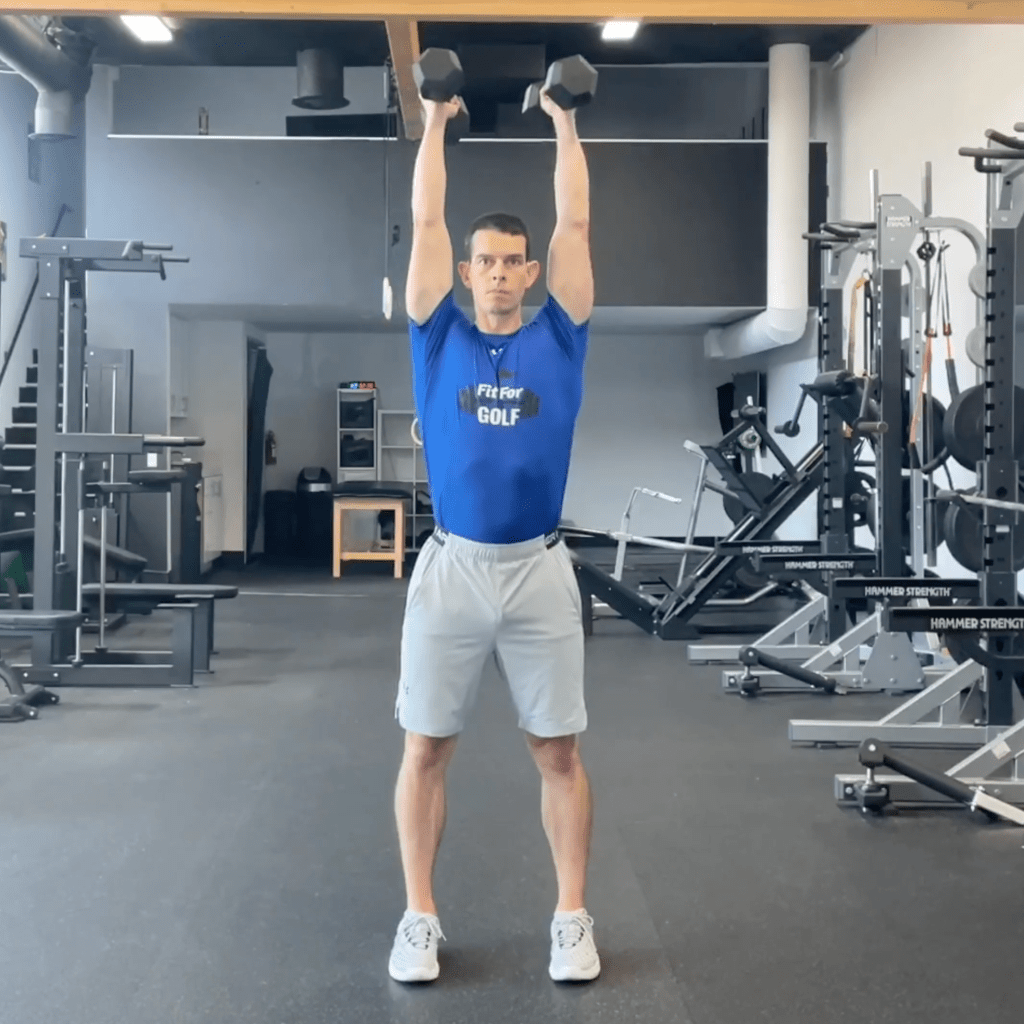
This short article is derived from Strength Training For Golf – The Fit For Golf Guide That article goes into detail on everything you need to know about strength training for golf. In this shorter piece, I am providing some insight into strength training and injury risk, and some other common myths.
A lot of people, especially seniors, worry about hurting themselves with weight training. It’s understandable. Strength training has had a reputation for being risky or hard on the body for decades. The problem is that people tend to focus on the small risks and forget to weigh them against the enormous benefits. They also forget that people get injured doing the most ordinary things: getting out of a chair, gardening, picking up kids, or swinging a golf club. Nobody tells them to stop doing those.
For some reason, there is still a stigma around lifting weights, especially “heavy” weights. You’ll often hear that it’s bad for your joints, that it causes “wear and tear” (utterly unfounded claim), or that the risk outweighs the reward. The truth is, there’s no good data to support those claims. When strength training is done with an appropriate build-up, controlled technique, and sensible programming, the injury risk is extremely low, even in older adults.
Data on injury rates shows strength training to be one of the safest forms of exercise available.
Competitive strength athletes (bodybuilding, powerlifting, Olympic weightlifting, and strongman): 1–4 injuries per 1,000 training hours (Keogh & Winwood, 2017). These data come from athletes training at high intensities for competition, often pushing physical limits and handling very heavy loads.
Recreational lifters (regular adults training for health and fitness, not competition): 0.31 injuries per 1,000 hours for men, and 0.05 for women (Aasa et al., 2021). Participants trained at least twice per week for six months or more, mostly using standard gym-based resistance training with free weights, machines, and functional equipment.
For context:
- Golf practice and play: 1–6 per 1,000 hours (Fradkin et al., 2007).
- Running: 2–12 per 1,000 hours (Videbæk et al., 2015).
- Pickleball: 3–6 per 1,000 hours (Merriman et al., 2023).
- Yoga / Pilates: 2–6 per 1,000 hours (Cramer et al., 2019).
Even at the higher estimates, strength training remains among the safest physical activities you can do.