
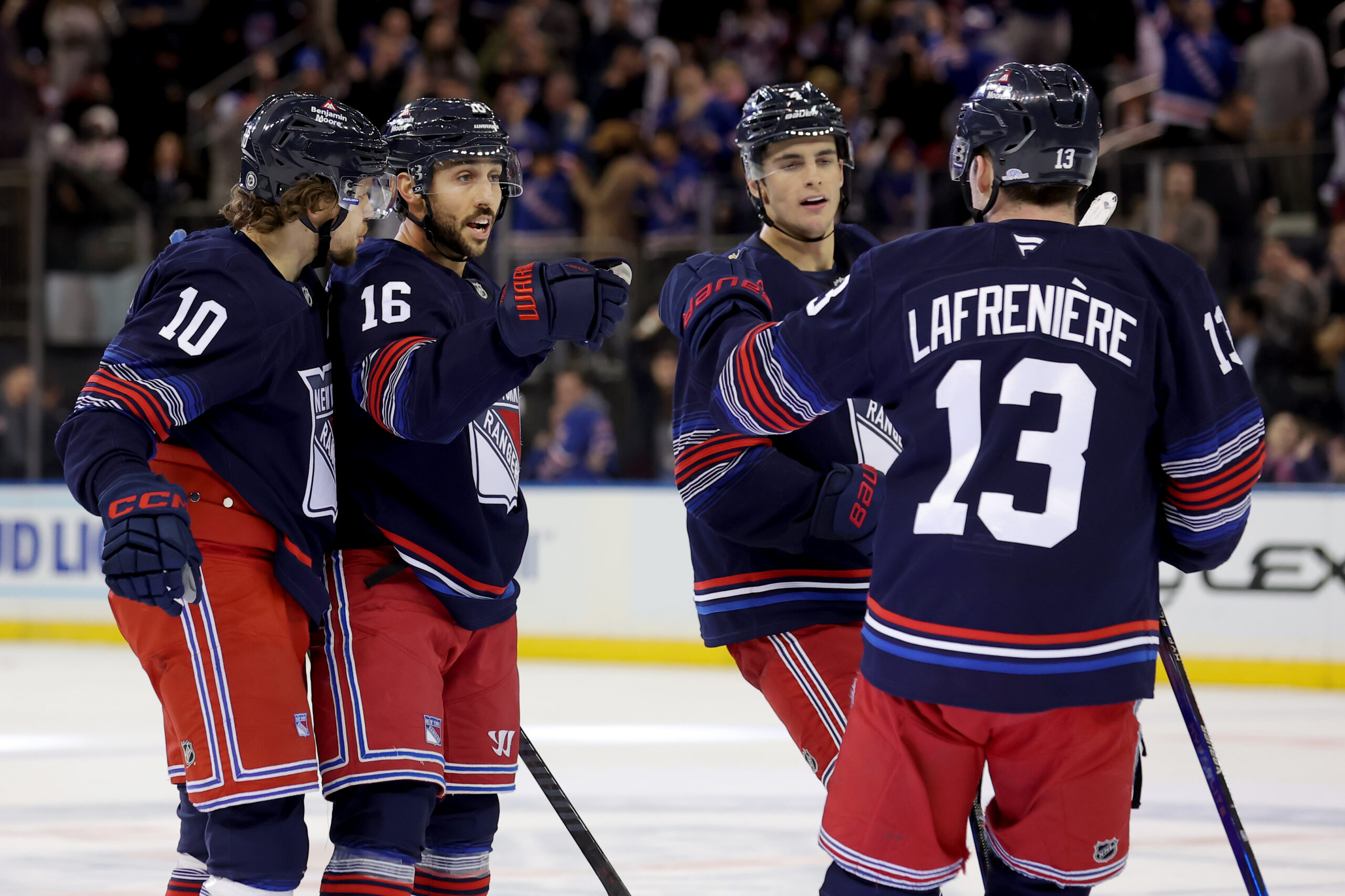
With the dust settled on the Artemi Panarin trade and the saga now behind us, it has become clear that he was never realistically going to return the kind of retool-caliber assets the Rangers needed, largely because his no-movement clause limited both leverage and potential destinations. I never believed Panarin was going to ignite the retool, as he and his agent effectively had Chris Drury over a barrel, and I was clear about this on X (formerly Twitter).. The true ignition to this reset will be trading Lafreniere and/or Schneider.
That reality brings the focus squarely to what comes next. With the Panarin chapter closed, we can finally exhale and focus on potentially trading this duo, among other decisions that will determine whether this reset becomes a quick turn rather than a prolonged transition. Somewhat surprisingly, trading Lafreniere and Schneider is the clearest path toward that outcome, as value around the league could better translate into the stylistic fit this next version of the Mike Sullivan-led Rangers requires.
Trading Lafreniere and Schneider sounds counterintuitive
On the surface, trading two young players in a retool seems odd. Lafreniere remains a former first-overall pick who continues to show flashes of high-end offensive creativity, while Schneider has developed into a physical, reliable defenseman with room to grow. Teams rarely trade players like that unless the return meaningfully matches a larger vision.
Lafreniere’s perceived trade value is unlikely to be as low as some fans believe. Former top picks early in their careers carry intrigue that front offices find difficult to ignore. His improving five-on-five production, willingness to engage physically, and ability to contribute in scoring chances all suggest untapped upside remains. For a rebuilding or middle-tier team searching for a potential top-line winger, Lafreniere could headline a package capable of bringing back younger, forecheck-oriented forwards who better match Sullivan’s system.
Schneider’s value comes from a different place but may be just as meaningful. Right-shot defensemen with size, edge, and the ability to handle significant minutes are consistently in demand across the NHL. Schneider projects as the type of stay-at-home player coaches trust in heavy situations, which raises his appeal to contenders and rebuilders alike. In trade discussions, that profile could translate into a return featuring speed on the wings, transition-driving defensive prospects, or premium draft capital that allows the Rangers to reshape their depth more deliberately.
Sometimes, it’s about system fit more than performance
Sullivan’s identity has always revolved around pressure, pace, and commitment away from the puck. His preferred 2-1-2 forecheck demands relentless forwards who close gaps quickly, win battles, and sustain offensive-zone time, supported by defensemen who can move pucks efficiently to maintain pressure. System fit, in this context, matters just as much as raw talent.
The Rangers’ current roster construction does not fully reflect that style. Too often, the attack has leaned on perimeter skill, transition play, and power-play production rather than consistent five-on-five pressure. To evolve into a heavier, more tenacious group, management needs to convert individual upside into multiple system-friendly pieces. Lafrenière and Schneider are the only realistic trade chips capable of bringing back that kind of return.
There is also the question of whether alternative trade pieces would meaningfully shift the roster. Vincent Trocheck’s name has surfaced in speculation, but the actual market may be thinner than rumor suggests. Much of the connection to Minnesota appears rooted less in sourced reporting and more in media narrative tied to Bill Guerin’s U.S. roster construction preferences. Trocheck is also not the only center potentially available, with Nazem Kadri, Ryan O’Reilly, Steven Stamkos, and others circulating in league chatter, further diluting demand.
The market matters
Overall, this really is not an argument about past trades or historical comparisons. Trading Lafreniere and Schneider is about defining a market, which is shaped by timing, leverage, and available assets. Lafreniere’s pedigree and production still carry meaningful league-wide appeal, while Schneider’s age, physicality, and handedness make him attractive to teams seeking long-term blue-line stability.
Packaging one or both in the right deal could yield younger forwards built for forechecking pressure, quicker transition defensemen, or high-end prospects aligned with Sullivan’s approach.
Of course not trading Lafreniere and Schneider is certainly defensible. Both players could still become foundational contributors in New York. But standing still carries its own risk when players may be plateauing due to the pressure in this market. The Eastern Conference continues to get faster and deeper, and the Rangers cannot solely rely on internal growth when their identity and organizational goals are shifting.
Successful retools are rarely comfortable. They require difficult evaluations and a willingness to move good players in pursuit of a better overall fit. If the Rangers truly intend to reshape themselves into a relentless, forecheck-driven contender, the most logical path to acquiring the right young talent may ultimately run through trading Lafrenière and Schneider.