
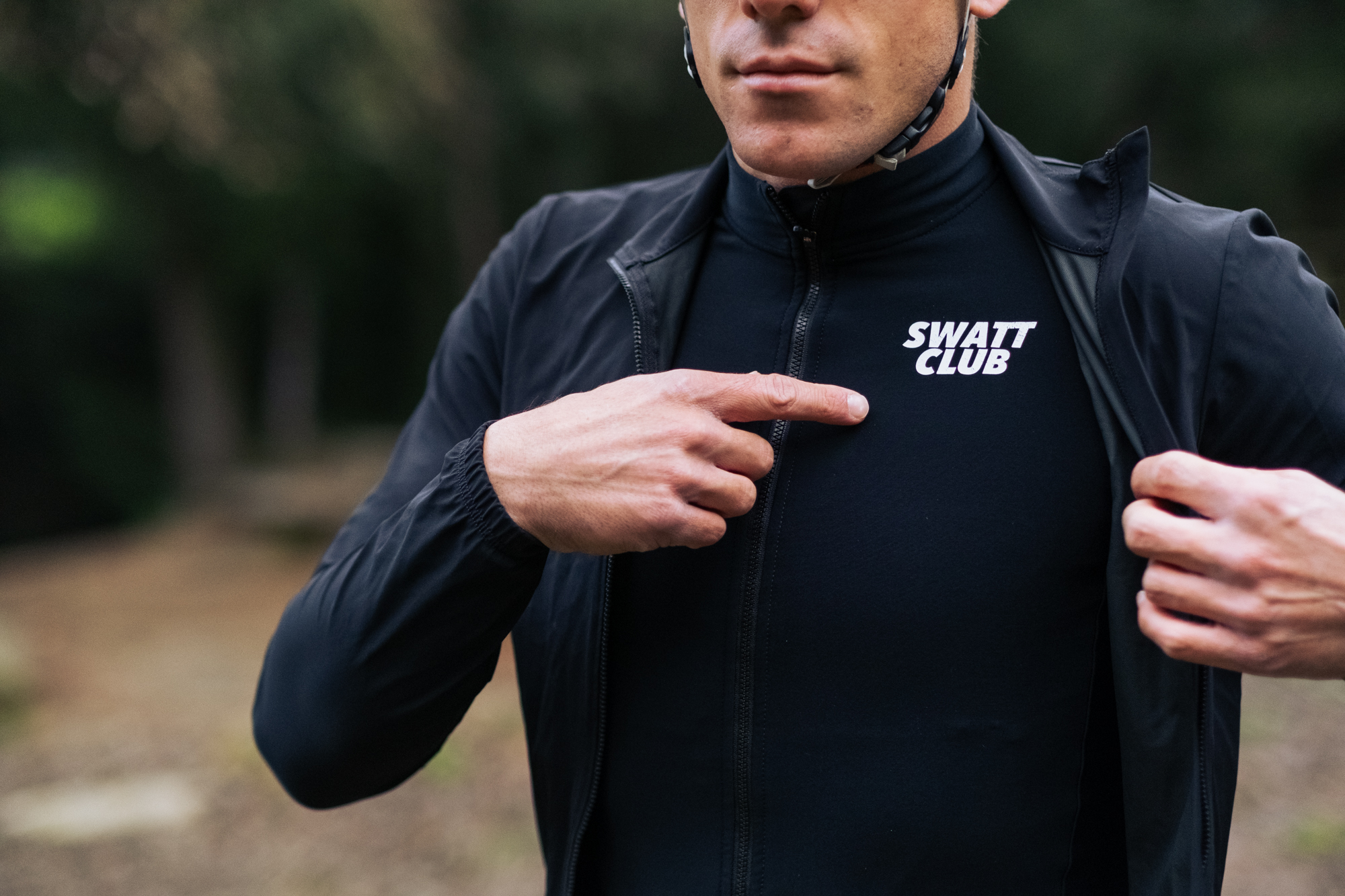
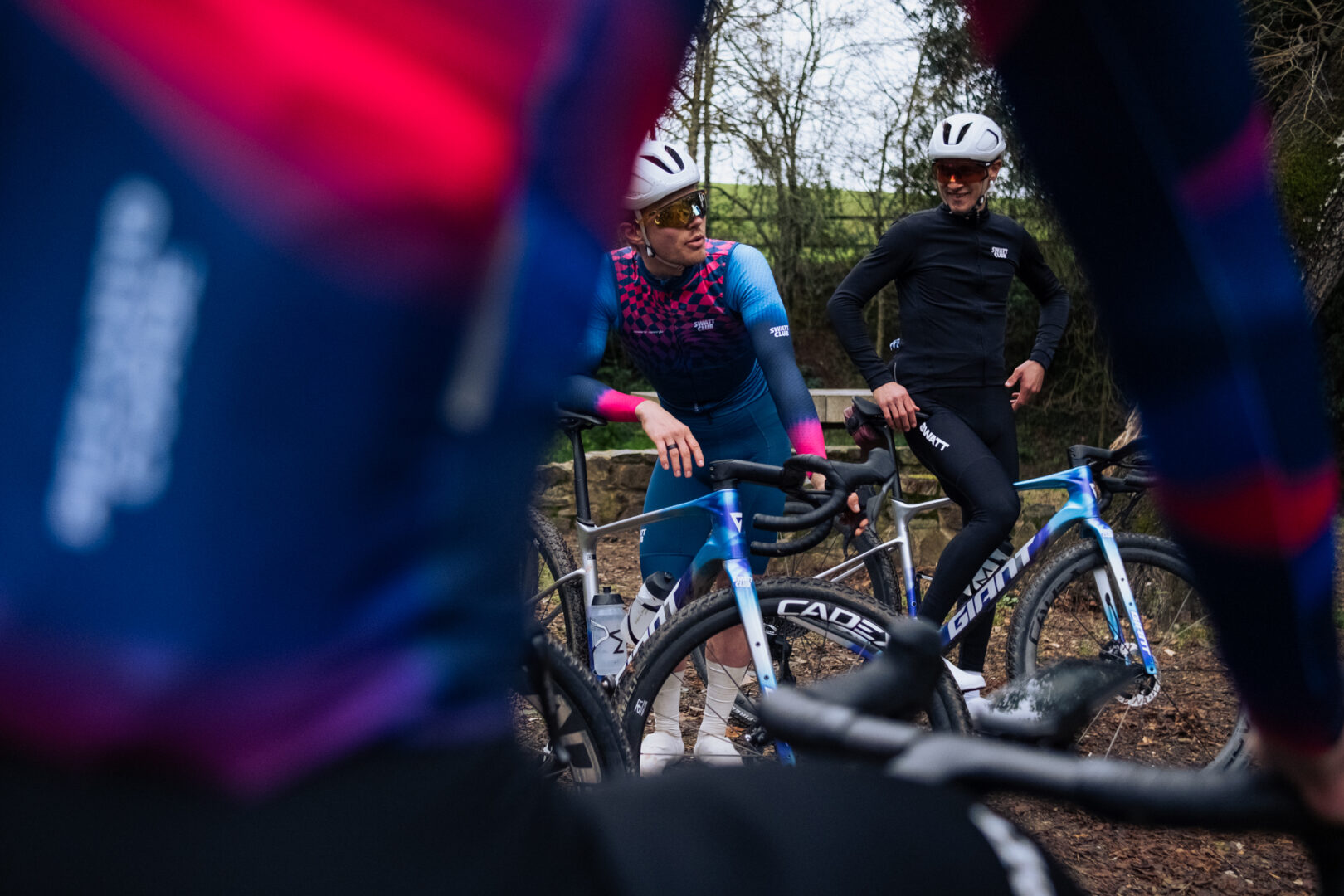
On the eve of Santa Vall, we agreed with Swatt Club to meet in the morning for a photo shoot. It was cold and rainy, so we were not sure any of them would show up. Shortly after, up to six riders appeared and we shared some laughs while creating the necessary content for this article.
It was another proof that the vibe at Swatt Club is different. Cool people that enjoy riding their bikes, and that by being very good at it, use the team as a platform to reach the professional peloton.
Unusual beginings
Cycling teams are usually born from sponsors, budgets, and sporting projects. The story of the Swatt Club started somewhere far less conventional: on a ski lift.
In 2013, during the Italian youth alpine skiing championships, a group of friends—coming from a background in alpine skiing and outdoor sports—had an idea. They wanted to tell stories about sport differently. The result was a blog called Solowattaggio, a name that would eventually give birth to one of cycling’s most unusual teams.
At first, it was just storytelling, documenting the culture of endurance sports. But the competitive instinct never really left the founders. Soon they were also riding, traveling the world to participate in amateur events such as the GFNY New York City and gran fondos across Europe and the Middle East.
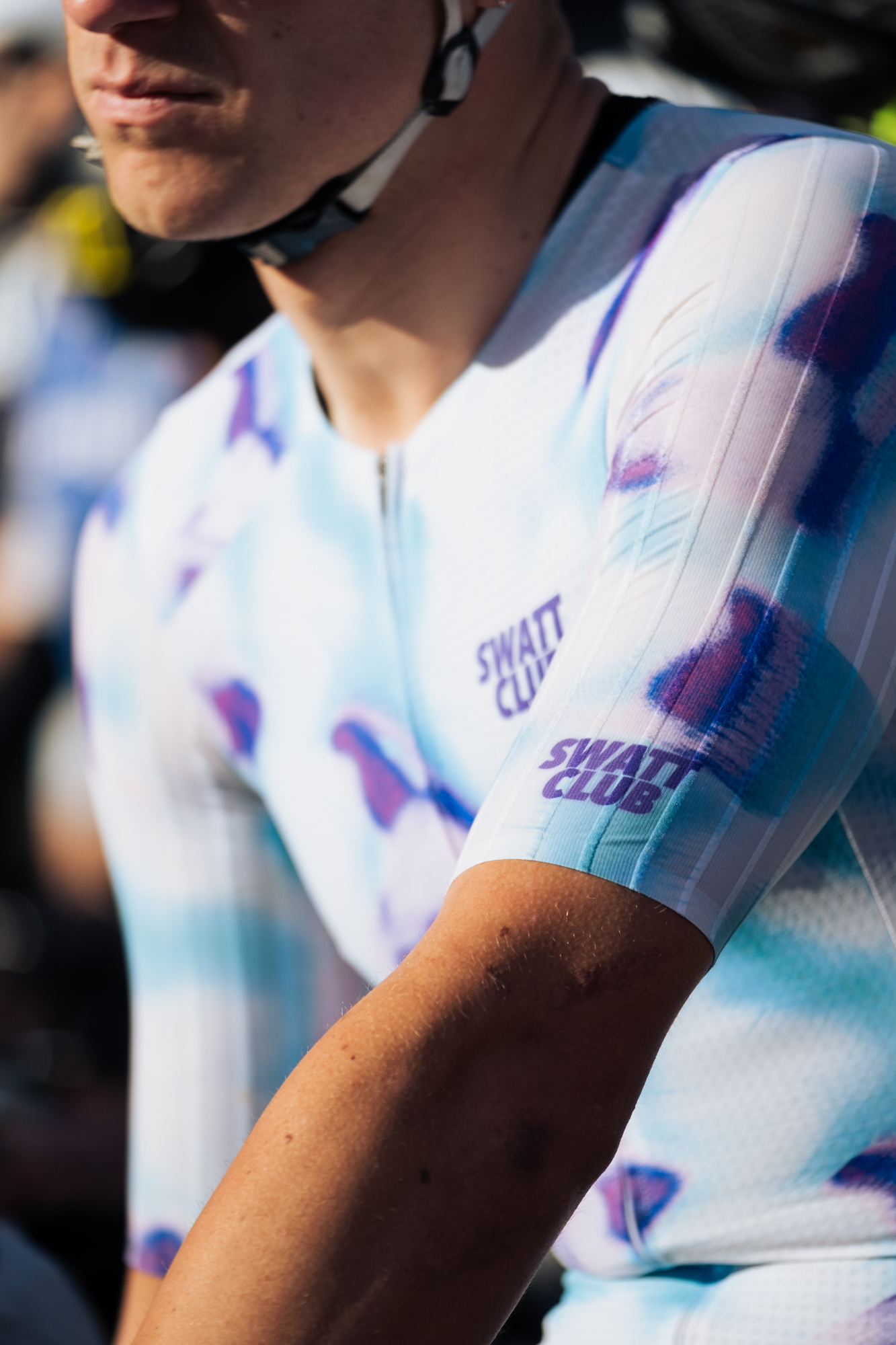
By 2017, the idea evolved into something more concrete: the creation of the Swatt Club as an amateur cycling association. The riders raced in clean white skinsuits without visible sponsors—a visual statement as much as a practical decision. Freedom was the core philosophy: freedom of calendar, freedom of expression, and freedom from the rigid hierarchies that dominate traditional cycling structures.
What began as a small collective slowly turned into a movement.
A club before a team
Today, Swatt Club counts around 1,100 members, but describing it simply as a cycling team misses the point. Inside the club there are smaller communities of amateur riders who coordinate their calendars around major events, especially Gran Fondos, which for years formed the backbone of the project. Riders might share training camps, travel together to races, and show up wearing the same distinctive kit.
The structure remains deliberately loose. Becoming a member gives riders access to a racing license and discounts on the club kit, but participation is voluntary rather than prescriptive. It’s less a team in the traditional sense than a large ecosystem orbiting around cycling. And it works, as every time we are in Italy we see a lot of people wearing Swatt Club gear.
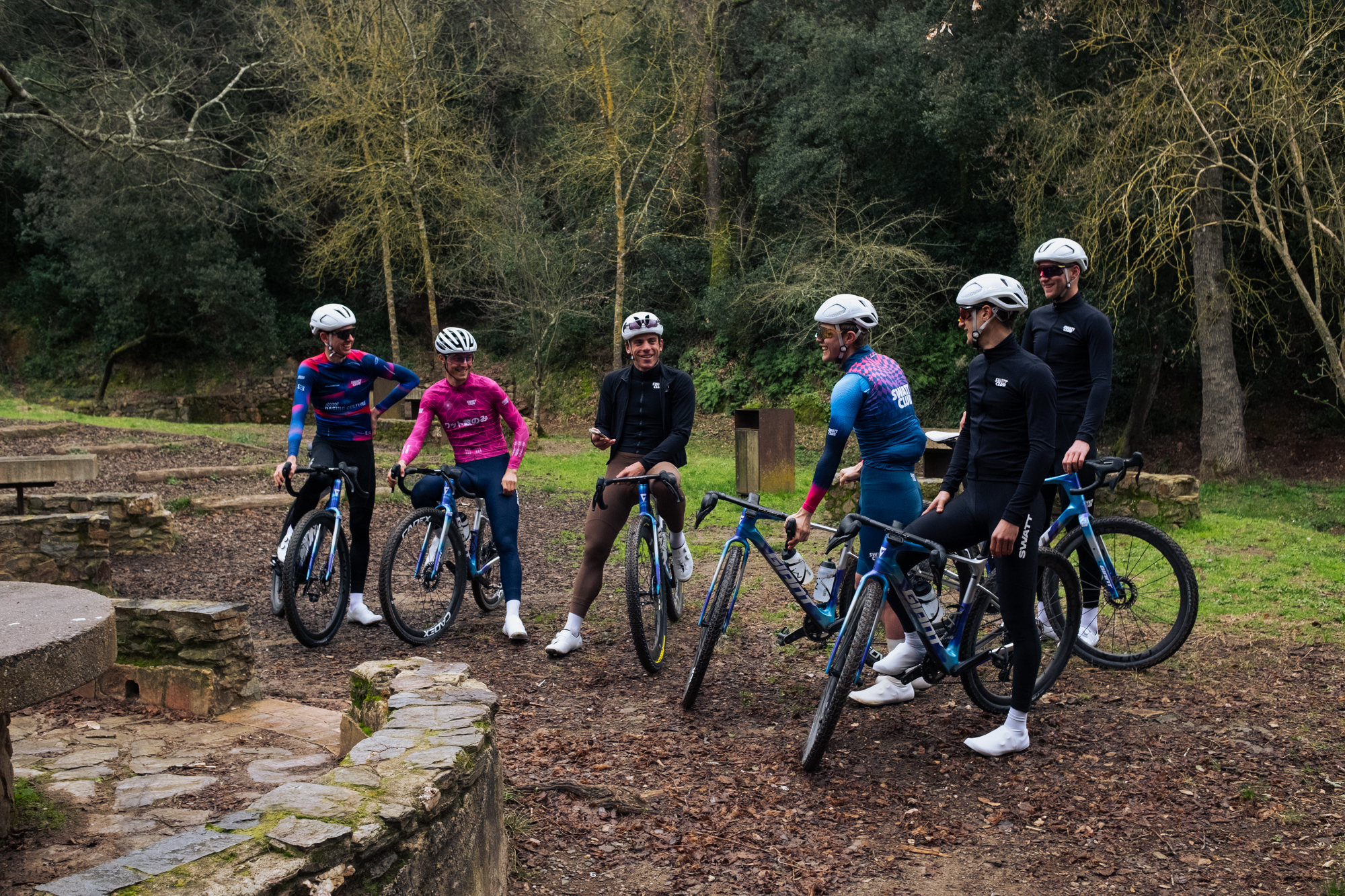
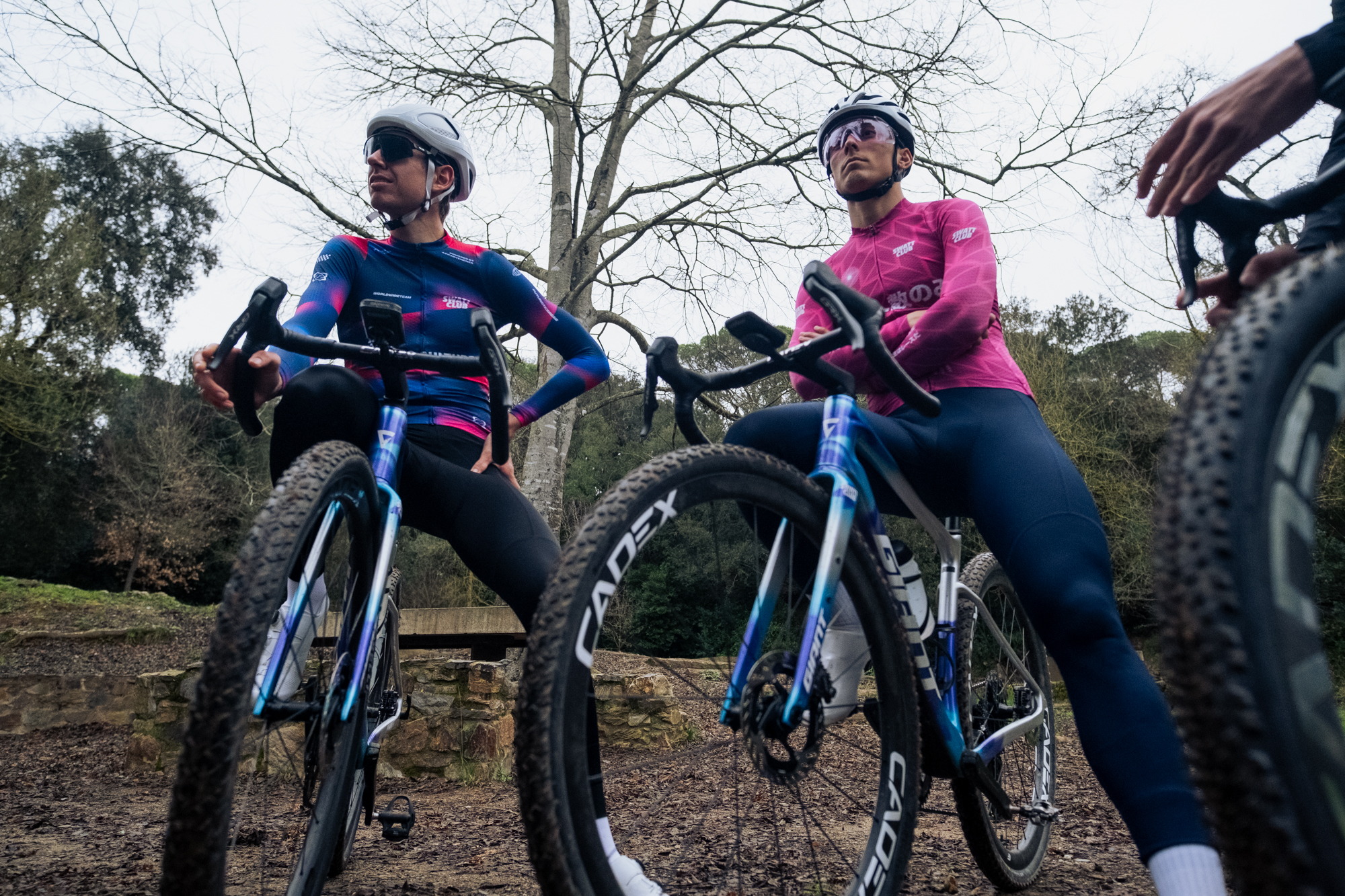
Swatt riders like to feel like professionals, and co-founder Carlo Beretta often travels to support club members during gran fondos; sometimes offering logistical help, sometimes simply documenting the moment. Photos are taken, stories are told, and riders experience something rare in amateur cycling: the feeling of belonging to something bigger.
From Gran Fondos to the pro peloton
For years, the competitive side of Swatt revolved around amateur racing. But over time the project began attracting riders whose ambitions extended further. The team became an unlikely platform for athletes caught between worlds: riders too strong for amateur racing but unable to secure contracts in professional teams.
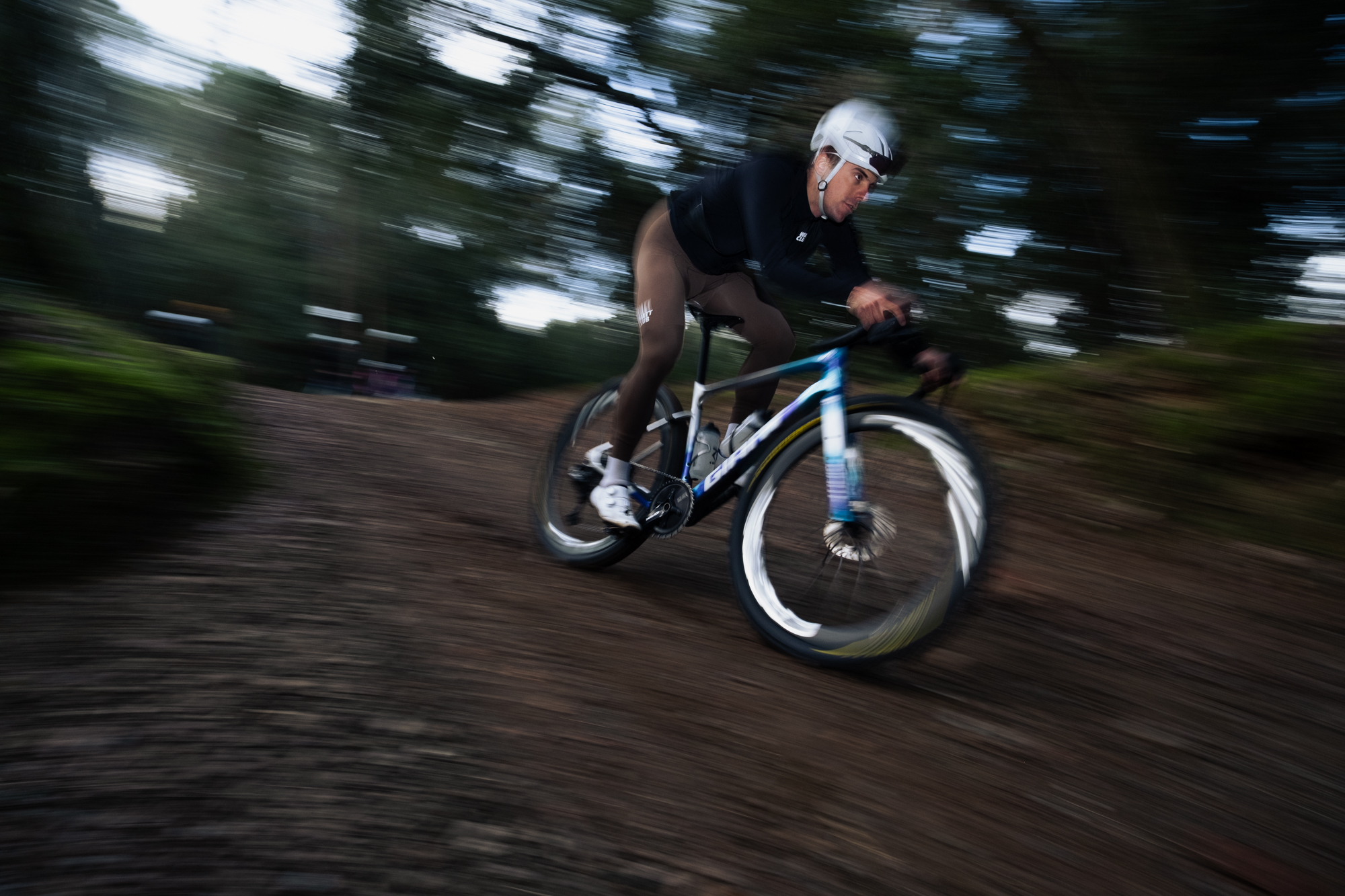
The philosophy is simple; Swatt does not guarantee salaries, but riders typically get ownership of the equipment they have used during the season. Still, many want to join primarily because they believe in the culture and the opportunity. Carlo mentioned the quantity and quality of the riders from all disciplines that applied to race for the team, and it shows the good reputation Swatt Club has in gravel.
Carlo explains that joining Swatt Club is for many “a one-shot chance to make it to the professional level.” And remarkably, there are recent success stories that proof it is possible.
The 2025 season marked a turning point. Several riders used Swatt as a launchpad to reach higher levels of the sport. Among them was Mattia Gaffuri, who secured a professional contract in a WorldTour team despite being over 25 years old—an age when the traditional development pipeline usually closes. Filippo Conca, who surprised many by winning the road national championships, also managed to go back to the highest level after a short stint at the team. Others followed a similar path in gravel, joining teams with many more resources. Riders such as Jordy Bouts and Mathijs Loman attracted stronger offers from The Grip and Canyon x DT Swiss All Terrain Racing, respectively.
“When riders get opportunities we can’t match, I encourage them to go. That’s part of the project.” – Carlo Beretta
The team’s recruitment often happens outside the usual scouting networks. One example is the aforementioned Mathijs Loman, who first caught Beretta’s attention after becoming a finalist in the 2019 Zwift Academy, and years later producing consistent top-10 finishes in major gravel races. Under the radar for most, he ended up winning the overall classification of the 2025 UCI Gravel World Series.
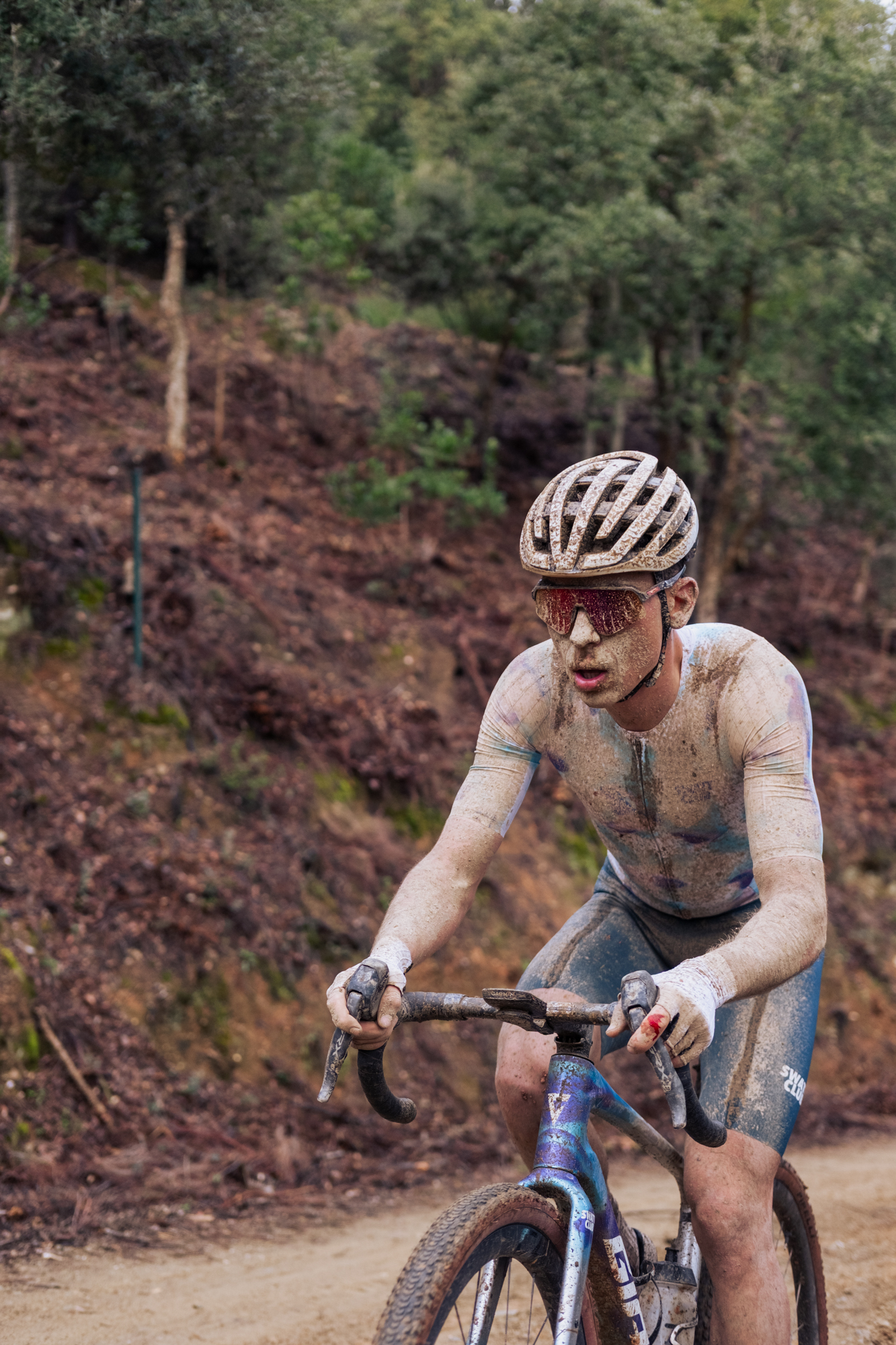
Another unconventional arrival was the Spaniard Alex Martin, who was supposed to race in a Continental road squad but that team suddenly folded a few days before the start of the 2026 season, leaving him with no chance to race. The young rider, with a background in cyclocross and mountain biking, joined after a recommendation from Mattia Gaffuri, as they were both part of the Polti VisitMalta squad for the second half of last season.
A hybrid structure
Despite its informal origins, the competitive side of Swatt has gradually professionalized. The organization now includes a small but functional support staff: a full-time mechanic, a physiotherapist during race weeks, and coaching support that includes former rider Mattia Gaffuri and his partner.
Focusing on their gravel squad, the race calendar reflects the team’s flexible philosophy. Roughly 10–12 events are planned each year where the entire squad races together. Outside those races, riders are free to pursue additional opportunities—if they want to enter another event, the team can help cover travel costs.
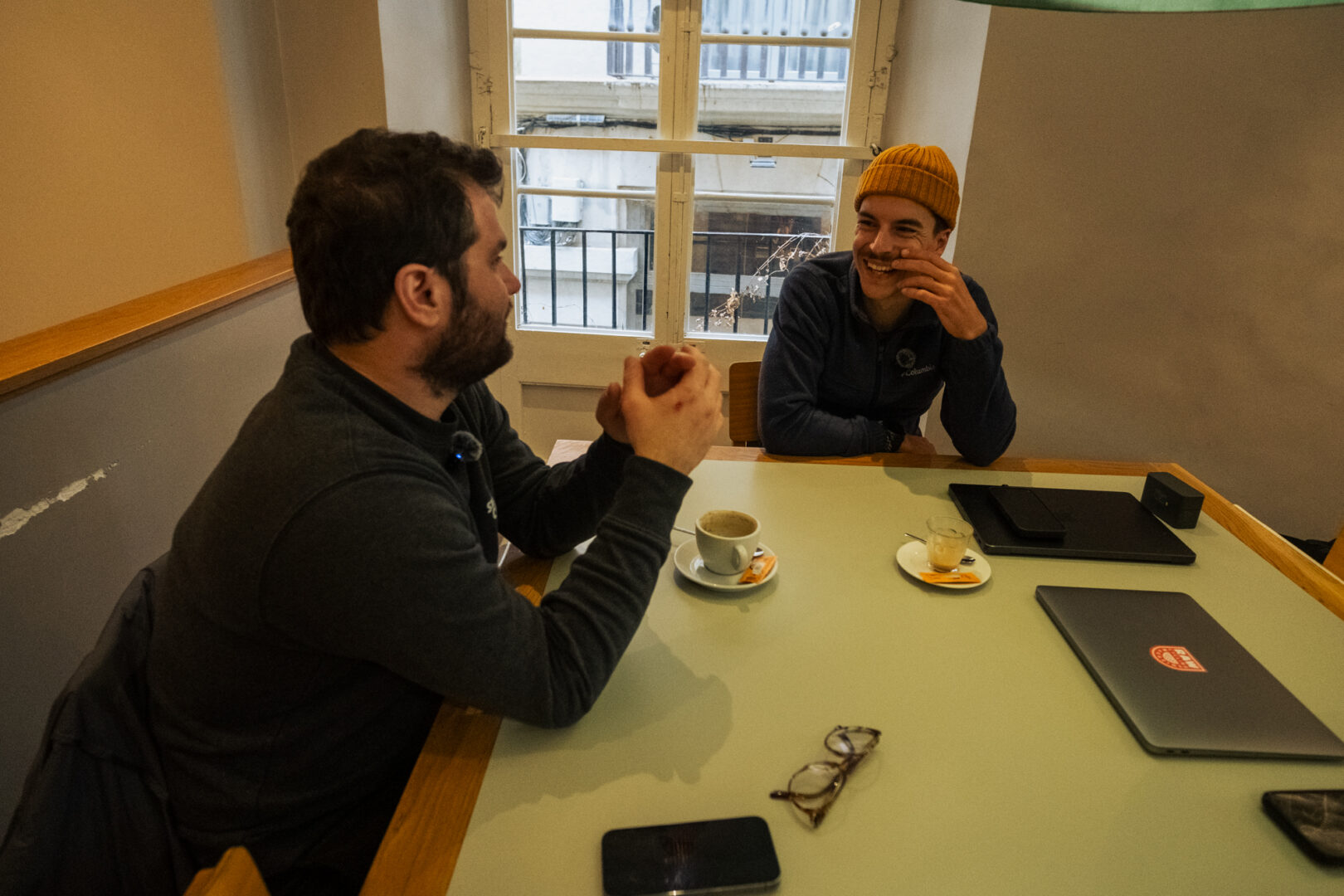
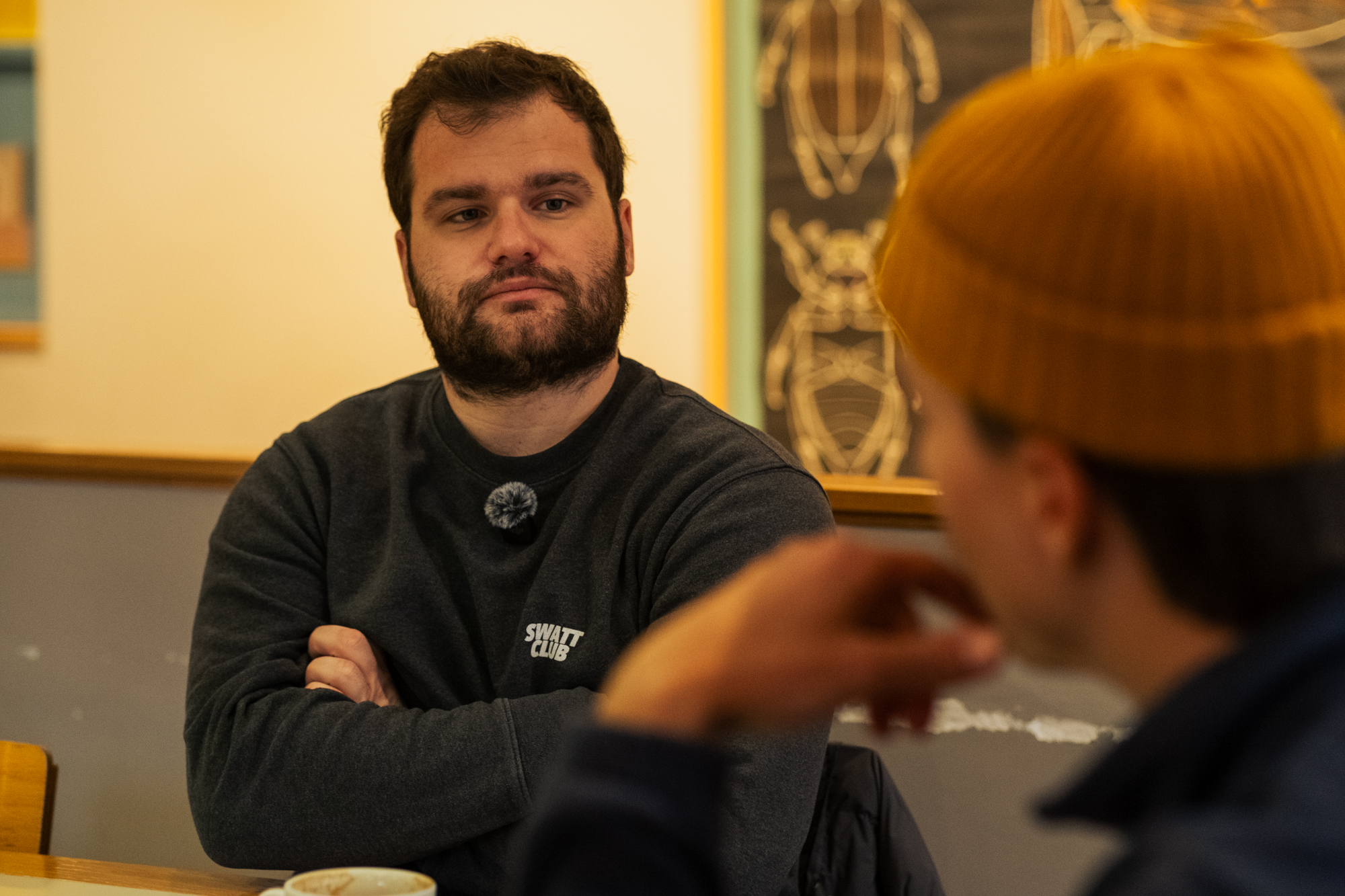
As for the road team, the biggest news was the step up to the UCI Continental division, but Carlo downplayed the impact it has in the vision of Swatt Club. It was a decision driven less by strategy than by their willingness to take part in certain races. “We did it with no logical reason,” Beretta admits with a smile. “We just wanted to race the Coppa Agostoni, which finishes five meters from our warehouse. And we wanted to race the Tour of Denmark too. That’s it.”
The result is a structure that sits somewhere between amateur collective and professional team—a hybrid that still feels experimental.
International ambitions
The Swatt roster has become increasingly international. Danish riders are particularly prominent, and the team has gained recognition in the Scandinavian country, where more than 25 Continental-level riders have reportedly contacted the project about joining.
One of the notable signings is Danish rider Stokbro, recruited for the gravel squad. The plan was to include him also in the road team, but because of Italy’s unusual rules related to the necessary number of U23 riders in Continental teams, he will race on the road somewhere else. Another signing, Matias Malmberg, brings a track background and has long-term ambitions aimed at the 2028 Summer Olympics in Los Angeles.
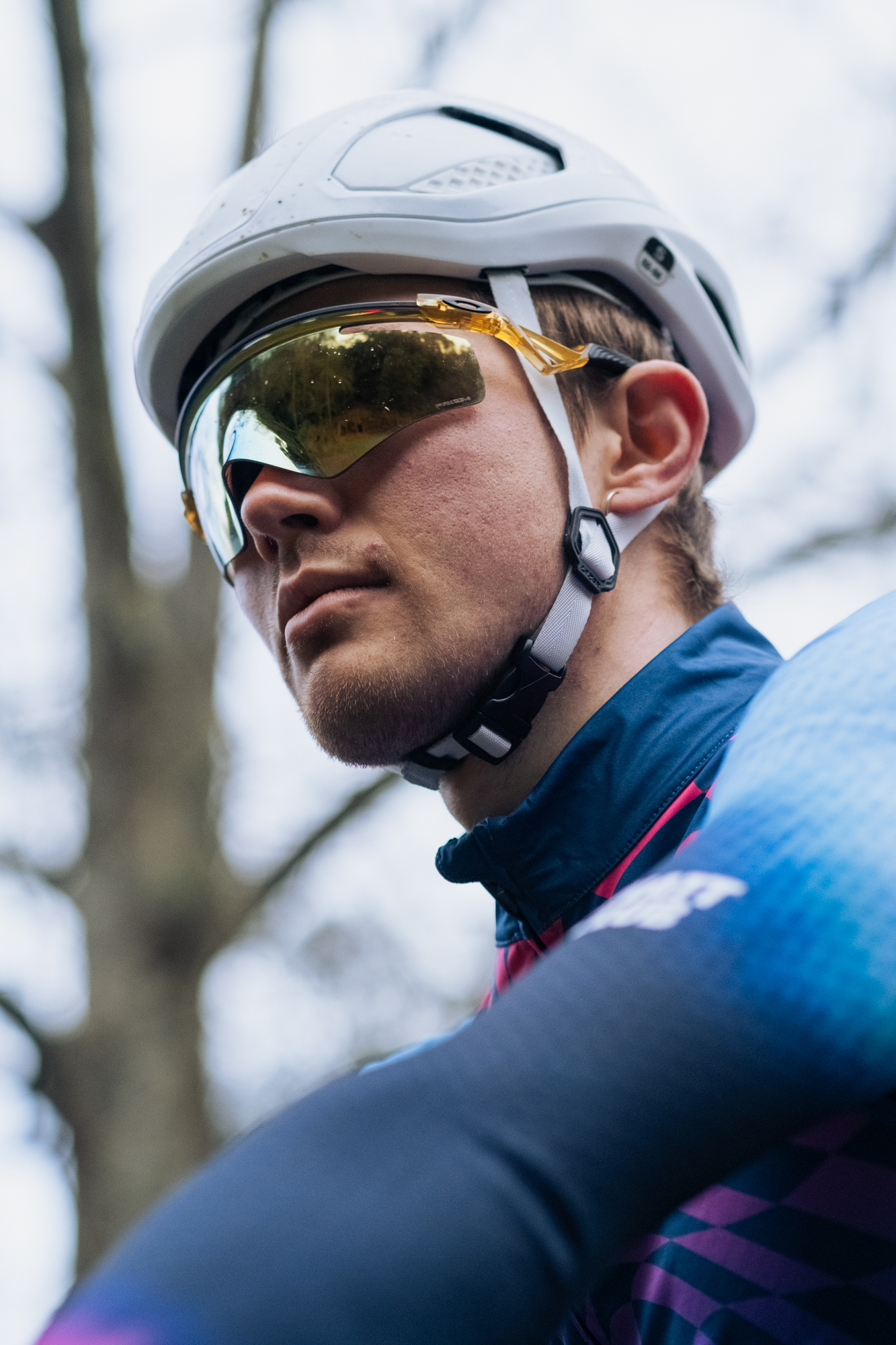
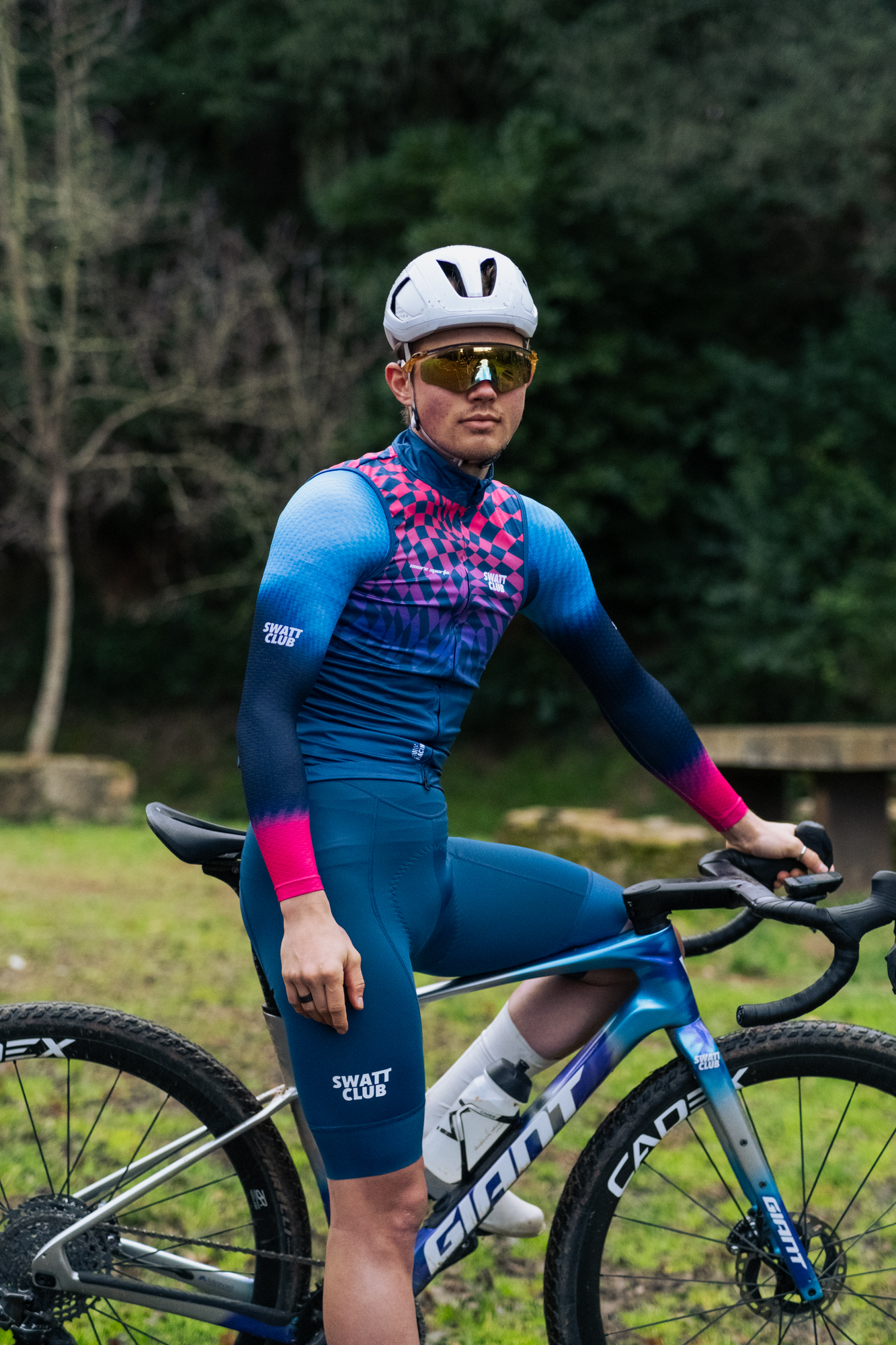
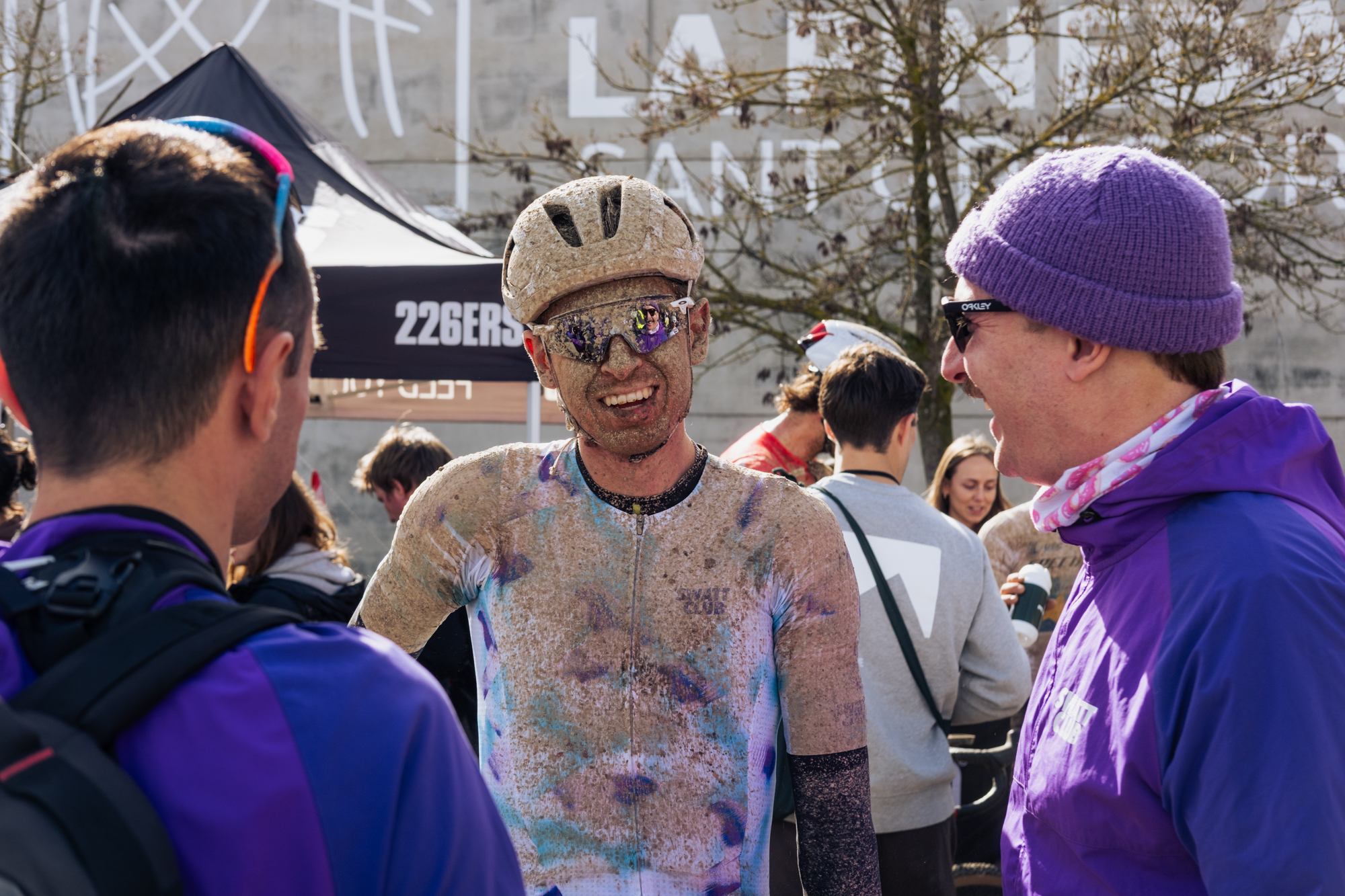
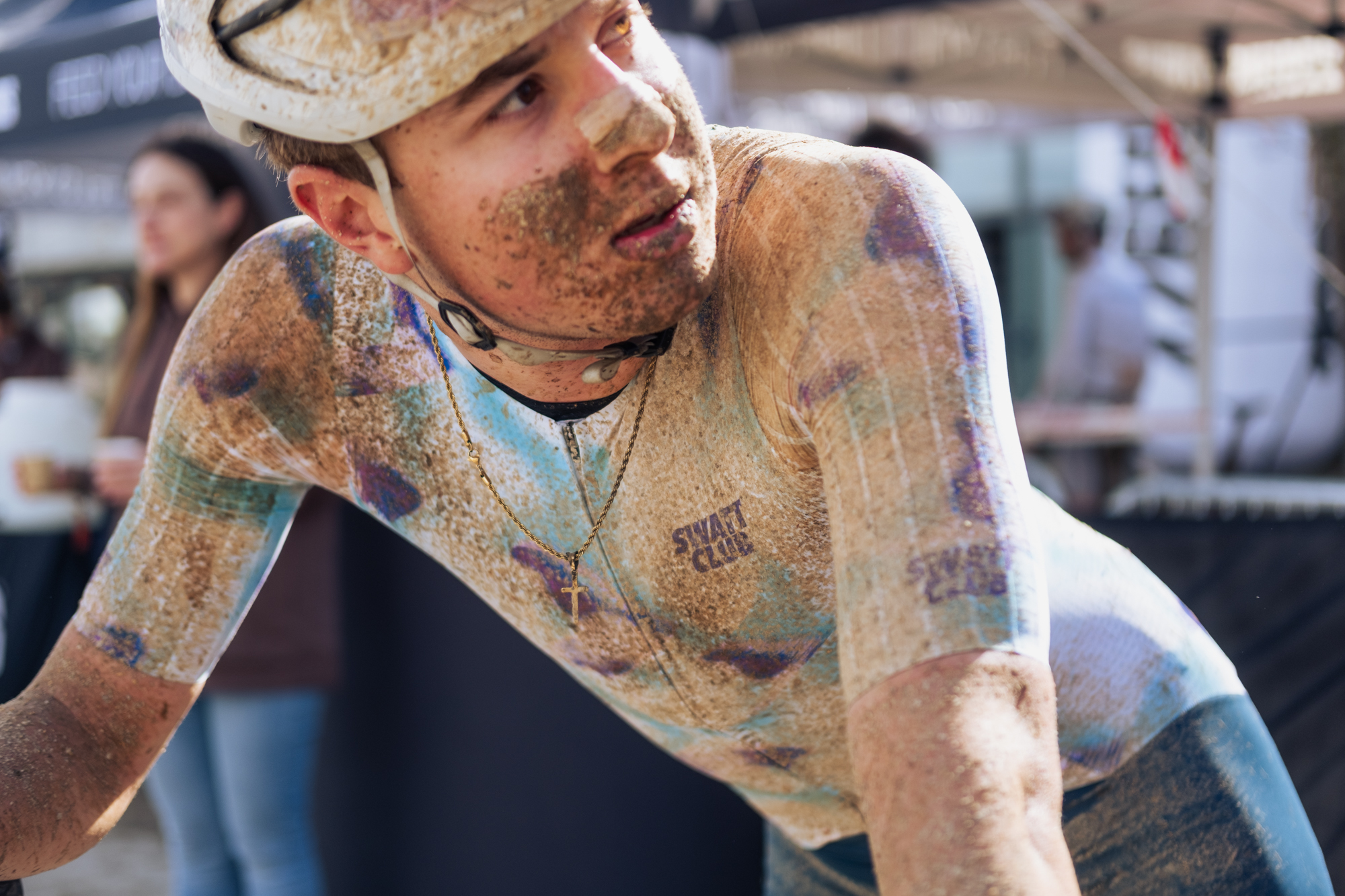
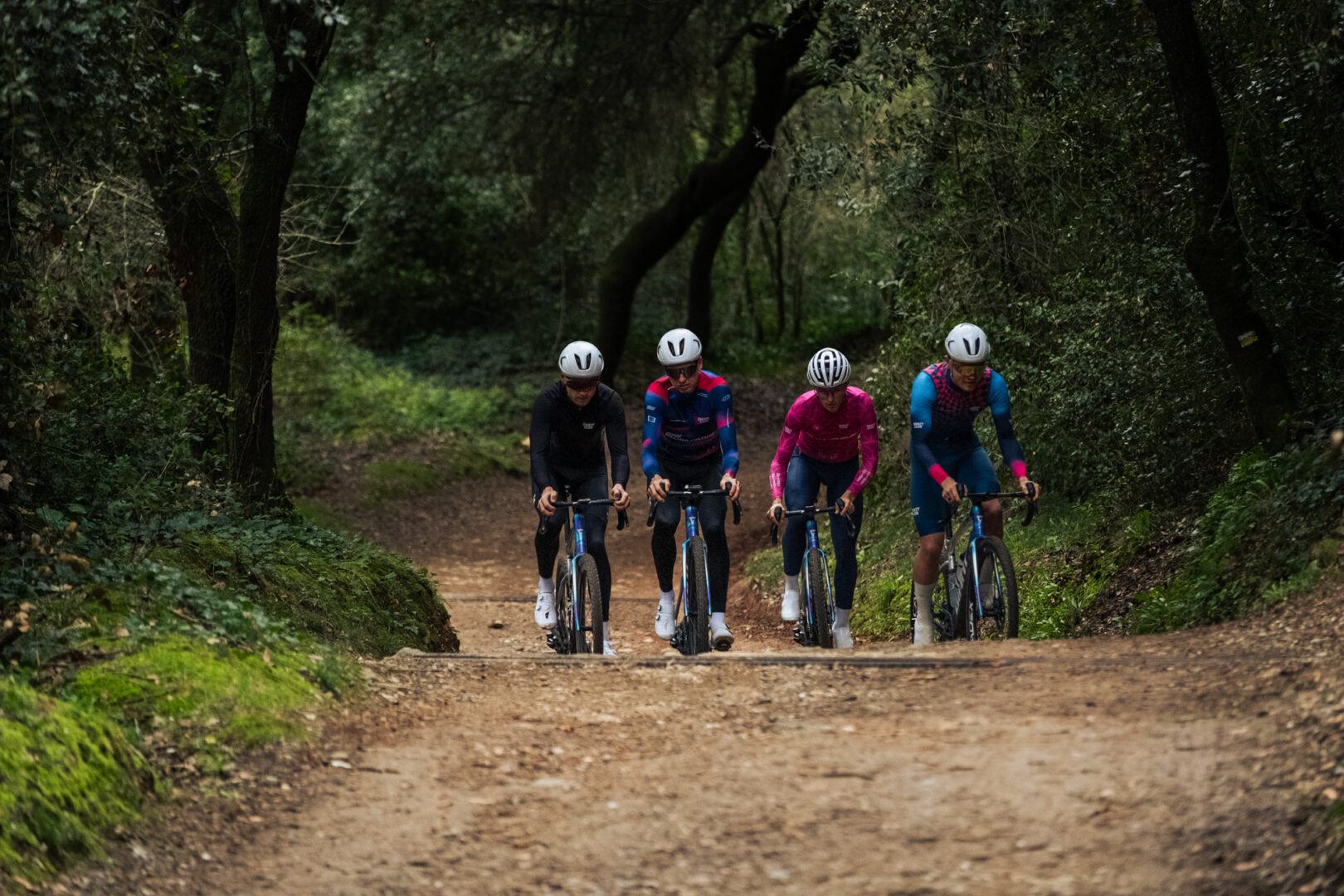
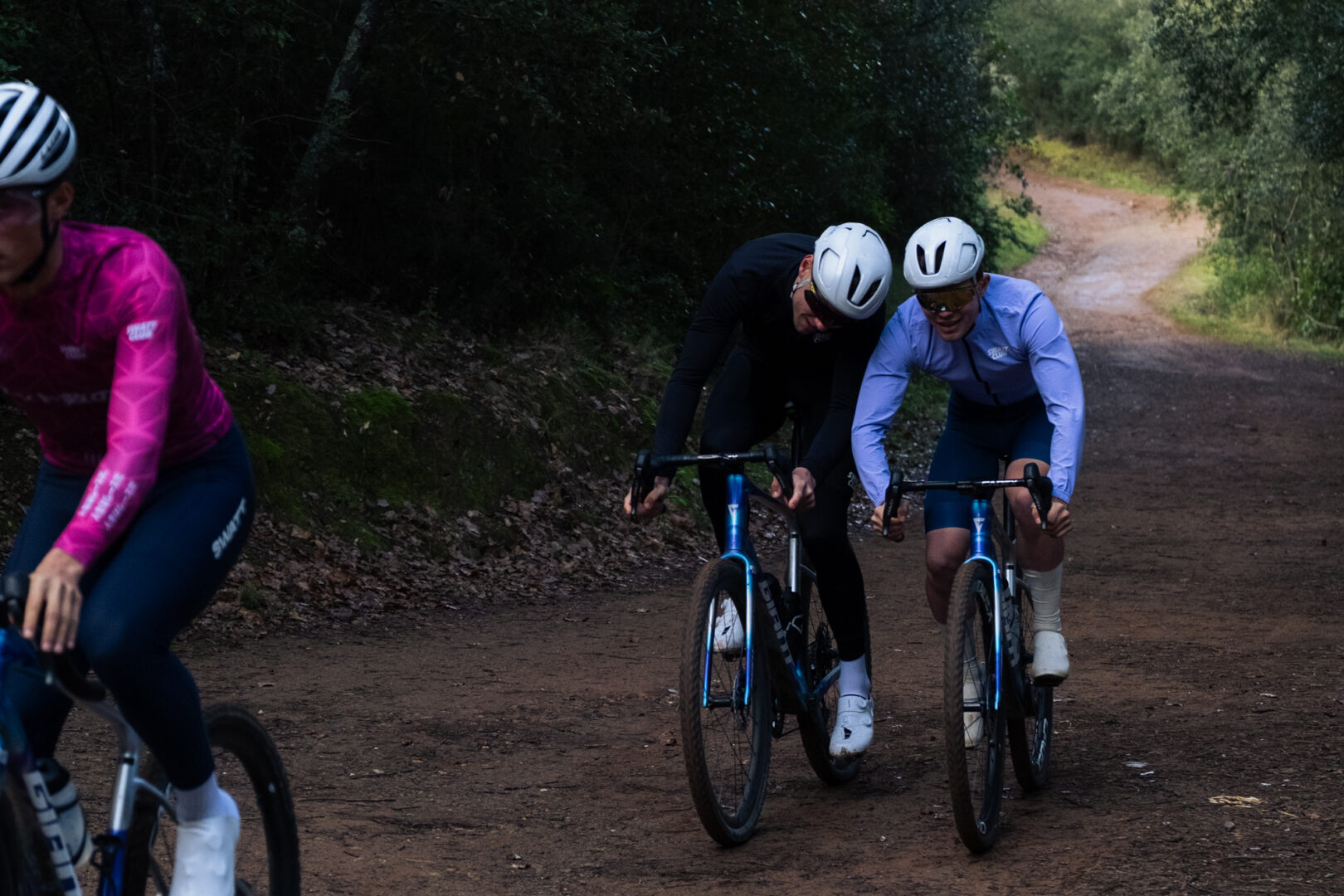
Swatt Club was very much present in Girona during the week of Santa Vall, as up to 20 riders (10 from the road squad and another 10 from the gravel team) stayed in town. While the roadies were busy with their training camp, returning and new riders of the gravel squad lined up against the best cyclists of the discipline. Stokbro started his new chapter with a good result, achieving a 5th place on stage one and reaffirming his abilities by securing a 6th place in the general classification.
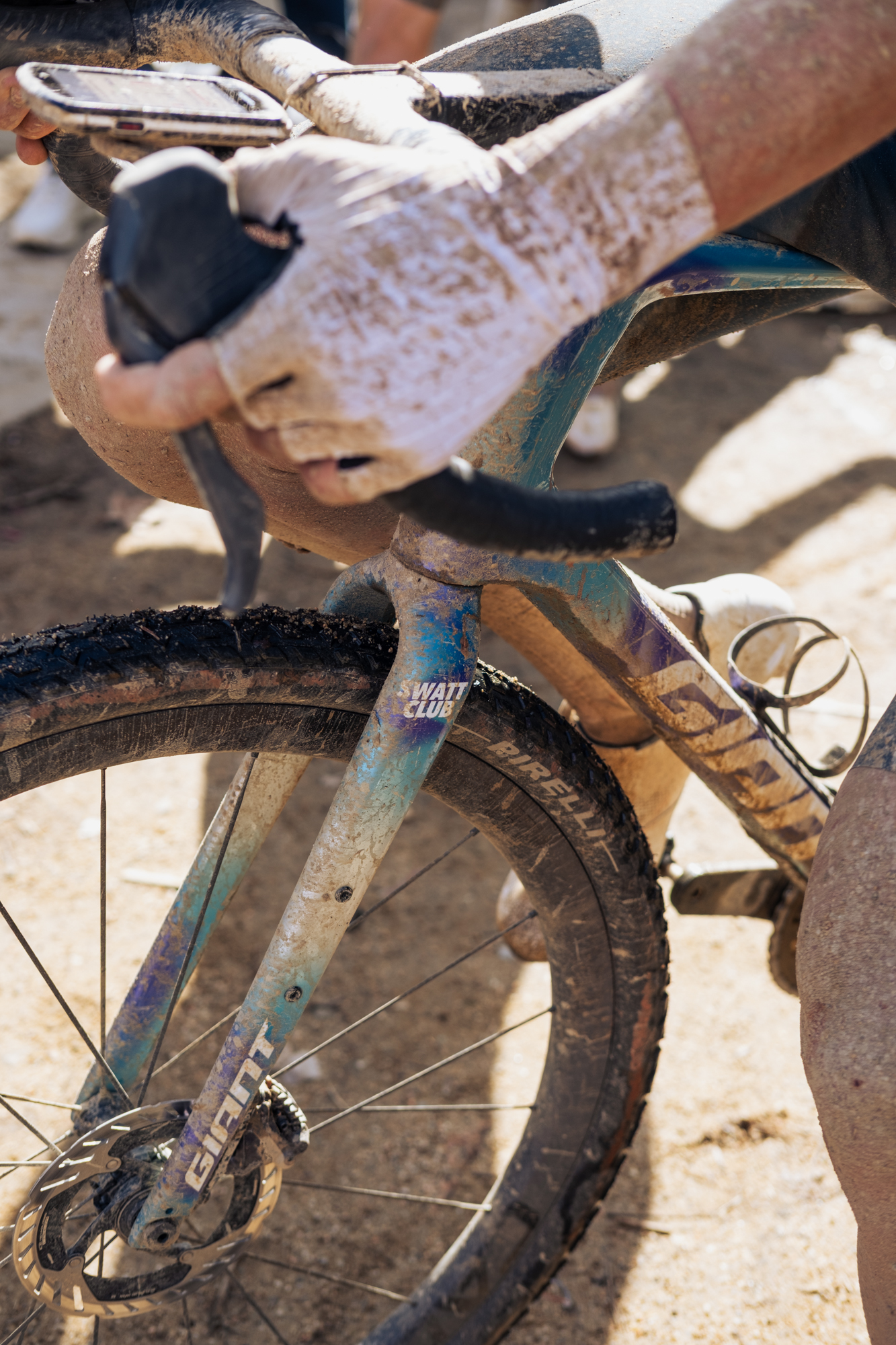
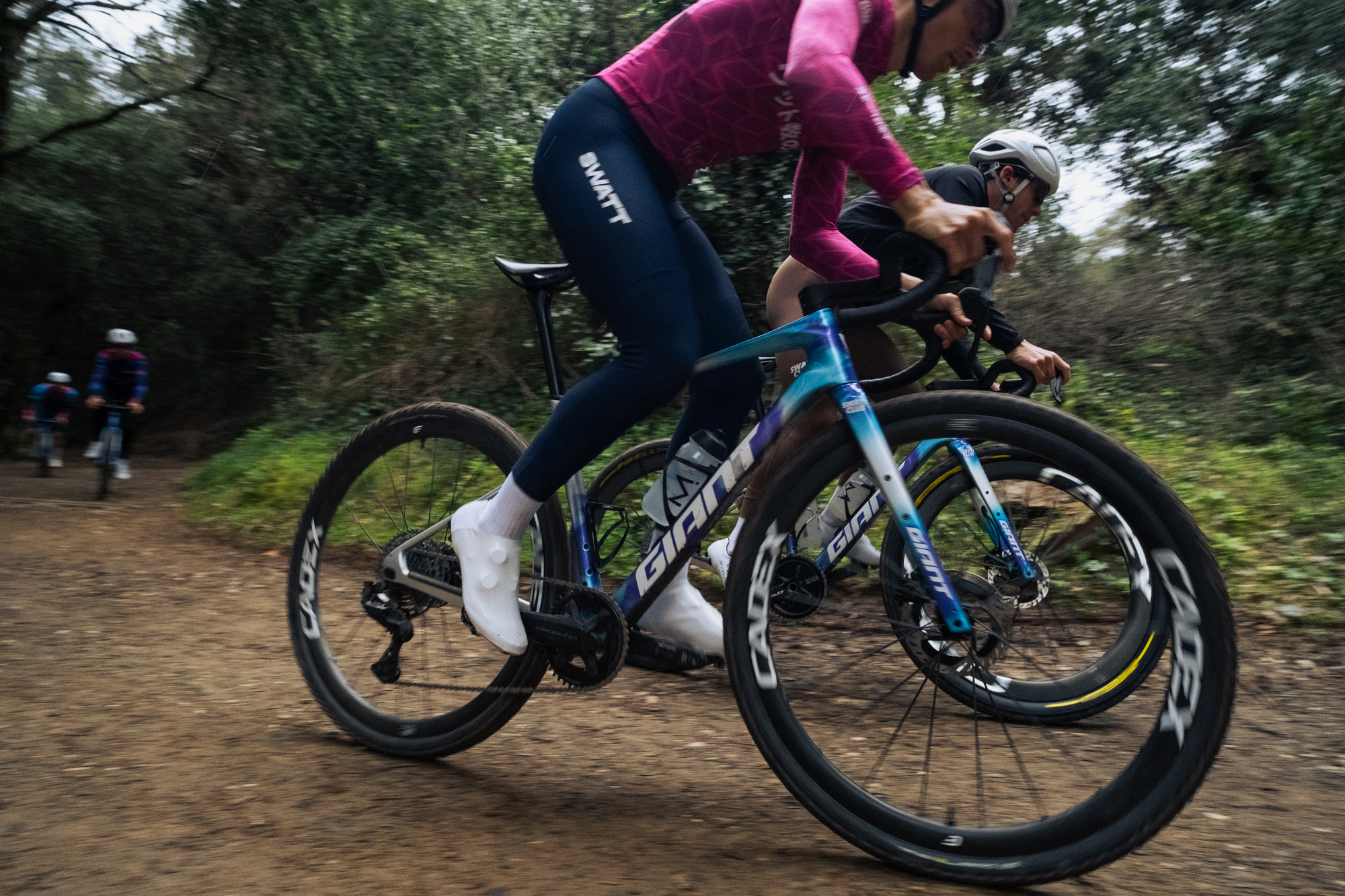
In 2026, the project continues with the same core equipment partners—Giant, Shimano and Lazer —while new partners such as Dynamic Bike Care and Rocket Espresso join the ecosystem. The bikes remain the same models as last season, but with a fresh paint scheme—another nod to Swatt’s emphasis on aesthetics and identity.
Culture first
Ultimately, equipment and results are only part of the story. What makes Swatt unique is the culture that surrounds it.
Inside jokes, slogans, and rituals circulate through the community. The infamous “sigari” story—about a cigar found on a ski slope in Switzerland by co-founder Kayser—has become part of the club’s slang. The team’s visual language, clean kits, and storytelling style have built a large following online and in real life. Fans often recognize the riders immediately, even when they line up against much larger teams.
Yet Beretta believes the project is only scratching the surface. “Our social media presence could be better,” he says. “There is so much more to show people. We are not as good as we can be. It’s time to step up.”
In many ways, Swatt Club exists in a space that traditional cycling rarely occupies. It is part amateur collective, part elite racing platform, part cultural movement. Riders can stay two or three years before moving on, but the community remains constant.