
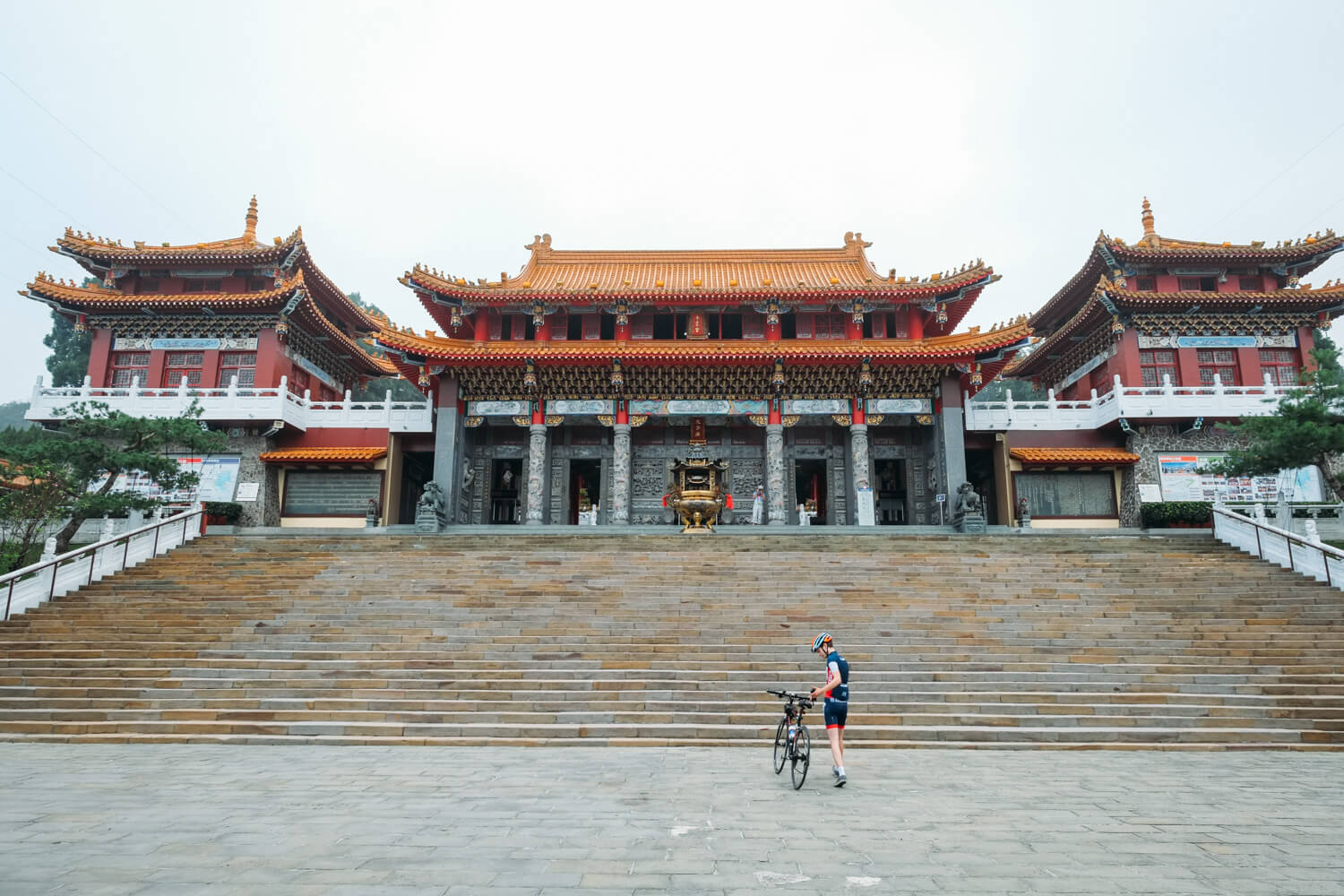
Imagine swapping the car for two wheels, cruising along scenic coastlines, and tackling mountain passes before resting in an accommodation that truly welcomes you and your bike. That’s the reality awaiting cyclists in Taiwan, a stunning island quickly cementing its reputation as the ultimate hub for low-carbon travel and unforgettable bike touring in Asia.
Taiwan, or Formosa, “the beautiful island,” is a land of rich contrasts—from its deep blue coastal waters and vibrant rice-field plains to its dramatic, cloud-kissed mountains like Wuling. This incredible diversity is packed into an accessible space, offering cyclists the chance to experience a huge variety of terrain and challenges in just a short time. This rich natural setting, combined with a captivating gastronomic culture and heritage, has made it a favorite destination for international travelers, who have increasingly chosen to explore the island by bicycle over the past decade or so. Cruising along at a leisurely 25 km/h, they can experience Taiwan’s scenery in a sustainable way and stay at bike-friendly accommodations.
Cycling in Taiwan
For people who love exploring the world by bike, Taiwan offers challenging routes, an excellent infrastructure, a high level of convenience, and distinctive sightseeing features, making it a paradise for cycling tourism.
The island’s commitment to cycling is evident in its ambitious network development. The established Taiwan Cycling Route No. 1, which opened in 2015, encircles the entire island, spanning about 961km along provincial highways. It’s equipped with clear signage and rest and refreshment stops along the way, enabling international travelers to plan a safe and worry-free trip. Additionally, for leisure travelers and families, Sun Moon Lake’s lakeside bikeway was selected by CNN as one of the world’s top ten most beautiful cycling paths, offering another classic, picturesque route.
But Taiwan is not resting on its laurels. The Ministry of Transportation and Communications (MOTC) is investing heavily to enhance the cycling environment, with a combined budget of NT267US million) allocated to upgrade the network through 2027. This effort includes addressing areas where “elevation differences where riverside paths meet regular roads, posing safety risks for riders,” according to the Taipei Times. The Ministry also plans to launch Cycling Route No. 2 next year.
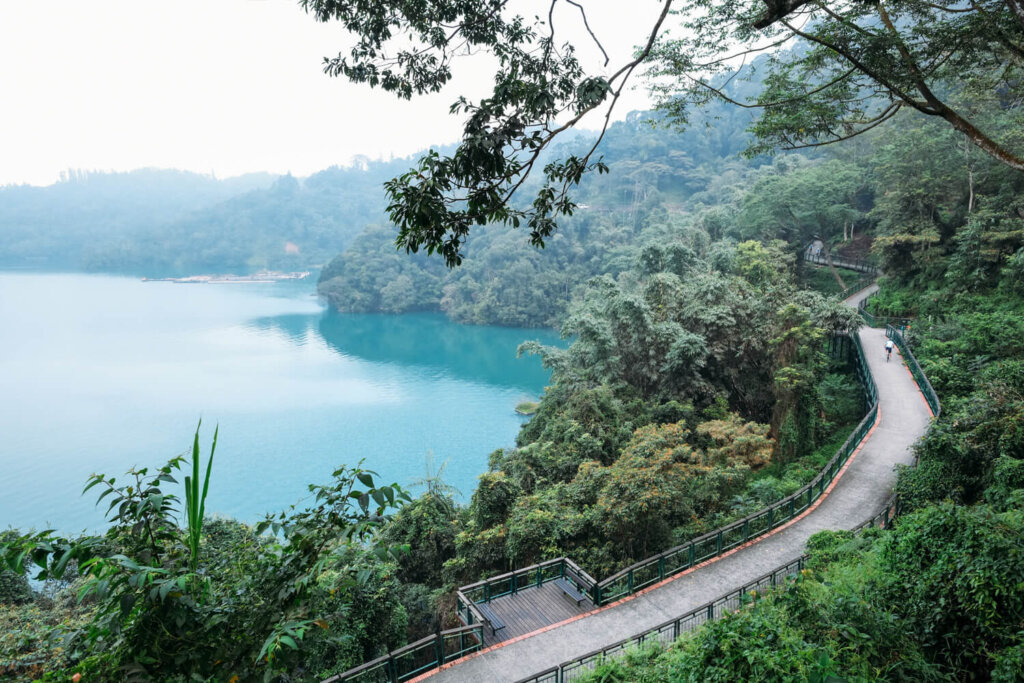
The separated cycling path around Sun Moon Lake, Taiwan. Photo by David Niddrie
While Route No. 1 emphasizes “speed and efficiency for cycling enthusiasts” as it runs along provincial highways, the new network “would highlight the nation’s scenic spots, hugging coastlines, running along rural landscapes and through food spots,” the MOTC said (Taipei Times). Preliminary plans for Route No. 2 are centered on scenic experiences, with sections running along the coastline past surfing hotspot Waiao Beach and Taiwan’s easternmost point at Cape Santiago Lighthouse. Other routes, such as the one from Taichung to Pingtung, will give cyclists views of rural landscapes, tea plantations, canal scenery, and spectacular sunsets. The Hualien-Taitung section will mainly follow the Huadong Valley, allowing cyclists to experience eastern Taiwan’s warm hospitality.
Taiwan’s convenient and cycle-friendly environment naturally encourages exploration. A high density of convenience stores makes resupply easy, with these stores serving as the most reliable supply points for cyclists. Responding to the global trend toward low-carbon travel, Taiwan’s Tourism Administration continues to implement its Bike-Friendly Accommodation program, an official certification ensuring that hotels provide secure bicycle parking, cleaning facilities, basic repair tools, and other cyclist-friendly services. Many locations also offer flexible options such as early breakfast or late check-out to meet cyclists’ needs, ensuring that both rider and bicycle get the rest they require.
The island’s commitment to bicycle tourism extends to major events. Since 2010, the Tourism Administration has organized the Taiwan Cycling Festival, which includes internationally recognized races such as the grueling Taiwan King of the Mountain Challenge, which saw foreign participation rise to 56 percent last year (Taipei Times). Other events include the Formosa 900 and the Sun Moon Lake biking carnival.