
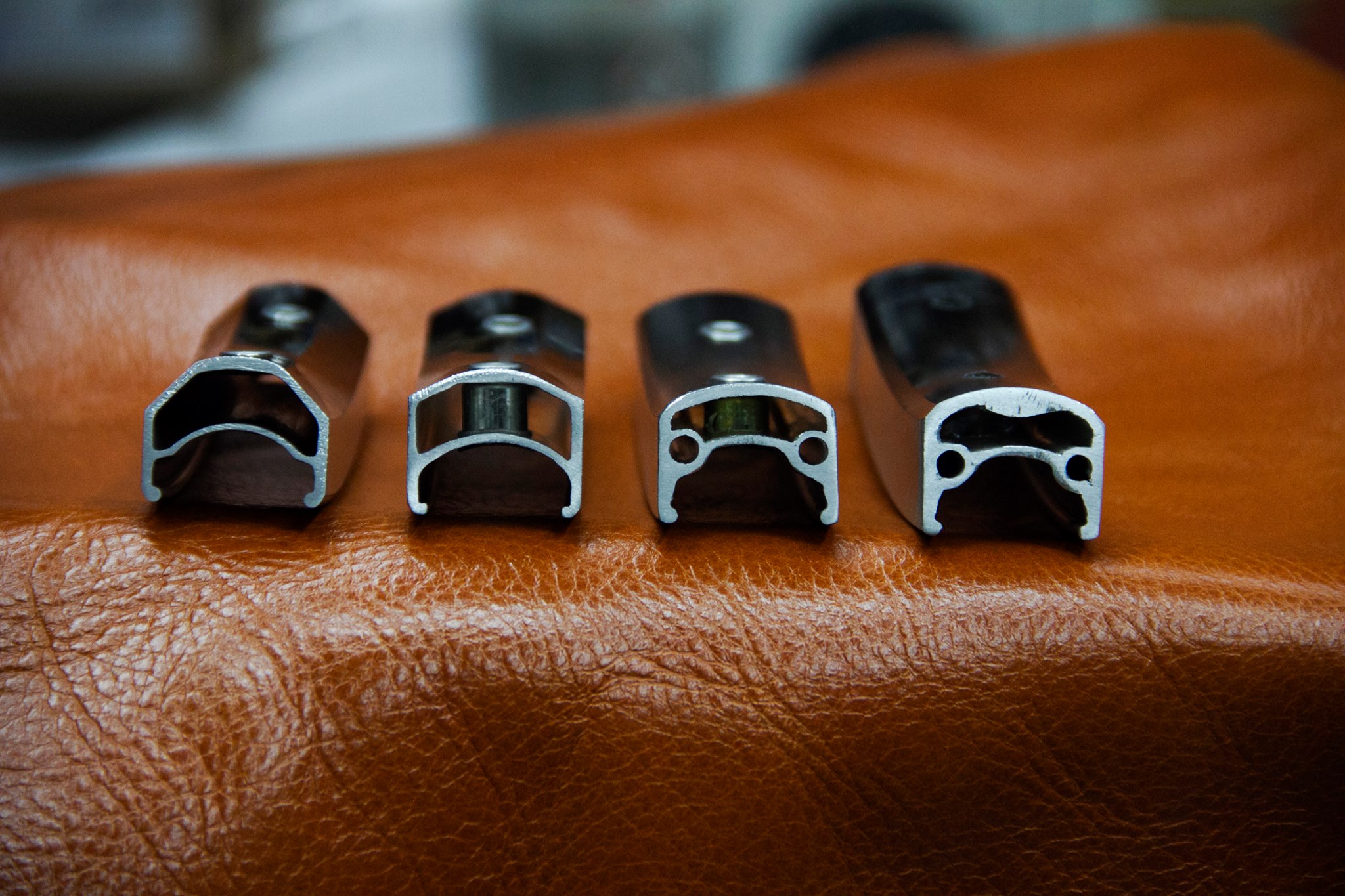
When it comes to bicycle touring rims, compromising on strength is the last thing you should do, as wheel failure will quickly derail your tour.
In my experience, rims rank among the top three most critical components of a touring bike, alongside racks (these are the best) and tyres (these are great). Even with perfectly tensioned, premium-quality spokes and strong hubs, inadequate rims will still fail under heavy loads.
The right rim strength depends on your body weight, total load, and the terrain you plan to ride. A 50 kg rider carrying 10 kg on smooth paved roads doesn’t need heavy-duty touring rims. But if you weigh 80 kg and are carrying 40 kg on bumpy roads in Africa, that’s a very different scenario.
In this guide, we’ll explore the essential features of the strongest and most reliable touring rims, and I’ll share my recommendations for the best brands and models available.
Note: This article was originally published in Dec 2015, but has just been updated in Dec 2025.
How Do Bicycle Touring Rims Fail?
Cracked Spoke Holes and Rim Centres
The most common form of rim failure on a touring bike is cracking around the spoke holes or at the rim centre.
If an aluminium rim isn’t thick enough, spokes can pull through or crack the metal around the spoke holes. While this type of failure is rare on proper cargo or touring rims, it is relatively common among lightweight rims weighing less than 600 grams.
Brake Track Splitting
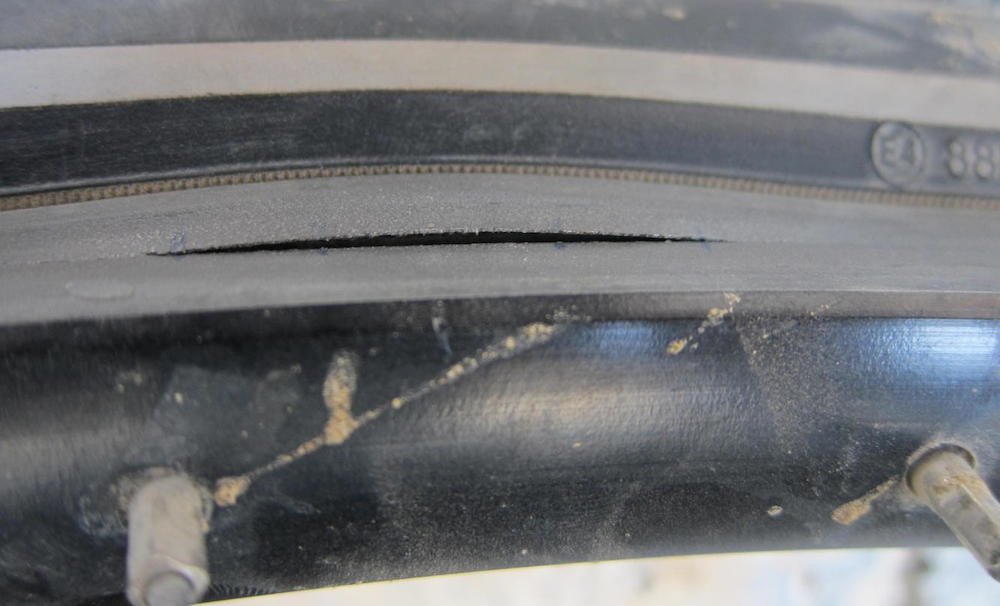
A less common form of rim failure occurs along the brake track. This is usually caused by exceeding the rim’s maximum tyre pressure, especially when combined with a heavy load. In rare cases, it may simply be the result of a manufacturing defect.
Brake Track Wear
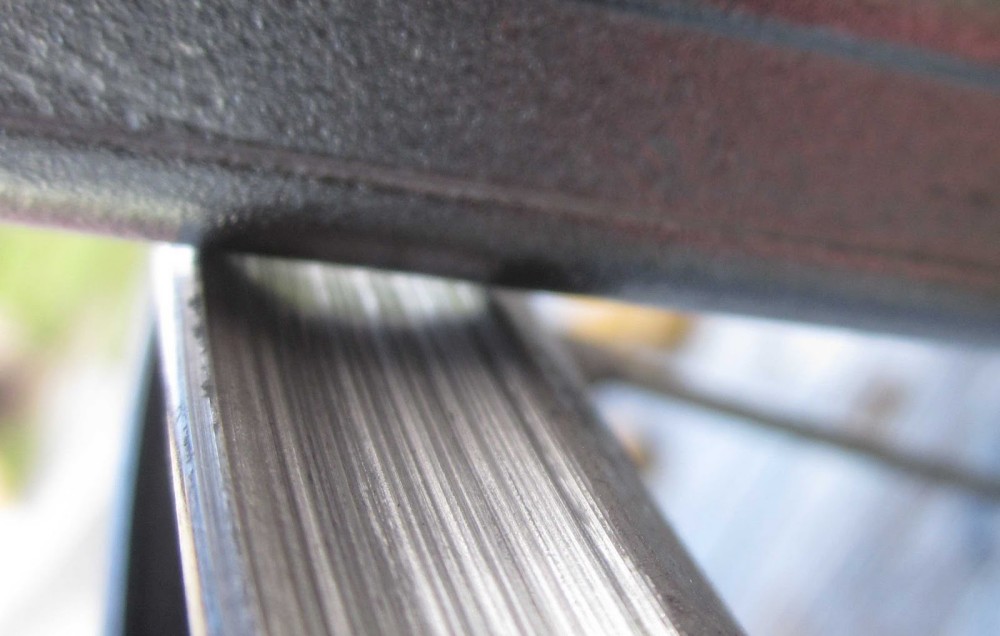
If you use rim brakes, the aluminium on your rims will gradually wear down from pad contact.
The rate of wear depends on factors such as riding conditions, terrain, and your braking style. Most touring cyclists can cover over 20,000 km before needing to replace their rims.
Key Attributes of the Best Bicycle Touring Rims
Rim Weights
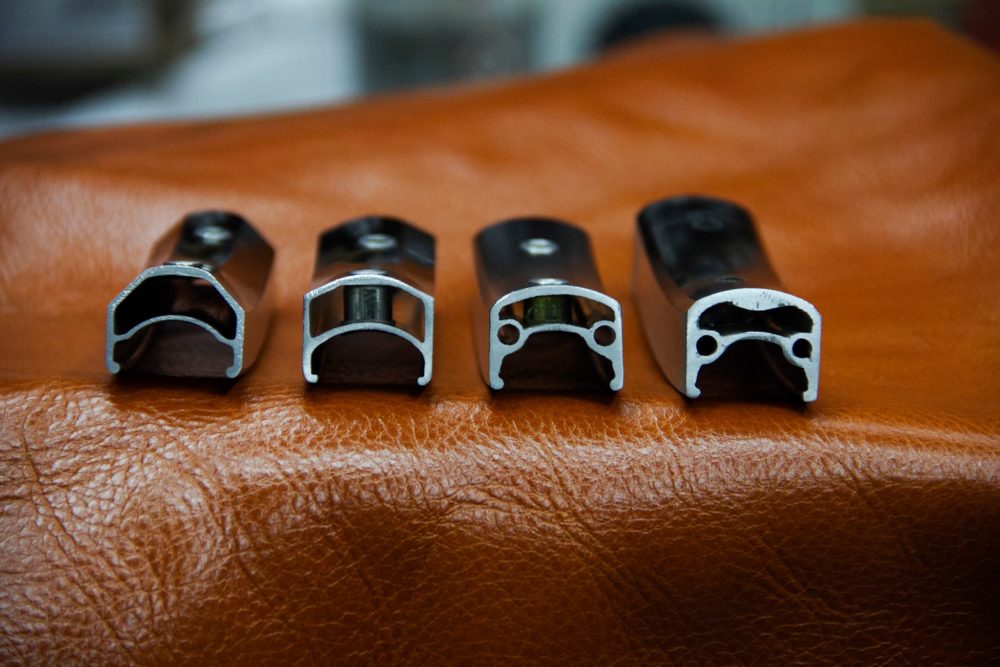
The most reliable indicator of rim strength is its weight. If you’ve ever cracked a rim, check its weight – I can almost guarantee it’s lighter than the rims listed below.
Adding a few hundred grams per wheel can greatly improve durability on long tours. Because heavier rims are usually stiffer, you’ll also spend less time constantly re-tensioning spokes.
High-strength touring rims achieve their strength, stiffness, and durability primarily through thicker aluminium. Aluminium rims can range from 300 to 950 grams, with high-quality touring rims typically falling between 600 and 900 grams.
Rim Materials
Almost all bicycle rims are made from aluminium. The manufacturing process involves extruding semi-molten aluminium through a mould to create a specific profile, which is then formed into a hoop and joined – either welded or pinned.
Aluminium replaced steel a few decades ago, thanks to its lighter weight, greater strength, rust resistance, and far better braking performance for rim-brake users.
Carbon rims are becoming increasingly common on road and mountain bikes, although they’re still relatively expensive. With carbon technology advancing quickly, it wouldn’t be surprising to see carbon rims become a more mainstream option on touring bikes in the coming years.
Rim Walls and Rim Eyelets
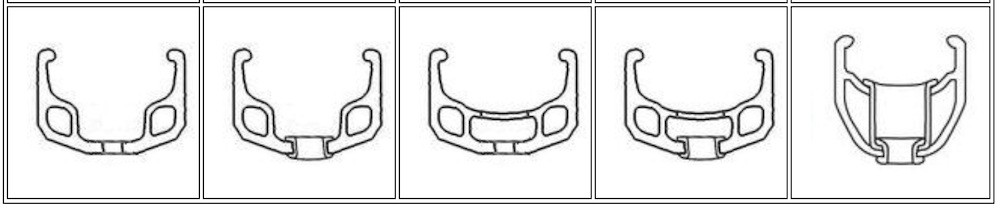
Rims can be single, double, or even triple-walled, though all high-quality touring rims are typically double-walled. This simply refers to the number of aluminium layers that make up the rim, and more layers tend to make it less prone to failure.
Eyelets are aluminium sleeves used to reinforce the spoke holes in a rim. Not all rims use them, but some manufacturers add eyelets to reduce weight without sacrificing strength – for example, Ryde trims about 70 grams from certain models by incorporating eyelets.
Double-wall rims may feature either single eyelets or double (socketed) eyelets. Double eyelets distribute spoke tension across both walls of the rim, allowing for a lighter yet stronger overall structure.
You’ll also notice that many of the strongest rims in the list below achieve their durability without using eyelets, relying instead on thicker aluminium walls. Eyelets aren’t essential for touring rims, but they can offer a small weight savings depending on the rim design.
Spoke Holes
Rims come in a variety of spoke hole counts, with 32, 36, and 40 holes being the most common options for touring. More spokes help distribute the load more evenly across the hub, spokes, and rim. With any of the touring rims listed here, most riders will find that 32- to 36-hole rims paired with high-quality spokes perform perfectly well.
While 36 spokes are usually sufficient, heavier riders, cyclists carrying substantial loads, and tandems running 700C wheels with cassette hubs may benefit from 40 or even 48 spokes.
Welded vs. Pinned Rims
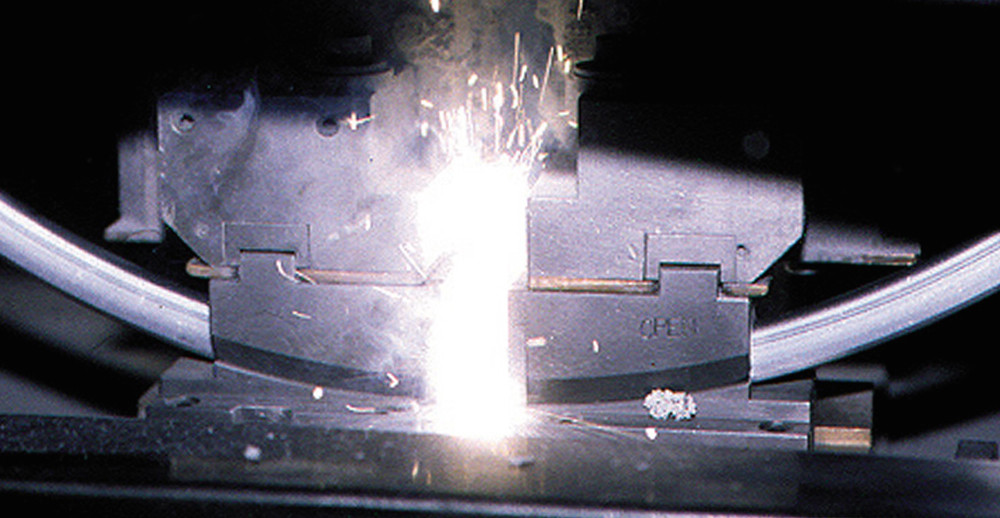
Once rims are extruded and formed into a hoop, they are either pinned together or joined with an arc weld. Lightweight rims generally benefit from being welded, as it creates a cleaner and stronger joint.
However, with heavy-duty rims (600 grams and above), the joining method contributes very little to overall strength – the sheer material thickness does most of the work.
Internal Rim Widths

In recent years, rims and tyres have been designed to work together more effectively by pairing each tyre with an appropriate inner rim width. When the rim width is well matched to the tyre, the tyre deforms far less in corners and avoids the exaggerated “lightbulb” shape when inflated.
Here’s a guide on pairing rim and tyre widths:
20-25mm internal width: 25 to 40 mm wide tyres
25mm internal width: 40 to 55 mm wide tyres
30mm internal width: 2.2″ or wider tyres
35mm internal width: 2.6″ or wider tyres
40mm+ internal width: 2.8″ or wider tyres
Rims For Internal Gear Hubs

Internal gear hubs have a much larger shell diameter than standard hubs. This causes the spokes to sit at a wider angle relative to the hub flanges, which changes how force is applied to the rim – spokes pull slightly sideways, increasing stress around the spoke holes. Over time, this can lead to cracking or spokes loosening if the rim isn’t designed to handle it.
Rims with angled spoke holes address this issue. The angled drilling aligns each spoke more closely with the direction of force from the hub, reducing lateral stress on the rim’s spoke bed. This helps prevent cracks, spoke pull-through, and premature rim failure.
Brands such as Ryde, Exal, Mach1, and RAD15 offer rims with angled spoke drilling specifically for use with internal gear hubs.
Tubeless Rims For Bicycle Touring

Tubeless tyres for bikes do exactly what the name suggests – they eliminate the inner tube, functioning much like a modern car tyre and rim. The benefits are significant: increased puncture resistance, lower rolling resistance, and the ability to run lower tyre pressures without pinching a tube.
Tubeless setups are now standard on mid to high-end mountain bikes and gravel bikes, and they’re becoming increasingly popular for touring bikes as well, especially with tyres wider than 2.2″ (55 mm).
A tubeless tyre looks much like a traditional clincher, but it requires no inner tube. Once the tyre is seated (meaning the beads snap securely into the rim), it forms an airtight seal. A valve, similar to those used with inner tubes, is fitted directly to the rim, and sealant (either poured into the tyre or injected through the valve) helps plug small leaks. The liquid sealant can even repair punctures while riding.
Rim and tyre fitment is critical: standard tolerances are roughly ±0.5 mm. Tyres that exceed this range can be impossible to seat, while tyres that are too small may blow off the rim. Unfortunately, not all rims meet this tolerance, but I’ve listed the ones that do below.
Disc and Non-Disc Rims

Some rims are designed exclusively for disc brake use and therefore lack a brake track. These disc-specific rims can be lighter while maintaining the same strength, since they don’t need to accommodate rim braking.
If you’re using rim brakes, it’s important to choose the correct type of rim – you can easily end up with an incompatible one. A rim with a brake track can be used on a disc-brake bike, but a disc-specific rim cannot be used with rim brakes.
Brake Track Treatment

For riders using rim brakes, some manufacturers apply special coatings to the brake track to increase rim longevity, improve braking performance, and reduce the risk of failure.
Ryde uses a Carbide Super Sonic (CSS) coating on some of their touring rims, which is claimed to slow rim wear by a factor of four. The process involves blasting tungsten carbide into the braking surface at several times the speed of sound, creating an extremely hard, wear-resistant layer.
Keep in mind that CSS rims work best with CSS-specific brake pads, such as those from Koolstop. Using standard pads will lead to faster pad wear than necessary.
The Best Bicycle Touring Rims For Strength & Durability
For heavy-loaded touring or cargo hauling, here’s my list of the strongest rims available.
My favourite brand for touring rims is Ryde. I have no affiliation with the company, but I’ve ridden more than 150,000 km on their rims – including 35,000 km on a super-heavy tandem – so I can personally vouch for their durability.
It’s no surprise that Ryde rims last a long time. They are often a couple of hundred grams heavier than comparable models, but that extra weight pays off. If you’re carrying four panniers, riding a heavier load, or heading out on an extended tour, 200 grams more per wheel provides real peace of mind.
Alex Rims

Alex DM24
- 26, 29, 700C
- 24mm Internal Width
- Tubes Only
- 32, 36h
- 712 grams (700C)
Alex EMC30
- 27.5, 29, 700C, 650B
- 30mm Internal Width
- Tubeless Ready
- 32h
- 684 grams (700C)
Alex EMC35
- 27.5, 29, 700C, 650B
- 35mm Internal Width
- Tubeless Ready
- 32h
- 727 grams (700C)
DT Swiss Rims

DT Swiss U 533
- 26, 27.5, 29, 650B, 700C
- 22mm Internal Width
- Tubeless Ready
- 28, 32h
- 655 grams (700C)
DT Swiss U 623
- 29, 700C
- 25mm Internal Width
- Tubeless Ready
- 28, 32h
- 685 grams (700C)
DT Swiss U 663
- 26, 27.5, 29, 650B, 700C
- 30mm Internal Width
- Tubeless Ready
- 28, 32, 36h
- 760 grams (700C)
DT Swiss U 683
- 27.5, 650B
- 35mm Internal Width
- Tubeless Ready
- 32h
- 730 grams (27.5″)
EXAL Rims

EXAL XL25
- 26, 27.5, 29, 700C, 650B
- 25mm Internal Width
- Tubes Only
- 32, 36h
- 834 grams (700C)
EXAL EM30
- 27.5, 29, 700C, 650B
- 35mm Internal Width
- Tubeless Ready
- 32, 36h
- 766 grams (700C)
EXAL EM35
- 27.5, 29, 700C, 650B
- 35mm Internal Width
- Tubeless Ready
- 32, 36h
- 822 grams (700C)
Idworx Rims

Idworx DaRim HD
- 29, 700C
- 30mm Internal Width
- Tubeless Ready
- 32, 36h
- 725 grams (700C)
Mach1 Rims

Mach1 Kargo L
- 26, 27.5, 29, 700C, 650B
- 25mm Internal Width
- Tubes Only
- 24, 28, 32, 36h
- 705 grams (700C)
Mach1 Kargo XL
- 26, 27.5, 29, 700C, 650B
- 27mm Internal Width
- Tubeless Ready
- 28, 32, 36h
- 825 grams (700C)
Mach1 Trucky 30
- 26, 27.5, 29, 700C, 650B
- 30mm Internal Width
- Tubeless Ready
- 28, 32, 36h
- 685 grams (700C)
Mach1 Trucky 35
- 26, 27.5, 650B
- 35mm Internal Width
- Tubeless Ready
- 28, 32, 36h
- 710 grams (27.5″)
Mach1 Trucky 40
- 26, 27.5, 650B
- 40mm Internal Width
- Tubeless Ready
- 28, 32, 36h
- 745 grams (27.5″)
RAD15 Rims

RAD15 Storm26 (Angled Drilling)
- 26, 27.5, 29, 700C, 650B
- 26mm Internal Width
- Tubeless Ready
- 32, 36h
- 750 grams (700C)
RAD15 Storm33 (Angled Drilling)
- 26, 27.5, 29, 700C, 650B
- 33mm Internal Width
- Tubeless Ready
- 32, 36h
- 800+ grams (700C)
Rodi Rims

Brutus 30
- 26, 27.5, 29, 700C, 650B
- 30mm Internal Width
- Tubes Only
- 32, 36h
- 817 grams (700C)
Brutus 35
- 26, 27.5, 29, 700C, 650B
- 35mm Internal Width
- Tubes Only
- 32, 36h
- 838 grams (700C)
Ryde Rims
Ryde Andra 30 (Angled Drilling)
- 26, 29, 700C, 650B
- 19mm Internal Width
- Tubes Only
- 32, 36h
- 830 grams (700C)
Ryde Andra 321 (Angled Drilling)
- 29, 700C
- 21mm Internal Width
- Tubes Only
- 32, 36h
- 677 grams (700C)
Ryde Andra 25
- 29, 700C
- 25mm Internal Width
- Tubes Only
- 32, 36h
- 874 grams (700C)
Ryde Andra 40
- 26, 27.5, 29, 700C, 650B
- 25mm Internal Width
- Tubes Only
- 32, 36h
- 874 grams (700C)
Ryde Andra 29
- 29, 700C
- 29mm Internal Width
- Tubes Only
- 32, 36h
- 927 grams (700C)
Ryde Rival 35 (Angled Drilling)
- 27.5, 29, 700C
- 35mm Internal Width
- Tubeless Ready
- 32, 36h
- 785 grams (700C)
Velocity Rims

Velocity Atlas
- 26, 27.5, 29, 700C, 650B
- 20mm Internal Width
- Tubes Only
- 32, 36, 40, 48h
- 620 grams (700C)
Velocity Cliff Hanger
- 26, 27.5, 29, 700C, 650B
- 25mm Internal Width
- Tubeless Ready
- 32, 36, 40, 48h
- 675 grams (700C)
Velocity Dually
- 26, 27.5, 29, 700C, 650B
- 39mm Internal Width
- Tubeless Ready
- 28, 32, 36
- 675 grams (700C)
Weinmann Rims

Weinmann DYNO E40
- 26, 27.5, 29
- 26mm Internal Width
- Tubes Only
- 32, 36, 40
- 849 grams (700C)
Weinmann DH39
- 26, 27.5, 29
- 32mm Internal Width
- Tubes Only
- 32, 36, 40
- 919 grams (700C)