
Home Blog Blog Article The Bat Speed Wars rage on. What will end them?
There is no end in sight to the Bat Speed Wars. We are not sure when we will be able to return home from the front.
A subplot during this World Series included a back-and-forth on social media regarding the merits of emphasizing swing speed.
The debate reached a boiling point with the Toronto Blue Jays playing in their first World Series in 32 years, a development tied in large part to internal improvement. The Blue Jays won the AL pennant not due to external additions but because their returning position player group improved at least in part — and I argued in large part — due to increased bat speed.
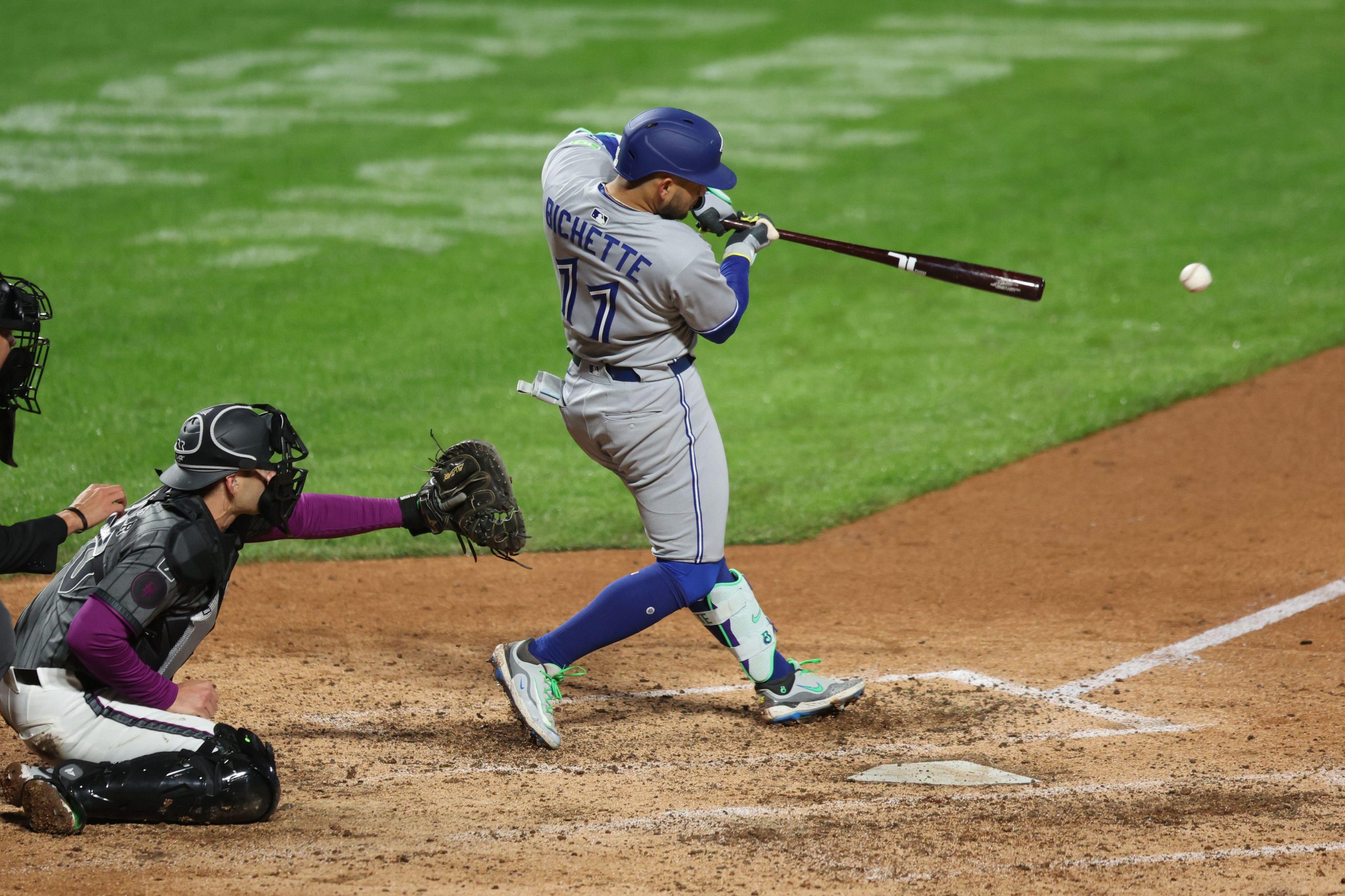
Sure, there was better health among players like Bo Bichette. But there was real, underlying skill growth. The Jays notably swing their bats faster and improved that skill throughout the season. The Jays rank fifth in the postseason field with a 71.9 mph average bat speed. They were among the laggards a season earlier.
This improvement came under first-year hitting coach in David Popkins, a former Driveline client and Dodgers hitting coordinator, who brought in a new intent-driven approach.
It’s not just the Blue Jays.
The World Series champion Los Angeles Dodgers have also had a selection of hitters train at Driveline in recent years. The Dodgers are among the clubs most interested in adopting the best player development practices. That includes bat-speed training.
This was a World Series meeting between two excellent organizations interested in swinging with more speed – not less. That says something, and says it loudly.
After all, if a hitter’s other skills remain constant – contact percentage, swing decisions, batted-ball quality, etc. – increasing bat speed raises their offensive production. Physics remains undefeated. Swinging a bat faster will cause the ball to exit with more speed and travel further.
We have proven at Driveline that hitters can improve their bat speed much like pitchers can improve their pitching velocity through constraint-based training, and that it can raise a player’s overall production. Yet, the merits of bat speed and training regimens to enhance it have doubters – including some very loud skeptics on social media platforms.
I asked Driveline director of hitting Tanner Stokey.
“I think the thing to start with is that that data hasn’t been public for very long – we’re looking at two and a half years now that the season is over,” said Stokey of the MLB-level data. “There’s a lot of people that don’t even know it’s there and have never looked at it .”
Bat speed is not new but quantifying it is.
And if we can measure something, then we can build better training regimens. It’s not any different than training velocity once we had reliable radar gun readings.
With just about anything new, there is will be pushback. The ancient Greek polymath Eratosthenes proved the Earth was round more than 2,000 years ago yet there are still doubters. There will always be doubters. The key with any valuable breakthrough is reaching a tipping point of wide acceptance.
That requires evidence, education, and communication to overcome misconceptions.
Driveline hitting coordinator Travis Fitta says empathy is key in messaging.
“Be empathetic to the fact that people don’t know what they don’t know,” Fitta said. “If you start looking at metrics individually – like bat speed in a vacuum – it’s very easy for people to start making assumptions of the metric based on what they know from their own playing career, or what they’ve seen, or what some guy down the street has told them about swinging fast.
“(Buy-in) is probably going to require more patience.”
Empirical evidence can accelerate buy-in, too.
So, let’s turn to the most popular misconception related to the topic: that increasing bat speed means missing the ball.
The Blue Jays proved this season that not only is bat speed improvement important, but that it does not have to come at the expense of bat control.
Not only did Toronto enjoy some of the greatest bat speed and exit velocity gains this season but they improved from a very good contact-hitting last season (6th lowest strikeout rate at 20.3% in 2024) to the become the best contact team this season (lowest MLB strikeout rate at 17.6%).