
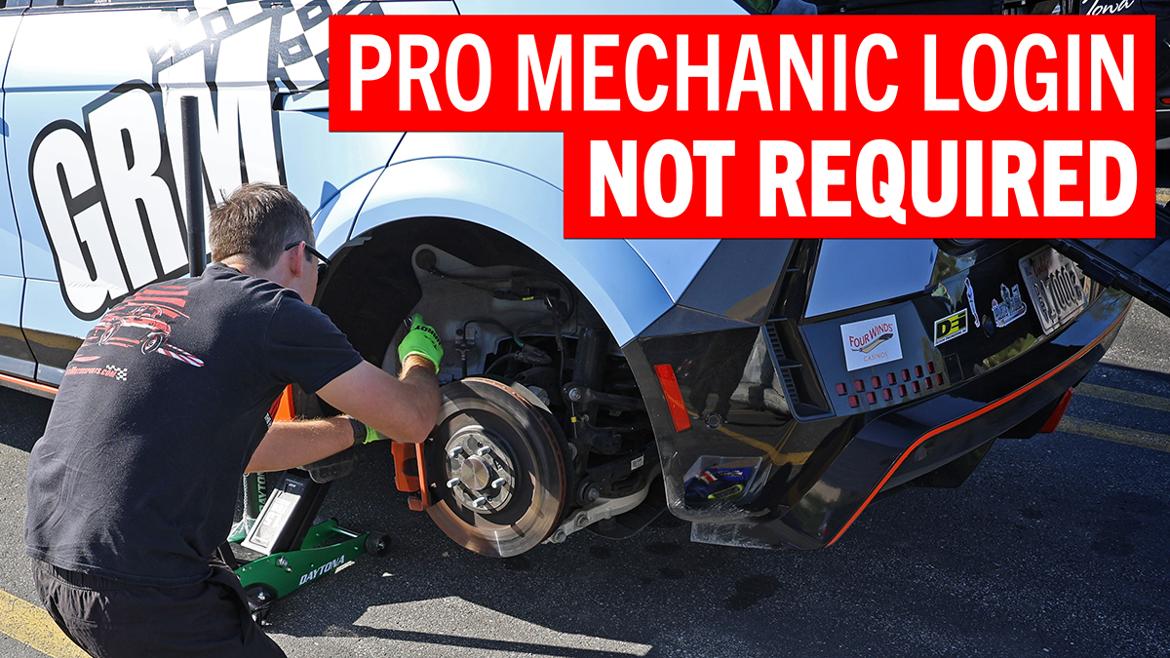
“Replacing Brake Pads on a Hyundai Ioniq 5 N Requires a Professional Mechanic’s Login.”
You probably saw that headline or something like it all over the internet, and the premise was simple: Somebody was complaining that “specialized computer equipment” was required to change the brake pads on their Ioniq5 N.
That expensive equipment was only available to professional mechanics vetted by a third party. “The Drive” dug through Hyundai’s own tech documentation, concluding that, in part, “no, a DIYer cannot do their own brakes on a Hyundai Ioniq 5 N.”
Positioned as a right to repair tragedy–and rightfully so–this took the internet by storm and generated enough hate to make the story go viral. The gist of the comments: Computers in cars are bad, and they ruin everything for automotive enthusiasts. When you can’t even put brake pads on your own track car, what chance do car people have in this modern world?
Here’s my counterargument: Every single time a car gets more wiring, we repeat this exact same cycle. And I’m tired of it.
First we get new electronics in a car. Then we get sensational complaints that hotrodding is dead. Then the community figures out how to crack into the system, so a tenuous truce is realized. And finally, the enthusiasts realize their newfound power and exploit the system for their own benefit.
Remember when EFI was going to ruin the Mustang? Or how body control modules were going to render all cars unrepairable and unmodifiable forever? Or how stability control was going to make it impossible to go on track? Or how direct injection was going to make adding power a thing of the past? Exactly. Plenty of people are still racing cars, and every single technology mentioned is being used to make them faster than ever.
Don’t take my enthusiasm for computers as a defense of OEMs’ tendencies to ignore our right to repair. We need to keep advocating for open access to tools, manuals and parts, and we cannot let “but the computers!” stand as a valid excuse for preventing us from working on our cars.
Ignoring or dismissing technology isn’t how we’ll keep our access. That’s the path to justifying keeping us from it, and we cannot say that it’s just too complicated for us to understand.
Of course, there is a prerequisite to working on modern cars: You need to buy a capable, bidirectional scan tool, and you need to learn how to use it. Every new car sold in America has had an OBD II port for 30 years, so at this point complaining about needing a scan tool is about as interesting as your dad complaining that he had to buy a whole new set of metric tools in the ’80s. On the bright side, you probably won’t need to buy that distributor tester or that box of carburetor jets. Cars evolve, and so do the tools we use to repair them. Scanners are no different.
Which scan tool should you buy? That’s a bigger topic than I can fit in a column, but I’m a big fan of my trusty Autel MaxiPro MP808K. I spent $560 of my own money to buy it back in 2022.
Depending on what I’m working on, I’ll augment it with an OBD II dongle paired with all manner of apps on my phone or computer, usually third-party software that digs deeper into an OEM’s systems than the Autel can or will. If you only work on one car–or one make of car–you might even be able to get away with one of these dongle options and skip the big general scan tool.
What’s the upside to all this complexity? Take our recent Volkswagen GTI project car as an example. Through nothing more than its OBD II port, I was able to add nearly 50 horsepower, change the feel of the brake pedal, and make its limited-slip differential lock more aggressively. I was also able to quickly and correctly diagnose its problems.
Scream at clouds all you want, but it would take far more than a scan tool to accomplish this with your ’65 Mustang. Computers do have their upsides, and anyone who’s ever fought with a rusty, sticking parking brake cable can tell you why electronic parking brakes can be lighter, simpler and more reliable.
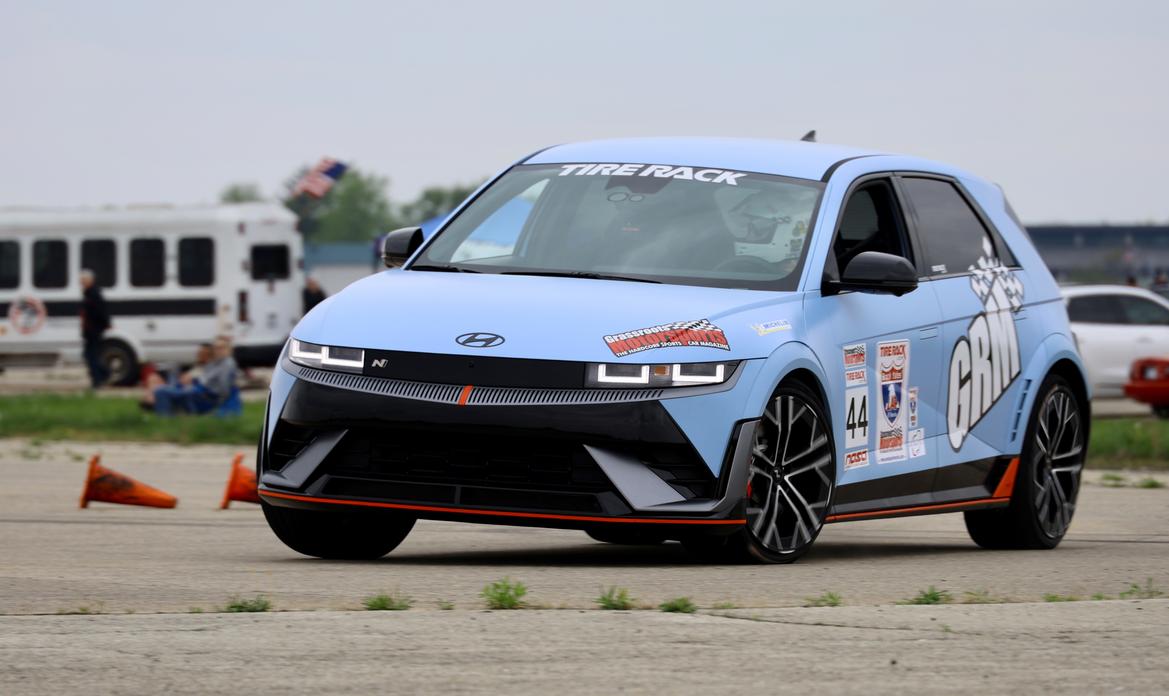
Which brings me to the 2025 Hyundai Ioniq 5 N that started this story. I guess it’s time to come clean about something: Six months before that owner complained, before that article was published, before it was declared impossible by other media outlets, I changed brake pads on a 2025 Ioniq 5 N. Twice. I even did it in a parking lot, with nothing more than the basic tools we carried on the Tire Rack One Lap of America Presented by Grassroots Motorsports.
[One Lap of America Day 0: Readying our Hyundai Ioniq 5 N]
And I did indeed encounter error codes and issues after swapping the rear brake pads. Then I fixed them with my trusty scan tool. I didn’t have to call up Hyundai, didn’t have to buy specialized equipment, and certainly didn’t have to prove to anyone that I was a professional (ha!). It was just another day at the track, and it was just another car.
What’s the moral of this story? Buy a scan tool. Use it to keep fighting for your right to repair. And above all else, don’t let modern technology keep you from working on modern cars.
Comments

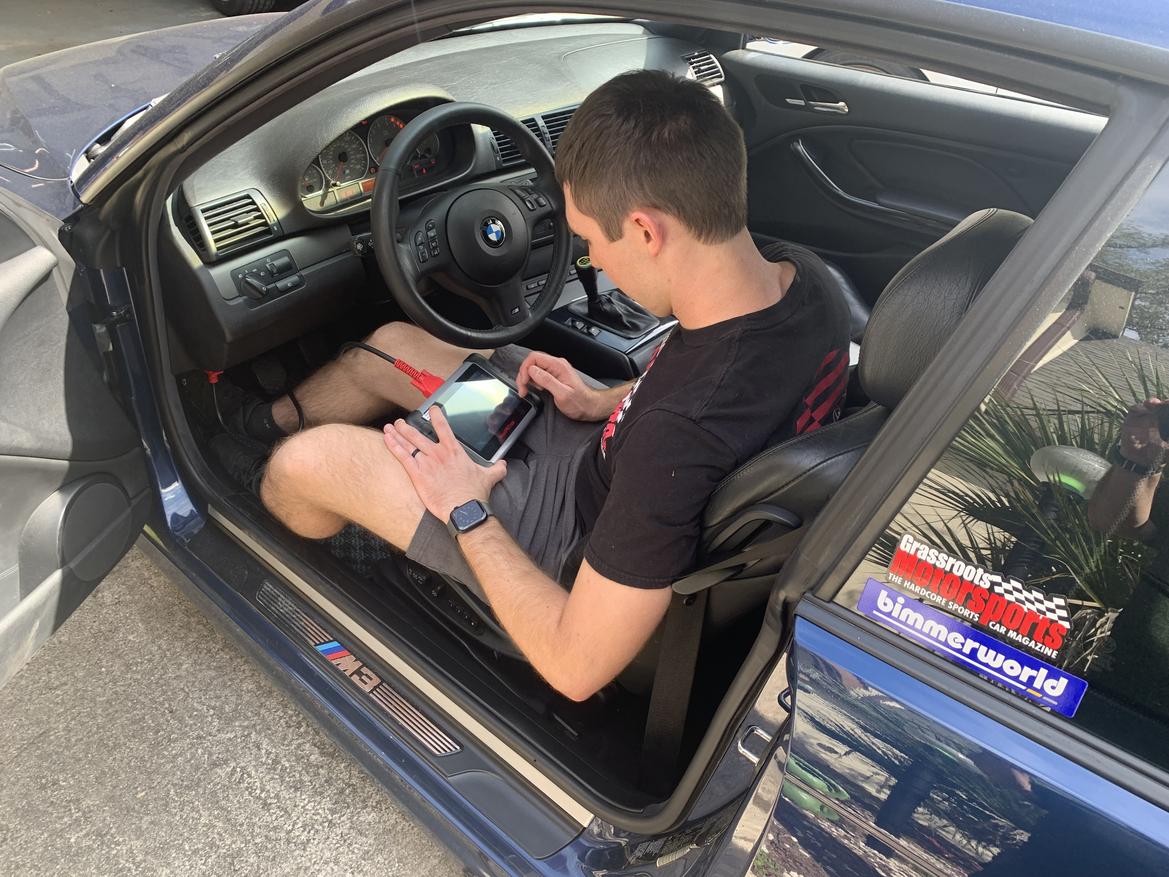
Tom’s used that same scan tool on my M3.

My Camaro V6 1LE also needed an Autel to retract the EPB – I’ll have to remember to grab my pitchforks for those pesky American cars too.
In my garage, I have my dad’s old dwell meter and timing light.

Hey Tom, can that Autel read the trouble codes from the Hyundai/Kia BCM? I’ve got a Kia Sorento that may or may not need an AC compressor and I need to check for any trouble codes in the BCM/HVAC module before I reload the parts cannon (or just give up and send it to a pro).

Mr_Asa
MegaDork
12/16/25 4:52 p.m.
Tom Suddard said:
Every new car sold in America has had an OBD II port for 30 years, so at this point complaining about needing a scan tool is about as interesting as your dad complaining that he had to buy a whole new set of metric tools in the ’80s.
Pedant alert:
From my understanding, as the regulations surrounding it are written, OBDII is specifically for emissions. As an EV has “no emissions” it doesn’t require an OBDII port and some don’t have it.
California law is changing that as of 2026 models, from what I understand

buzzboy
UberDork
12/16/25 7:02 p.m.
Tom Suddard said:
Every new car sold in America has had an OBD II port for 30 years, so at this point complaining about needing a scan tool is about as interesting as your dad complaining that he had to buy a whole new set of metric tools in the ’80s.
I love the obdii port on my old cars because it tells me things like which cylinder has the misfire or that my MAP has gone bad. I don’t like that newer cars use that port with special software for doing brake pads.

I think the important part of this is that OBD2 is an open standard — there is a published specification out there and anyone can implement a scan tool that reads the standard codes, whereas brake piston retraction is not a part of this standard, it is manufacturer-specific extension. Moreover according to the original article, Hyundai neither sells a tool to individuals to allow them to use this extension, nor do they publish a standard telling other people how to do it (*). The third-party scan tool companies usually have to reverse-engineer the protocol, they buy a car and play with it to figure out how to do the things that are needed to maintain it.
These guys are pretty good at reverse-engineering, but that is basically only true because manufacturers like Hyundai do not generally put much effort into hiding the way to do this. They aren’t using cryptographic authentication between the scan tool and the car’s computer, so it’s possible to simply monitor what packets the factory tool sends when you issue a particular command, record them, and then set up the third party tool to send the same ones. This is what’s known as a “replay attack” in computer security circles, and techniques for defending against it are well-known. Hyundai isn’t using those techniques today, but there’s nothing stopping them from doing it other than public opinion.
So while Hyundai isn’t as far down this road as John Deere, I think it’s a mistake to minimize and ridicule the significance of them not selling a factory-approved tool for conducting basic maintenance. Hyundai’s actions send the message that they do not believe that it is important for their customers to be able to do their own maintenance, and it’s just a short hop from there to an all-out war on end-user repairs.
This is not a luddite, anti-technology viewpoint. Tech integrated into cars can be a great thing, but it needs to be open and available for end customers to access.
(*) I should add that this is “as far as I know”. If they do publish it then that’s a different story.

In reply to Tom Suddard :
A list of the supplemental apps would be nice. 😉

Opti
UltraDork
12/16/25 8:48 p.m.
Many manufacturers allow for a service mode without the need for a scan tool.
I’m with codrus. Openness is important here, you be surprised how closed some of these standard obd2 systems are becoming. Try and do anything but pull codes on anything stellantis released after the WL or any brand new Nissan with your aftermarket bi directional scanner.
buzzboy
UberDork
12/16/25 8:58 p.m.
Opti said:
Many manufacturers allow for a service mode without the need for a scan tool.
Service features should be available through the info-tainment screen.
Displaying 1-10 of 36 commentsView all comments on the GRM forums
You’ll need to log in to post.