
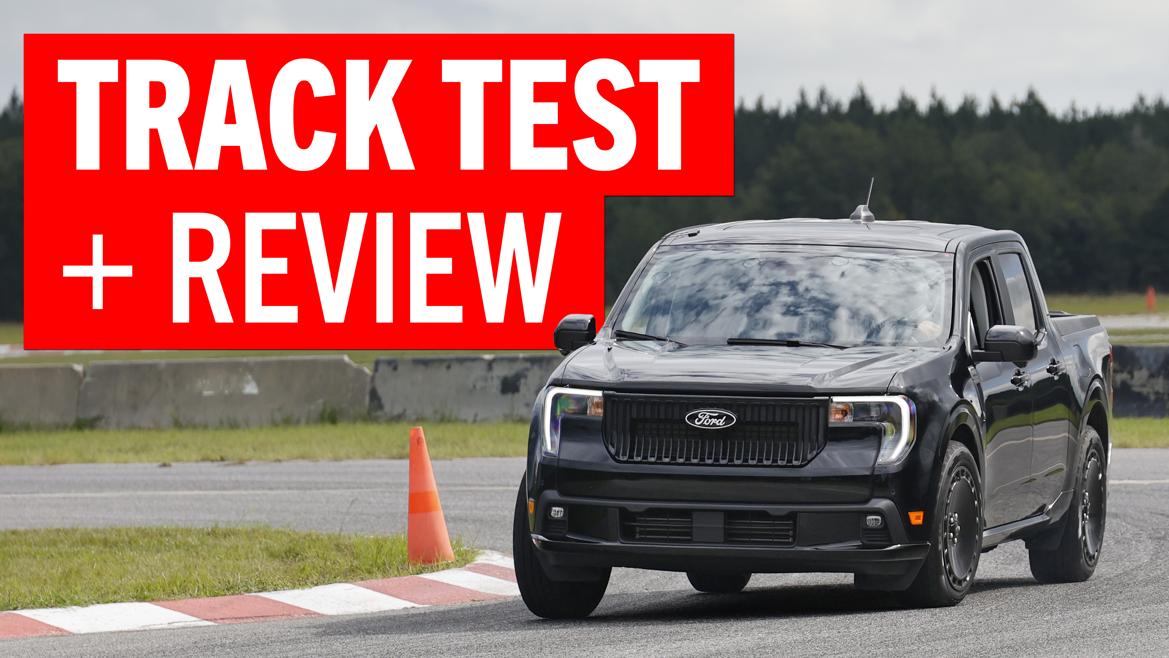
Back in the simpler times of the 1980s, the world celebrated mini-pickup trucks as more than just economical alternative for hauling some cargo. Thanks to their low cost–many well-equipped small trucks could be had for less than $10,000–plus utility and economy, mini-trucks also had a magnetic appeal to a lot of young buyers–particularly young males–who wanted to express themselves through …
On track
Regardless of the level of content crammed into this miniature truck (which is actually similar in size to a short-bed 1975 F-150), the Lobo’s performance would do the mini-trucks of old proud–and simultaneously frustrate the crap out of them.
On track, the Lobo is its own best friend as well as its own worst enemy, with better manners, drivability and tossability than it has any right to have while being hamstrung with a woefully misapplied set of tires and very poor transmission programming.
Despite giving the Lobo an overt, on-road performance mandate, Ford chose to equip it with a set of tires far more suited to light off-road or inclement weather use. The 225/55R19 Goodyear Wrangler Territory HT is a fine tire in its own right, but it’s mismatched to the intentions of this chassis. A set of summer rubber, or even a set of slightly more road-friendly tires, would go a long way toward turning the Lobo into a far more capable carver.
The transmission programming is also substandard, as we’ve experienced with other recent Ford automatics on track. Even in full auto mode when using the paddle shifters, it forces upshifts, delays downshifts and generally becomes a frustrating companion to track driving.
Couple that with an engine whose output is all torque, all the time, and this makes it tricky to get repeatable laps. The flat pull of the 2.0-liter gives no real tactile or aural indication of where it is in the rev range. So you’re forced to drive entirely by the tach–and to shift a few hundred rpm early, lest the transmission controller sense you’re nearing redline and thwart your shift timing. Dear Ford, just throw an 8HP in this thing already.
Complaints aside, the Lobo is better than it has any right to be on track for a modern interpretation of the genre. The tires may not deliver much grip, but all that slip angle is easy to manage given the good chassis control and decent steering. Brakes are also decent, although the pad compound does start to go a little soft after a few hard laps. But they do retain enough bite to finish a session.
Data Dive
How much would a set of real tires help the Lobo? Let’s compare it against our 2011 BMW 328i project car in stock form minus a set of BFGoodrich g-Force Phenom T/A tires.
[Performance tires that won’t break the bank? | Budget UHP tire test.]
Our VBox data from the FIRM shows very similar acceleration graphs (red for the Lobo and green for the BMW). Likewise, both vehicles display braking performance that’s more similar than different, with the nod maybe even going to the Lobo for its excellent, linear deceleration performance.
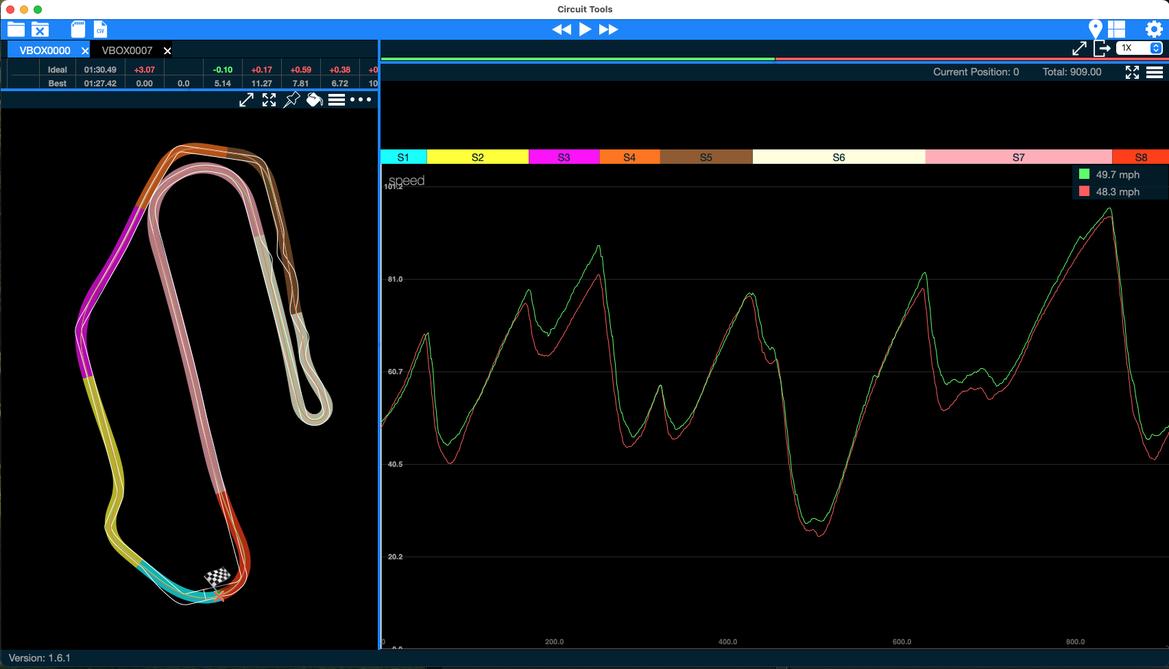
But as soon as the cars get to the corners, the Lobo’s lack of grip becomes apparent. The BMW runs a full 5 mph faster in the FIRM’s quick Turn 4, for example, and enters the sweeping Turn 8 nearly 6 mph quicker.
Ultimately, the BMW turned a lap a few seconds quicker than the Lobo–1:27.42 versus 1:30.84–almost entirely on the strength of additional cornering performance.
Still, the traces of the Lobo are smooth, showing that the chassis is predictable and drivable. Only absolute grip separates it from a quicker lap.
Well, grip and transmission performance.
Shifting the Lobo is an exercise in frustration, as it’s likely to upshift rather than hold a gear, or to delay a downshift when entering a corner just enough to throw off your timing.
Couple that with the flattest torque curve this side of the Kansas plains, and it can make for a high-stress lap that’s difficult to repeat. We found the best repeatability when we upshifted early–not really a penalty because of the strong pull by all that torque–and downshifted late. It was not the timing we wanted from a good track companion, but it mostly worked.
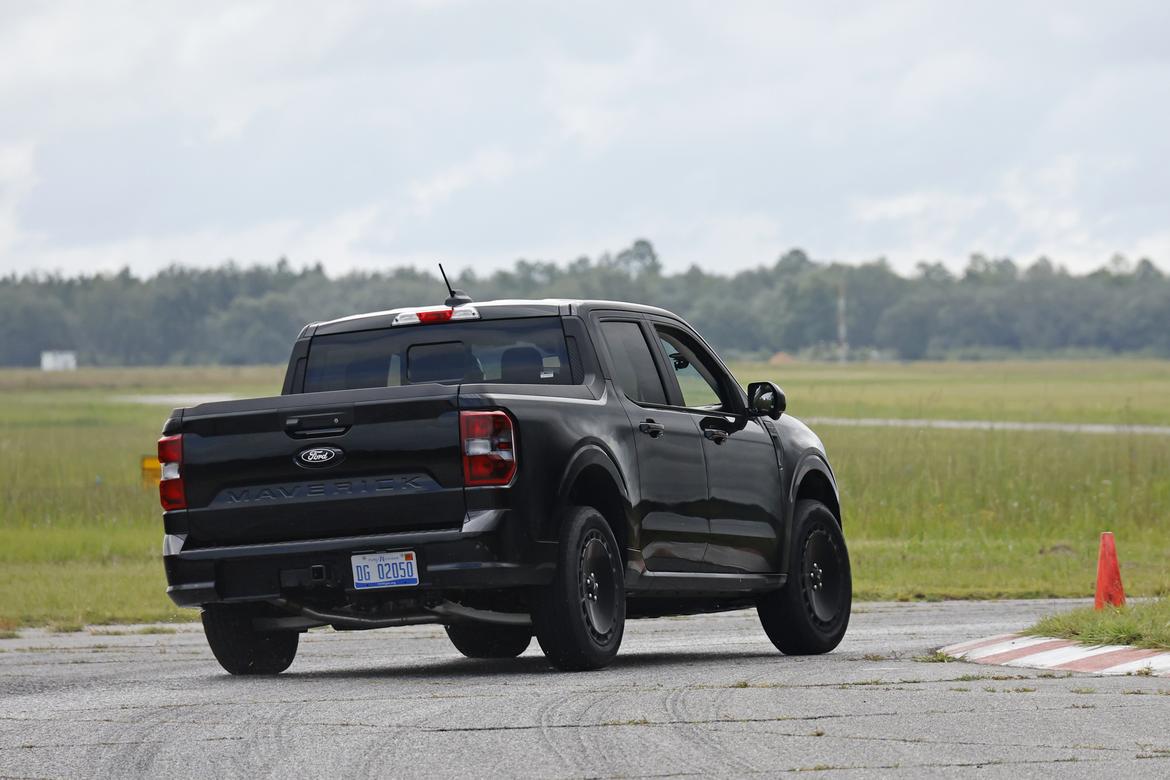
It has some frustrating flaws, but overall the Maverick Lobo is a nice modern take on a classic formula. It’s fun, comfortable and useful on the street (as long as you don’t need to tow much) while delivering somewhat capable track manners.
At more than $43,000 as tested, though, that’s where it likely strays the furthest from its sporty, mini-truck roots. Anyone who’s priced Rush tickets this year knows that nostalgia comes at a price, though–and you’ll probably want to set aside a few bucks for a more aggressive set of tires.