
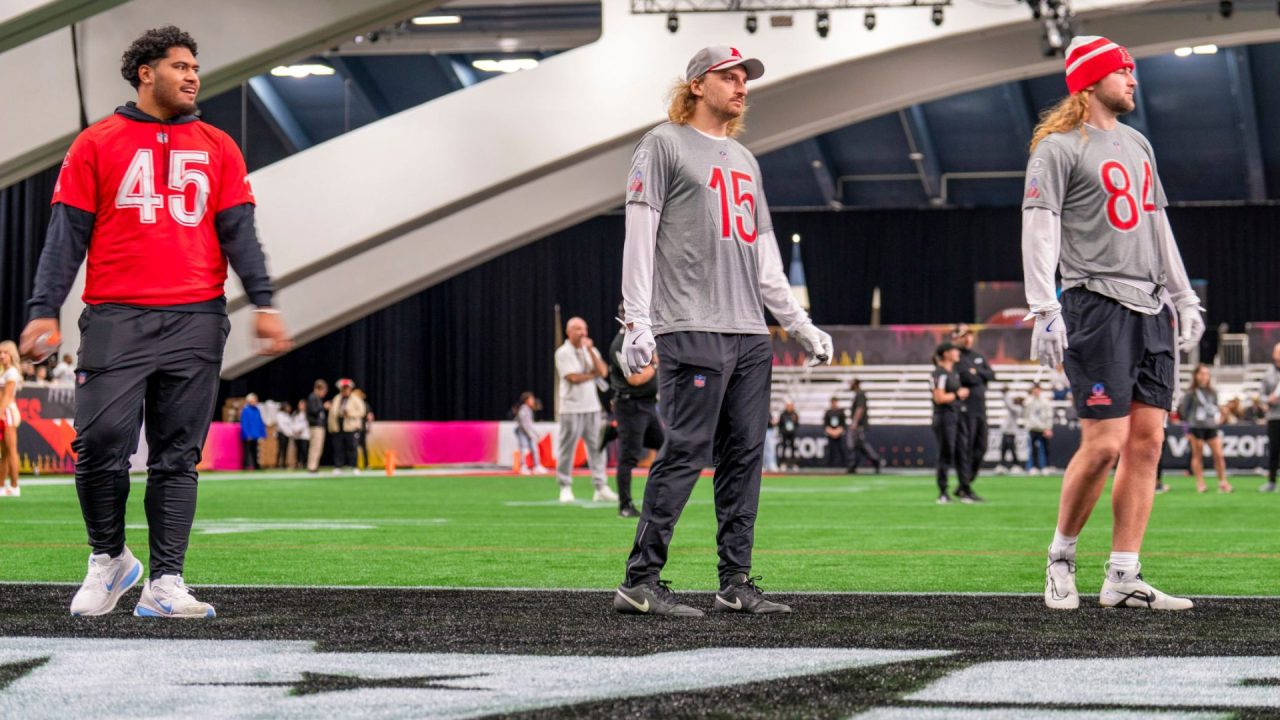
For years, fans have joked that the Pro Bowl was on life support. I’ve extensively discussed changes the league could implement to make the game more exciting, however, in 2026, it feels like the NFL finally pulled the plug — then propped the body up, slapped sunglasses on it, and called it “The Pro Bowl Games.” Except, the games were missing!
What used to be an honor has become a rotating cast of opt-outs, alternates, and players who treat the event like a mid-winter vacation. Not that there’s anything wrong with a vacation: it was one of the perks the players used to get. However, with this year’s lineup of events, replacements, and general chaos, the league may have pushed fan interest past the point of no return.
The prestige is gone — and fans know it
There was a time when being named a Pro Bowler meant something. It was a badge of honor, a line on a resume that carried weight. Now? It’s a participation trophy. Literally.
The voting process is still marketed as a fan-driven celebration of the league’s best… but the players fans vote for rarely show up. Opt-outs aren’t just Super Bowl participants anymore — they’re players who simply don’t feel like going. And the replacements? Let’s just say the logic behind some of them would stump a rocket scientist.
Take the AFC side, for example. The three quarterbacks selected Shadeur Sanders, Joe Burrow, and Joe Flacco, were all alternates — they went a combined 10-15 on the season. Their stats didn’t really scream All Star material either.
These are the AFC starting QBs for the #ProBowlGames.
Shedeur Sanders: 7 starts — 56.6%, 1,400 yards, 7 TD, 10 INT
Joe Flacco: 10 starts — 2,479 yards, 15 TD, 10 INT
Joe Burrow: 8 starts — 66.8%, 17 TD, 5 INT
Combined record: 10–15.
What a year. pic.twitter.com/bQVGDjFsMq— (@steelcityundrgr) February 3, 2026
At least the NFC side had some stars at the most visible position in football, with last year’s Super Bowl winner Jalen Hurts playing alongside Dak Prescott and Jared Goff. Otherwise, opt-outs, injuries, and “personal decisions” have turned the AFC and NFC rosters into a revolving door. Fans have openly questioned how certain replacements were chosen over more deserving players, and the league has offered little transparency. (We’re looking right at you, Aaron Rodgers.)
When the original roster is treated as a suggestion rather than a selection, the entire process loses credibility.
Does the league think the Pro Bowl is still meaningful?
I strong believe the NFL has given up on the Pro Bowl. The NFL’s solution to declining interest in the game over the years was to first make it a fantasy football game, where celebrity coaches picked, and coached, their teams. With millionaire athletes unwilling to risk injury in a meaningless game, the traditional helmets and pads were eventually swapped with a week of skills competitions and a flag football finale.
On paper, it sounded fresh. In practice, it was a mash-up of backyard games, social-media-bait challenges, and players wearing sunglasses while jogging through drills.
This year, the “games” were mostly wiped off the map, leaving the flag football matchup — now being pushed as a future Olympic event — as the lone survivor. League officials had hinted that more details on the usual skills competitions were coming, but a throwaway comment during Tuesday’s broadcast all but confirmed that staples like Tug‑of‑War, Dodgeball, and even the Madden showdown didn’t make the cut.
Venue and scheduling
Even the NFL’s website all but buried details of the game, which quietly shifted to a Tuesday evening. Originally, the Pro Bowl had been played following the Super Bowl, which left an open weekend with no league events between the conference championships and the big game. To rectify the situation, Commissioner Roger Goodell moved the Pro Bowl up one week, which began it’s downward spirl.
Due to the new scheduling, all Super Bowl participants — who in theory are the best players this season — couldn’t participate.
The league long ago ditched the Pro Bowl’s iconic Honolulu backdrop — its home from 1979 to 2008 — in favor of a rotating list of mainland sites. Hawaii at least offered players and their families a legitimate incentive and gave the NFL a rare presence outside the continental U.S. Even when the game briefly returned to Aloha Stadium, later stops in Miami, Orlando, Phoenix, and Las Vegas still drew respectable crowds in the 50,000–60,000 range.
This year, the NFL planted the event in the Super Bowl host city, clearly hoping to pad the week’s festivities. But the flagship flag football game was shoved indoors into a convention center, complete with temporary end‑zone bleachers seemingly occupied by players’ families and staff — and not many others. It’s hard to read the move as anything but the league quietly shrinking the Pro Bowl into irrelevance.
The event itself
If the setting didn’t already tank the TV product, the broadcast finished the job. The cramped venue only amplified the absurdity, and viewers were treated to Jason Kelce openly calling out the flag‑football officials for inconsistent rule enforcement. Half the time it wasn’t even clear when a flag had been pulled, which is… kind of the entire point of the sport.
The officiating chaos didn’t stop there. “Sacks” inexplicably turned into two‑point safeties, and even legitimate highlights — like Courtland Sutton stretching for a would‑be touchdown as the first half expired — fizzled because officials were out of position and no replay system existed to clean it up. If the players weren’t taking it seriously (and they weren’t), the league certainly wasn’t either.
The lone bright spots came from players who refused to mail it in. Sutton made plays all night, and George Pickens — one of the game’s MVPs — delivered the kind of jaw‑dropping moments that remind you why he’s must‑see TV. Athleticism was everywhere: Garrett Bolles catching passes, Ja’Marr Chase lining up on defense, the usual Pro Bowl chaos. But we already know these guys are elite athletes. When the roster is a patchwork of alternates — including Sanders tossing multiple interceptions — the sloppy officiating and bare‑bones production don’t exactly elevate the experience.
Where the Steelers fit into this mess
Pittsburgh still had three players selected to this year’s event — T.J. Watt, Jalen Ramsey, and Ben Skowronek — but even their nominations underscore how odd the Pro Bowl has become.
Watt, one of the most decorated defenders of his generation, earned yet another nod, but the idea of him operating in a setting where “effort” is optional and the loudest hits come from the speakers feels mismatched. A player of his caliber belongs in a real football environment, not a glorified content shoot.
Ramsey’s instincts and competitiveness make him a natural fit for coverage drills and flag football, but even he stayed on the sideline this year. And honestly, it’s hard to blame him — the event has drifted so far from anything resembling a football showcase that even elite competitors can’t elevate it.
Skowronek, meanwhile, received a well‑deserved selection for his special teams work, though the current format doesn’t acknowledge the third phase at all. (There are no kickoffs and teams must go for two on all extra point attempts.) His recognition is a reminder that the Steelers still value special teams, even if the league treats it like an afterthought.
In a traditional Pro Bowl era, this trio would’ve anchored a meaningful AFC roster. In 2026, they’re reduced to names on a graphic for a made‑for‑TV exhibition.
So… is the Pro Bowl officially dead?
If the Pro Bowl isn’t competitive, isn’t prestigious, and isn’t taken seriously by players or fans… what is it? At this point, it’s a content week. A branding exercise. A chance for players to hang out, crack jokes, and film social clips in a low-stress environment.
There’s nothing wrong with that — but it’s not the Pro Bowl.
The Pro Bowl, as fans once knew it, is gone. And unless the league makes a dramatic shift back toward meaningful competition, it’s not coming back.