
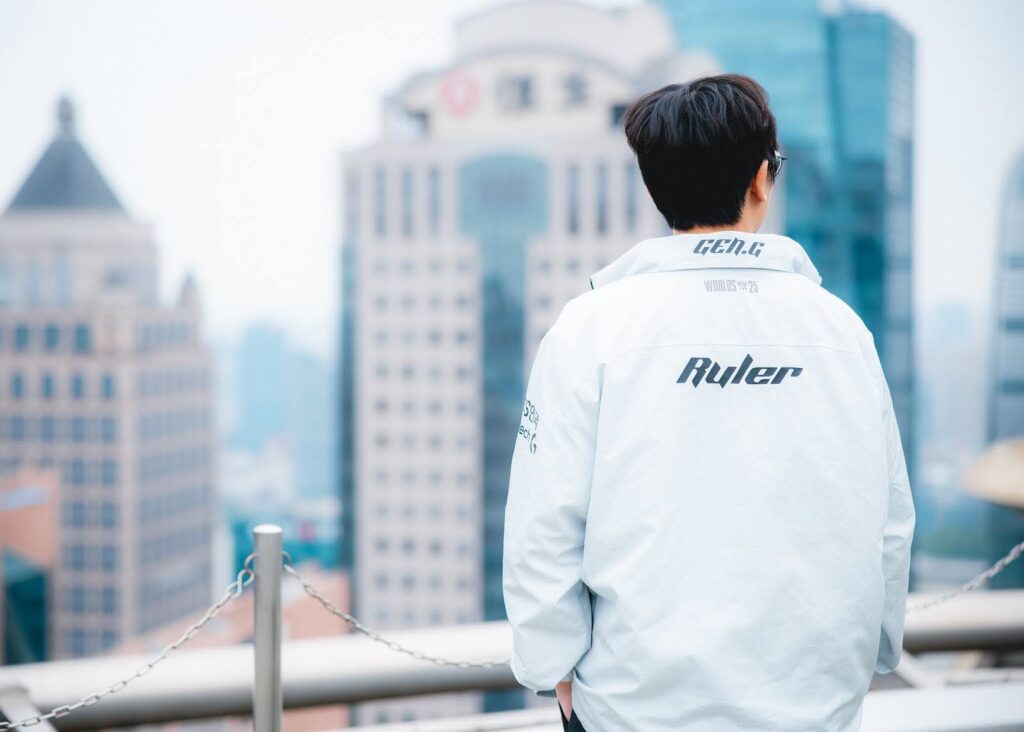
Park “Ruler” Jae-hyuk’s tax controversy has become one of those stories that, at first glance, looks smaller than the reaction surrounding it. A mountain out of a mole hill. After all, the taxes were ultimately paid! There’s no lurid criminal indictment attached to the case in the way casual readers might imagine when they hear the phrase “tax evasion.”
And Ruler, in his own statement, has insisted there was no deliberate concealment of income, describing the matter instead as a mishandled arrangement involving payments to his father and stock held under his father’s name.
Yet in South Korea, this has landed not as a minor accounting dispute but as a genuine public scandal. That is because the controversy touches three especially sensitive nerves at once: taxes, celebrity ethics, and military-service privilege.
Korean coverage has treated the case not as fandom gossip but as a broader question of whether one of the country’s most recognizable esports stars lived up to the civic standards expected of someone who has benefited so visibly from national recognition.
- “Increased focus on fandom”: Jake Sin on selecting the next VCT Pacific partner teams
- Does G2 Esports’ run at First Stand 2026 mean the gap between Western and Eastern teams in LoL Esports is closing? Maybe
What Exactly Happened With Ruler’s Taxes?
The core facts, as laid out in domestic reporting, are straightforward enough. From 2018 to 2021, Ruler listed his father as a manager and sought to treat related payments as deductible labor or management expenses. Separately, stock was held under his father’s name.
The national tax service viewed those arrangements as improper, assessed additional comprehensive income tax and gift tax, and Ruler challenged that assessment before the tax tribunal. He lost.
Reports say the tax authorities and tribunal were not persuaded that his father’s role was substantiated in the way required, and they were similarly unpersuaded by the explanation that the name-borrowing arrangement lacked a tax-avoidance purpose. Some coverage has pointed to the fact that money in the father’s account was also used for the father’s own taxes and credit card bills, which only hardened public suspicion.
That alone would be damaging. But scandals are rarely only about the underlying conduct; they are also about what the conduct symbolizes — in this case, paying taxes is not just a legal obligation. It’s a shorthand for fairness. It reflects a public expectation that a celebrity should not become a route to special treatment.
That is part of why Korean media have so often framed this story as reputationally unresolved, even though the tax bill itself has already been settled.
Then there is the military angle, which turns a bad story into an explosive one. Ruler is not just a famous player. He is an Asian Games gold medalist, and that matters enormously in South Korea because military-service exemptions tied to elite athletic or artistic achievement are both rare and politically contentious. They are granted to only a sliver of people and are often scrutinized as a test of what the state should reward.
So when a beneficiary of that system is caught in a tax controversy, the public argument changes. It is no longer merely: did a star player mishandle his finances? It becomes: did someone who received one of the country’s rarest public privileges fail a basic duty? Korean reporting has explicitly connected the case to renewed debate over whether the rules around such benefits should be tightened.
That is why this is such a big deal for the LCK, too. The league is not just dealing with a player scandal; it is dealing with a legitimacy test. Where the majority of previous controversies have been one-game suspensions for off-color remarks and poor in-game behavior, this is one of the first significant scandals in the league’s history.
The LCK has already announced an internal review and said it will form an investigative committee that includes outside experts. Importantly, the league also said that, for now, it will not impose interim measures before the investigation is completed. That measured approach makes sense. It avoids rushing to punishment while acknowledging that the matter is serious enough to require formal scrutiny.
The Tax Controversy May Paint Ruler Unfairly
In fairness to Ruler, there is something puzzling about the entire affair. He is wealthy. He is famous. He had every reason to protect a reputation built over years as one of Korea’s flagship esports figures. And the conduct at issue appears, at least from public reporting, to be concentrated in a relatively limited set of arrangements from years ago rather than some sprawling pattern of hidden offshore behavior.
That does not excuse it. But it does make the case feel less like the cartoon image of greed with and his father twirling their mustaches and more like a mixture of complacency, bad judgment, and the dangerous belief that informal family arrangements are harmless because they are familiar.
That may be the broadest lesson of the entire affair. Players in every esport should think very hard before putting family members in quasi-professional roles involving management, finances, or representation. Not because relatives are inherently suspect, but because those arrangements so easily dissolve the line between trust and oversight.
Once that happens, what begins as familiarity can curdle into opacity. In the NBA, that pattern has surfaced in very different forms: Lonzo Ball’s split from the Big Baller Brand ecosystem led to allegations that millions were unaccounted for, turning a family-centered business structure into a public embarrassment, while the long-running scrutiny around Kawhi Leonard’s uncle, Dennis Robertson, showed how an influential relative operating in the shadows can…suck.
Football offers even starker warnings. Lionel Messi long argued that he left tax matters to others, especially his father, but that defense did little to protect his image once both men were convicted in Spain over unpaid tax on image-rights income. Neymar’s father, meanwhile, has for years stood at the center of his son’s commercial life as agent, company operator, and dealmaker, and that closeness repeatedly pulled football and family into the same contested space, from tax disputes to the legal and reputational fallout surrounding the Barcelona transfer.
The issue in cases like these is not always some cinematic act of corruption. More often, it is the quieter but still corrosive problem of informal family authority being treated as a substitute for professional structure.
The post The Ruler scandal explained: South Korea’s explosive reaction to what seems like, well, not a big deal appeared first on Esports Insider.