
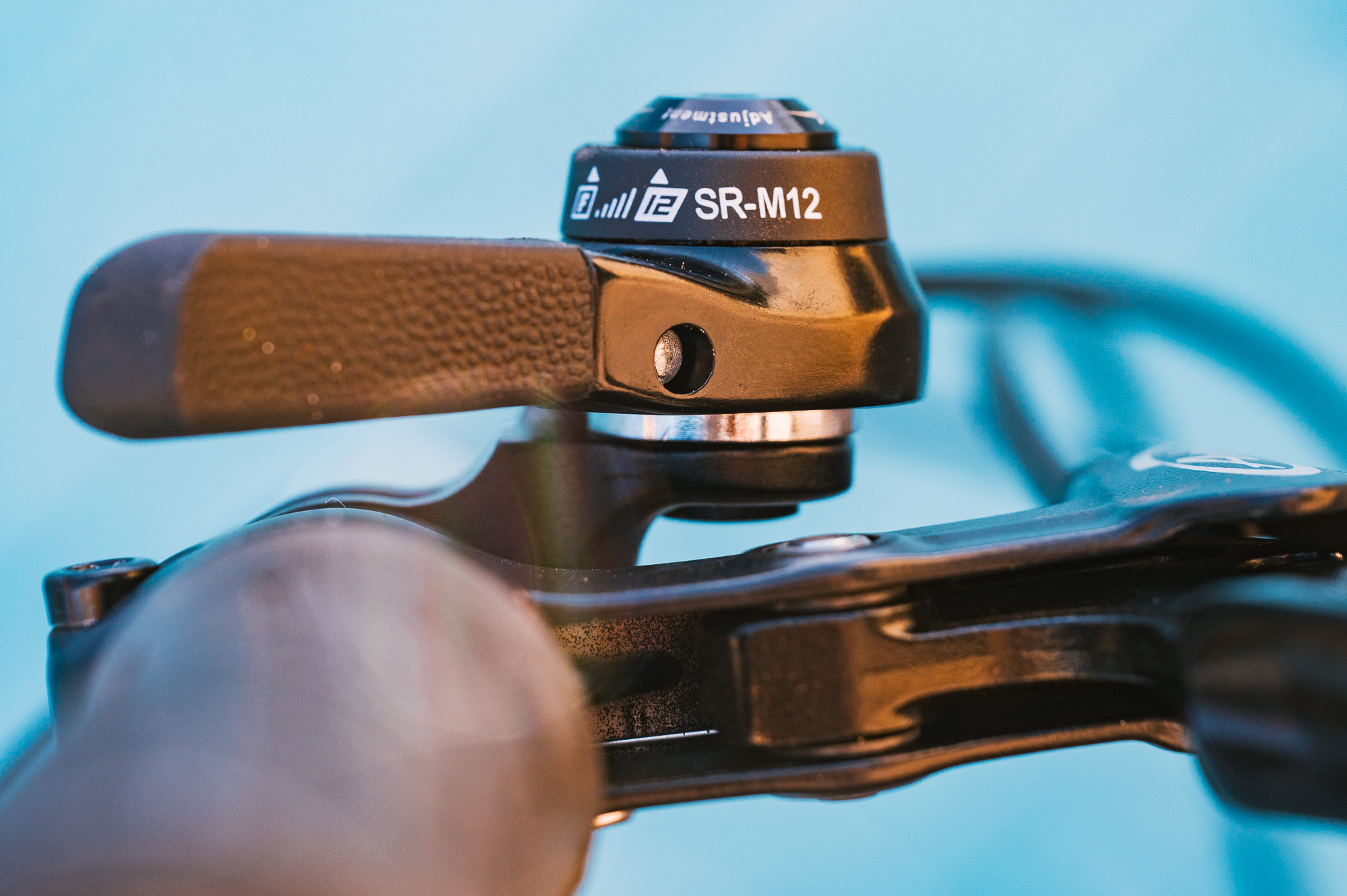
Ever since SRAM released its cable-actuated Eagle 90 Transmission drivetrain, a burning question has lingered in the back of Spencer’s head: Will it friction shift? In short: yes, every drivetrain will eventually fall to the whims of the friction-shifting aficionados. Today, Spencer discusses his Tinker Tantrum quest to answer this burning question. So how does it actually ride?
It wasn’t long ago that almost all of my bikes used friction shifting, except for one that had electronic shifting. It was quite the set of outliers in my stable. I’m still waiting for the day when I get to have wireless electronic friction shifting, but that hope died when Archer Components went out of business. Nonetheless, we persist onward toward the latest frontier in friction shifting, SRAM’s UDH and accompanying cable-actuated Transmission drivetrains.
Why Even Bother?
I’m sure more than a few of you are thinking, “The trigger shifter works just fine, why do you need a thumb shifter? Isn’t that less efficient?” To answer the last question, absolutely. A thumb shifter is an antiquated, less efficient, and frankly less ergonomic component, but I dare you to ask your mechanic which component on a drivetrain tends to fail first. They’ll probably say either the derailleur or the shifter, especially rapid-fire shifters. If you’ve never spent a day continually spraying degreaser into a seized rapid-fire shifter, sit down and stay out of my comments. Now, the new Eagle 90 derailleur is serviceable and fully repairable, which is amazing, but the shifter is not. Thus, we quest toward a modern, reliable, rebuildable drive train.
Can I Haz Transmission Plz?
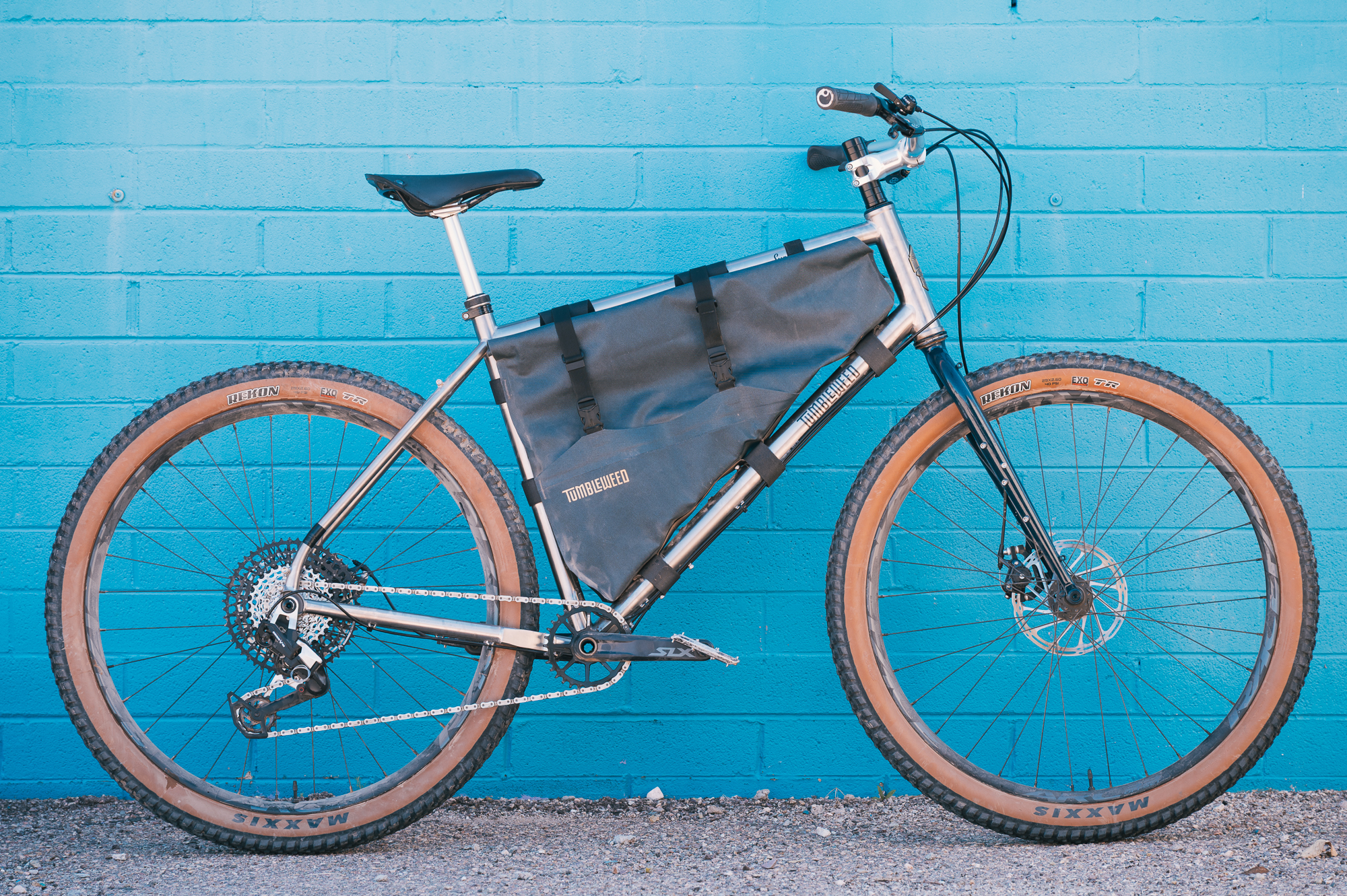
I spent the past year bothering anyone at SRAM who would listen about friction shifting the new Eagle 70/90 drivetrains. I got answers ranging from “that would be hard” to absolute crickets – ghosted, unless I wanted to review the newest, fanciest, most electronicified drop bar groupset. That changed when Tumbleweed sent me their new Sunliner Ti for review, which coincidentally came spec’d with the Eagle 90 drivetrain.
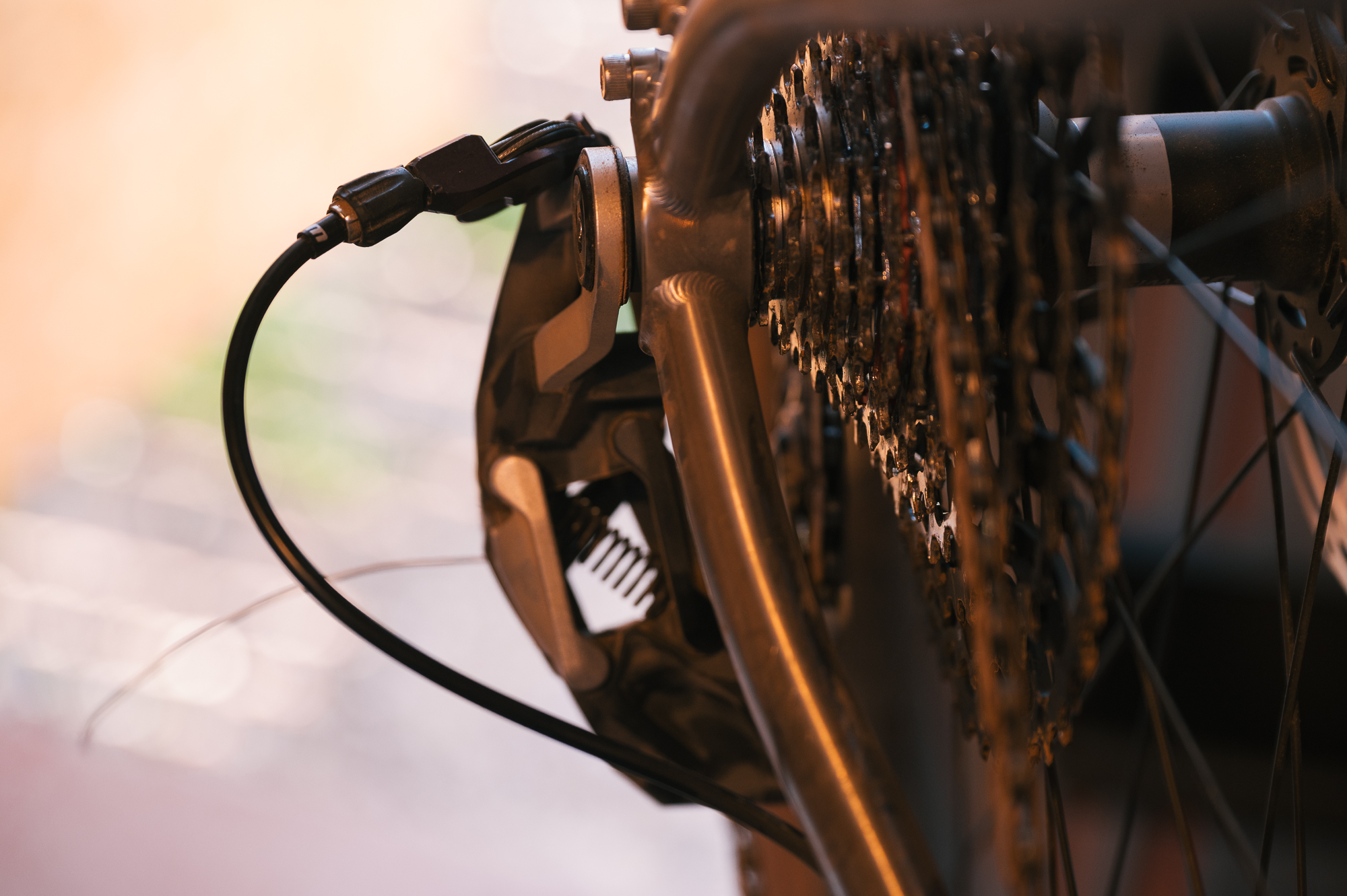
I was immediately intrigued by how stoutly the Transmission derailleur mounts to the UDH, a design that allows shifting under greater load than a standard derailleur hanger. What would it feel like to just absolutely dump gears with a thumb shifter on a system built to handle that kind of abuse? It sounded pretty cool in my head, so – for science – we press on.
My First Attempt
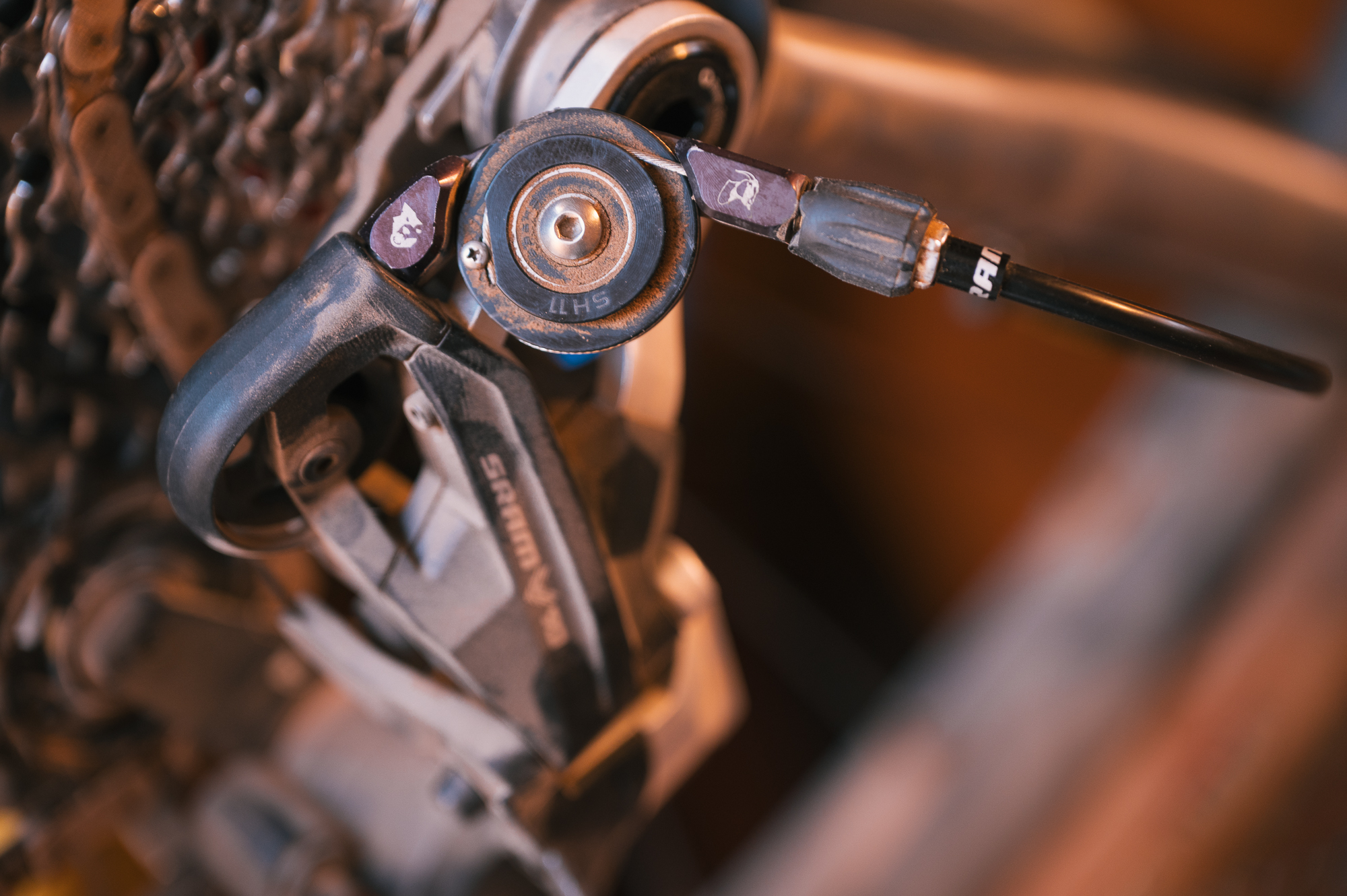
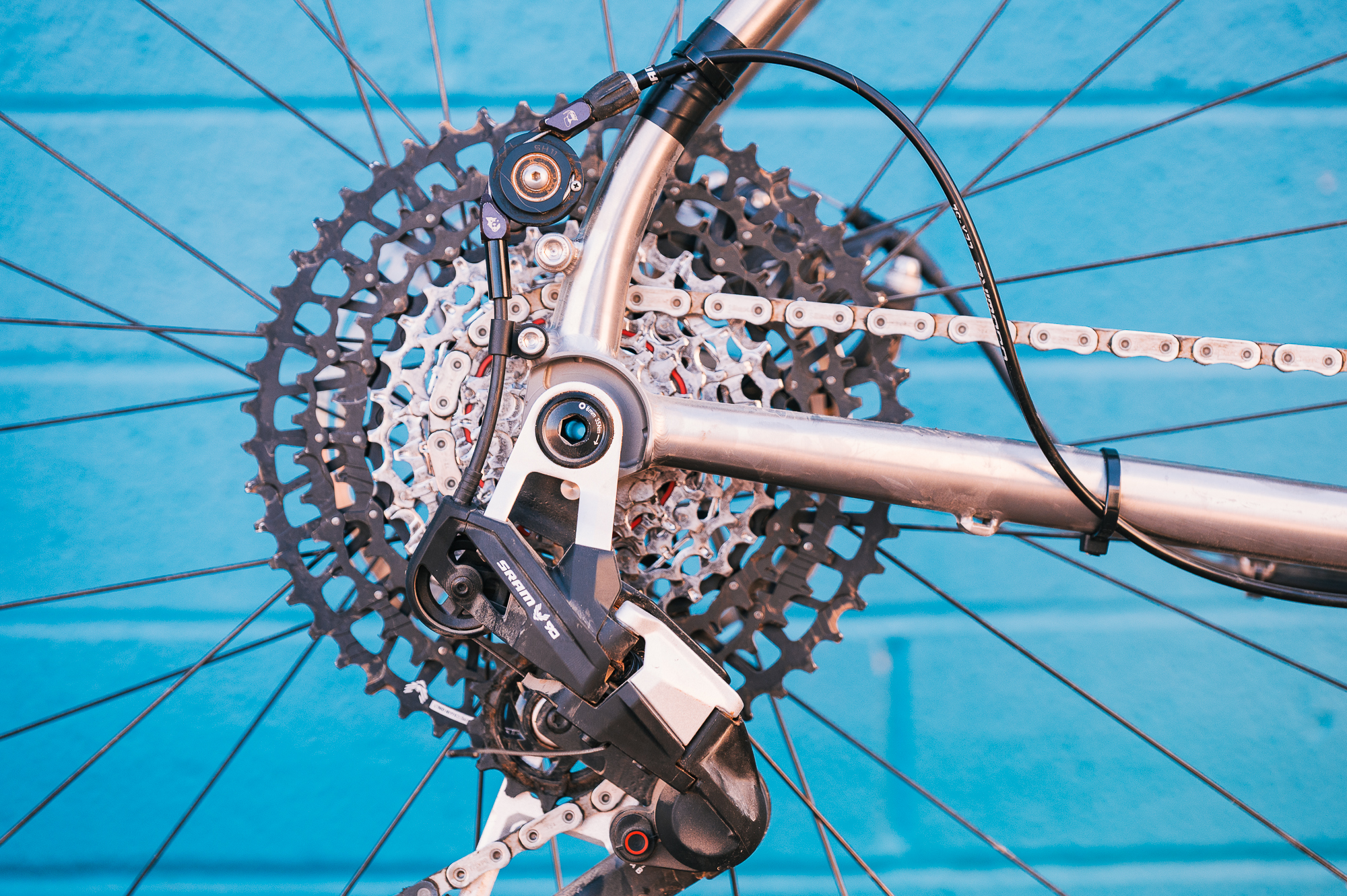
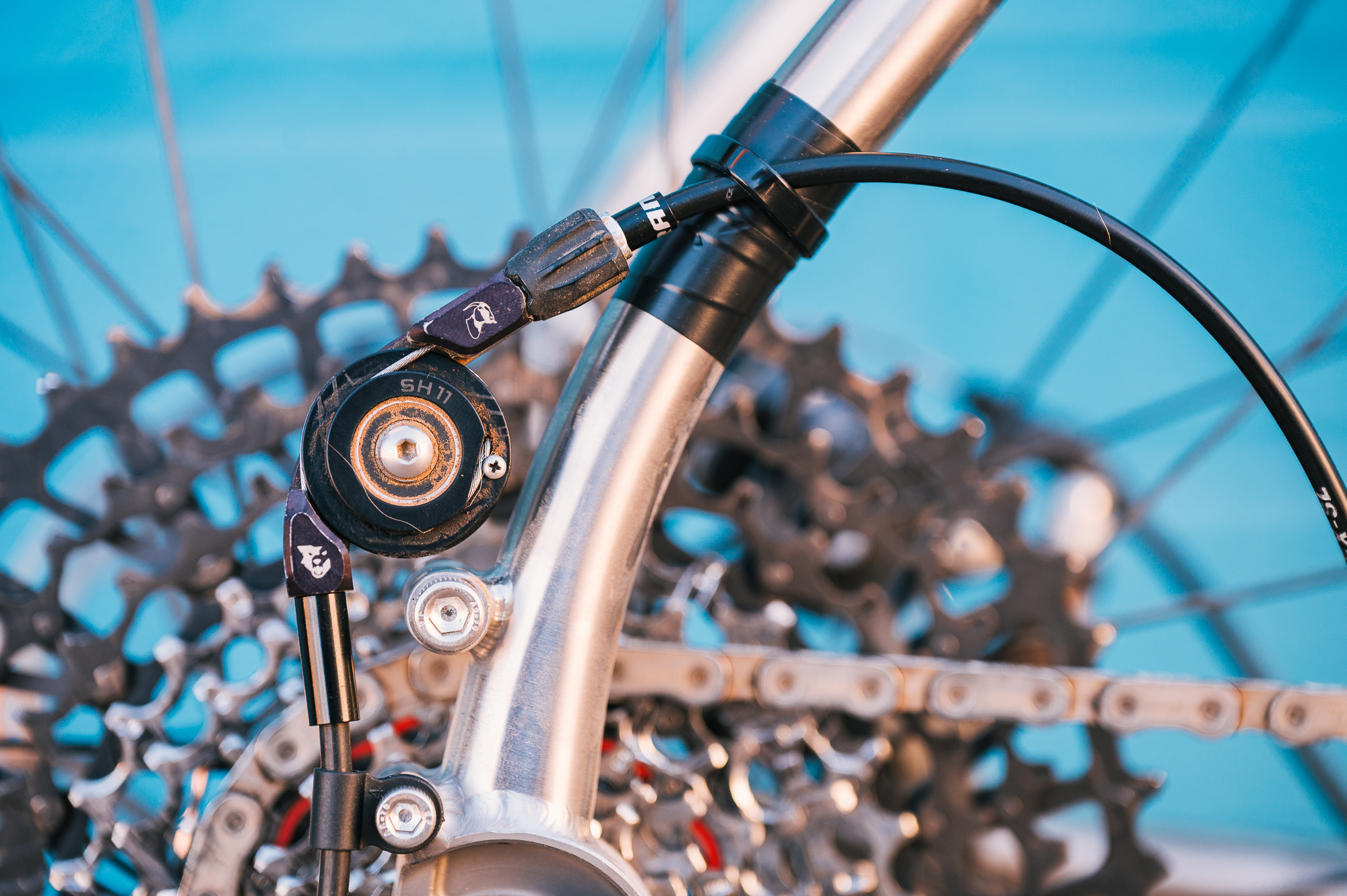
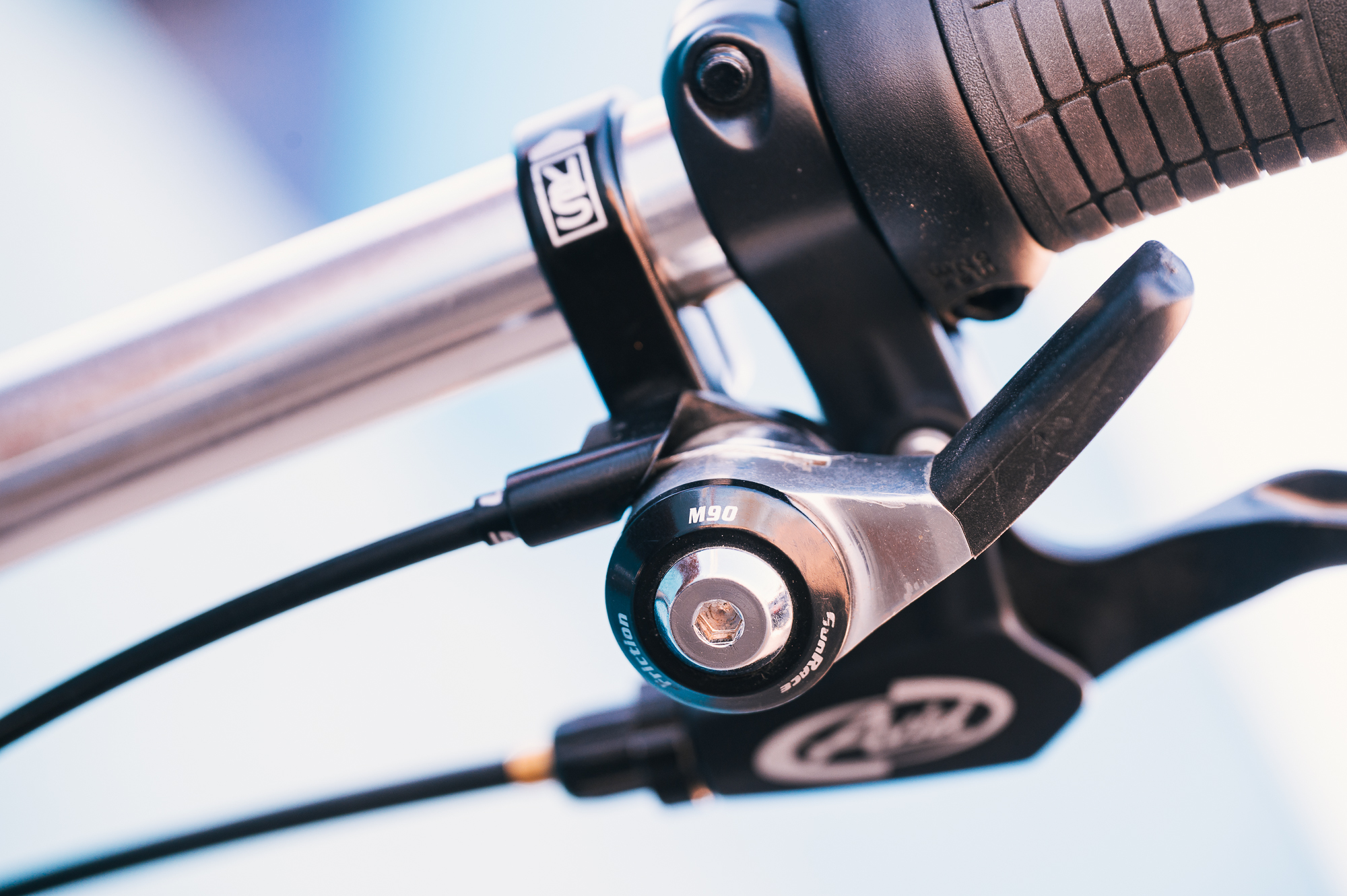
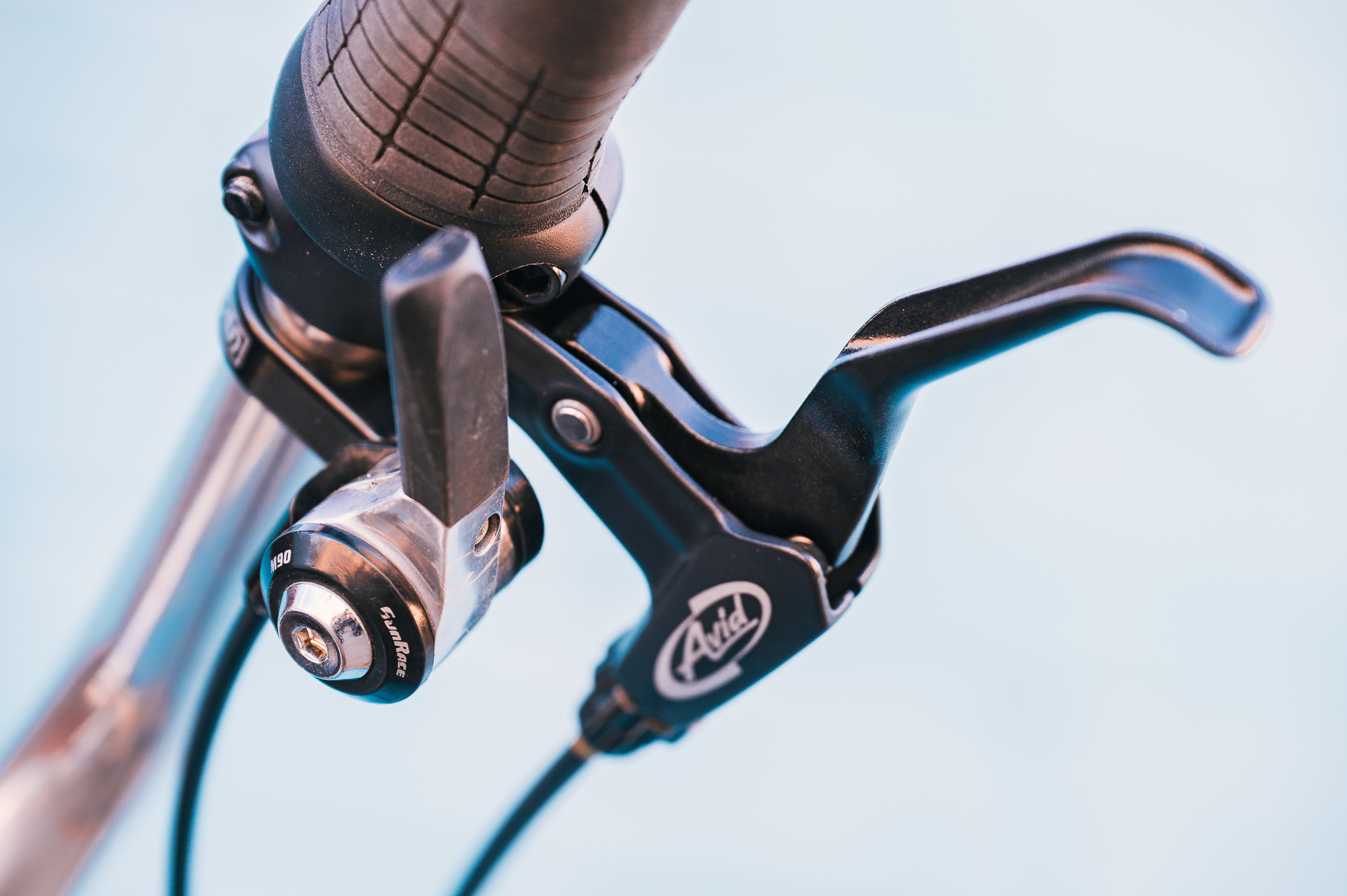
Working with what I had in my shed, I came up with an abomination comprised of a friction shifter meant for Sturmey Archer 3-speed hubs and a Wolf Tooth Tanpan cable travel adjuster. My initial test found the friction shifter just barely lacking in cable pull to span the whole cassette, something I decided was probably due to the extra 3 mm of width allowed by the UDH. To remedy that, I added the Tanpan, which I had used in previous experiments, to account for the lack of cable pull. While ugly as sin, this setup worked just fine, though for the sake of reliability, I hoped to avoid the unnecessarily complex setup of the tanpan and its very teeny tiny set screw.
After setting off one of the most robust discussions on our Radavist Slack channel, where our resident tech guru, Travis Engel, and I went back and forth about the actual amount of cable pull. Travis did the actual science here; I’m just standing on the shoulders of his accomplishments to create unholy abominations, ethics be damned.
“My main nitpick is that the new mechanical SRAM Transmission shifter pulls less cable per shift. It’s not much — I measured a decrease of barely 2.5 mm in the full pull across all 12 gears, from 38.6 mm down to 36.1 mm. For reference, a Shimano 12-speed shifter pulls a total of 36.4 mm.”
Now, 2.5 mm can sound like a lot in shifting terms, but divided across 11 shifts, it works out to roughly 0.227 mm per shift difference between Transmission and standard Eagle. I decided to hit up Microshift to try their thumb shifter designed for the legacy Eagle groupsets.
Second Attempt, Much Betterer
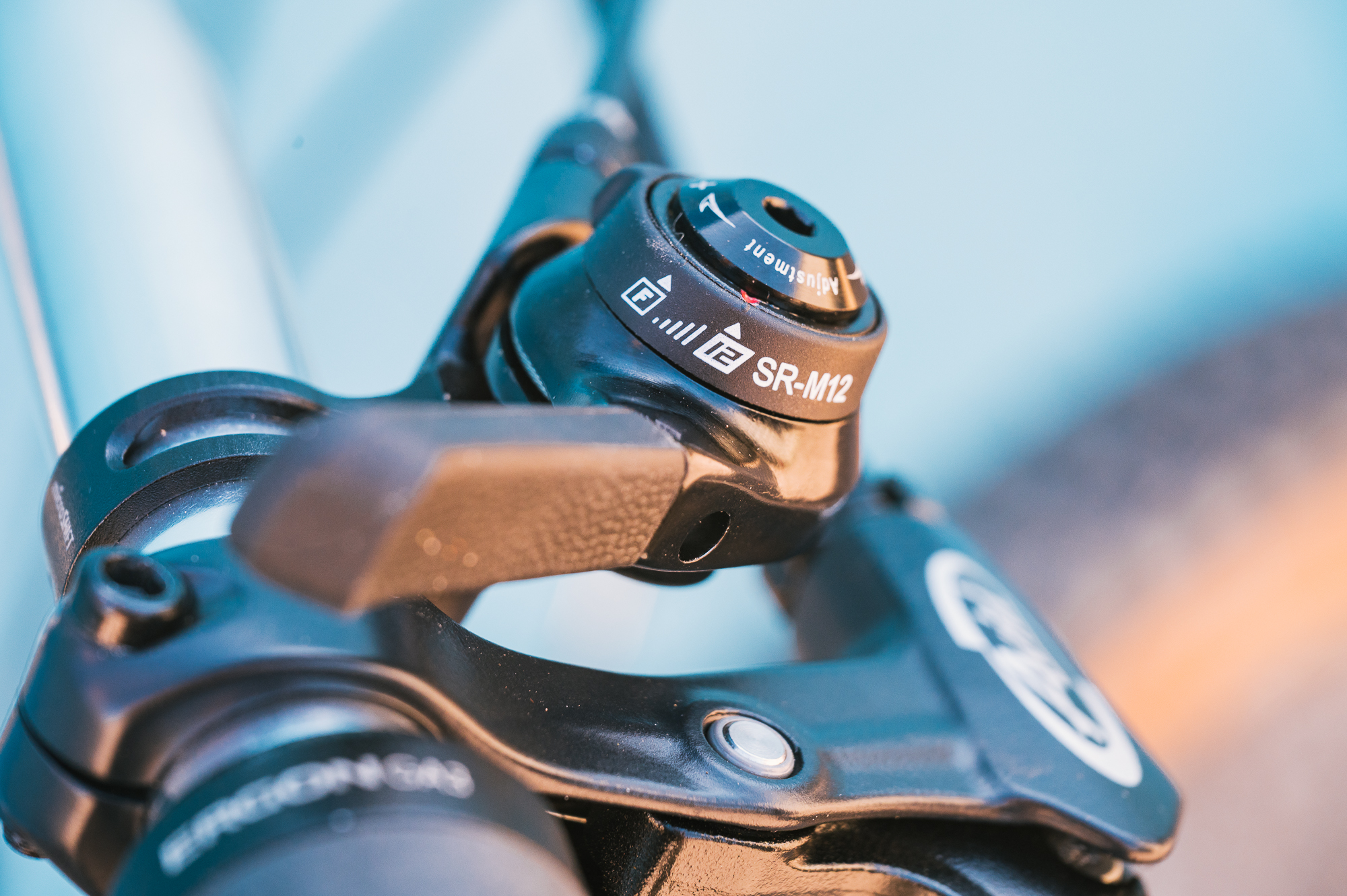
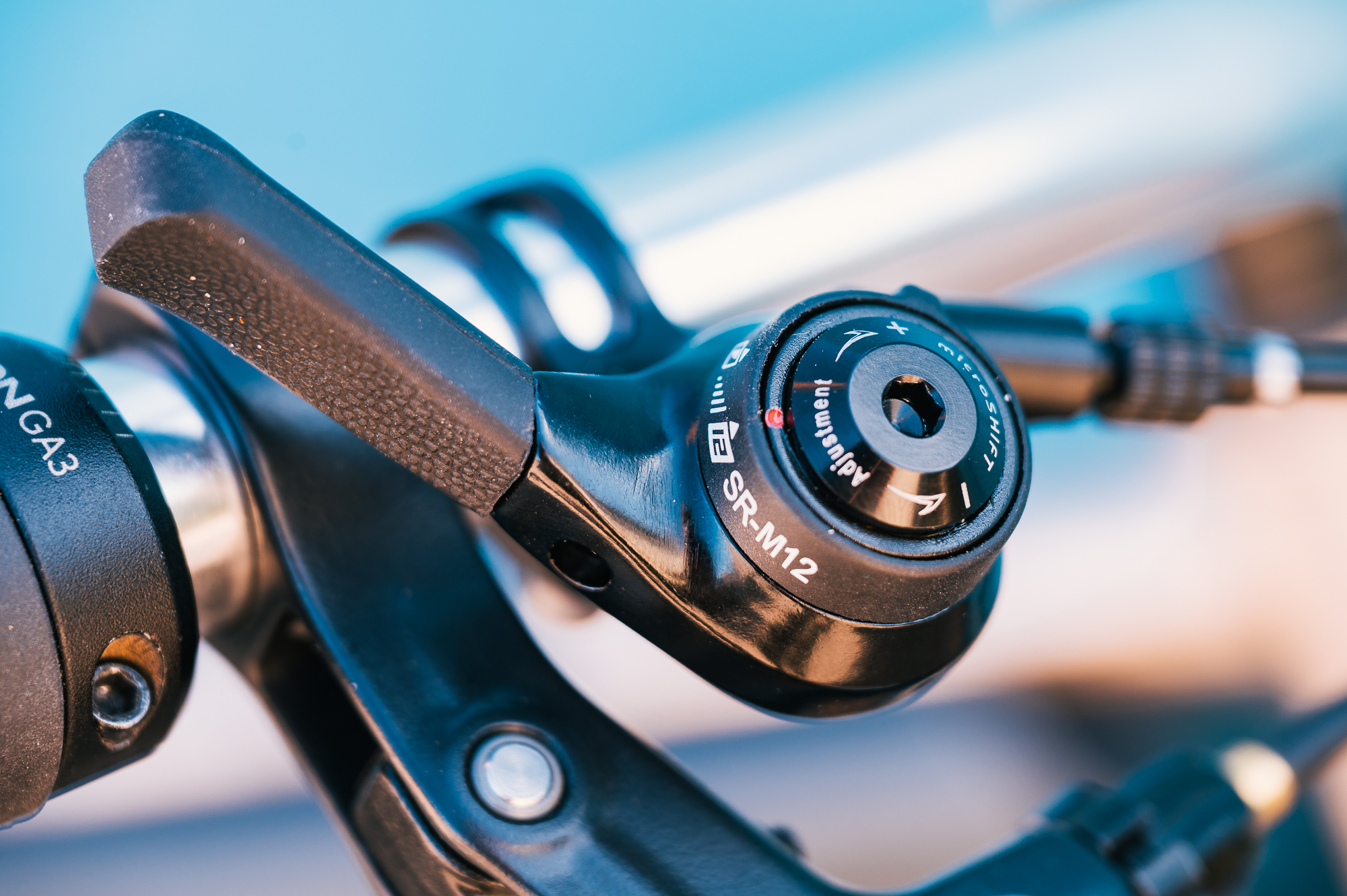
I was giddy when I got the new Microshift thumb shifter in the mail. I immediately went back to my shed to tinker and see if my hypothesis actually worked. A few minutes later, I was friction shifting through all twelve gears of the cassette. No modifications or advanced tinkering needed. Well, that was a bit too easy.
Now, to try the last lingering question in my head, will it index? I had found in previous tinkering that the minuscule discrepancies between brands’ pull ratios could sometimes lead to cross-brand drivetrains, as with my mixing of a Sram MTB thumb shifter and Shimano Cues Linkglide drivetrain. I loosened the tension screw on the thumb shifter and swapped to the index mode…
It worked! With some basic cable tensioning adjustment, the thumb shifter was indexing just fine with the Transmission derailleur. While it wasn’t the point of the experiment, I was pleasantly surprised to find the discrepancy between Eagle and Transmission within tolerance for indexing. It may be worth noting that this could also mean that a Shimano 12-speed shifter might actually shift a Transmission derailleur, but that is counterproductive to my goal.
How Does It Ride?
In my initial shifts in the stand, that derailleur definitely didn’t like shifting multiple gears in quick succession, making me think maybe this wouldn’t be worth the effort. On the bike was a different story. The shifting was as smooth as I’ve experienced on any Transmission drivetrain.
When I got to take it out for a proper ride, I was oddly ecstatic staring down an incredibly steep hill in front of me on a gravel road ride in Las Cienagas, south of Tucson. This was my chance; how would it shift truly under load? I put as much power into the pedals as I could, pushing a huge gear. Once my cadence started to give in to the strain of the gear ratio, I began dumping gears as fast as I could. The derailleur glided up the cassette with minimal effort and strain. For anyone who has grinded, skipped, and heard the groan of a strained drivetrain on a steep hill, you may have an idea of the sense of relief I felt in that moment.
My experiment had worked, and it felt great.
Caveats
In an effort to appease the product managers and media liaisons of the bike world, I will remind you that this is not supposed to work, is not approved, nor is it condoned. It will void your warranty and most likely any goodwill you have with said drivetrain company. Tinker at your own risk!
Like all great experiments, they need to be repeated and tested long-term. I only had access to this setup for a few rides, but I felt the results were sufficient enough to publish for curious minds. I have not tested this long term, while the indexing may fall prey to wearing parts and eventually fall out of tolerance, friction is eternal!
In the end, the combo of an Eagle 90 derailleur and a Microshift thumb shifter is right up my alley if I wanted to use a 12-speed drivetrain. I still prefer the Microshift / Shimano Linkglide combo for its long-wearing nature, but I can’t overlook the performance, reliability, and rebuildability of the frame-mounted Eagle 90 Transmission derailleur.
I needed to know. Maybe you did too? Maybe you are a friction-shifting aficionado who is likewise intrigued by the latest technology and how it can fit into your pseudo-Luddite tendencies? If that’s you, I hope you have enjoyed this Tinker Tantrums side quest.