

I first raced a bicycle when I was eleven, and now I’m in my 30’s. I’ve played the upgrade game, and under the auspice of “professional bicycle mechanic,” I’ve been an NPC in the bicycle upgrade and entertainment industry. All that is to say that I know what upgrades matter, and which are hype.
This is my quick, no-bullshit guide to improving bike performance without, you know, actually training.
This guide assumes you have a bike that fits and is appropriate for the type of riding you do. If you’re trying to win triathlons and all you have is a children’s mountain bike, deal with that situation first and then come back.
TLDR: Upgrade your body position. Then upgrade the points where your bike and body meet. Then upgrade where your bike and the road meet. And finally, upgrade the moving parts.
FIRST UPGRADE: A DECENT PERFORMANCE FIT.

SECOND UPGRADE: APPAREAL.
The right clothing will improve your cycling performance by increasing comfort and reducing drag. Let’s start from the top down.
Helmet:

Pretty much all helmets sold in the US pass the same safety tests, so beyond that you want to look at weight, ventilation, and aerodynamics. You might also consider different helmets for different events, since the most aerodynamic headwear tends to be heavy and provides low air flow.
Your head is basically a big dumb knob sticking way out and over the top of your body, so smoothening it down can make a huge difference, but those aero gains can be offset if you accidentally bake your brain. Something like the Giro Aerohead is a good compromise for triathletes, but I prefer the Lazer Aeroshell system because it’s like having a normal helmet, a winter helmet, and an aero helmet all in one.
Jersey or Skinsuit:

Skinsuits are more aerodynamic than jersey/bib combos, but they’re inconvenient for toilet breaks and it can be hard to find a perfect fit without going custom. I have a nice skinsuit that I can’t wear anymore because I got fat. The zipper broke when I tried to zip it over my big belly. Sad.

Nonetheless, the bike’s rider accounts for some 80% of drag, so making the body more slippery will lead to time savings.
 |
| Thank Cycling Weekly for this chart. |
Seriously though, BIKE SHORTS:
Going from no bike shorts to yes bike shorts is the biggest performance upgrade you can do. Going from crappy bike shorts to bibs is another quantum leap. IF YOU CAN ONLY SPLURGE ON ONE THING, MAKE SURE IT’S THIS.

As far as fit goes, you want them to be tight, but not so tight that they become see-through when you bend over, and not so tight that they squeeze your legs like a rubber band over a hot dog. the big thing is to avoid a fit that’s so loose it flaps in the breeze. Oh, and don’t wear underwear, except when trying the fit at the store. Def wear undies at the store.
Saddle:
Oh, and splurge on the saddle too. Ok that sounds bad. What I mean is treat your saddle purchase seriously. Most quality bike shops will have some kind of fit program to help you make the best choice. Similarly, most saddles come with a sixty-day fit guarantee. If it doesn’t feel right, don’t be afraid to return it. Returns are built into the pricing. It might take years to find the perfect saddle, and you might never find one. But a good saddle will allow you to ride harder for longer, so it’s worth the time investment. Also, wear bike shorts when trying saddles out.

Three tips for setting up your saddle:
- Make sure it’s level. If any saddle is uncomfortable while level, there’s something wrong with it, or your fit is off.
- Check saddle height and leg extension. Sometimes people think their saddles are uncomfortable because they’re way up in the air and rocking back and forth to push the pedals.
- Double and triple check that it’s straight, not cockeyed.
Gloves:
A good pair of cycling gloves will pad the outside of the palm. Fit, again, is crucial, but tricky. Your hand will swell when you ride, so you want the fit to be loose when you try it on in the shop. But not too loose. Leather gloves should fit tight when new because they break in.
Just make sure to keep the receipt. OK?
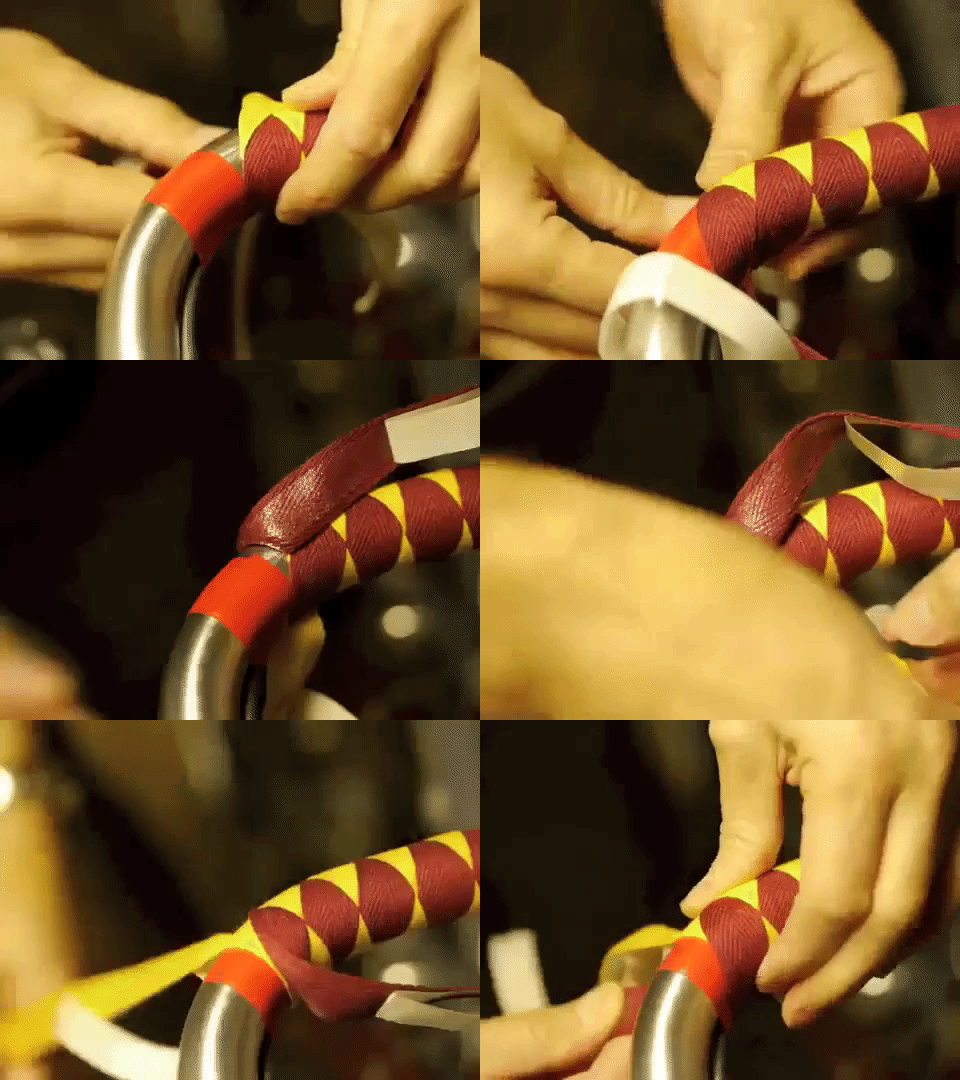
While we’re at it, make sure you have a good handlebar grip. I use thick tape, but I know a lot of people who double-wrap their bars.
Shoes and Cleats:
When I learned about clipping in it changed the game for me. All the sudden my feet were always in the right spot and wouldn’t shake free over train tracks. I could put more power down without my foot flexing, and I could pull up on the cleat while sprinting.
Cycling shoes are fairly simple to fit. They aren’t like running shoes, which need to fit like a second skin.
Easy guide to bike shoe fit: Does your heel feel cupped? Can you move your toes? Yes? Good. That’s a fit.
Bike shoes are little more than a stable platform to push against. I usually buy whatever brand looks coolest.

As for the difference between road and MTB pedals and cleats: road give a better power transfer but MTB are easier to get in and out of.
THIRD UPGRADE: TIRES.

FOURTH UPGRADE: THE REST OF THE BIKE
- New Frame and fork. A top-tier frame should be in better alignment than lower quality frames. It’ll also be lighter and more aero. There’s a limit, though, and marginal gains are exponentially more expensive.

- Cables and housing. Upgraded cables and housing require less maintenance than the stock crap, which translates to more time riding.
- Electronic shifty things. Di2, E-tap, EPS; whatever, it all works great. Lower maintenance, better shift feel, better under pressure. Nothing but wins.
- Bearings, chain, crank. If it spins, upgrade it something that spins smoother.

- A little motor in the hubs or crank.
- Wheels. Roundness is the most important thing. After that, toughness. After that, smoothness of the hub, then aerodynamics, then weight.


