

Touring bike weight spans a surprisingly wide range, from lightweight gravel models that weigh just 9 kg to the strongest touring bikes weighing more than 21 kg.
The question is: what’s the right weight for a touring bike?
Unfortunately, there is no simple answer. It depends on several factors, including your body weight, how much luggage you plan to carry, and the terrain you expect to ride. It can also come down to whether you want an extra margin of strength for unexpected situations.
In this article, I’ll walk through the typical touring bike weight range, explain the advantages of both lighter and heavier bikes, and help you decide what weight makes the most sense for your own touring setup.
Let’s take a closer look.
The Touring Bike Weight Spectrum
Long Distance Touring Bike Weight
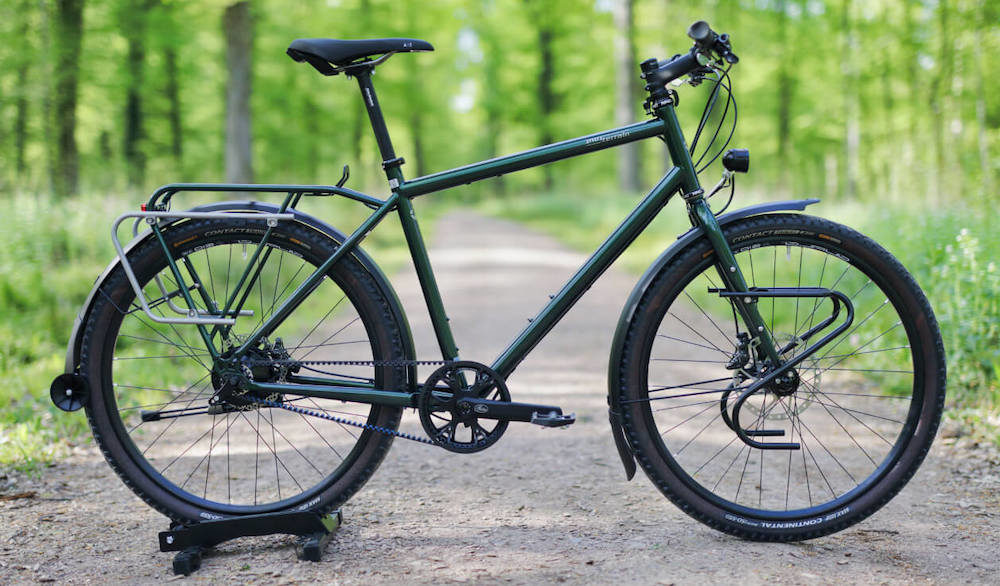
Most long distance touring bikes fall within a weight range of about 14 to 18 kg (31-40 lb), with the average sitting around 16 kg (35 lb). That’s fully decked out with racks, fenders and dynamo lights. Bikes in this weight range represent a balance between durability and strength, and they cover the needs of most riders under typical touring conditions.
For instance, the ever-popular Surly Disc Trucker weighs around 15 kg (33 lb) when equipped with touring accessories. It seems to strike a decent balance of being reliable without being excessively heavy.
At the other end of this range, more heavy-duty models such as the Böttcher Evolution come in closer to 18 kg (40 lb). These bikes are built to handle heavier loads and more demanding touring routes, while using extra low-maintenance drivetrains.
Light Touring Bike Weight

At the lighter end of the spectrum, “light touring” or gravel bikes can weigh as little as 9 kg (20 lb), though most are closer to 12 kg (26 lb). They’re aimed at riders who prioritise speed, efficiency, and a minimalist setup.
These bikes are typically made from carbon, titanium, or aluminium, and paired with gravel components. Weight is saved through lighter rims and lower spoke counts, while narrower tyres rely on tubeless sealant for puncture protection instead of heavier Kevlar layers.
As these frames are optimised for low weight rather than maximum stiffness, some flex or torsional movement can occur under heavier loads, so it’s generally best to keep luggage below about 10 kg (22 lb). The maximum system weight (rider, bike, and luggage combined) is usually around 135 kg (300 lb).
Expedition Touring Bike Weight

At the other extreme, the heaviest touring bikes can weigh up to 22 kg (48 lb), although most models in this category average around 18 kg (40 lb).
Every component on these bikes is designed to handle much higher system weights, sometimes up to 180 kg (400 lb), including the rider and luggage. This makes them ideal for riders carrying heavy loads or travelling in remote areas.
These bikes are extremely stiff both laterally and torsionally, meaning the frame and fork flex very little, even with a large amount of luggage. They are also much more resistant to damage and capable of withstanding hard impacts during transport, such as when flying or travelling on buses.
The wheels are typically built to be exceptionally strong, using very tough rims that are resistant to cracking. The tyres are also highly puncture-resistant, often incorporating Kevlar protection layers to prevent sharp debris from penetrating the tube.
Many heavy-duty touring bikes also feature sealed gear systems such as Pinion gearboxes or Rohloff internal hubs. While these systems typically add 1 to 2 kg to the overall bike weight, they can greatly improve long-term drivetrain reliability and reduce maintenance.
How Can You Find Touring Bike Weights?

In my buyer’s guides, I list the weights of more than 330 touring bikes and over 380 bikepacking bikes.
These guides are designed to help you understand everything about the bikes as well as how to compare them effectively. At the back of each book, you’ll find detailed listings that outline important specifications such as frame sizing, steering speed, gear ratios, maximum tyre clearance, chainstay length, and, of course, the bike’s weight.
You can find the Bikepacking Bike Buyer’s Guide HERE, and the Touring Bicycle Buyer’s Guide HERE.
How Much Does Weight Matter?
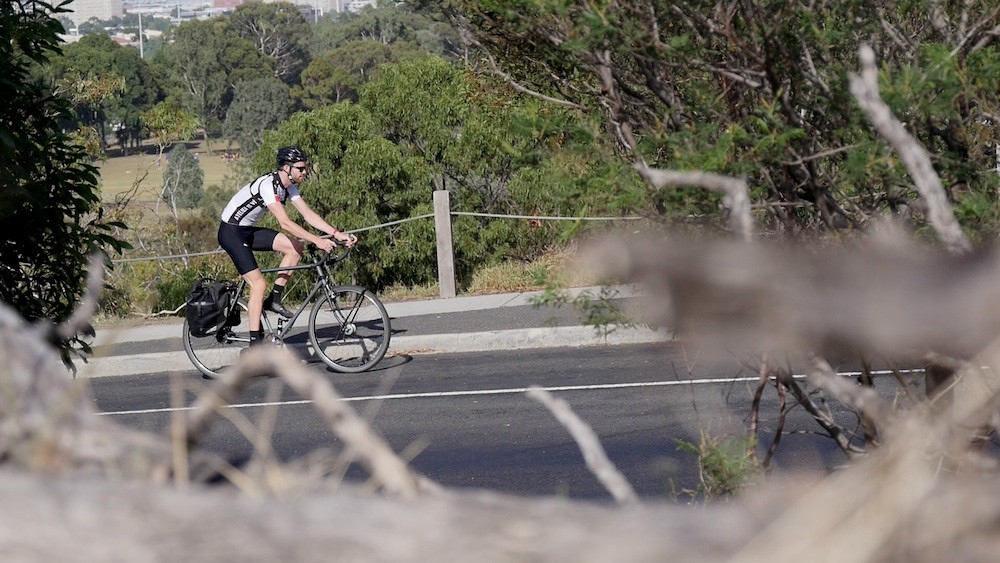
Many people assume bike weight has a huge impact on speed, but when you run the numbers, its effect is relatively small compared to factors like rolling resistance or aerodynamics.
When you ride your bike up a hill, it’s not just your bike’s weight that you are hauling. You are pushing your body, clothes, shoes, water, food, pump, spare tube, and any luggage you might be carrying. In practical terms, choosing a bike that’s one kilogram lighter might reduce your total system weight by 1%, but this changes your cycling speed by very little.
I’ve run experiments with bikes of different weights, and also modelled the results using software. From my testing, I’ve found that carrying an extra kilogram of weight costs me roughly one to two minutes per 100km (62 mi) on a hilly route, and there’s almost no difference on flat roads.
This ultimately means that I don’t think you should be too concerned about adding a few kilograms of touring bike weight if you also get extra strength and stiffness in return.
You can read more about my weight testing HERE.
The Advantages of A Stiff and Durable Frame

A heavy touring bike usually offers very high torsional and lateral stiffness, which helps maintain excellent stability when carrying a load. Even with fully loaded panniers, the bike tends to feel rock solid underneath you, tracking predictably rather than wobbling about.
This added stiffness also reduces the likelihood of high-speed shimmy or “weave”, a phenomenon where the front wheel begins oscillating from side to side at certain speeds.
Another benefit of an overbuilt frame is the extra strength margin in unexpected situations. Incidents such as flying with a bike, hitting a deep pothole, or crashing can subject the frame and fork to forces far greater than those encountered during normal riding. When parts are engineered and tested to higher strength thresholds, they are much more likely to withstand such events without sustaining damage.
The Advantages of Durable Components
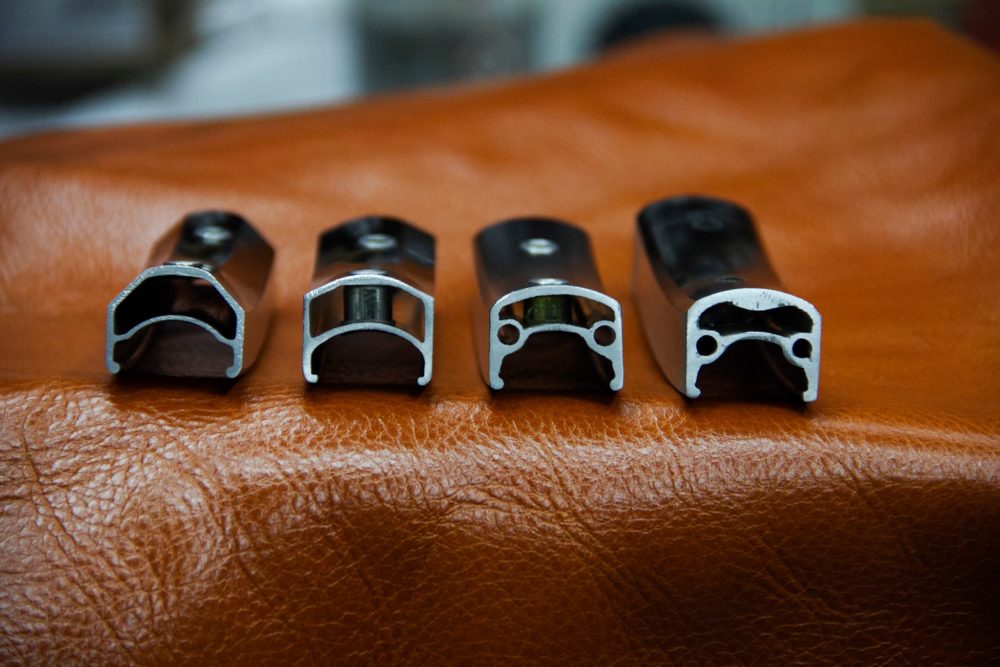
A heavy touring bike almost always comes equipped with more durable components. The parts that benefit most from extra strength are those exposed to the highest forces, primarily the wheels, tyres, and racks.
Wheel durability is particularly important. Many riders experience rim or spoke failures while touring, especially when carrying luggage over long distances. One of the most reliable indicators of rim strength is its weight. Adding a few hundred grams per wheel can significantly improve durability, as heavier rims tend to be stiffer and better able to cope with sustained loads.
A stiffer rim also reduces the amount of stress placed on the spokes, which means you’ll spend less time dealing with loose spokes or constantly re-tensioning your wheels. I have an article about the best touring rims HERE.

Punctures are another common problem on long tours, but modern touring tyres can dramatically reduce the risk. Heavy-duty touring tyres include extra puncture-protection belts within their construction. While these tyres are often assumed to roll more slowly, the reality is more nuanced. Many models provide an excellent balance of puncture protection and rolling resistance, delivering far more protection than their small efficiency penalty might suggest. You can see the best touring tyres HERE.
Drivetrain durability also tends to increase with weight. Shimano’s Linkglide cassettes are constructed from plated steel and feature thicker, taller teeth designed for longevity. Although they weigh more than typical cassettes, they are often reported to last up to three times longer. Internal gear hubs and Pinion gearboxes follow a similar philosophy, adding weight but offering extremely long service life and low maintenance.
Finally, racks must support the full weight of your panniers, which means they experience significant stress during a tour. As with rims and tyres, the most durable racks tend to be the heavier ones. You can see the best touring racks HERE.
Additional Accessories and Features
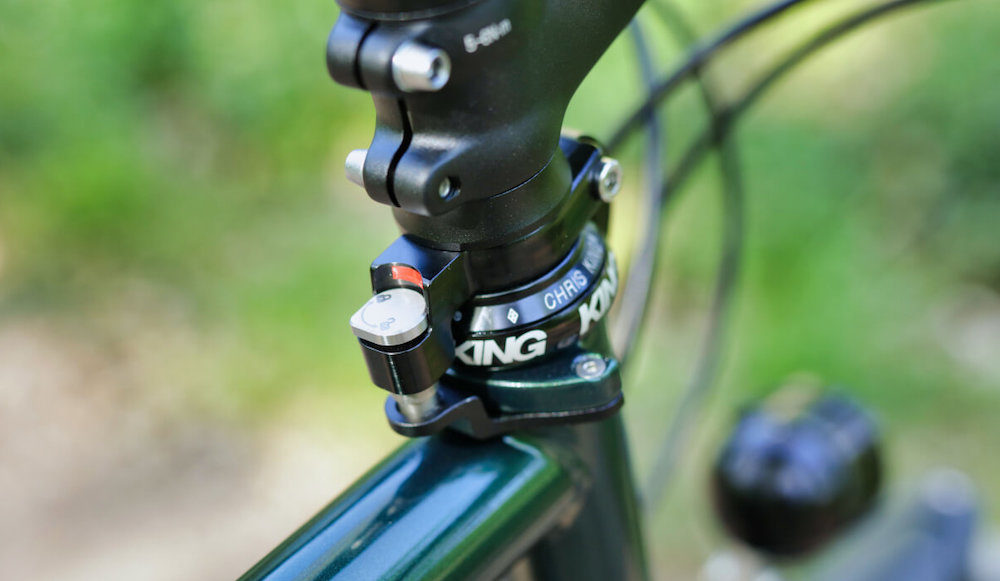
Touring bikes often include features that aren’t commonly found on other types of bicycles, and these additions inevitably increase the overall weight.
For example, racks, fenders, a kickstand, and dynamo lighting can easily add more than two kilograms to a bike. Comfort-oriented components such as suspension seatposts, aero bars, and more supportive saddles can contribute another kilogram or so. Some touring bikes also incorporate specialised features like integrated rack sub-frames, steering locks, and fork dropouts with built-in dynamo wiring, all of which add additional weight.
As a result, touring bikes are typically heavier than many other bicycle types simply because they are equipped with more accessories and features.
Reducing Touring Bike Weight Without Sacrificing Strength

Let’s say you had an unlimited budget. Could you spend extra money to build a lighter touring bike that is just as stiff and durable? The answer is yes, but it comes at a high cost.
German brand Idworx has gone to great lengths to create lighter versions of its touring bikes. In fact, it offers an entire range called “Wachtberg”, which focuses on reducing the weight of touring bikes without sacrificing strength. By using more expensive materials and even stripping the frame of paint, Idworx has managed to remove about 1.5 kg (3.3 lb) from its All Rohler touring bike (which is already a light bike within its category).
Some of the changes include:
-
Carbon fork – about 500 g lighter than aluminium (+€795)
-
Titanium racks – about 500 g lighter than steel (+€675)
-
Carbon rims – about 150 g lighter than aluminium (+€795)
-
TPU tubes – about 180 g lighter than butyl (+€55)
-
Anodised frame – about 170 g lighter than a painted frame
And the cost to save this weight without compromising stiffness or durability? Around €2,320 in total – roughly €1.50 per gram of weight saved.
This example shows that while it is possible to reduce the weight of a touring bike without sacrificing strength or reliability, the cost rises quickly. Touring bikes may appear heavy, but much of that weight exists for a reason – it contributes directly to their overall stiffness and durability.
How To Optimise Your Touring Bike Weight
Consider Your Body Weight
Riders’ body weights vary enormously, and this has a big impact on what kind of touring bike is suitable. I’ve met people on bicycle tours who weigh as little as 50 kg (110 lb) and others over 130 kg (290 lb). The stresses placed on a bike change dramatically depending on your weight alone.
If you weigh around 50 kg (110 lb), a lightweight touring bike in the 10 to 13 kg range can be more than adequate. Riders in the 60 to 90 kg (130–200 lb) range can comfortably use bikes that weigh 13 to 16 kg. However, if you’re over 90 kg (200 lb), it’s generally better to look for bikes on the heavier side.
Even at my own weight of 80 kg (175 lb), I’ve broken plenty of spokes and rims over the years. Wheels are often the first component to give way, along with tyres and racks. Luckily, for heavier riders, there are plenty of tough components available that are extremely reliable and unlikely to fail, even under demanding conditions.
Factor in Your Luggage Weight

A touring bike should be stiff enough to resist the twisting and bending forces created by the load you carry.
-
Light loads: If you’re carrying relatively little gear, a lighter frameset is fine because the stiffness requirement is lower. For example, most 12 kg bikes will work well if your luggage load is under 10 kg (22 lb).
-
Moderate loads: For luggage closer to 20 kg (44 lb), a bike over 15 kg is usually preferable. The extra weight comes with additional frame stiffness and stronger components, ensuring the bike handles the load with ease.
-
Heavy loads: On extended trips where you’re sometimes carrying a lot of gear, plus food for a week and 20 litres of water (which could easily total 45 kg of luggage!), a bike weighing 18 kg or more is strongly recommended. The extra weight ensures the frame remains stiff and components can withstand the additional stress.
Trip Duration and Frequency
Touring occasionally on weekends is very different from riding day-in, day-out for months or years. Components fatigue over time under repeated stress, so those putting more mileage on their bikes generally benefit from choosing a heavier, more durable bike that can withstand long-term use without problems.
Self-Sufficiency
Even if you are lightweight and carry only a minimal load, choosing a heavier, bombproof bike can make a huge difference in reliability. The chance of component failure in the field is significantly lower, giving you peace of mind that your bike will perform reliably no matter the conditions or distance.
Off-Road Riding

Rough terrain, bumpy dirt tracks, and corrugated roads add further stress to a bicycle and its components. If you plan to ride off-road or on poor surfaces regularly, it’s wise to lean toward a heavier, more durable bike with components designed to withstand these conditions.
Overall Advantages of Heavier Touring Bikes
-
Higher frame and fork stiffness reduces unwanted flex under load
-
Lower chance of frame or fork failure
-
Better resistance to damage during transport, crashes, or impacts
-
Stronger, longer-lasting components that can handle heavy loads
-
Reduced maintenance requirements over long trips
-
Additional touring-specific features, such as internal gear systems, steering locks, robust kickstands, and more
Summary
When it comes to touring bike weight, most models are typically between 14 and 18 kg.
If you are a lighter rider or plan to carry only a minimal load, a lighter bike should be fine, as it will still provide adequate stiffness and durability for most tours.
On the other hand, if you are heavier, carrying significant luggage, riding on rough or off-road terrain, or want the capacity to carry extra water and food, a heavier bike is generally a better choice. This is due to the stronger frame, tougher components, and greater frame stiffness, which all help the bike handle larger loads safely and reliably over long distances.
In short, choosing a heavier touring bike is often about prioritising reliability, durability, and long-term peace of mind, especially if you carry a lot of gear, tour frequently, or ride in challenging conditions.
You can find the touring bike weights of over 330 models in the Touring Bicycle Buyer’s Guide. Make sure to get your copy HERE.