
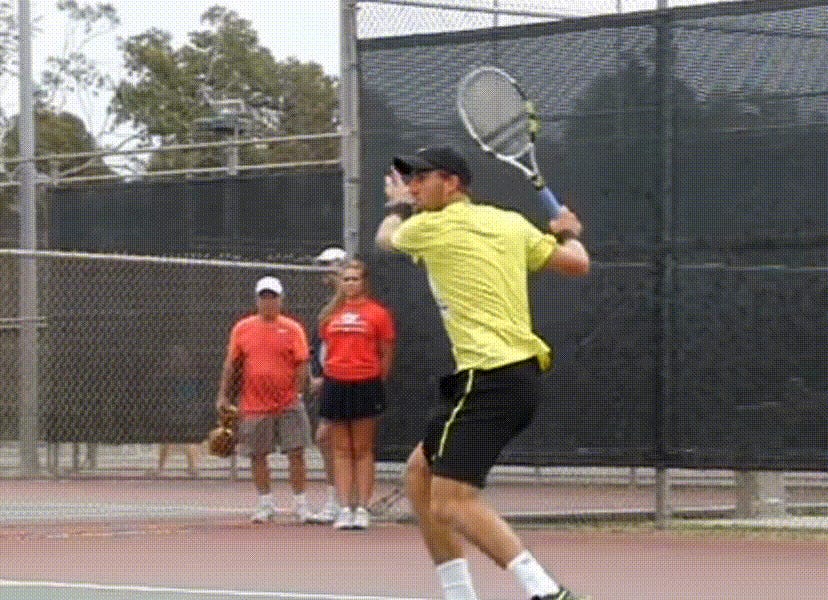
Things I’ve noticed.
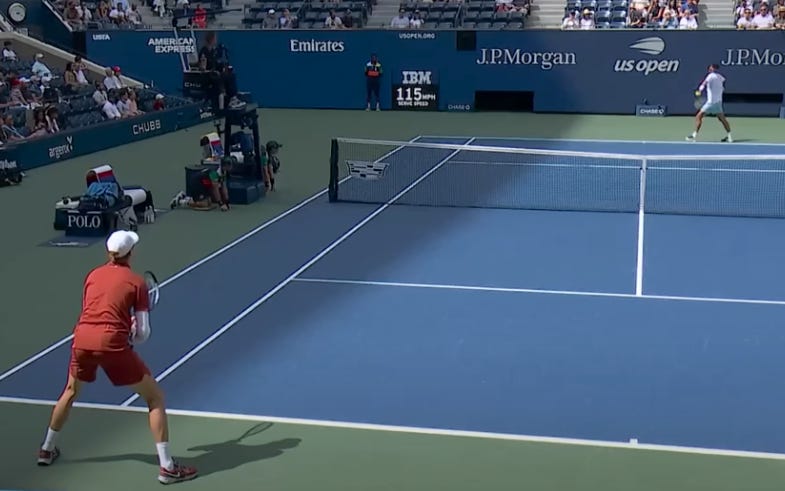
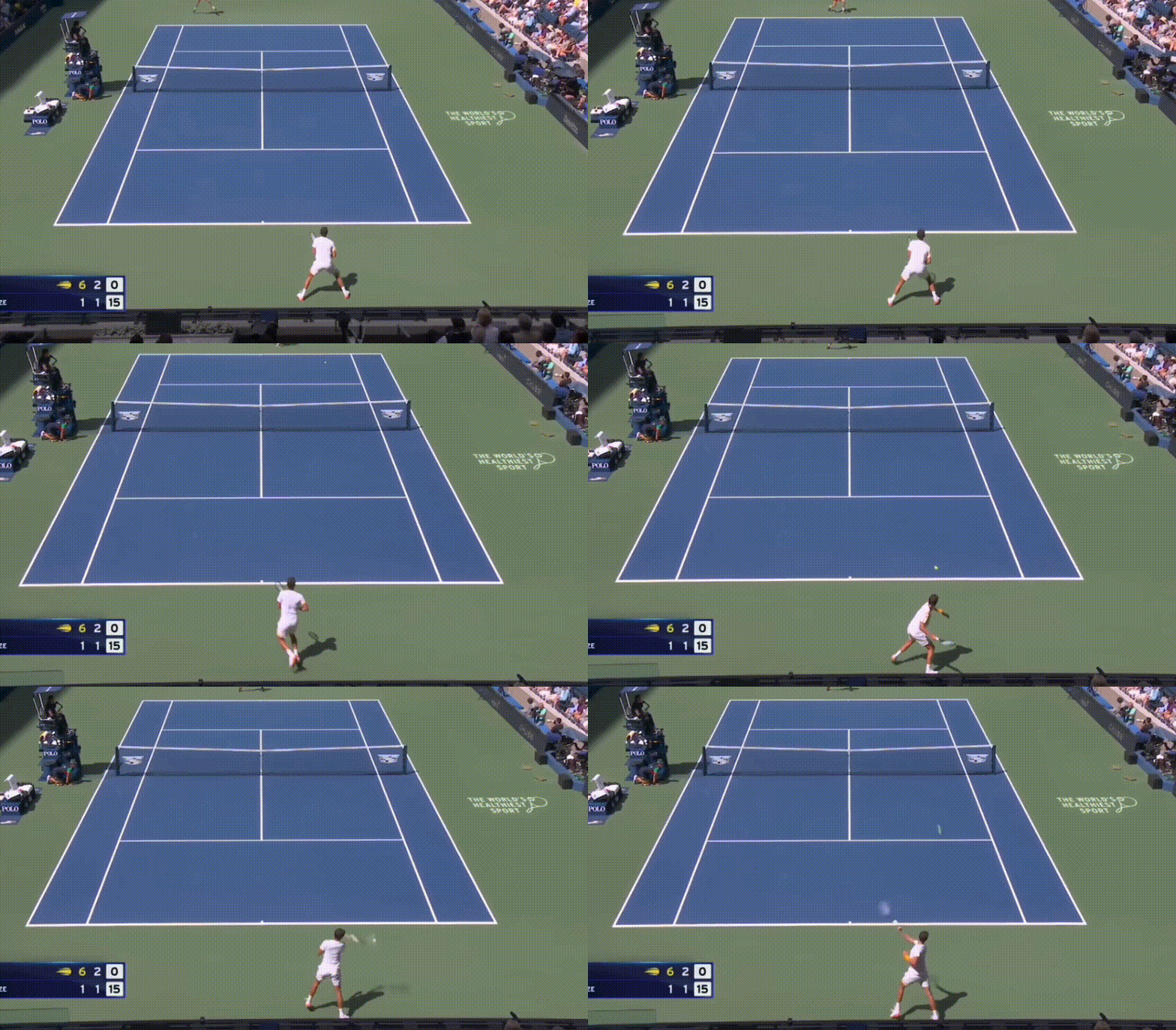
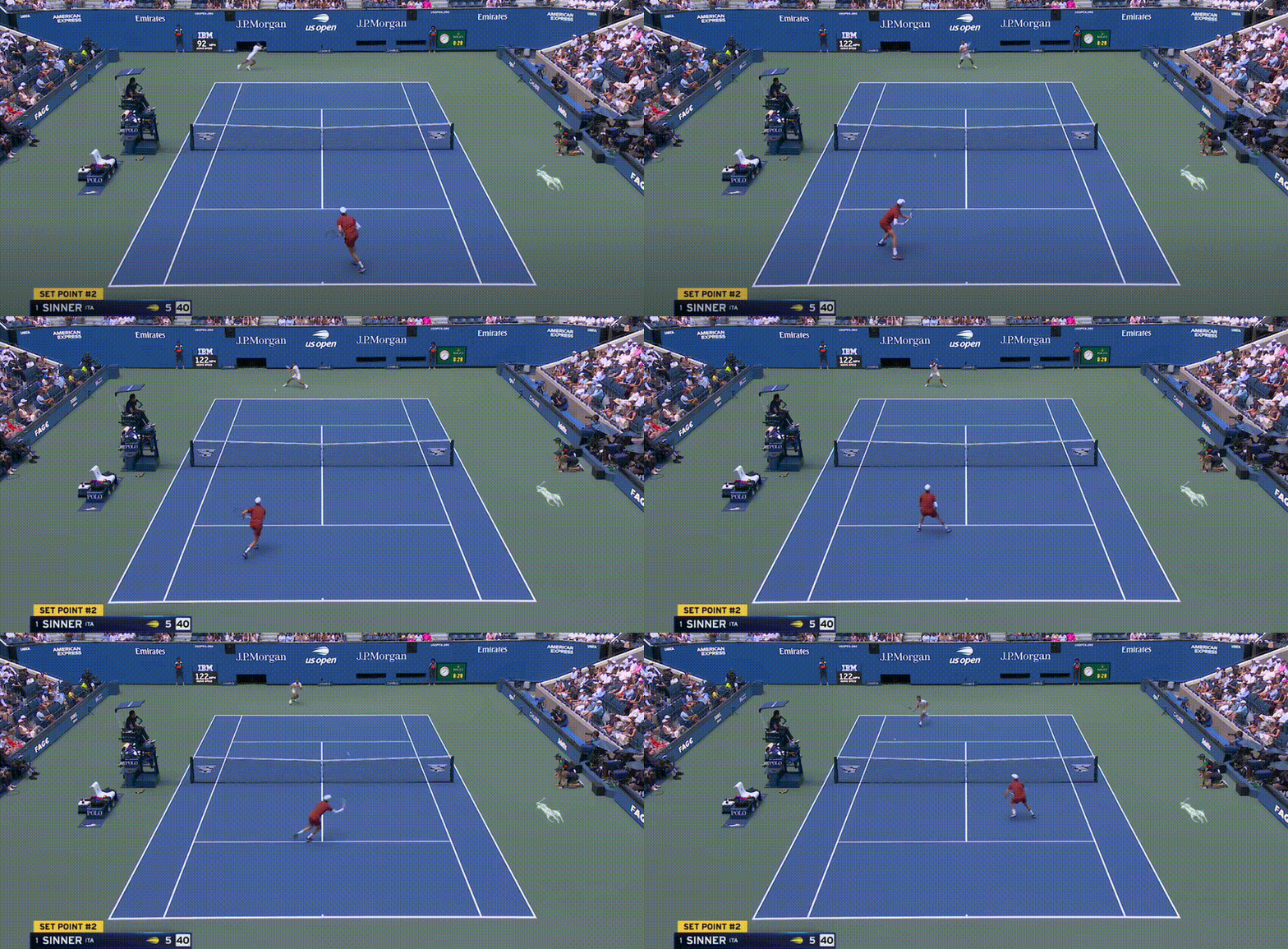
In the wake of the Cincinnati viewing disaster (where apparently the tournament changed which end the cameras were positioned on centre court, thereby putting the sun more in front of the camera), I’m still baffled that tennis — a game primarily played from the baseline — uses a score box that blocks the ad-side player for every deep shot. Why not place a compressed scorebox in the upper left corner where it won’t ever conceal a shot?
This isn’t a trivial thing in modern tennis. So many players specifically return from that location on ad-side points (Nadal, Medvedev, Alcaraz, Sinner, Thiem to name a few prominent examples), and the defensive efforts of players these days mean tennis is blocking the live view of so many shots.
And it’s not like tennis didn’t have this figured out back in the day:
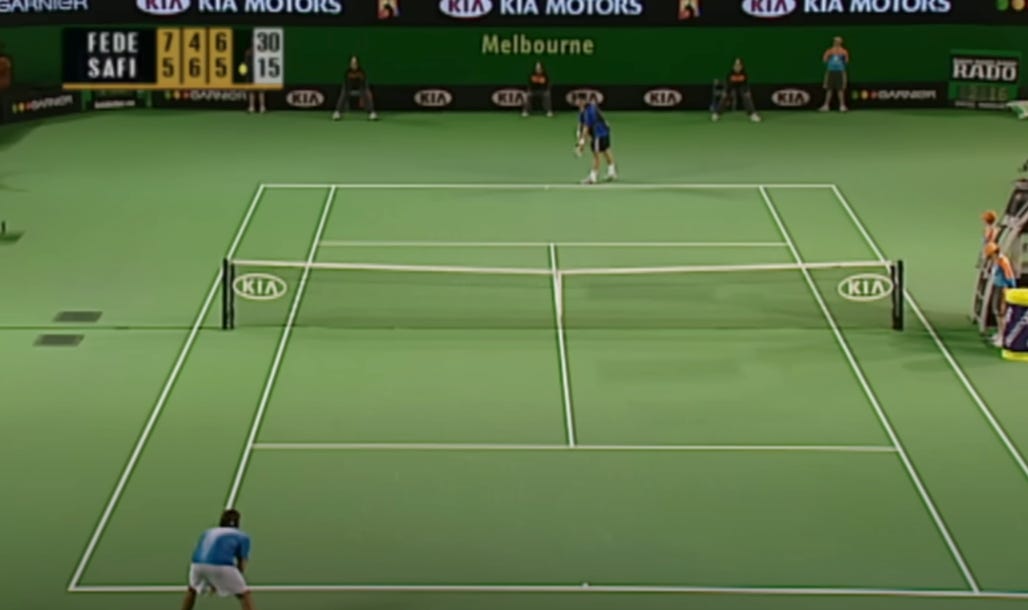
And my personal favourite. The opaque-green Wimbledon version that blended seamlessly with the surroundings, from the early 2000s:
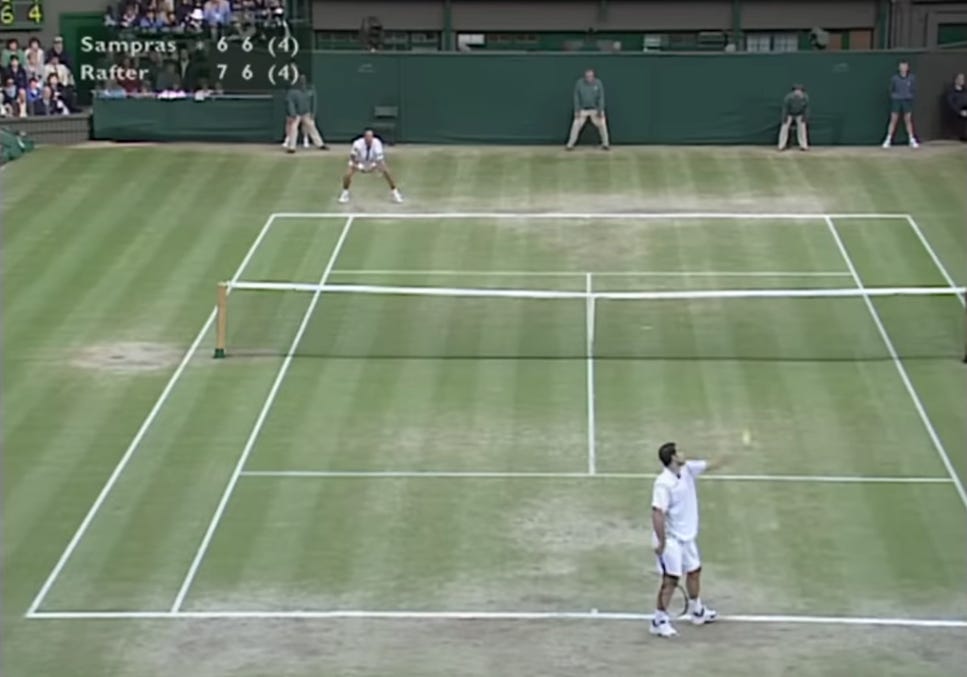
I suspect some of it is sponsor driven: Emirates is paying for that upper left corner. But I fail to see why the score can’t be as far off screen as the US Open’s watermark is. Or given we are playing in the mecca of capitalism, why not offer a sponsors banner on the scorebox itself to replace one of the Emirates logos on the back fence?
It’s not the only issue hampering the broadcast product. The camera angles are often far too high (compare Tsitsipas/Altmaier to the Sampras/Rafter one), and Courier has been mentioning on air how he suggested to the US Open four years ago that they close the roof (just enough to push the entire court in shade, thereby still making it an outdoor event for the necessary 30 minutes) on Ashe once the shadows start to encroach on the blue part of the court, making it easier for players and viewers to see the ball. That seems to have fallen on deaf ears.
While tournaments continually make changes to earn on-site profit (extended 1000s, huge on-site renovations, Sunday starts at majors that dilute the quality of day 1/2/3 grounds passes, wild ticket prices for ground passes, $23 honey deuces, etc.,) the television product seems an afterthought, despite a billion people tuning in annually.
Vit Kopriva fell to Jannik Sinner in the opening round on Wednesday. No shock there. But the Czech is one of the few players on tour who posts a faster average speed on his backhand than forehand. The backhand is very solid, but the forehand is a two-piece push, not dissimilar to Jakub Mensik’s in it’s lack of a weak-stretch based on a backswing that places the racquet at the end of the unit turn.
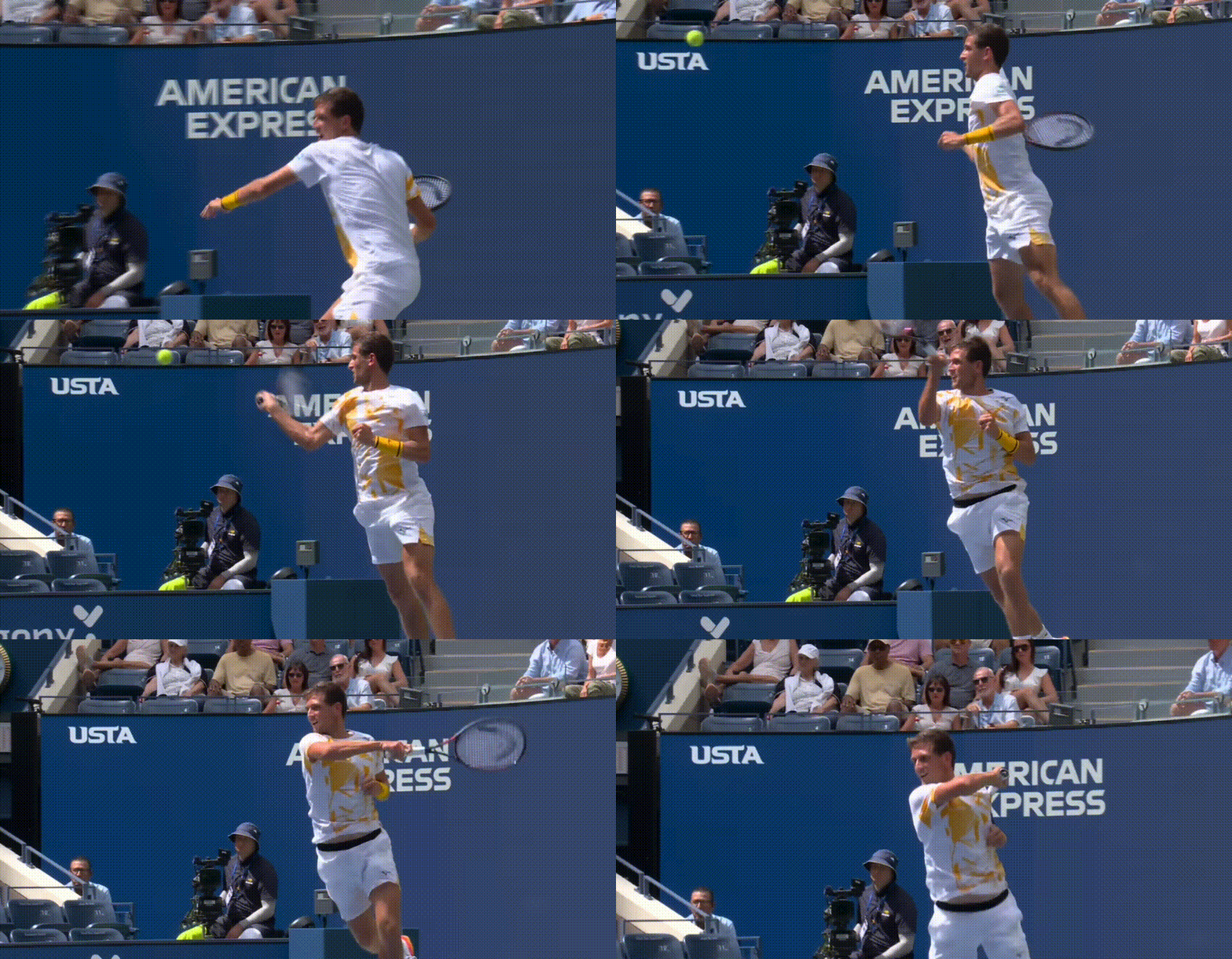
You can often see Kopriva steering balls off that wing, pushing the hand forward with no elbow pronation or long-axis shoulder rotation in the follow through, and exaggerating the torso rotation. The strings and palm finish facing more up to the sky/side fence:
That’s a sure sign of a slower swing. Faster swings have more internal shoulder rotation and elbow pronation in the follow through, with the torso slowed down through contact.
Here at Thread of Order’s HQ is my example of long-axis rotation of the arm:
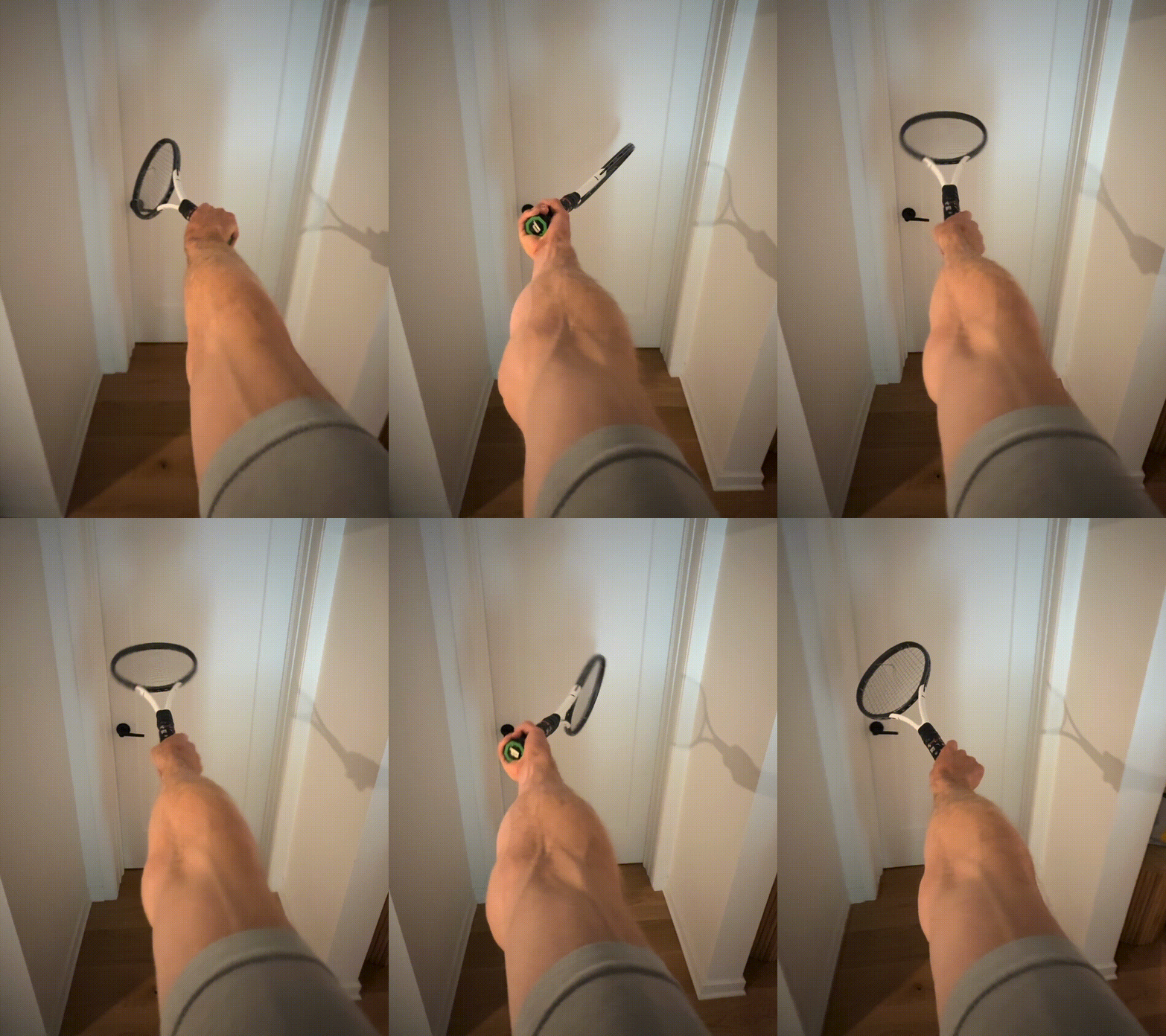
“Long-axis rotation of the upper arm is an important component of the forehand, contributing ~35% of the racket’s speed at impact for strokes played from a relatively slowly fed ball.”
— Reid, M., Elliott, B., & Crespo, M. (2013). Mechanics and learning practices associated with the tennis forehand: a review. Journal of sports science & medicine, 12(2), 225–231.
It’s not dissimilar to what I think hurts Coco Gauff’s forehand. Many have suggested her grip is to blame, but there are plenty of Western gripped weapons on both tours (Fils, Fritz, Berrettini, Swiatek, Keys, Qinwen to name a few). I think she is guilty of guiding the ball with late contact for her grip, and you can see how much faster Swiatek gets her racquet-head across her body; from this perspective, the racquet tip gets right (so the shoulder is internally rotating faster) faster/earlier in the follow through/post contact, and that’s a sign that it (racquet/shoulder) was faster going in to contact.
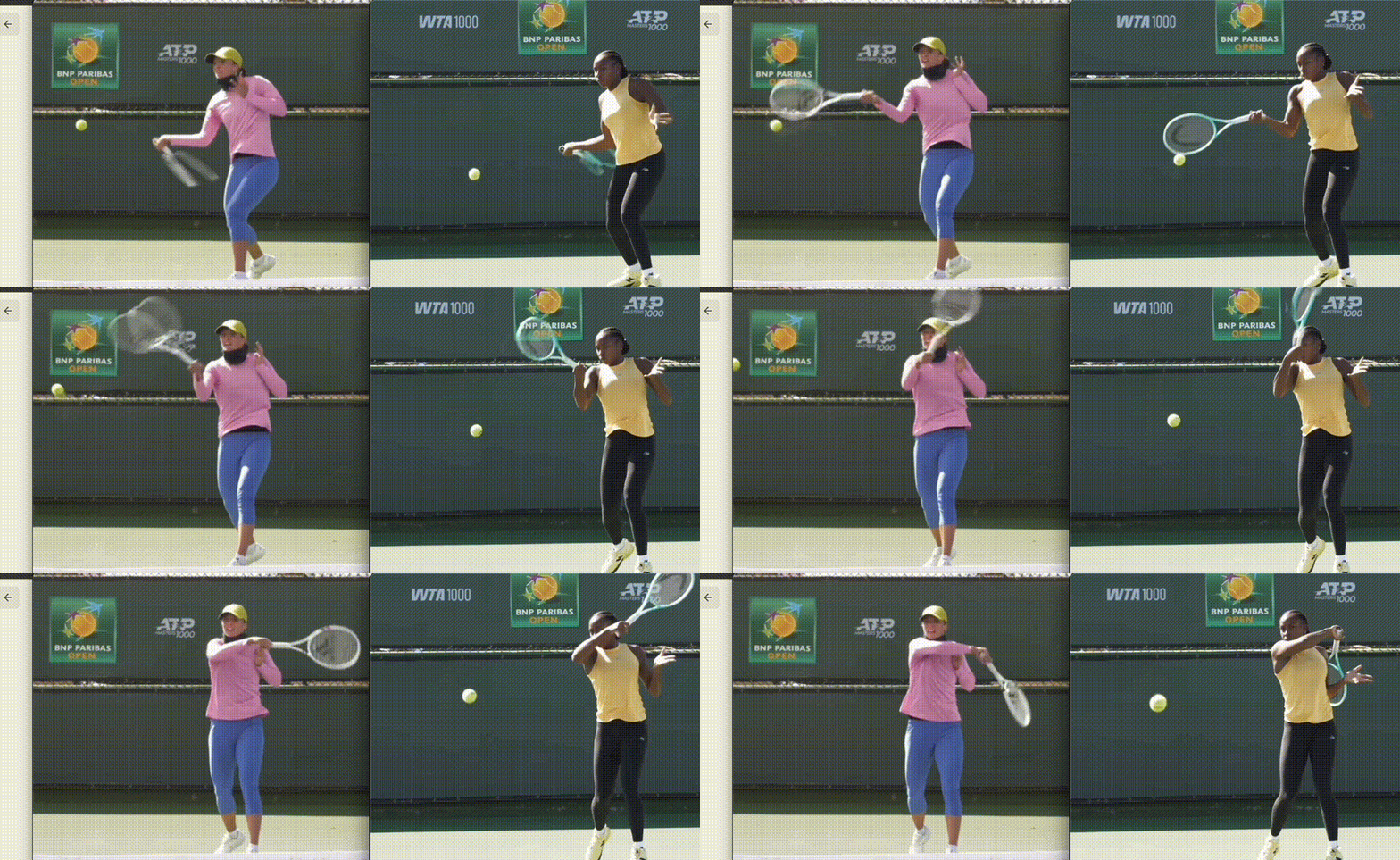
The most extreme examples of this action include Jack Sock, Nick Kyrgios, Matteo Berrettini, and the king-daddy of windshield wiper action: Steve Johnson:
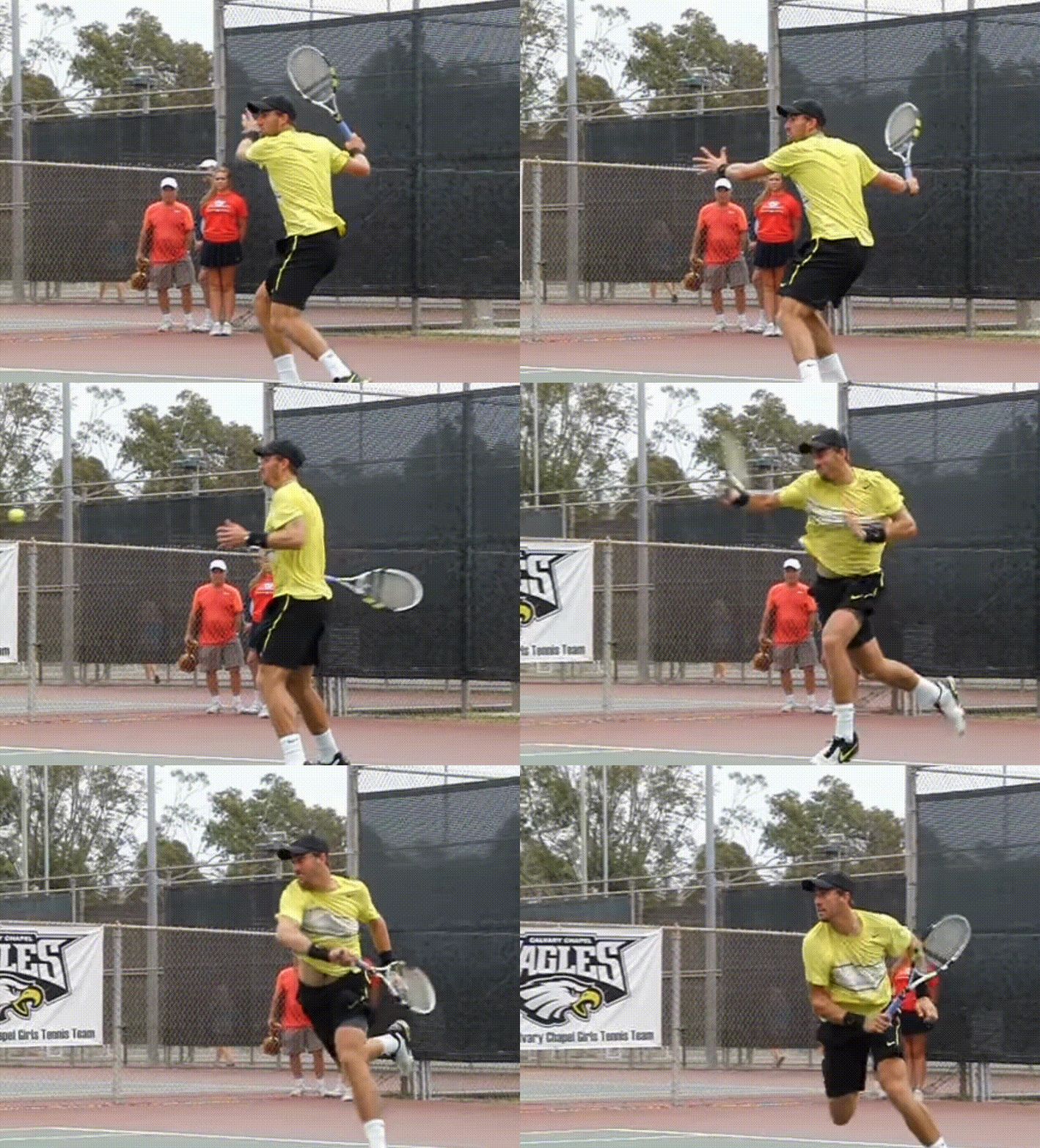
And that’s why renowned coach Robert Lansdorp suggested she follow through with a reverse finish (Nadal style) or a lower finish like Swiatek and Co. around the hip.
In generalising the instruction of the forehand, there appear to be two general philosophies: a rotational approach to building racket speed and a more linear approach to building racket speed… The former approach emphasises the positive contribution of trunk rotation and shoulder internal rotation. It has been qualitatively observed that this emphasis tends to correspond with players using the western and semi-western grips. Conversely, the latter approach seems the preference of coaches that emphasise more eastern grips and the flattening the arc of the racket swing in the transverse plane near impact. Noteworthy is that neither approach precludes the rotation or contribution of key segments, rather they are emphasised in different ways and/or at different times.
— Reid, M., Elliott, B., & Crespo, M. (2013). Mechanics and learning practices associated with the tennis forehand: a review. Journal of sports science & medicine, 12(2), 225–231.
Gill Gross is on the grounds and got to speak to Musetti about his serve stance adjustment:
“I changed during Cincinnati. I lost against Bonzi and I didn’t feel okay with my motion. I felt my toss was getting too much in front and I was losing too much percentage, especially on 1st serve… We tried to stick as simple as possible. Right now I’m not moving my feet – before I was. I was trying to transfer my weight, but I was leaning too much forward. It was a little adjustment but I think it made a big difference because I think today I served really well.”
— Lorenzo Musetti via Gill Gross on Twitter/X

The serve is essentially a throw, but in an upward plane of motion and with a more turned/side-on torso orientation to the target compared to a pure throwing action, and tossing the ball farther in front risks pulling the torso down and opening too early, much too much like an actual throw. Compare the cocking and release positions of Novak Djokovic and Shohei Ohtani:


Musetti takes on Juame Munar in the fourth round on Monday.
The Canadians turned up on Saturday, with Denis Shapovalov going toe-to-toe with Jannik Sinner for a couple of hours before falling in four sets. It was impressive to see Shapovalov’s single hander hold up very well in the opening couple of hours of play that I witnessed. This point late in the first was outrageous:
Shapovalov has one of the deepest slot positions on tour for a single-hander, and straightens the hitting arm early, which I think facilitates timing by reducing the moving parts of the swing, and creates a better stretch in the hitting shoulder. Compare with the technically weak Tsitsipas:
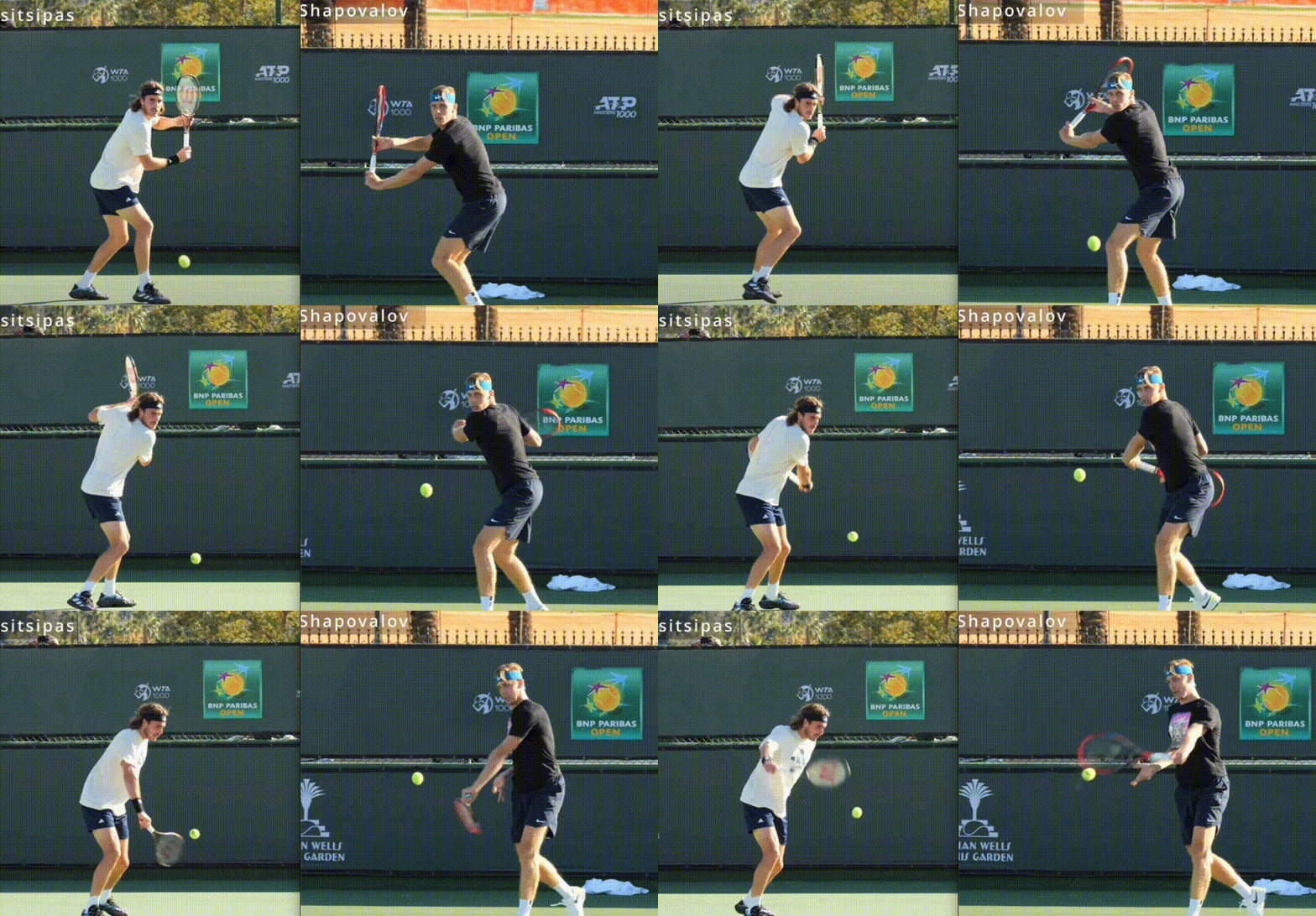
Shapovalov didn’t lose the match with Sinner because of his topspin backhand today (the 15 double faults didn’t help), and it’s a sign — to me at least — that you can still play at the top of the game if your one-hander is fundamentally rock solid.
In the evening session on Louis Armstrong, Felix Auger Aliassime delivered one of the best performances of his career, taking out #3 seed Alexander Zverev in four sets.
50 winners. 24/27 at the net.
It was a masterclass forehand performance in particular from Felix, who averaged 83 mph off that shot when directing it into the Zverev forehand — something he did very often. Tallon Griekspoor approves:
“It’s pretty clear when you play against Zverev what the tactic should be. I’ve said it a couple of times, open and wide, and people were shocked, but I think there’s only one tactic against Zverev, and that is: every ball to the forehand.”
— The Changeover Podcast
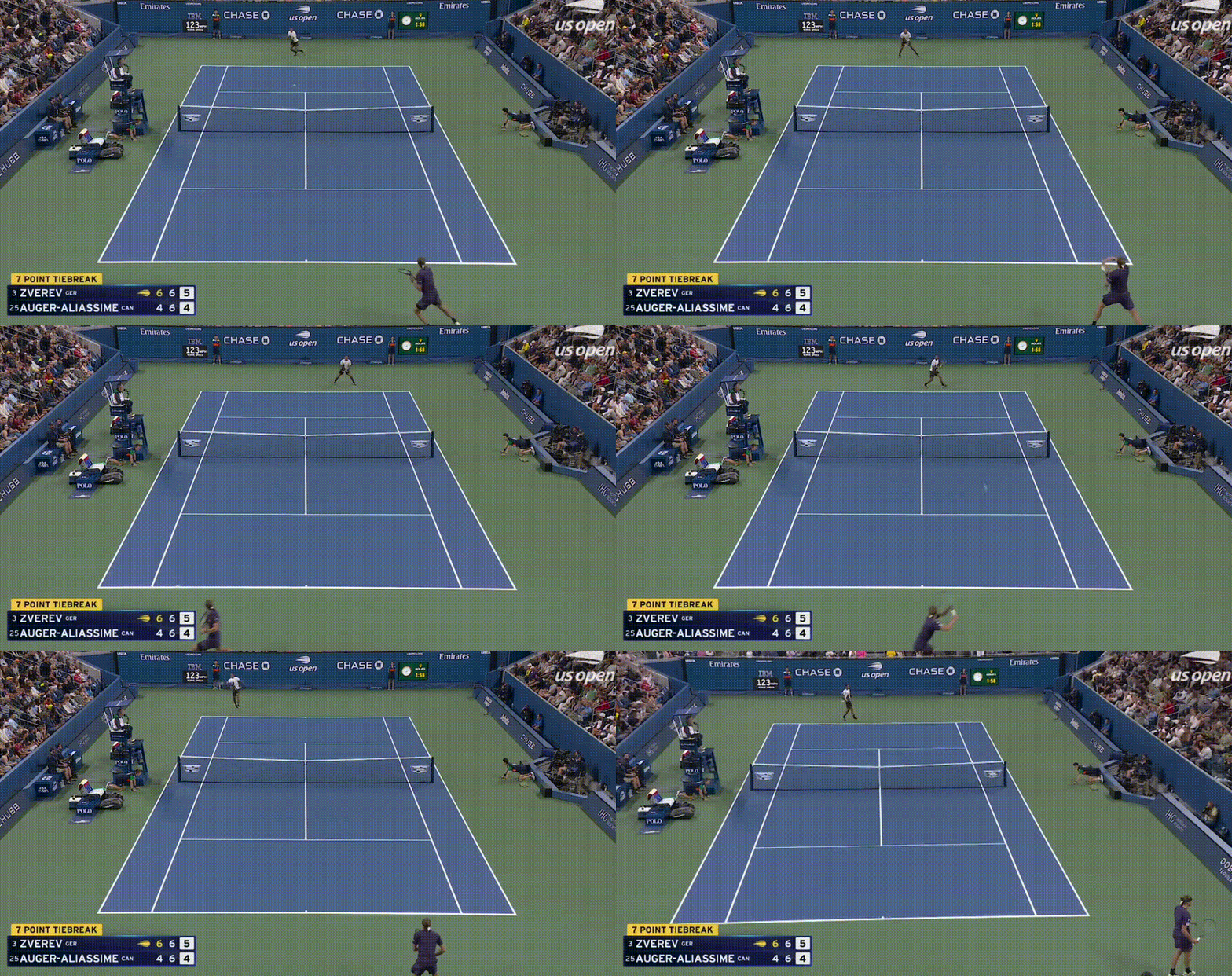
The setup is noticeably lower now compared to a couple of years ago, and this perfect angle down 5-4 in the second set tiebreaker was a huge moment in the match as he was in danger of going down two sets to love:
FAA takes on Rublev in round 4.
That’s all I’ve got. See you in the comments. HC.