
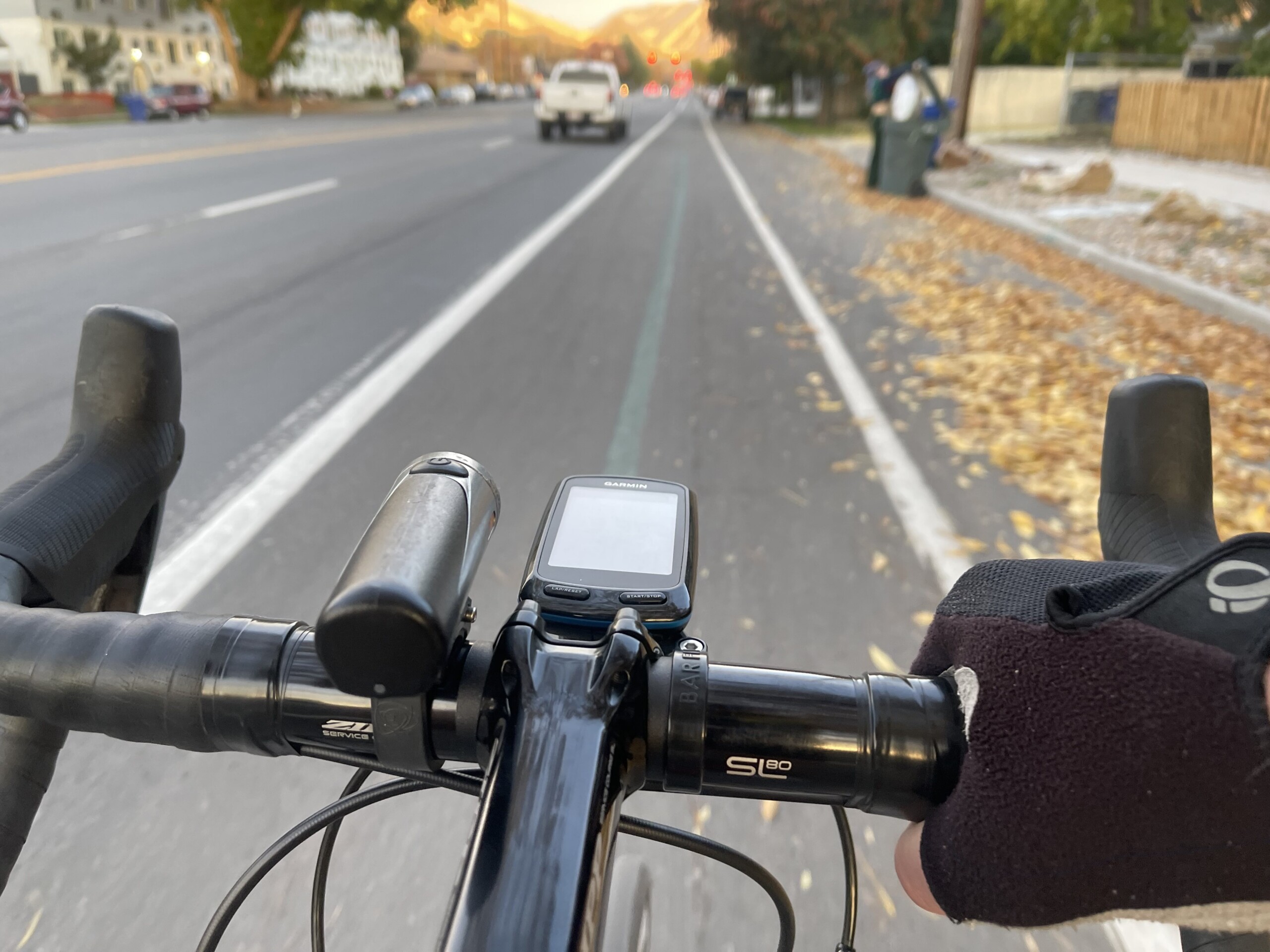
SALT LAKE CITY (February 3, 2026) — A transportation bill in the Utah Legislature (SB 242 See lines 3181-3274) will continue the assault by out of area legislators Sen. Wayne Harper and Rep. Kay Christofferson on Salt Lake City’s safe streets efforts that began in 2025 with SB195. The bill would require Salt Lake City to “mitigate” street safety, bike lane, and bus projects on 200 S, 400 S, and 300 W, and to provide a timeline for the potential removal or modification. The bill does not define what “mitigate” means.
SB242 repeals SB 195 from 2025, but replaces it with an even greater reduction in Salt Lake City’s ability to manage its own streets, further eroding local control.
Senate Bill 242 expands the study area south to the city’s southern border (roughly 2100 S to 2700 S) and west to Redwood Road.
The bill explicitly requires “mitigation” of the brand new bike lanes on 300 W, 400 S, and the bus lanes on 200 S.
“includes plans and timelines for the city to mitigate the impacts of traffic calming measures and highway reduction strategies previously implemented on:
(A)300 West from 400 South to 900 South;
(B)200 South from 300 West to 300 East; and
(C)400 South from West Temple to Interstate 15;”
This is ironic since the new 300 W protected bike lanes from 400 S to 900 S were just completed under permission from UDOT, as were the new bike lanes on 400 S.
The “mitigation”, while not defined, requires the following:
“(d)To develop the plan for mitigation described in Subsection (1)(a)(v), the city:
(i)may engage and consult with stakeholders and the department to assess potential
impacts and alternatives; and
(ii)shall obtain approval from the department of the proposed plan for each highway.”
Since the 200 S project is part of the Davis-Salt Lake City Community Connector Bus Rapid Transit Project, removal or “mitigation” of this project could jeopardize funding for the Davis County Bus Rapid Transit line design grant. The Davis-Salt Lake City Community Connector Bus Rapid Transit Project received Federal funding including $1.5 million awarded for design beginning January 5, 2026.
The 200 S street reconstruction including its bus and bike lanes were paid for by the Funding our Future bond. It remains unclear what obligations Salt Lake City or the State of Utah would have to repay construction costs if the project is altered or removed.
The bill also strips Salt Lake City’s ability to safely size travel lanes by mandating 12 foot travel lanes wherever possible on Tier One streets (like 800 S), with a minimum of 11’ travel lanes. 12’ travel lanes are for a design speed of 55+ mph, clearly inappropriate for a street like 800 S.
NACTO (National Association of City Transportation Officials) states,
“Lanes greater than 11 feet should not be used as they may cause unintended speeding and assume valuable right-of -way at the expense of other modes.
Restrictive policies that favor the use of wider travel lanes have no place in constrained urban settings, where every foot counts. Research has shown that narrower lane widths can effectively manage speeds without decreasing safety and that wider lanes do not correlate to safer streets.3 Moreover, wider travel lanes also increase exposure and crossing distance for pedestrians at inter-sections and midblock crossings.4
…
Lane width should be considered within the overall assemblage of the street. Travel lane widths of 10 feet generally provide adequate safety in urban settings while discouraging speeding. Cities may choose to use 11-foot lanes on designated truck and bus routes (one 11-foot lane per direction) or adjacent to lanes in the opposing direction.”
See NACTO’s Urban Street Design Guide for Lane Width:
It is unclear why the bill sponsors are choosing lanes widths that nationally recognized transportation planners don’t recommend. Given the high speeds at which Salt Laker’s tend to drive, this clearly will not make the streets any safer.
Even the staid and conservative AASHTO (American Association of State Highway and Transportation Officials) recommends 12′ lanes only on streets with speeds higher than 45 mph, of which Salt Lake City has none in the study area — and to our knowledge, none at all — with speeds that high.
“AASHTO Lane Width Standards Overview (from Google AI):
• Interstate & Principal Arterials: 12-foot (3.6 m) lanes are the standard, especially for high-speed (>45 mph) and high-volume routes.
• Urban/Suburban Arterials: Lane widths may range from 10 to 12 feet.
• Low-Speed/Local Roads: 10 to 11-foot lanes are acceptable, particularly in urban areas with speeds under 35 mph or where space is constrained.
• Auxiliary Lanes: Often 10 to 12 feet, but not less than 10 feet.”
Action Needed:
Contact the bill sponsors (info below), as well as your senator and representative.
Find your representative tool:
- Ask them first to not only repeal SB195 (from 2025), but to remove the new language in SB242 as well. This section of the bill is legislative overreach.
- State your support of the existing infrastructure on 300 W, 200 S, and 400 S, without changes, and that all bill language targeting these projects be removed.
- State your opposition to the 12′ lane mandate and ask for that to be removed from the bill as it contradicts guidance from both major transportation engineering organizations.
- State your opposition to removal of local control of Salt Lake City’s own streets, which runs counter to frequently stated principles of the legislature.
To contact bill sponsors Sen. Harper and Rep. Christofferson, see:
(Visited 216 times, 222 visits today)