
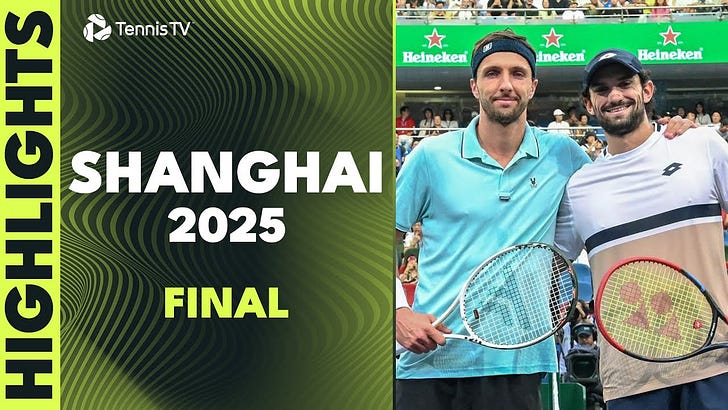
Valentin Vacherot capped off a fairytale week(s) in Shanghai, defeating Arthur Rinderknech 4/6 6/3 6/3 to become one of the sports wildest tournament wins in memory. The story is made all the more bizarre upon learning that the pair are cousins who played college tennis together at Texas A&M.
Prior to the tournament, Vacherot sent a text to a friend:
“I’m going to take my chance in Shanghai qualifying because a sick run can come any second.”
It’s perfectly sound logic for a big-serving, hard hitting 26-year-old. But even here, “sick run” is Lotto-sponsored-Challenger-level-journeyman vernacular for “fourth-round”.
Maybe take down a tired seed or two and cash a nice cheque. Get on Yonex’s radar a little more. Maybe Lotto can offer me some money.
“Sick run” does not mean giant-killing, title-winning, 9.0 rating play in front of Roger Federer in the final. I’m not sure anything other than “what the fuck?” is warranted.
It was one of those weeks that reinforced the “this is sports” / “unscripted” / “underdog” tags and cliches. We say them because once in a while this happens, giving renewed vigour to the horde of underdogs that battle it out on lesser stages all over the globe every. single. week. Intrepid travellers playing in boondock cities for a chance at the big time. This week it’s Curitiba, Hersonissos, and Lincoln. I tip my hat to them all.
One of the talking points from many players these days is the depth of the tour. Guys way down the rankings can play dangerous ball. Vacherot is testament to that. But I think another talking point that will only gain momentum in the wake of a result like this is the fact that at the top of the rankings, there is a lack of elite talent right now outside of Sincaraz. Zverev is world number three and by his own admission would say he’s had a terrible year outside of Australia. Djokovic is world number five at 38 years old playing a schedule of Slams, with the the odd Masters 1000 sprinkled in to keep sponsors happy (a luxury brand like Lacoste must have a big Chinese appetite. Ditto Federer with Rolex). I don’t want to say “weak era”, because that’s a lazy slur used by internet trolls of player fanbases, but coupled with post-US-Open fatigue and brutal conditions and two week Masters events, I don’t think it’s a coincidence that these types of winners emerge in the aftermath.
But heck, it’s still remarkable.
Personally, I thought Rinderknech was going to win this. I was proven right early on, as the Frenchman got out of the blocks quickly, breaking in the second game and finding his timing and legs early:
Vacherot could have been forgiven for looking jaded in the opening minutes. His run to the final included surviving near losses in qualifying, and battling back from a set down in six matches enroute to the championship match. All this work, mind you, in the brutal heat and humidity of Shanghai, as others around him wiltered.
Still, the Monegasque’s legs didn’t fail him once the nerves settled, doing well here to dip the forehand low and set up this two shot pass.
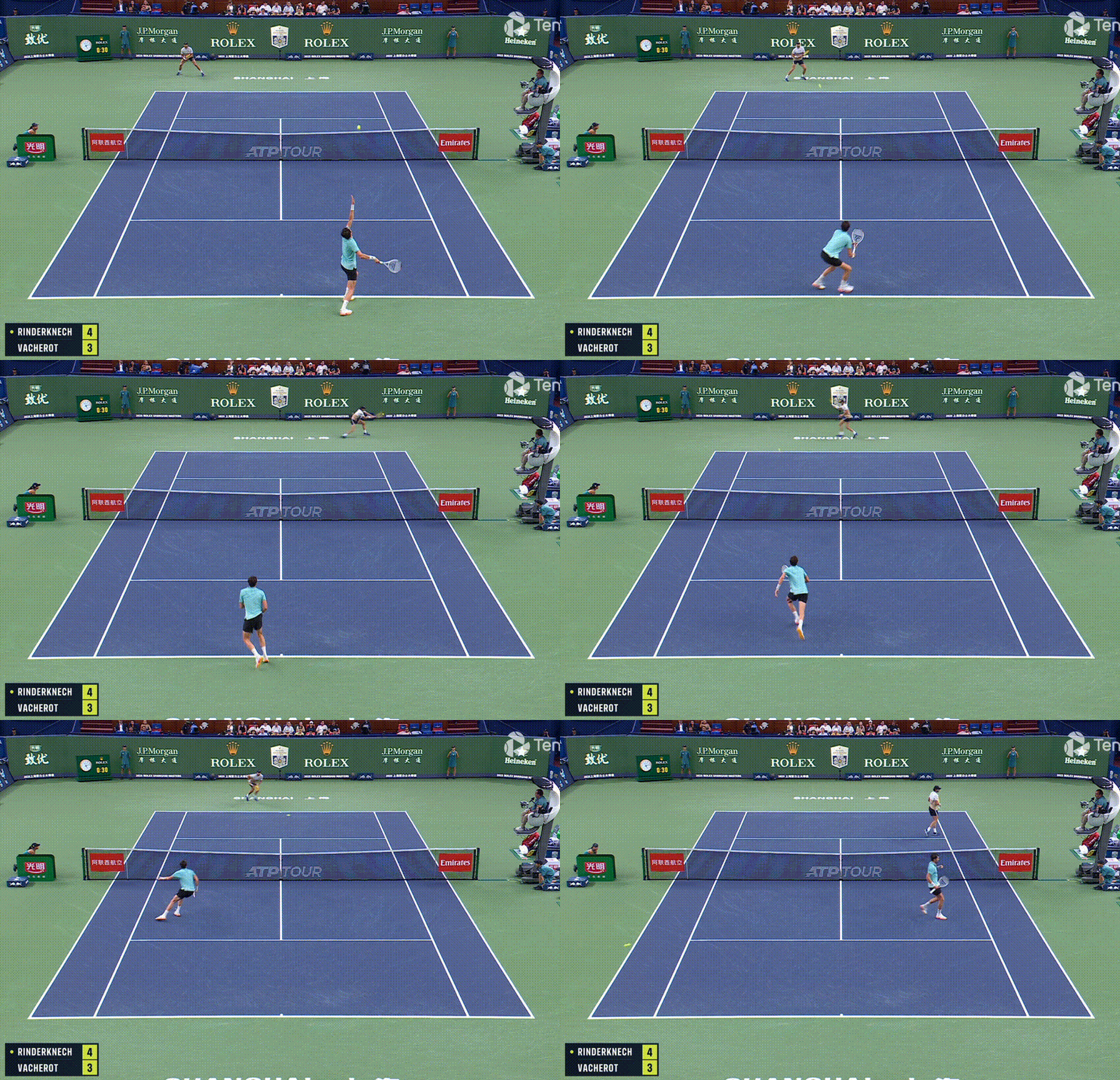
I was most impressed with Rinderknech’s backhand in the opening hour or so. He can take it hard and both ways, and here he wasted no time attacking the +1 after a nasty sliding second-serve:
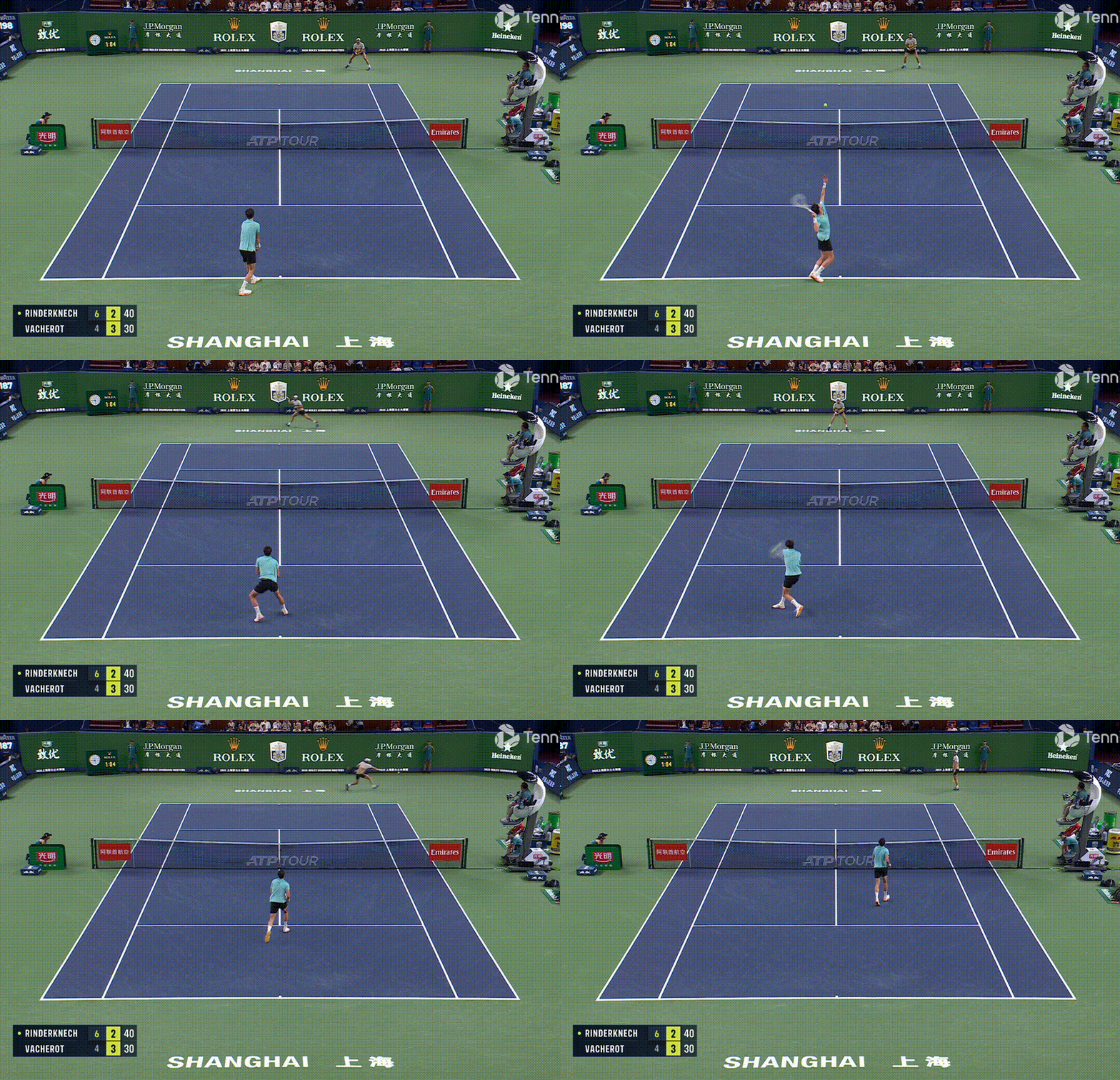
The Frenchman was the better player through 6/4 3/3, and in that game on Vacherot’s serve he earned a volley on the net at 30/30 and dumped it into the net in what may be his biggest regret in the post-mortem, as the very next game Vacherot’s own backhand came alive, twice threading a winner down the line to completely flip the script and steal momentum, hitting this beauty to take fate into his own hands:
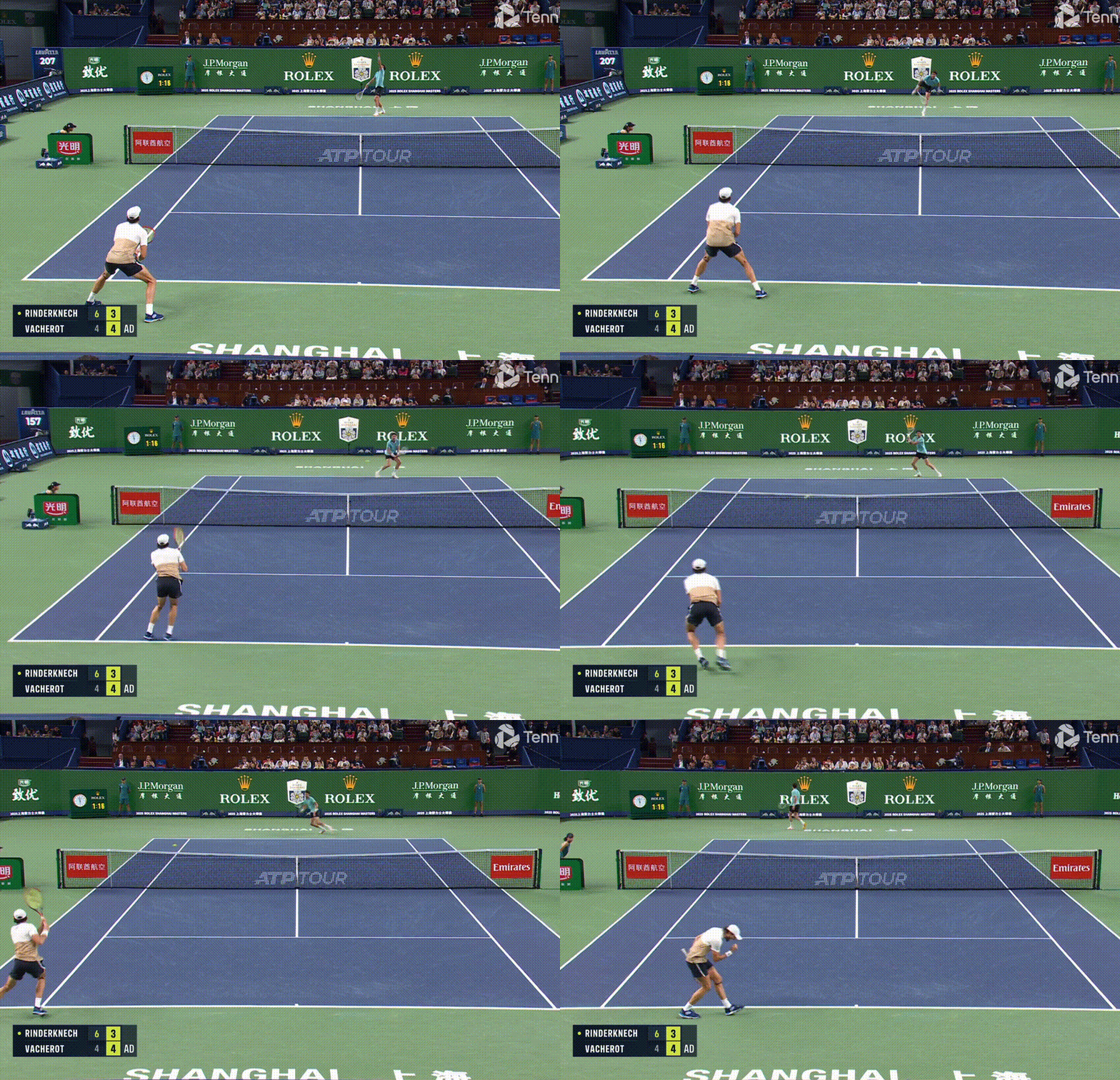
“Well we shouldn’t be surprised. That’s how he’s [Vacherot] played to get to this stage. First break point: fearless. And it’s unsettling when a player is in this mood in the biggest moments.”
— Tennis TV commentary
There was a 10-minute break after the last point of the second set, as both men went for a change of kit. Rinderknech came out slow in his opening game, gifting triple break point with bricked volleys like this:
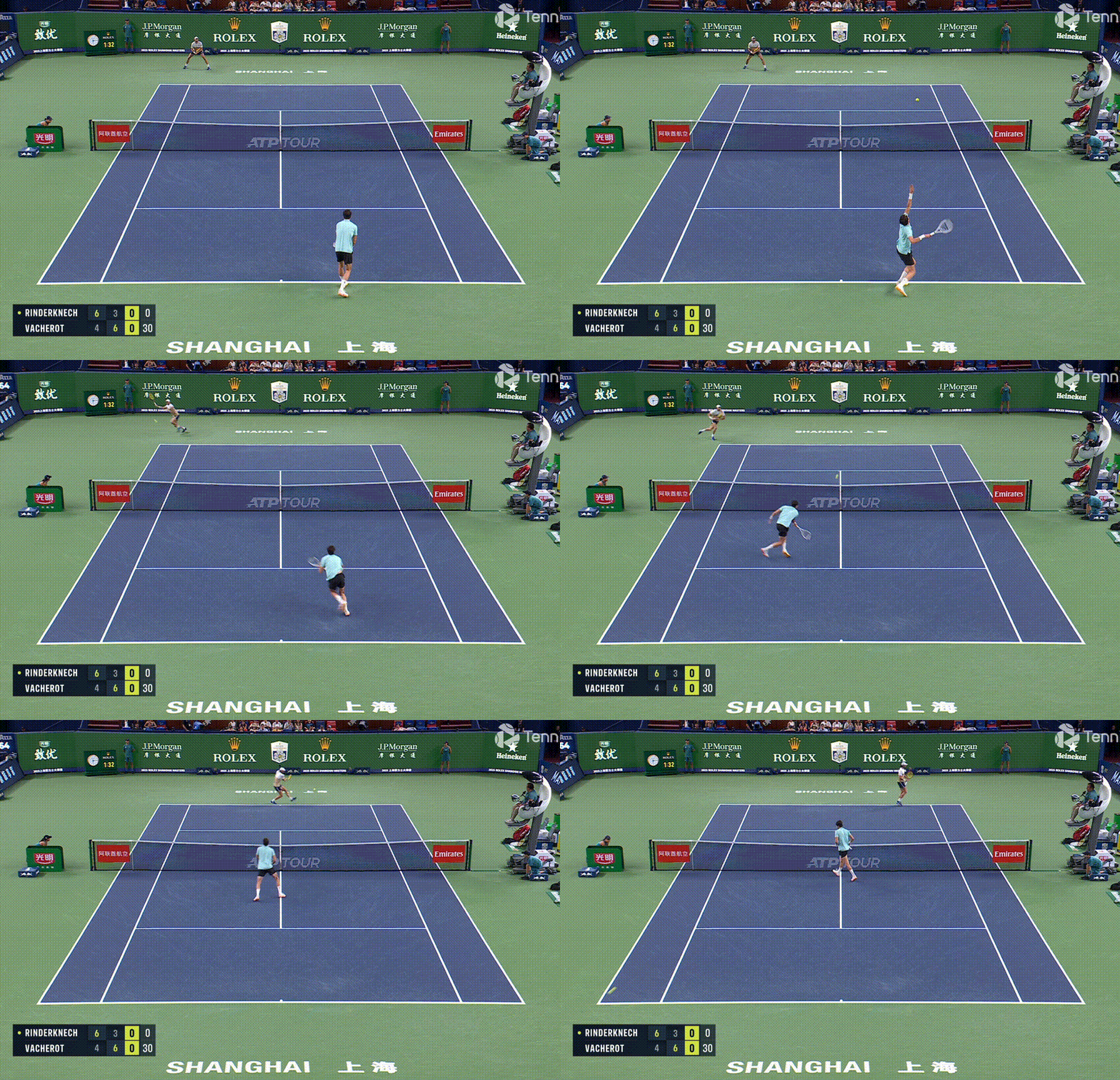
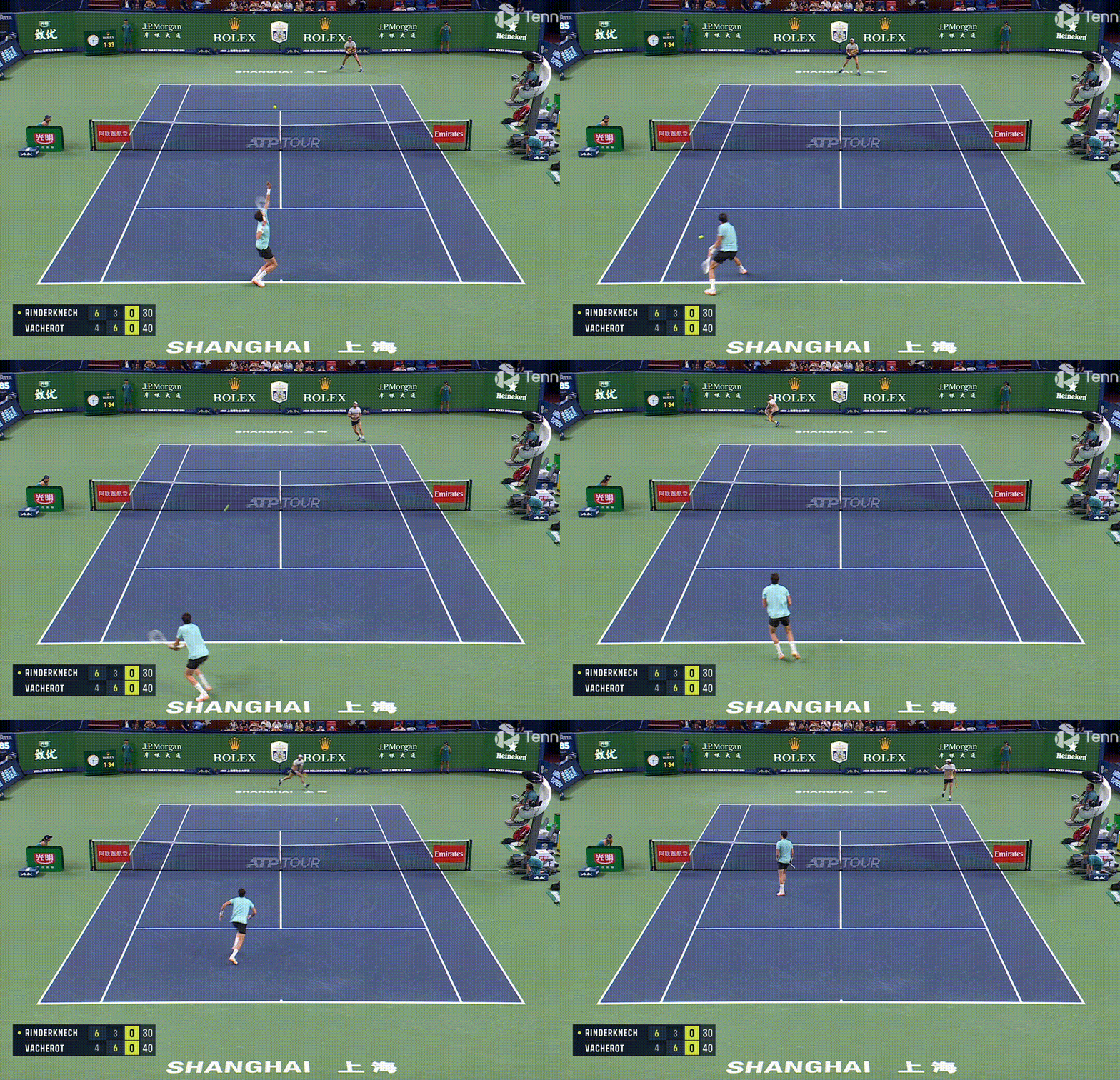
Yet the converted break point was well-earned, with Vacherot again weaving the margins with the backhand:
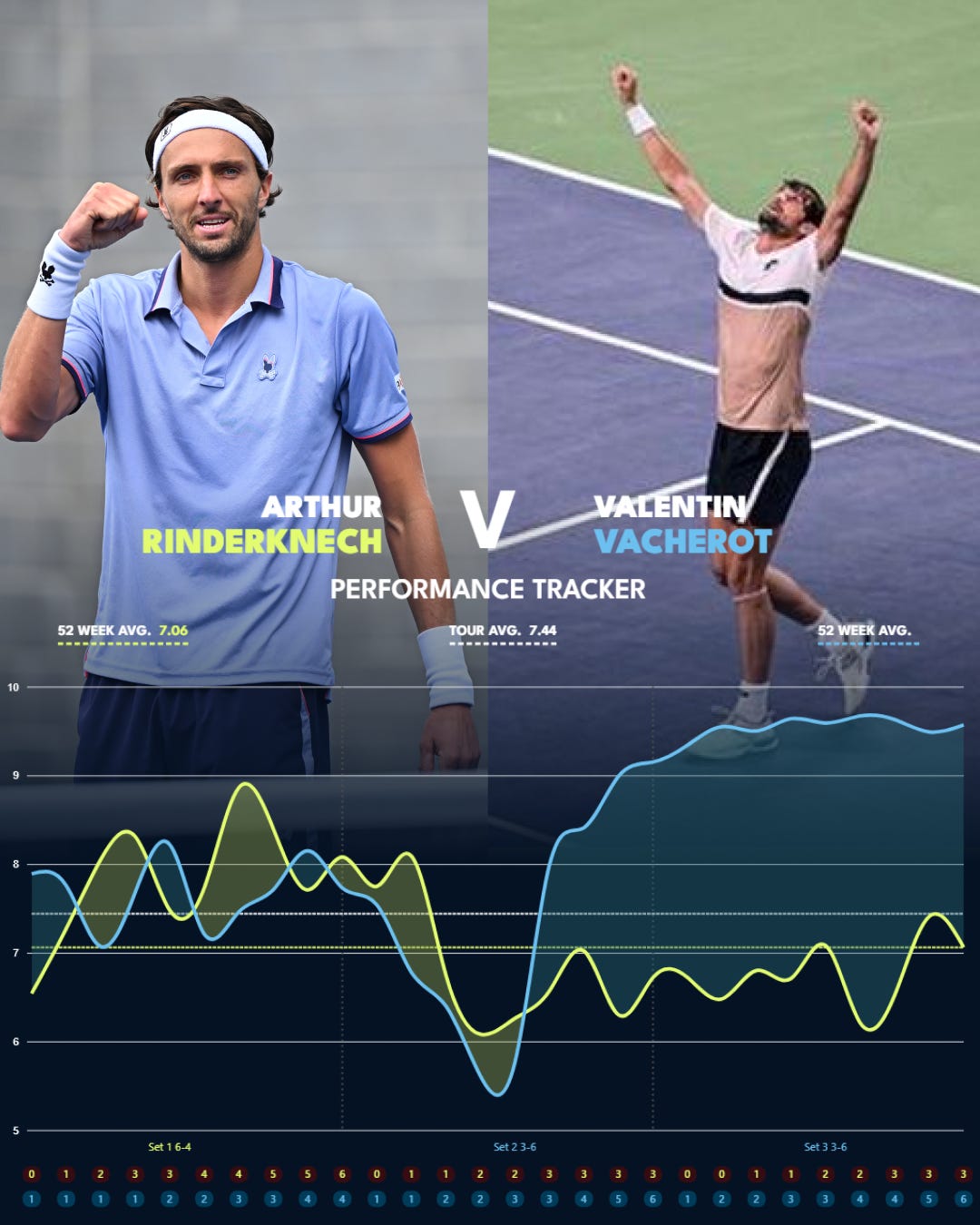
In fact, it appeared the Monegasque needed little help from his cousin in taking a lead in the third set. A look at Tennis Insights’ performance tracker — a rating that combines the In Attack, Conversion, Steal, and Shot Quality data to create a metric showing a player’s overall performance level — suggested the world number 204 was tapping into a rich vein of form precisely when he needed it most, hovering above a 9.0 rating at the start of the third set, and carrying that all the way to the finish line:
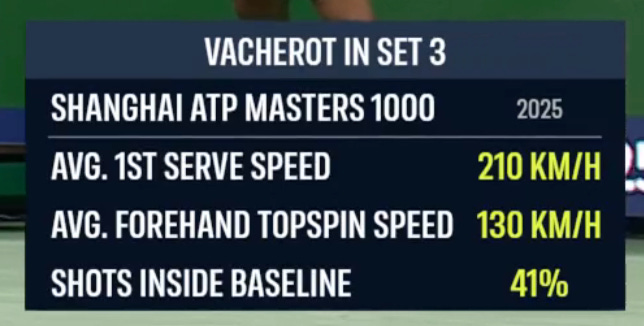
And this wasn’t anything new for Vacherot this week. The trend all tournament had been to go bigger and more aggressive in the third set each and every time, upping the serve speed, increasing the forehand by 6 km/h, and playing 10% more balls inside the baseline, all while containing the errors. Perhaps his seeded opponents can be forgiven for falling to a player who played with such conviction:
Early in the third it was the backhand for me that was the real damage maker. Over and over again he was taking it early, finding both corners, and following it in with all the threatening reach of his 6’5’’ frame:
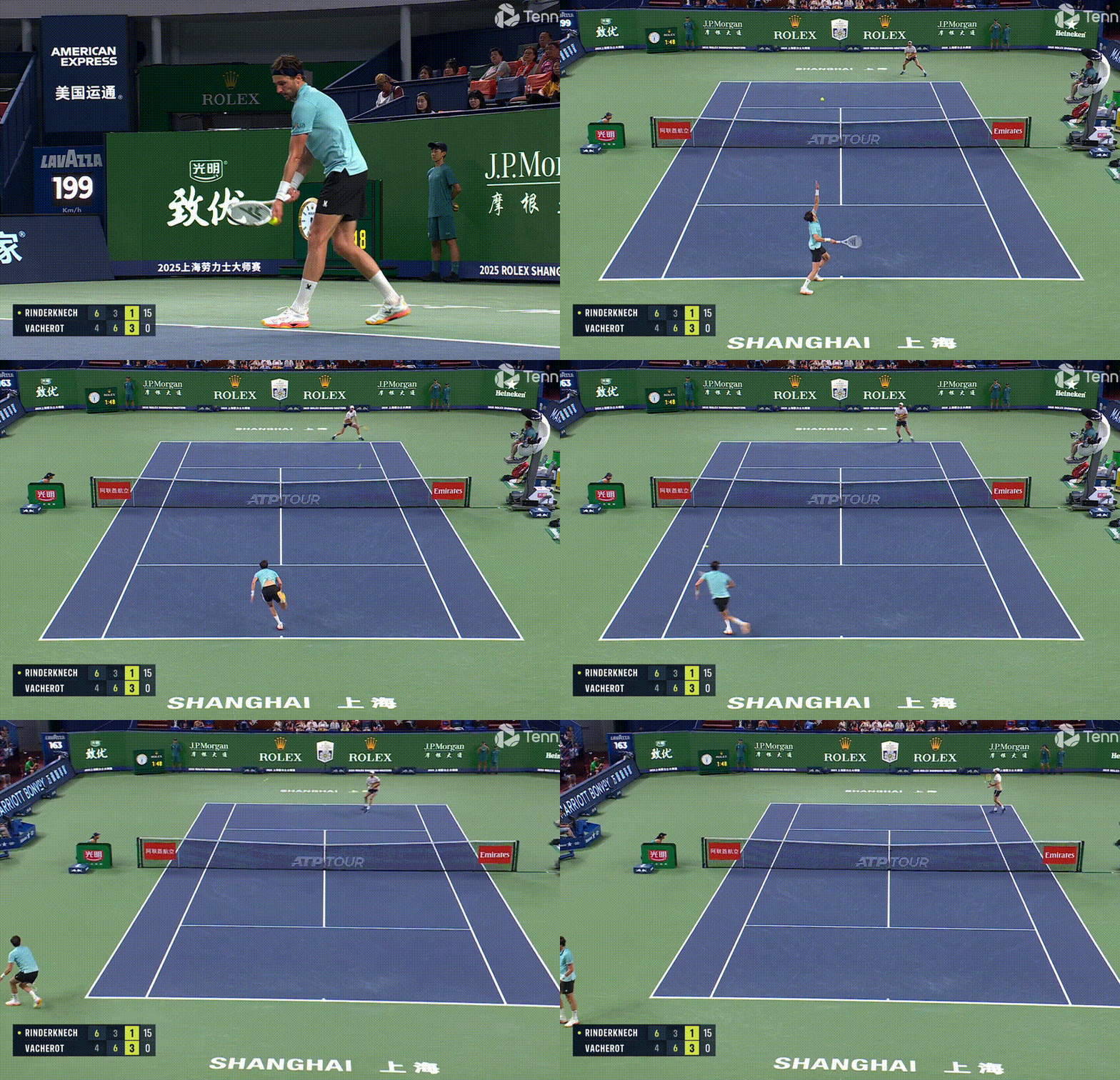
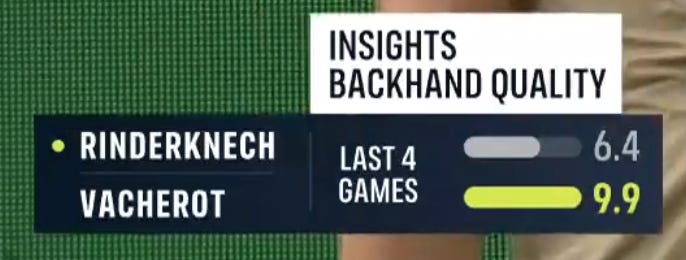
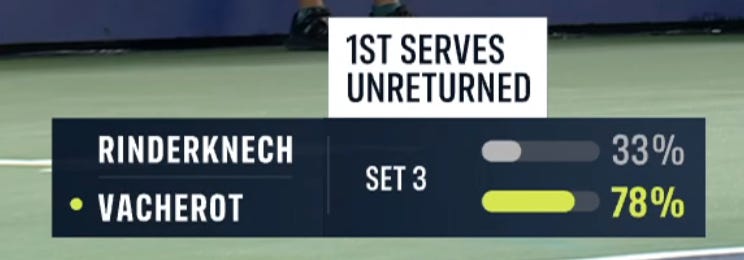
It left Rinderknech clawing in each and every service game, while Vacherot held to love in his opening three, sending down unreturned rockets as the norm:
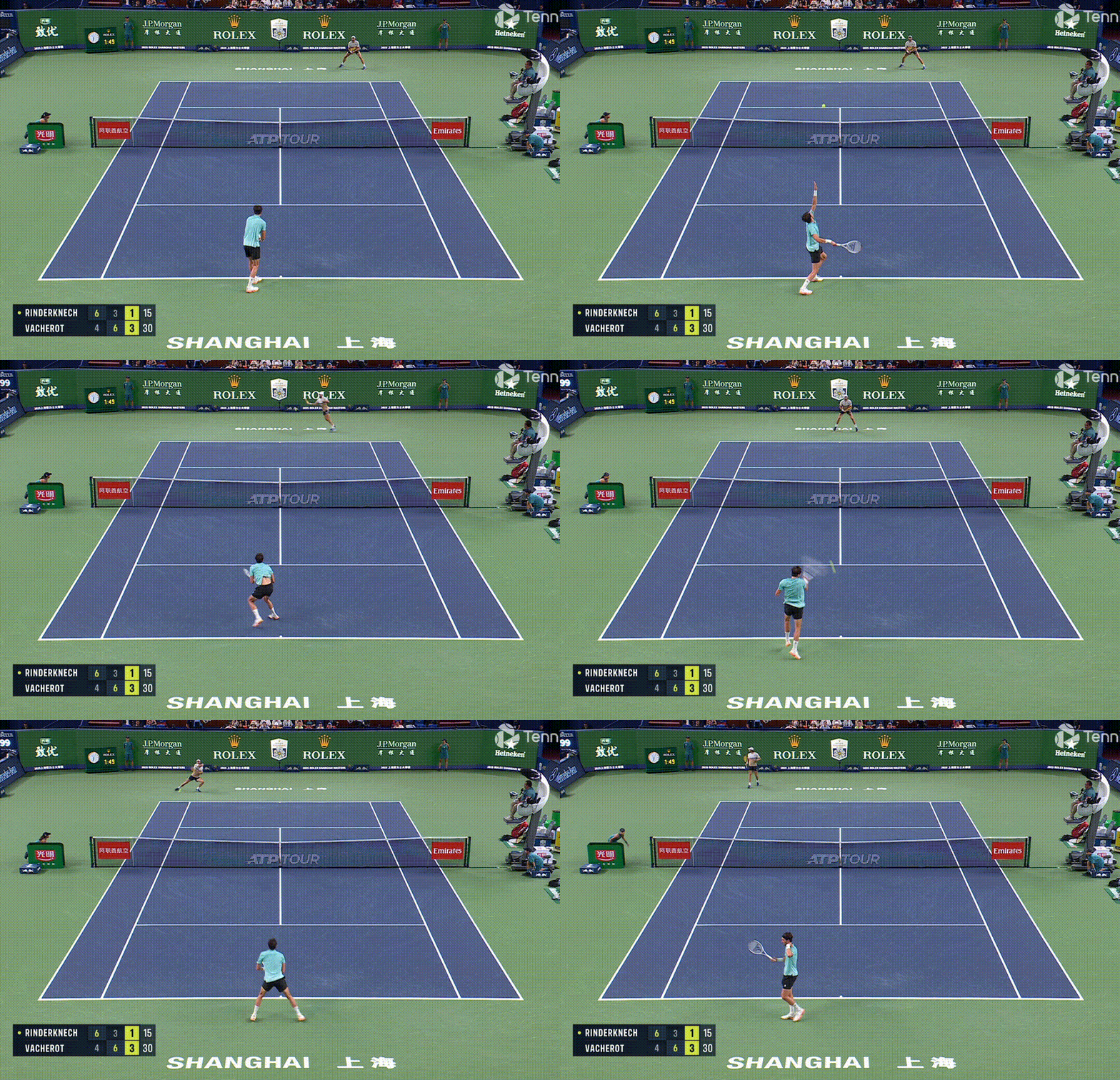
Of course, the forehand was humming too. Everything Vacherot touched turned to 9.0 gold:
If there was a ‘blip’, a moment where an unheralded player might typically blink and awaken from the dream state of such unfathomable runs, it was when serving at 4-2 40-0, when Vacherot missed two attacking shots — one forehand and one backhand — but that was about it. Even those misses were full of conviction and marginal in nature.
They would be the only two points he would drop on serve for the entire third set.
Despite this, the Monegasque (it’s a great word) had no plans to serve it out, carrying his unconscious plans forward to the 3-5 return game, where the plan appeared to be taking huge cuts at everything and making everything:
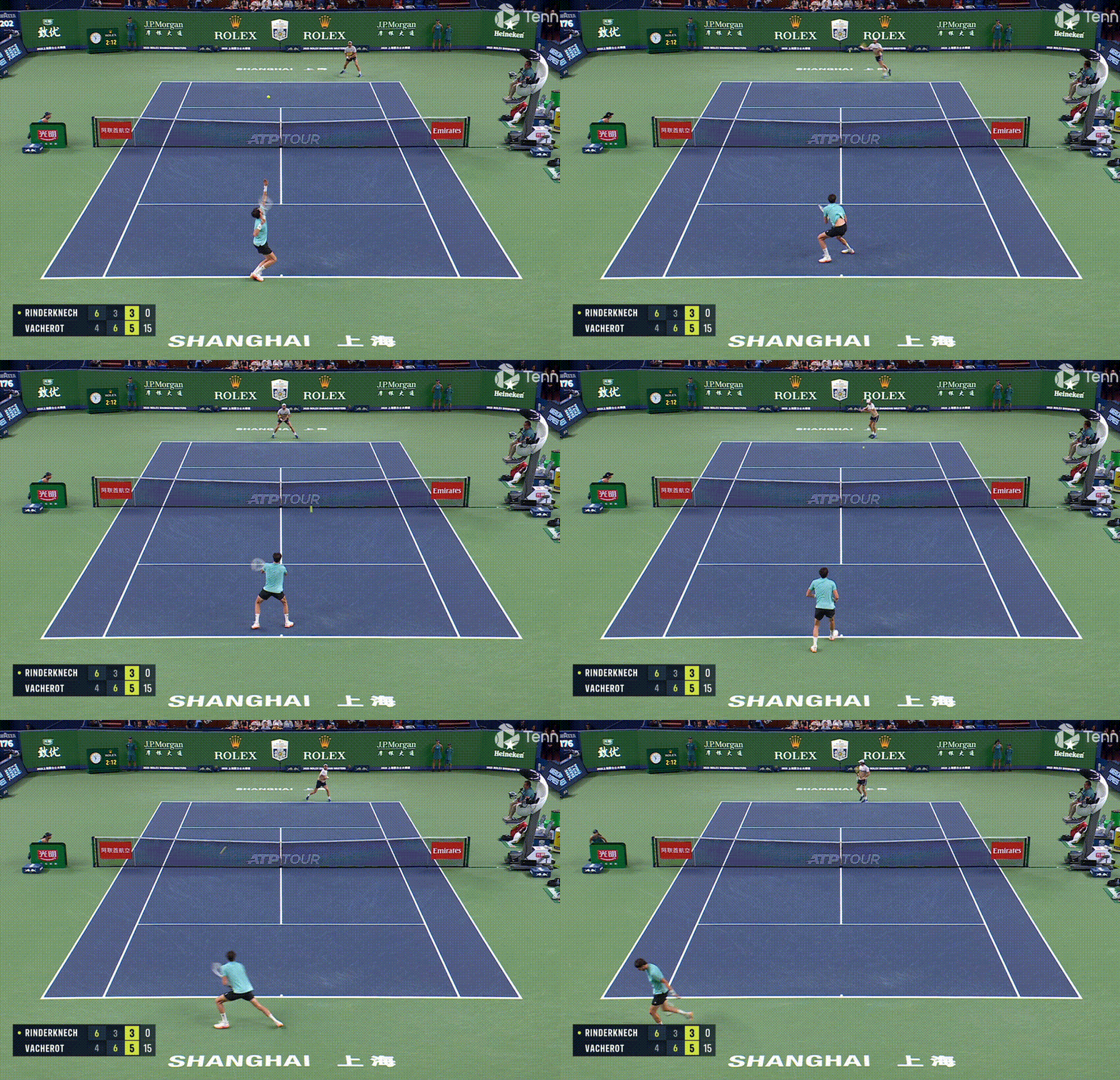
Rinderknech needed some quick hands to get on the scoreboard at 3-5:
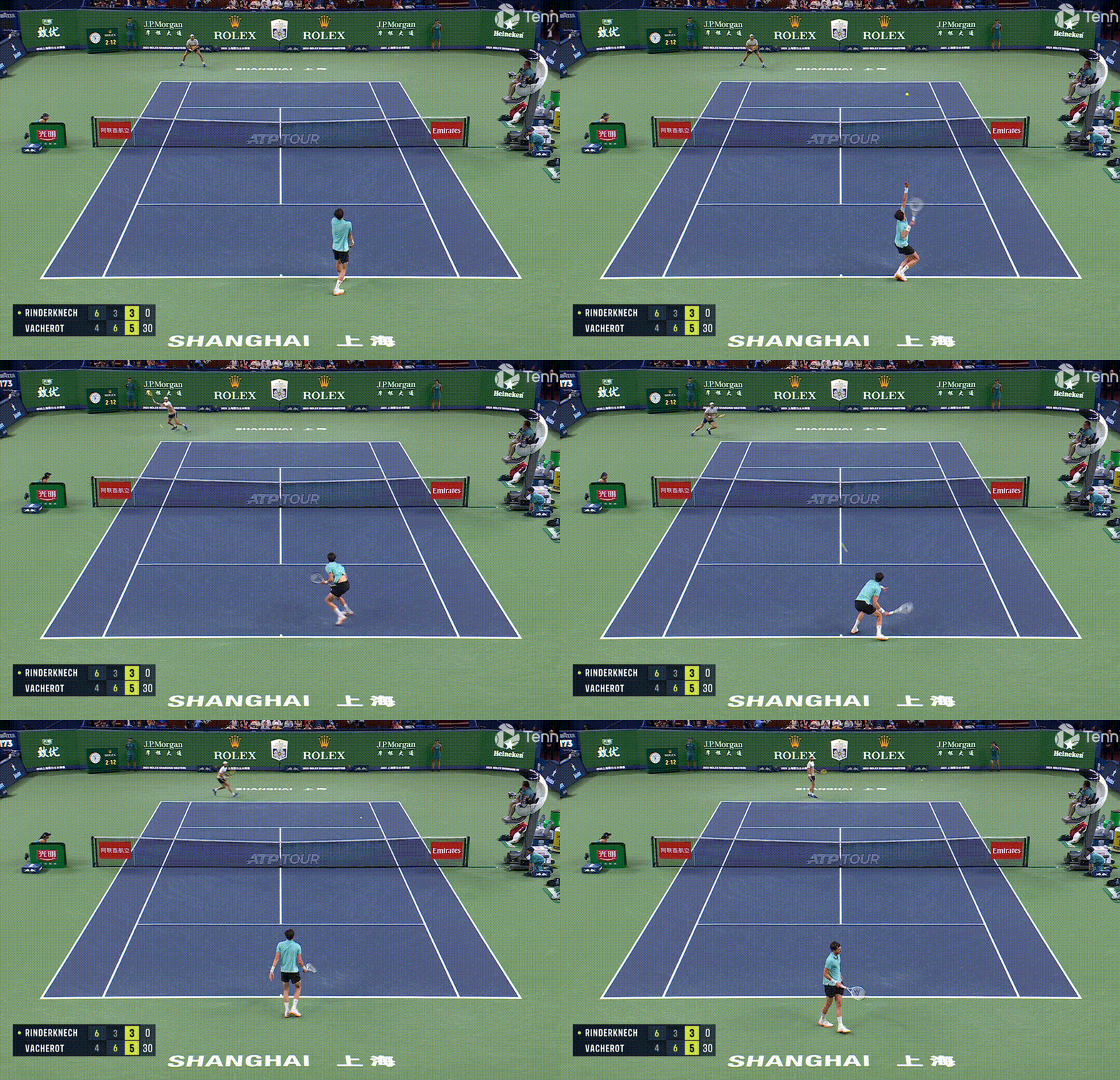
But it wasn’t enough, with Vacherot converting on his second match point, threading a forehand pass down the line for the improbable title.
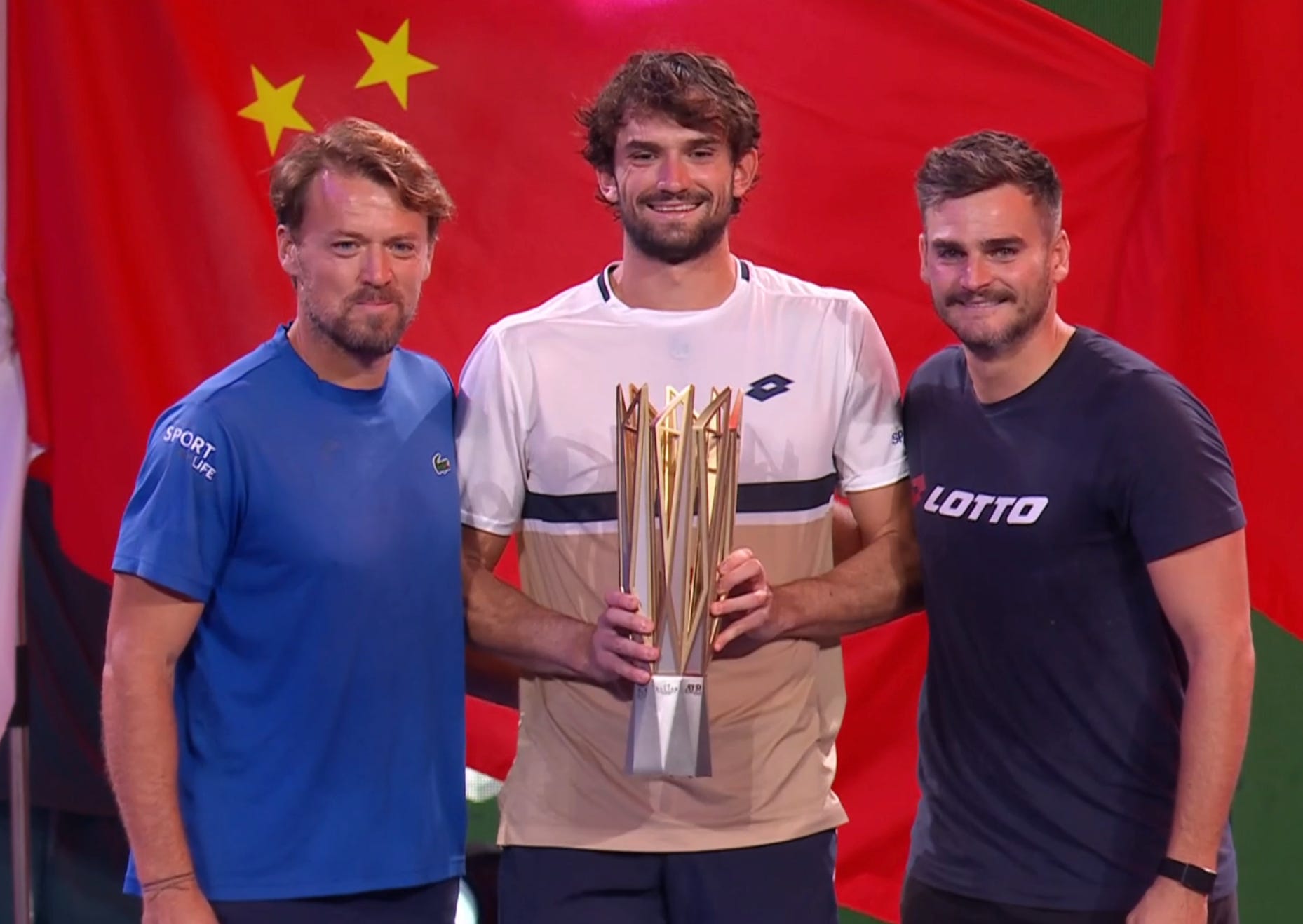
“It is unreal what just happened. I have no idea what is happening right now. I am not even dreaming, it is just crazy,” Vacherot said. “I am just so happy with my performances the past two weeks. I just want to thank everyone who has helped with my career since the beginning. There has to be one loser but I think there is two winners today, one family that won. And I think for the sport of tennis, the story is unreal.”
— Valentin Vacherot