
Updated March 30, 2026 06:53AM
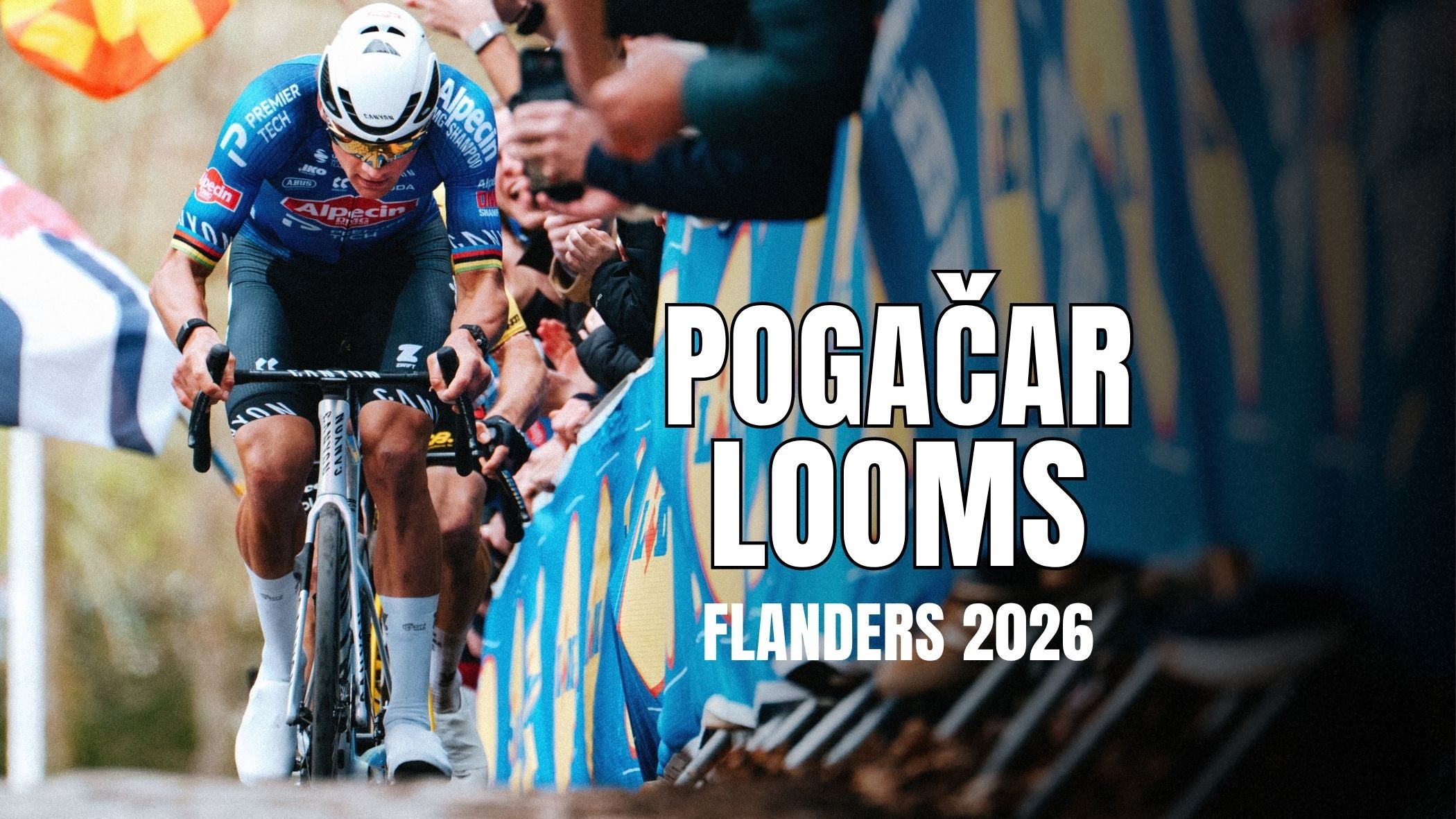
Mathieu van der Poel insists he’s ready for the blockbuster duel with Tadej Pogačar at the Tour of Flanders.
Recent evidence may suggest otherwise.
With less than a week to go, the flying Dutchman is sending some oddly mixed signals.
There are no flashing red warning signs, but is the facade of his trademark efficiency and classics dominance beginning to crack?
The long solo attacks are coming, but they are not sticking.
After a hot-and-cold spring of near-misses, big wins, tactical compromises, and visible fatigue, Van der Poel almost looks human just days ahead of his super-hero clash with Pogi.
“I’m in good shape. I knew it was going to be difficult to be 100 percent after the effort I did on Friday,” Van der Poel told FloBikes. “I think for next week, of course, it will be very difficult again, but I will try to be at my best there.”
It has been as clear as Belgian mud to get a clean read on exactly where he stands heading into Sunday’s generational showdown on the Oude Kwaremont.
But it is a fool’s errand to draw too many conclusions from this bumpy lead-up to the Ronde. Flanders and Paris-Roubaix are what count.
Van der Poel has already confirmed he is at a winning level against the entire peloton.
But the big question begs: Is he at a Pogačar-beating level?
Bumpy spring of highs and lows
Van der Poel’s spring has been anything but a smooth ride.
After ripping through the mud and muck to make cyclocross history, he blasted onto the road with big wins at Omloop Het Nieuwsblad and looked to be in beast mode at Tirreno Adriatico with two stage victories.
But then he crashed and was dropped at Milan-San Remo, where Pogačar delivered the kind of audacious victory that everyone was expecting.
The Dutchman rebounded to win E3 Saxo Classic, but only barely after being nearly reeled in after a long-range attack that, in previous years, would have sealed the race.
Then came In Flanders Field, where Van der Poel detonated the race alongside Wout van Aert, but ultimately succumbed to team tactics as Alpecin-Premier Tech teammate Jasper Philipsen sprinted to victory.
Which way to read it? Van der Poel, the ice-cold cobble-killer, or does he suddenly look vulnerable?
“I said quite quickly today on the radio that I didn’t feel super well recovered,” Van der Poel said after In Flanders Fields. “I think I did quite a defensive race as well, just following and doing what was necessary, but not too much.”
That sounds like he’s very much thinking about the bigger prizes at Flanders and Roubaix.
Big power vs. narrow gaps
Before jumping to conclusions, it’s important to point out that tactics and race dynamics also shaped the outcomes across the weekend.
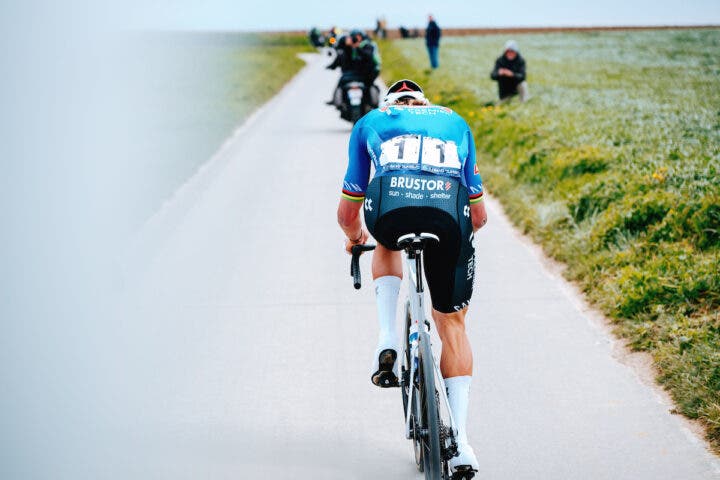
At E3, he rode solo 64 kilometers after powering away on the Boigneberg.
Gusting head and crosswinds turned the run-in from the final climb, still 19km out, into a grinding slog, and he was nearly caught under the red kite.
Van der Poel still completed the hat-trick and later offered a rare glimpse at his power numbers, posting a screenshot of his Strava data to Instagram.
He revealed what he described as his best 90-minute effort ever, averaging a staggering 446 watts.
Holding that output for an hour and a half borders on extreme (he didn’t reveal exactly from what part of the race). For context, most top amateurs can struggle to produce 400 to 500 watts for even a single minute.
Why break his usual radio silence around his power numbers? Was it a warning shot to rivals who might suddenly smell blood? Or perhaps to bolster his own self-confidence?
Playing the team card
Being the strongest in the race doesn’t always guarantee victory, even for Van der Poel.
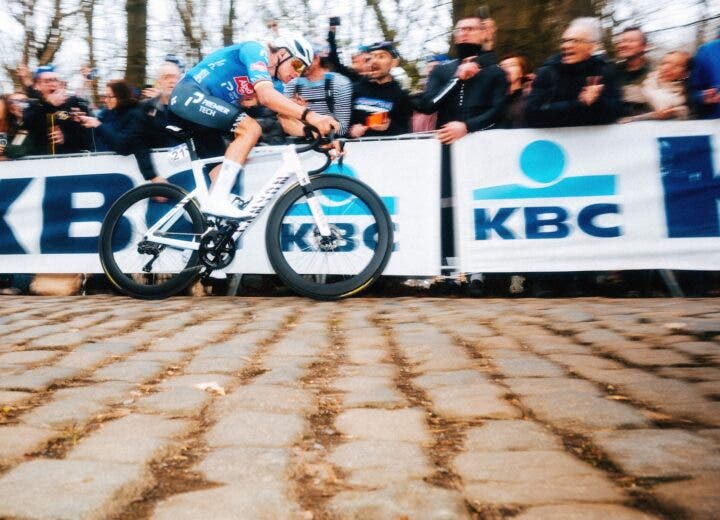
On Sunday, his explosive attack on the final passage up the Kemmelberg dropped everyone except Van Aert.
“It was also my only attack of the day, I think,” he said. “To get there alone was impossible, but we wanted to keep the pressure on the chasing group. I knew that with the legs I had, I shouldn’t go too crazy. I rode a defensive race, a bit against my nature.”
It’s 35km on flat roads from the Kemmelberg to the line, plenty of time for teams to organize a chase against two riders, especially with Philipsen riding the coattails in what was a free ride in the chase.
“If I didn’t have Jasper in the back, it would have been a different story,” he said.
At E3, his solo move nearly unraveled. At Gent-Wevelgem, it never fully came together.
Warning signs? Maybe.
Tactics and wind played factors in both races that will be wildly different on Sunday at the Ronde.
Prestige battles
And then there is something waiting on Sunday that neither E3 nor Gent-Wevelgem can match — prestige.
Van der Poel has built his career on peaking precisely when it matters.
The Tour of Flanders is his favored terrain. A fourth victory would place him alone in the record books.
Big moves tend to stick deeper at the monument distance of 278km.
At the Ronde, it is only 13km from the final climb of the Paterberg to Oudenaarde. The peloton will be on its collective knees.
“I think for next week, of course, it will be very difficult again, but I will try to be at my best there,” he said when asked if he will win No. 4. “I hope so, but it will be very difficult.”
It is clear Van der Poel has been building toward Flanders and Roubaix since last winter.
Within hours of finishing Gent-Wevelgem, he was already accelerating his recovery by flying back to Spain on a private jet.
Pogačar will arrive at the Ronde with a mix of momentum and menace.
Van der Poel remains the one rider who can beat Pogačar at Flanders, and vice versa.
You get the sense Van der Poel is exactly where he wants to be.
His battle Sunday against Pogačar will help define his legacy.