
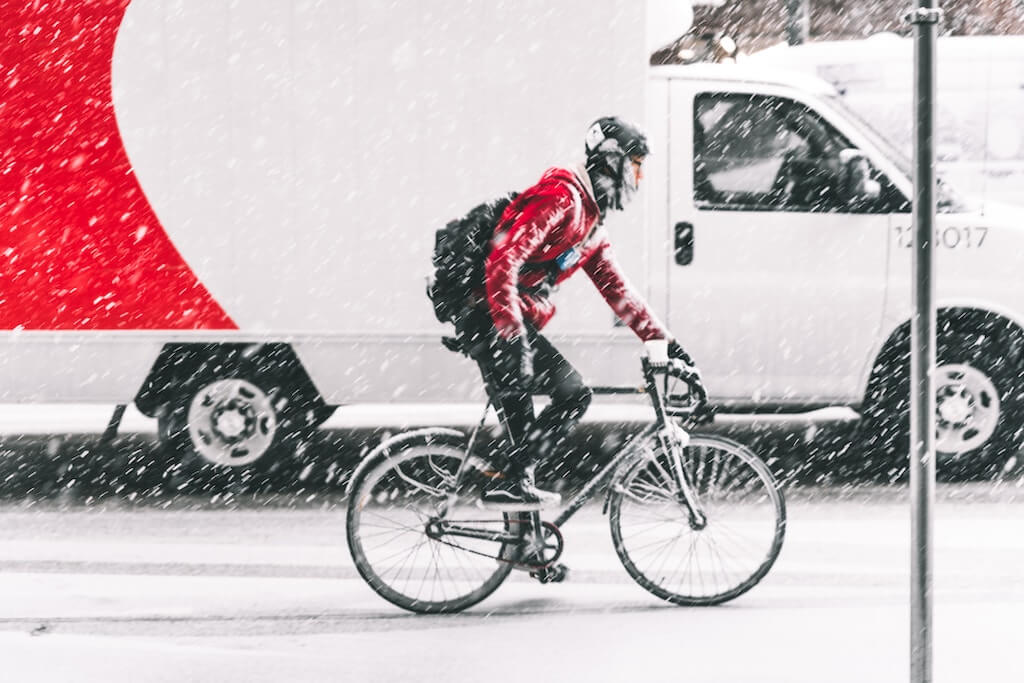
On a January morning when the thermometer reads –18°C and the city sounds muffled under fresh snow, the bus shelter is packed. Down the bike lane, a lone commuter pedals past, balaclava iced at the edges, breath puffing like a steam train.
For winter bike commuters, that question of how cold is too old never really goes away. Somewhere between the first frost and the deep-freeze polar vortex, everyone wants to know: Is there a temperature where cycling to work stops being practical—or even safe?
Short answer: yes, but it’s higher than you think for some, lower than you’d expect for others, and almost never about temperature alone.
Welcome to the surprisingly nuanced world of Viking Biking.
The Cold Is Relative (and So Are You)
Ask a dozen winter commuters when it’s “too cold” and you’ll get a dozen answers. For a cyclist in Vancouver, –5°C can feel apocalyptic. In Winnipeg or Montreal, it’s barely worth zipping the vents.
Physiologists will tell you that humans are remarkably adaptable. Once you’re moving, your body generates a lot of heat—roughly the equivalent of a space heater strapped to your torso. At a moderate commuting pace, most riders are producing enough warmth to stay comfortable well below freezing.
What actually ends most winter commutes isn’t cold—it’s wind chill, road conditions, and exposure time.
Viking biking commuting
Wind Chill: The Real Villain
Cycling creates its own weather. A –10°C day with a 20 km/h headwind can feel closer to –20°C once you factor in apparent temperature at cycling speed.
That’s when mistakes get expensive.
-
Bare skin freezes fast at wind chills below –20°C
-
Eyes water, then freeze
-
Fingers lose dexterity, turning braking and shifting into clumsy guesses
For many seasoned commuters, wind chill—not ambient temperature—is the line in the snow.
Rule of thumb: If your commute is under 30 minutes and you’re fully covered, –20°C wind chill is uncomfortable but manageable. Beyond that, you’re into “expert-only” territory.
Traction Trumps Temperature
Plenty of people ride happily at –25°C on dry pavement. The same riders will bail at –5°C during a freezing rain warning.
Cold is predictable. Ice is not.
The biggest winter risk isn’t hypothermia—it’s falling.
Snow-packed bike lanes, rutted slush, and black ice at intersections make decision-making more important than bravado. This is where true Viking commuters get pragmatic:
-
Studded tires extend the season more than any jacket ever could
-
Lower speeds are a feature, not a failure
-
Routes change—quiet side streets beat “maintained” arterials full of refrozen slush
The Clothing Myth: “More Layers = Warmer”
New winter commuters tend to overdress. Veterans do the opposite.
The goal isn’t to stay warm standing still—it’s to stay cool enough not to sweat. Sweat freezes. Wet baselayers turn a mild ride into a survival exercise.
The classic cold-weather system looks like this:
-
Merino or synthetic baselayer (never cotton, ever)
-
Windproof outer shell, not insulated
-
Insulated extremities: hands, feet, face
-
Clear or yellow lenses for eye protection
If you’re cozy when you roll out, you’re overdressed.

Winter biking is glorious
So… Is There an Actual Cutoff?
Most winter commuters quietly agree on a few practical limits:
-
–10°C: Winter cycling is still “normal,” just slower and quieter
-
–20°C: Gear, experience, and route choice matter a lot
-
–30°C (or colder with wind): Marginal gains, high risk, diminishing returns
At that point, frostbite risk increases, mechanical failures become common (frozen cables, brittle plastics), and the margin for error shrinks to almost nothing.
Even the most committed Viking bikers usually tap out somewhere here—not because they can’t ride, but because the cost-benefit math stops working.
The Secret Nobody Talks About: You Don’t Have to Be Hardcore Every Day
The real winter cycling flex isn’t riding through everything—it’s knowing when not to.
Successful year-round commuters aren’t purists. They mix modes. They watch forecasts. They forgive themselves for the occasional bus ride when freezing rain hits or the wind howls straight off the prairie.
Consistency beats heroics.
Viking Biking Is a Mindset, Not a Temperature
Winter bike commuting isn’t about proving toughness. It’s about agency—choosing movement over delay, momentum over waiting, a quiet ride over a packed bus.
Some days, that choice happens at –15°C under a pink sunrise. Other days, it means leaving the bike locked and your pride intact.
So when is it too cold to bike to work?
When the ride stops feeling smart—and starts feeling like a dare.
Until then? Layer up, ride smooth, and embrace your inner Viking.