Running from Saturday 22nd August and Sunday 13th September 2026, it was confirmed earlier this week that the 2026 Vuelta a España will begin on the Côte d’Azur with a Gran Salida in Monaco.
From there, the newly-unveiled route cuts across France to reach the Pyrenees before passing through Catalonia and the Costa Blanca. After a rest day, the remaining two weeks linger in Spain’s southern half, with the Sierra Nevada featuring in week two before a final time-trial and pair of mountain stages in Andalucía. There’s no Madrid procession this year either, as the Vuelta will crown its champion beside the Alhambra fortress in Granada.
Boasting seven mountaintop finishes, 58,000m of climbing and 41km against the clock, the 2026 Vuelta appears to be the toughest of the three Grand Tours if you’re judging on these metrics alone. Beyond these claims however, the route strikes a good balance of profiles to offer GC tension throughout the race’s entirety.
It’s a surprising and, quite frankly, un-Vuelta parcours. Regardless, the response seems to be positive from fans online, more so than after the Tour de France and Giro d’Italia route reveals earlier in the autumn, with many heralding the Vuelta’s parcours as the best of the three-weekers in 2026.
An un-Vuelta amount of time-trialling
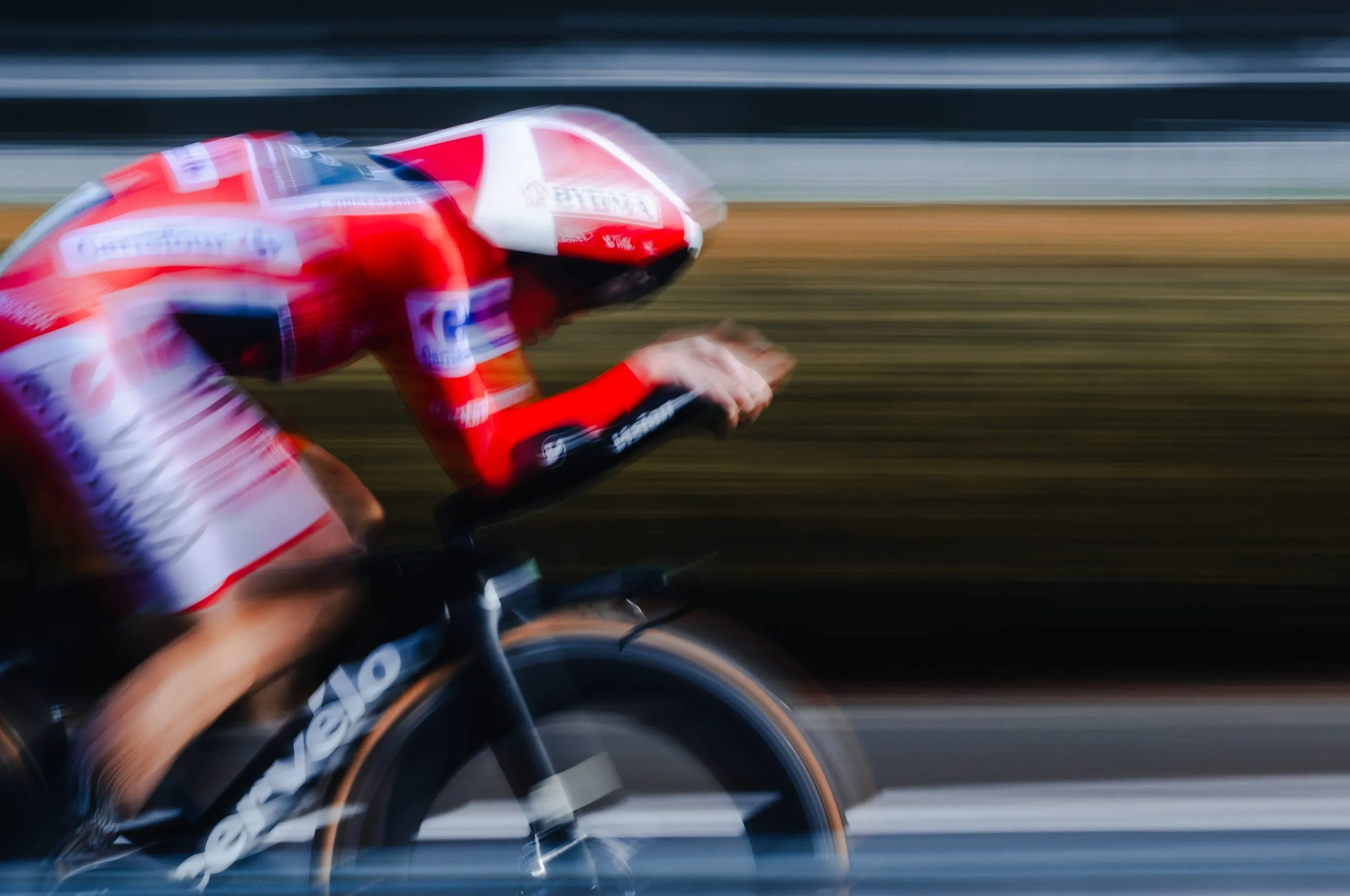
In a year where time-trials are few and far between at Grand Tours, the Vuelta has doubled down on its races of truth. In total, there are 41km of time-trialling at next year’s Vuelta, all of which are solo.
In fact, the whole three weeks open with a short 9km-long prologue around Monaco, which should allow a specialist a chance to dictate the GC and wear the maillot rojo early on. The second time-trial is 32km in length, and appears relatively flat on the elevation profile provided by the race organisers. It’s been slotted into the midst of the final week on Stage 18, so it’ll act as an important fork in the road for many hunting the overall title. Don’t forget, time-trialling is supposed to be a cornerstone of the GC game after all.
To illustrate how out of character this is, the 2026 parcours offers the highest number of individual time-trial kilometres since the 2014 edition. However, since the Giro and Tour have pared back their challenges against the clock, the Vuelta has responded well, even if that requires a rethink on its TT-light identity over the past two decades.
This may even attract the sport’s top time-triallists as preparation for the World and European Championships in the weeks following the Vuelta’s conclusion. Given the opening stage is the only traditional prologue of 2026’s Grand Tours, a time-triallist would be silly to let the opportunity pass to wear the red jersey. Logically, their involvement would improve the depth of the Vuelta’s startlist, which can sometimes feel like the weakest of the three.
Constant GC peaks and troughs
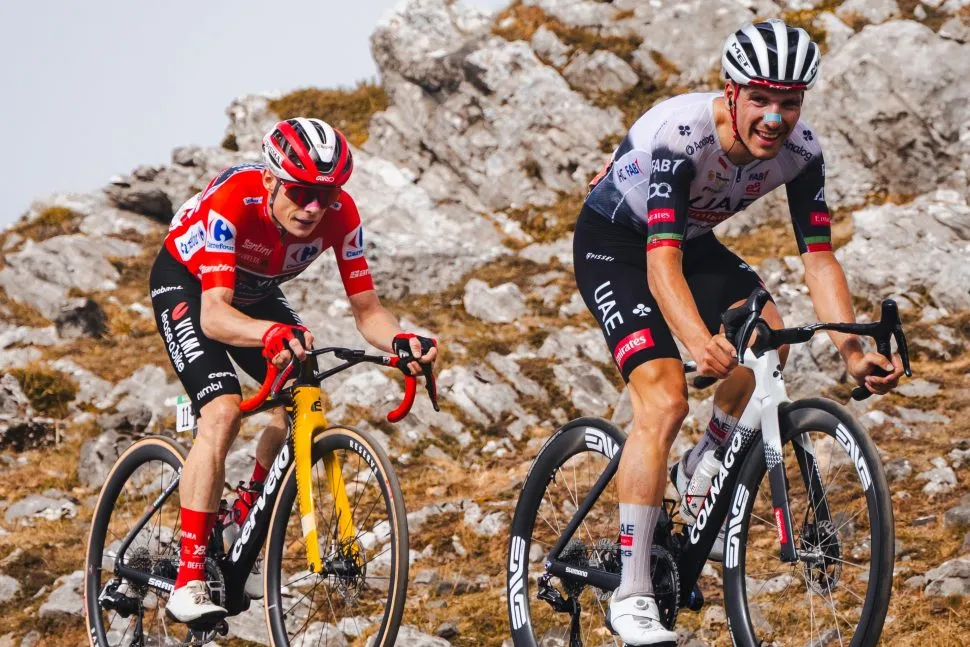
Both the Tour de France and Giro d’Italia feel very back-loaded next year, with the GC forced to hold its breath until one final crescendo in the third week. Yes, this can create a grand conclusion – like at the past few Giros – but it can also dilute the racing up until that point. Significantly so if there are few opportunities to shake up the GC elsewhere.
The first two Grand Tours are willing to play that risk, perhaps in the hopes of tempering Pogačar and Vingegaard’s dominance, but the Vuelta has spread out its decisive stages throughout the three weeks. Thankfully, the queen stages aren’t back-to-back like at the Giro and Tour. Instead, we’ve got profiles with 4,000m of climbing in all three weeks of the Vuelta, starting from Stage 4. Furthermore, the summit finishes are also spread out, with two to three on the menu each week.
In fairness, three of those mountaintop finishes come in the first week, which could be considered too frontloaded. While that’s a fair assumption – given the Pyrenean profiles and early time-trial – but there are equally tough mountain stages in both week two and week three. The latter of which seems to be more toned down than recent Grand Tours, with just two mountaintop finishes in the Vuelta’s final block.
Of course, the outcome of this choice comes down to the riders contending next year’s Vuelta, but I think the dispersal of mountain stages should enhance the race-long GC narrative. The three-week length offers ebbs and flows in form, fatigue and team support, so the constant inflow of mountaintop finishes should keep the GC fight fresh throughout the Vuelta.
To that end, the consequences of one off-day shouldn’t disproportionately hamper someone’s overall hopes. In fact, there are plenty of chances to rectify any slip-ups on this route, which can’t be said of the parcours for the Giro and Tour next year, on the other hand.
The Vuelta a Mediterrenean
The geography of this Vuelta a España is unique to say the least. Almost all the 21 stages are placed within a stone’s throw of the Mediterranean Sea, even the Monégasque Gran Salida, which is some 500km away from Spain’s shores.
This calls for all the crisp aerial shots of the Med’s lush coastline you could want, but it’s not quite as geographically and culturally diverse as your average Vuelta route. No Basque fans, no foggy mountain passes in Galicia, nor the barren flatland of Castile and Léon.
It’s almost definitely a reaction to last year’s parcours, which was entirely in Spain’s northern half. To that end, it’s only fair that the southern half gets some of the thrills and spills of the country’s Grand Tour, even if that comes at a summery cost. Indeed, Andalucía, the host region of much of the final half of the race, boasts average temperatures of 30-35°C during the Vuelta’s calendar slot. If it does get that scorching, we might have to whip out the extreme weather protocol, much like we did last time we visited the southern tip of Spain at the 2024 race.
In that case, the winner of this Vuelta is either going to need a lot of SPF50 or be unreasonably immune to the heat.
Not your ordinary procession

The Vuelta doesn’t quite have the same love affair with its respective capital as, let’s say, the Tour de France. That said, Madrid has by far been the race’s most common finishing location, with a sprint procession often used to conclude the event. Next year’s race, however, parks that Grand Tour cliché to one side as the final stage enters new territory, both geographically and profile-wise.
In 2025, the Spanish race ended in chaos as the final stage in Madrid was cancelled midway as activists took to the streets in response to Israel-Premier Tech’s inclusion. Understandably, the race has swerved from Madrid in 2026. And although the Canary Islands were first rumoured, Granada now becomes the most southerly city to crown a Vuelta a España champion.
While Granada wasn’t the initial plan, the alternative is still exciting – and it includes a stage start inside the city’s branch of supermarket Carrefour. Perhaps inspired by the Montmartre switch-up on the Tour de France’s final day, next year’s Vuelta procession is far from plain sailing as a final loop around the hilltop Alhambra fortress offers a short climb on each lap. In fact, the finishing line will be atop that ramp, which is just 1km-long at an average gradient of 7.3%.
In theory, this should really keep things open until the very end. Let’s say if gaps are just a few seconds apart in the GC, a punchy final kilometre like this could be ideal terrain to eke out some extra seconds. In that case, we might forgo the early stage Cava photo ops if the bunch decide to race.
That’s how it should be. Every race should continue to the final pedal stroke.
Only a few party tricks
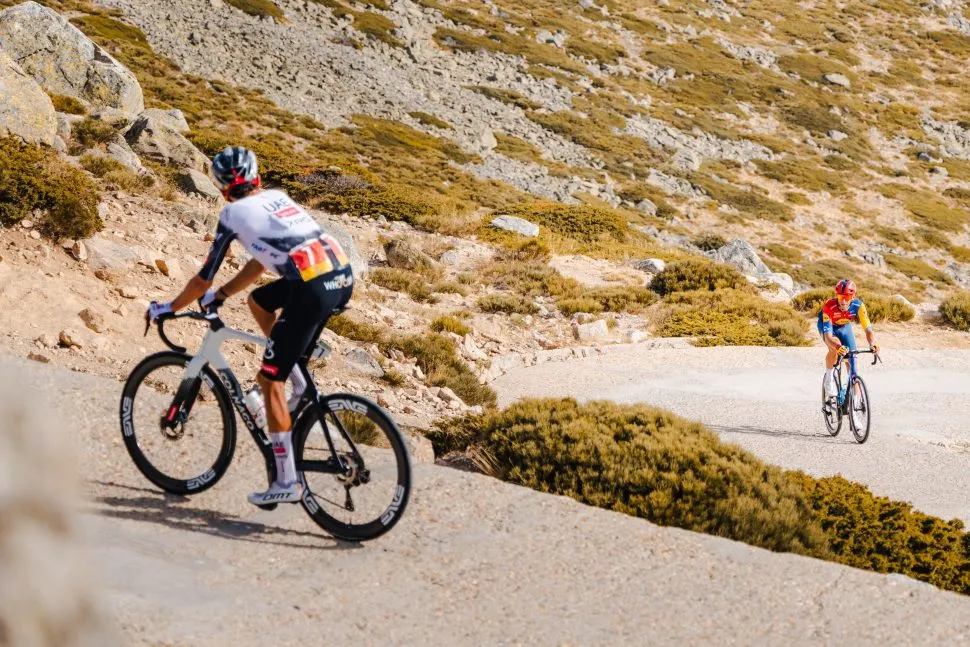
We might be visiting two micronations, a supermarket and an Andalusian castle at next year’s Vuelta, but this parcours feels like it’s lacking the novel tricks employed by the likes of the Giro and Tour in recent years.
I’ll concede by admitting that there’s finally some gravel at the Vuelta – albeit 3km of it on Stage 6’s Puerto del Bartolo. Sure, this is a new trick for the race, but it’s hardly rivalling the Strade Bianche-style roads of Tuscany or the winemaking chemins blancs featured at the 2024 Tour de France. If you’re a firm believer in gravel at Grand Tours, it’s clear that more could have been done to incorporate those rough tracks into the 2026 Vuelta.
For instance, we pass by Jaén during the latter half of the race. That neck of the woods has one of the biggest gravel road races (if you can place those words in sacrilege unison) at the Clásica Jaén. We could have just nicked its parcours to give the Vuelta a bit of intrigue, especially given the Tour and Giro have opted against the usage of gravel next year.
Another way to get heads turning would have been to drop by some of the Vuelta’s most iconic mountain passes. By virtue of our very southerly route however, we miss out on fan favourite climbs near the Bay of Biscay or those around Madrid or the Basque Country. Sadly, the Asturian legends of the Lagos de Covadonga and Angliru have to be left aside once again.
Instead, Sierra de la Pandera and the Alto de Velefique are probably the most well-known climbs on next year’s parcours. Yet we conclude our time in the mountains with a double dose of the Alto de Hazallanas on Stage 20. Since the Tour and Giro are doubling up on Alpe d’Huez and Piancavallo on their final stages, this hardly feels original.
Otherwise, the Vuelta has rolled back its reliance on double-digit gradient climbs to forge its identity. The rampas inhumanas are sparse in next year’s race, continuing a trend over the past two editions. Likewise, the race’s typical unipuerto profiles have also been extracted from the parcours. Instead, the mountain stages have been beefed up by adding several tests along the way. While that strategy has made for fewer mountaintop finishes than in previous years, they feel far more worthwhile at first glance.
The best Grand Tour route of 2026
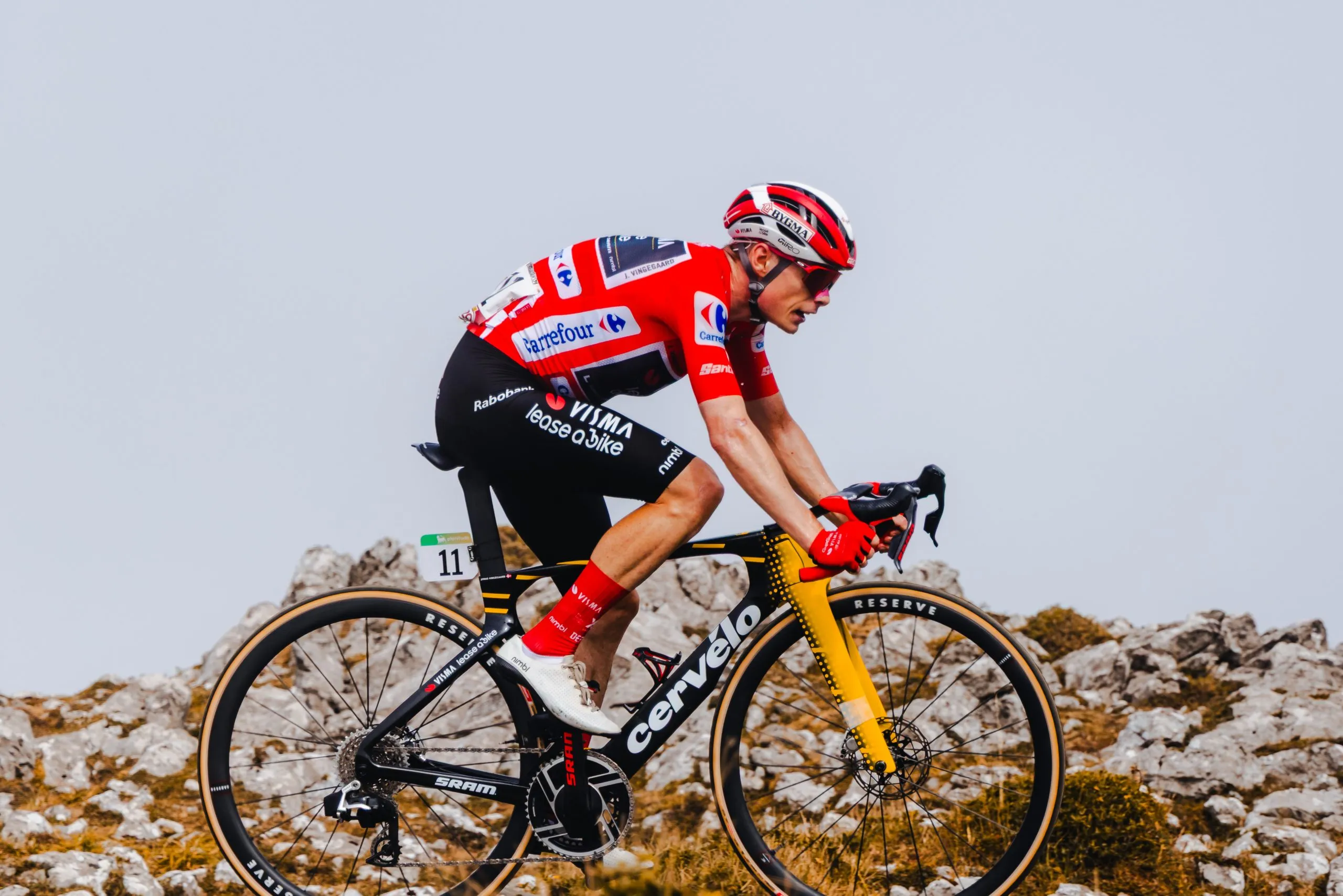
Overall, I think the Vuelta’s parcours is far and away the best of the three Grand Tours next year. Yes, there are no gravel quirks or any 30% gradient crimes against cycling, but it offers a real pick and mix of GC-friendly moments. Each mountain stage feels well poised for decisive action, and there’s no risk of the GC being a damp squib until the final week, unlike the Giro and Tour.
While we don’t visit the iconic names of Vueltas gone by, the purists can be satisfied with the Vuelta’s 41km worth of time-trials, which shockingly make the race the most TT-heavy Grand Tour in 2026. That’s not the only thing the route designers have done to make this parcours feel very different to its traditional format. We visit new places, dare to switch up the final stage’s composition, and we abandon what once made the Vuelta so unique: non-stop punchy finishes. We’ve even got four, maybe five stages that could end in a bunch sprint.
Who’d have thought? The Vuelta looks the most well-executed route of the three. It feels like the purest Grand Tour, and one that will crown the best all-rounder rather than someone who keeps their powder dry until the final week. It might not be enough to reel Pogačar in, but it’s certainly a five-star route from my perspective.