
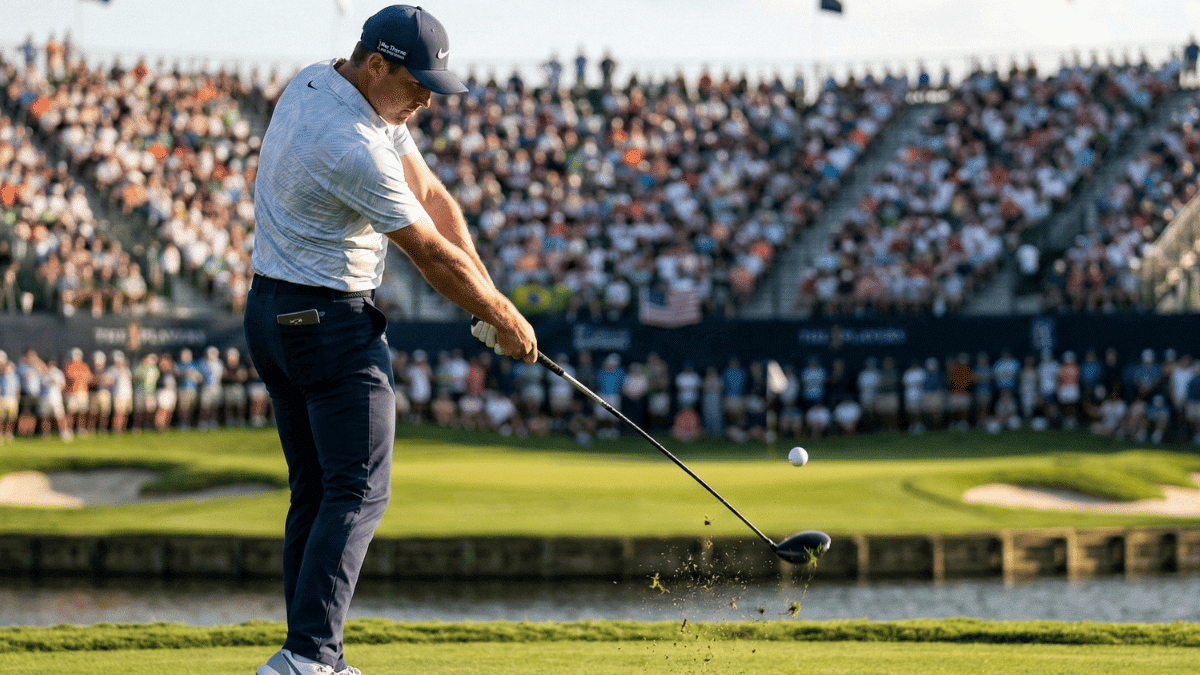
Justin Thomas is back. After nearly six months away from the PGA Tour and a major back surgery last November, JT is lacing up his shoes again and heading to Bay Hill. And look, I want to be excited. I really do. But before we pop the champagne, there is one question every golf fan needs to sit with right now: Is this the same Justin Thomas? Or are we about to watch the beginning of the end?
Because back injuries do not care how talented you are. They do not care how much fight you have. They have ended careers that had no business ending. And the longer I have been around this game, the more I know that a golfer’s relationship with his back is the most fragile thing in all of professional sports.
What Happened in the First Place
Here is what makes this story complicated. Thomas did not get hurt and immediately shut it down. He played through the pain. He gutted it out at the Ryder Cup last fall, contributed for his team, and kept his mouth shut about how bad it really was. He admitted afterward that he was struggling out there, but he stayed in the arena because that is who he is.
I respect that. Every person who has ever competed at a high level respects that. But when you play through a back injury at that level of intensity, you take a risk. A real one. And the surgery that followed in November was not some routine procedure. This was serious work that kept one of the best players in the world off the course for the better part of half a year.
The question worth asking now is not whether JT has the heart. We already know the answer to that. The question is whether his body can hold up to the demands of competing on tour, week in and week out, at the level he needs to be competitive. Back injuries in golf (a game known for the hip turn) are notoriously stubborn, and the Tour schedule shows no mercy to anyone managing one.
The Tiger Comparison Is Not an Overreaction
I know people do not like hearing this, but we have to talk about it. Tiger Woods is the most obvious example of what a back injury can do to a golfer’s career, but he is far from the only one. We have seen players ranked inside the top 20 in the world essentially disappear from contention because of spinal issues. Some came back and found a version of their old game. Others never did.
Tiger’s surgeries did not just cost him time. They cost him feel, they cost him explosiveness, and they fundamentally changed how he had to approach every swing. He adapted brilliantly because he is Tiger, but even he could not get back to exactly who he was before. The physical toll of his back problems stretched across the better part of a decade.
Now, Justin Thomas is not Tiger, and his situation is not identical. But the arc should serve as a reminder: back surgery at the elite level is not a reset button. It is a pivot point. What comes after defines the rest of your career.
Here Is the Good News, and There Is Real Good News
Before this gets too heavy, let me tell you what gives me genuine optimism about JT’s return. Even when he was hurting last season, even when his back was clearly limiting him, he found his groove. He broke a real slump. He picked up the RBC Heritage trophy and showed the rest of the tour that his competitive instincts were completely intact.
That matters more than people realize. A player who can win while compromised is a player who has not lost the thing that makes him dangerous. The mental edge was there. The ball-striking was there in stretches. And now, if the surgery has actually resolved the structural problem rather than just managed the pain, we could be looking at a Justin Thomas who comes back sharper than he was going into last year.
His swing mechanics have always been elite, and great mechanics tend to survive injury better than players who rely more on raw athleticism. That is a real factor here. JT built his game on precision, not just power. Precision can come back faster than explosiveness when a player returns from a physical setback.
Why Bay Hill Sets the Tone for Everything That Follows
The timing of this return is not random. Bay Hill is a tournament with weight to it. Arnold Palmer’s event. A stop where the best players show up because majors are right around the corner and everyone wants competitive reps heading into the season’s biggest stages.
The field at Bay Hill gives Thomas a real test right away. He is not easing back in at a low-stakes event. He is walking into a competitive environment with serious names on the board, cameras in his face, and every commentator in golf watching every swing for signs of discomfort or hesitation. That pressure is either going to reveal something encouraging or expose a player who still has work to do.
Personally, I think the fact that his team chose Bay Hill for this return says something positive. You do not send a player into that environment unless you believe he is ready. Bay Hill demands a complete game, especially with the demands it puts on a player’s lower body and rotation through the ball. If JT can handle Bay Hill, he can handle anything.
What a Real Comeback Looks Like From Here
Let me be direct about what success actually looks like for Thomas this year, because I think the bar has to be set correctly. Nobody should expect him to come off the surgical table and immediately challenge for a major. That would be unrealistic and unfair to him as a competitor and as a human being.
What a real comeback looks like is this: consistent ball-striking, minimal signs of physical compensation in his swing, and a couple of strong finishes in big events heading into the summer majors. If he can show the world that his back is not something he is managing anymore but something that has actually been resolved, the wins will follow. He has too much talent for them not to.
The major season is about to kick into full gear. The Masters is coming. The U.S. Open is coming. Every major tournament this season represents a chance for Thomas to write the next chapter of his career. But that chapter starts this week, at Bay Hill, with everyone watching.
My Prediction, and Why I Think This Story Ends Well
Here is where I land after thinking through all of it. Justin Thomas is not done. Not even close. The players who are truly done after surgery are the ones who were already declining before the injury gave them a reason to fade. Thomas was winning trophies through the pain. That is not a player in decline. That is a player who hit a physical wall that surgery was designed to fix.
My prediction is that by the time the summer majors arrive, the conversation will have shifted completely. People will stop asking whether JT is back and start asking whether he is a genuine title threat. And I think the answer to that question is going to be yes.
But I want to hear from you. Drop your prediction in the comments. Is Thomas a major contender again this season or does he need another full year to get back to that level? I read every one of them.
Frequently Asked Questions
What surgery did Justin Thomas have?
Thomas underwent back surgery in November after playing through pain at the Ryder Cup. He was away from the PGA Tour for nearly six months during his recovery before returning to competition at Bay Hill.
Can golfers fully recover from back surgery?
Recovery from back surgery varies depending on the type of procedure and the individual player. Some golfers return to full competitive form, while others manage ongoing limitations. The key factors are the nature of the injury, the quality of the surgical outcome, and how well the player adapts their swing mechanics during recovery.
How does a back injury affect a golf swing?
Back injuries directly impact rotation, weight transfer, and the ability to generate consistent power through the ball. Golfers managing back problems often develop compensations in their swing that can affect accuracy and distance. Resolving the underlying issue through surgery or rehabilitation is often necessary before those compensations can be corrected.
Why did Justin Thomas play at the Ryder Cup while injured?
Thomas has spoken about his commitment to playing for his team regardless of his personal physical situation. He admitted he was struggling during the Ryder Cup but chose to compete rather than withdraw, which delayed his ability to address the injury through surgery until after the event.
Is Justin Thomas still a major contender?
Based on the evidence before his surgery, there is a strong case that Thomas remains a legitimate major contender. He was winning tour events even while dealing with back pain, which suggests his fundamental game and competitive instincts remain at an elite level. His performance in the months following his return will determine whether that assessment holds.
What makes Bay Hill a meaningful return event for Thomas?
Bay Hill is a high-profile event that draws a strong field heading into major season. Choosing it as a return venue rather than a lower-stakes tournament suggests confidence from Thomas and his team that he is ready to compete at a serious level. The course also demands full physical commitment from players, making it a genuine test of where his game and body are right now.