
Story by Salil Shukla
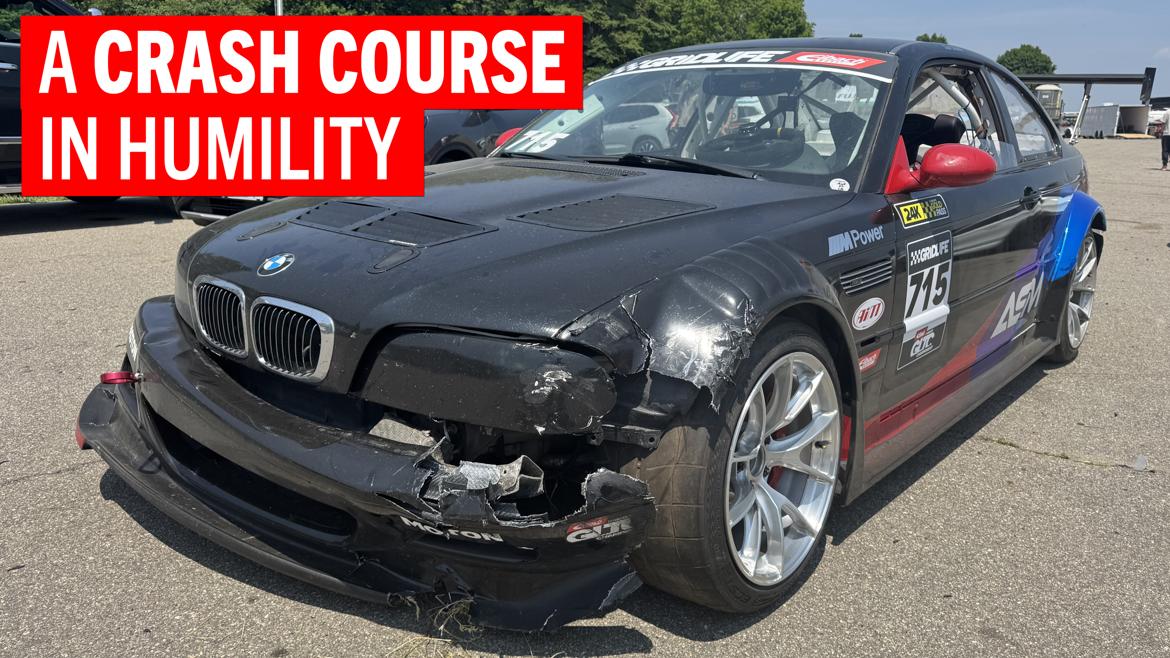
I awkwardly drove into a few cars during a race. My competitors’ races were ruined, tempers were provoked, race cars were damaged, and my ego was mangled.
The consequences escalated when the motorsports director got involved. Turns out there’s a whirlwind of regret embedded within Randy Pobst’s “vortex of danger.”
[Every racer’s worst enemy? A lack of awareness.]
There has never been a better time to be a driving enthusiast because it’s never been easier to get on track. For novices, there’s that initial thrill of discovering their potential as drivers while testing their car’s potential, all while surrounded by a community of addicts.
Then come the exhilaratingly irrational decisions. It starts with buying sticky tires and performance brake pads and rapidly devolves into more power, more cooling, bigger brakes and fancy dampers.
The list goes on. The slippery slope drains into the deep end of The Pool of Regret: Now you’re buying an altogether more capable track car.
Eventually, prudent people will consider the volume of spending and acknowledge that this hobby only skews toward insolvency.
But there is a continuum of stupidity; some stare into the financial void and think, “I can stop at any time. Nobody is getting hurt but me. Besides, everyone does it.” These are the hedonists that lurch into the fiscal abyss of competitive motorsports.
Regardless of the series, to compete in wheel-to-wheel motorsports, you will combine your talents at car control, racecraft and spending all the money.
Another common denominator is the rule about driving into your competitors: It’s frowned upon.
Racing space is the amount of space you must leave other cars on track to facilitate competition while limiting contact. It’s like personal space but for race cars.
People (but not this person) can dance gracefully, even provocatively, while maintaining respectful boundaries. Racing space works the same way.
But uncoordinated people like to dance, too, and clumsily flailing bodies unpredictably collide. In Gridlife Touring Cup, the series in which I compete, clumsy driving is not tolerated.
GLTC is a “no contact” series, so any car-to-car contact is unacceptable. If contact occurs, video footage from all parties involved is reviewed and arbiters assess blame.
When I initiated contact, it was spectacular and, unfortunately, exclusively my fault. I drove up on the inside of a competitor entering a turn into a brake zone, and because I was so fixated on the pass, I became less fixated on braking.
By the time I passed the other car, there was no way for me to slow down enough to avoid barreling into the cars already turning ahead of me. In racing parlance, this mistake is called a divebomb, and I executed it flawlessly.
Everyone divebombs at some point. It’s part of the learning curve. But it comes just after the part where you learn that strapping on the helmet is good and your car catching on fire is bad.
What’s worse than divebombing the field? When the car you hit belongs to one of your teammates. And that teammate spins and takes out another teammate. Who hits yet another teammate (I have many teammates) who had a brand-new wrap on her car.
And all of this happened before the car I was fixated on passing arrived at the melee I created and collided with me. There was so much video evidence. My mistake has been put to music and circulates the internet. Divebombs never go unnoticed.
GLTC is an attractive place to race because the competition is intense, the fields are deep, the price of entry is reasonable (in the way a parched man in the desert gets a good deal on water) and it’s held at premier tracks.
Incidental to the racing, GLTC knows how to host a spectacle. It has professional livestream coverage and color commentary, thousands of spectators, dozens of sponsors, and complimentary time attack and drift events. It also hosts a music festival on race weekends that runs well past my bedtime. GLTC is an especially great place to race because it takes “leave racing space” very seriously.
My divebombing blunder ruined the race of competitors and teammates. Mercifully, nobody was injured, but I was mortified.
I found my competitors after the race and took full responsibility for my mistake. They were gracious in accepting my apology.
The motorsports director was less accommodating. I was rightly placed on probation. I was told other competitors had been kicked out of the series for less egregious mistakes, but I was judged redeemable.
GLTC assigned me a mentor with whom I was to check in over the course of subsequent race weekends. I was to attend novice meetings and share lessons learned racing in the series.
I was told that if I emerged from probation unscathed, I was expected to become a mentor for a novice driver and demonstrate the type of driving behavior I advocated. I’ve raced with NASA, World Racing League and ChampCar. Every series has penalties for reckless mistakes, but this was the first time I’d experienced a series actively developing the type of drivers its organizers want in competition.
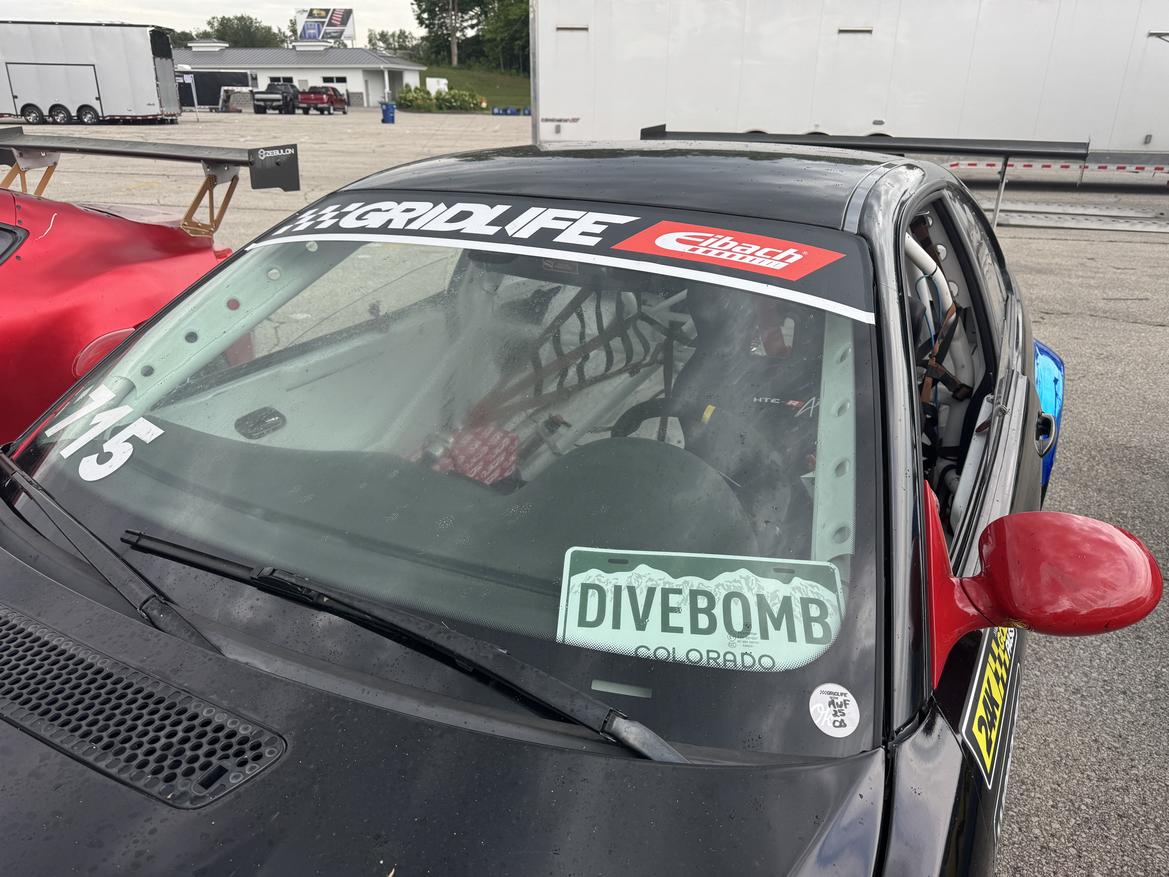
Driving a car on track is intoxicating. Relish the experience of learning to find the limits of car and driver.
Then, when you’ve sniffed your potential prowess and your vehicle’s capability, when you’ve experienced the exhilaration of cultivating a skill few people possess, and when you’ve met like-minded enthusiasts, stop immediately, run away and discover bridge with your 401(k) intact.
Alternatively, follow your passion and hope the pursuit doesn’t come at the expense of your responsible, functioning adult life. Try motorsports! Take the leap into competition, read about “budgeting,” enjoy learning, and remember that while mistakes are inevitable, consequences are best faced head on.
Comments

Good article, but one things missing – let’s see the tapes!

Tom1200
UltimaDork
12/30/25 10:45 p.m.
So as an aggressive driver who often posts up videos of various passes that I know Randy wouldn’t approve of, I like this article a lot.It’s a very fine line between a well executed slide job and punting people.
At vintage races if you cause an accident, you may be talking a year off.
Displaying 1-2 of 2 commentsView all comments on the GRM forums
You’ll need to log in to post.