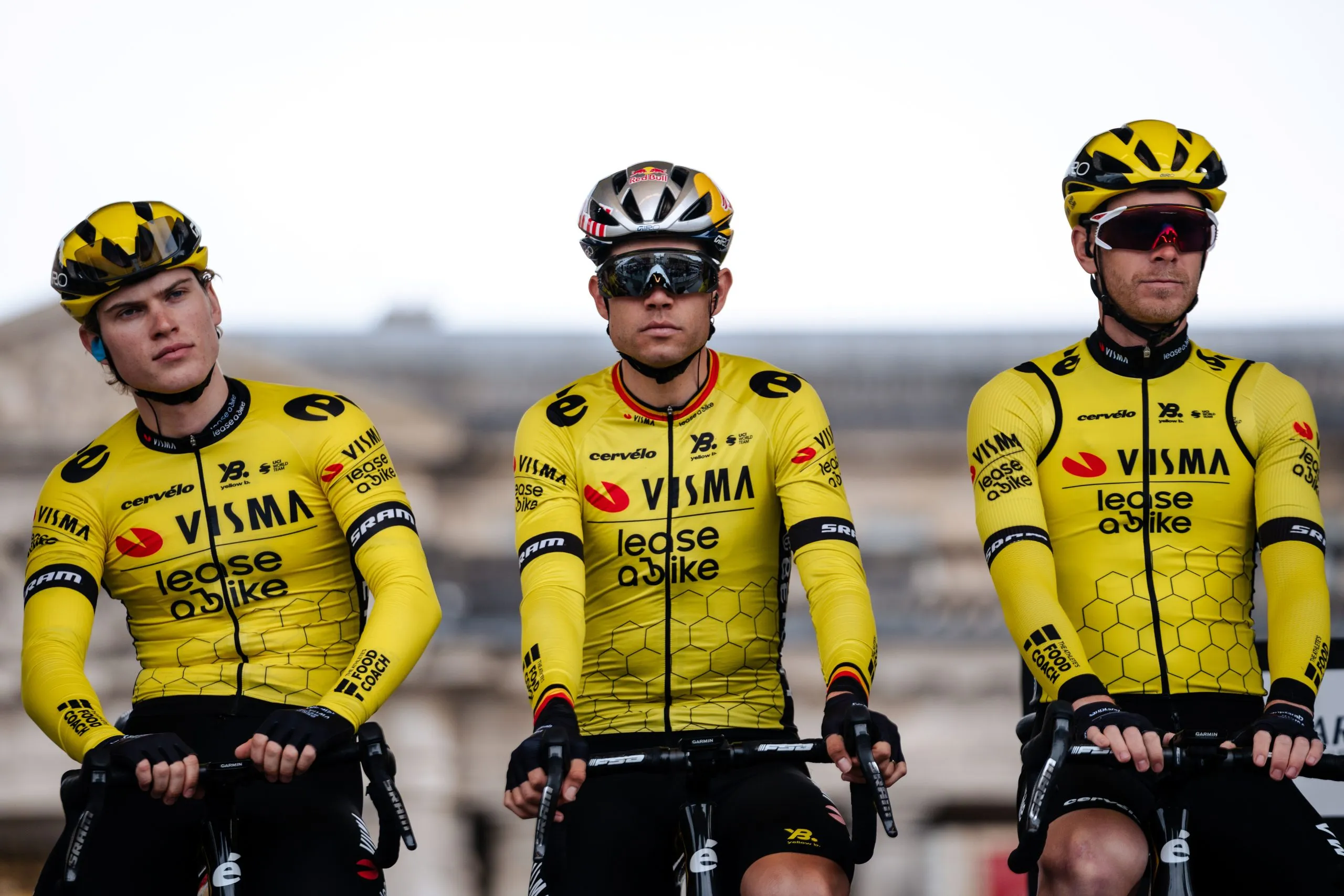
While the opening two months of the season have seemed plain sailing for many, the same can’t be said for Visma-Lease a Bike. The Dutch team have opened 2026 embroiled with injuries, a weakened roster, a cloud of comments ex-riders and staff exits.
With seven weeks of the 2026 season now dealt with, Wout van Aert has suffered an ankle injury, Jonas Vingegaard’s coach has quit, and the Dane lashed out at a fan in training just days before skipping his scheduled opening rendezvous at the UAE Tour. To add to the chaos, the team are now reported to be in need of a new title sponsor in order to keep up with the rising budgets of UAE Team Emirates XRG and Red Bull-Bora-Hansgrohe.
What has caused this crossroads for the sport’s once dominant force? Let’s recap the events unravelling around Visma since the New Year.
Weakened roster
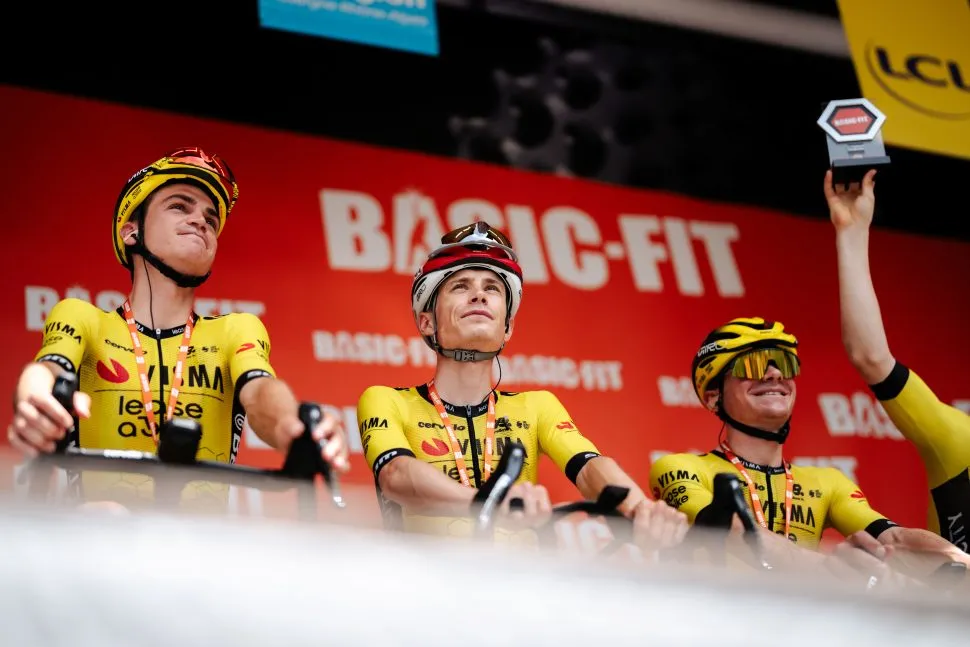
Over the winter, Visma-Lease a Bike haemorrhaged a host of top riders, with several crucial Classics names and loyal lieutenants heading out. While UAE and Red Bull strengthened their arsenals on behalf of Tadej Pogačar and Remco Evenepoel, Visma-Lease a Bike have taken a hit.
Dylan van Baarle and Tiesj Benoot, two of the team’s top performers in the Classics, left over the winter. On top of that, the team lost usual Grand Tour support rider Attila Valter, young prospect Cian Uijtdebroeks, and top sprinter OIav Kooij. This removes a huge chunk of potential UCI points and leadership options for 2026. Importantly, these losses will hamper the team’s Grand Tour prospects, whether that be for GC or stage victories.
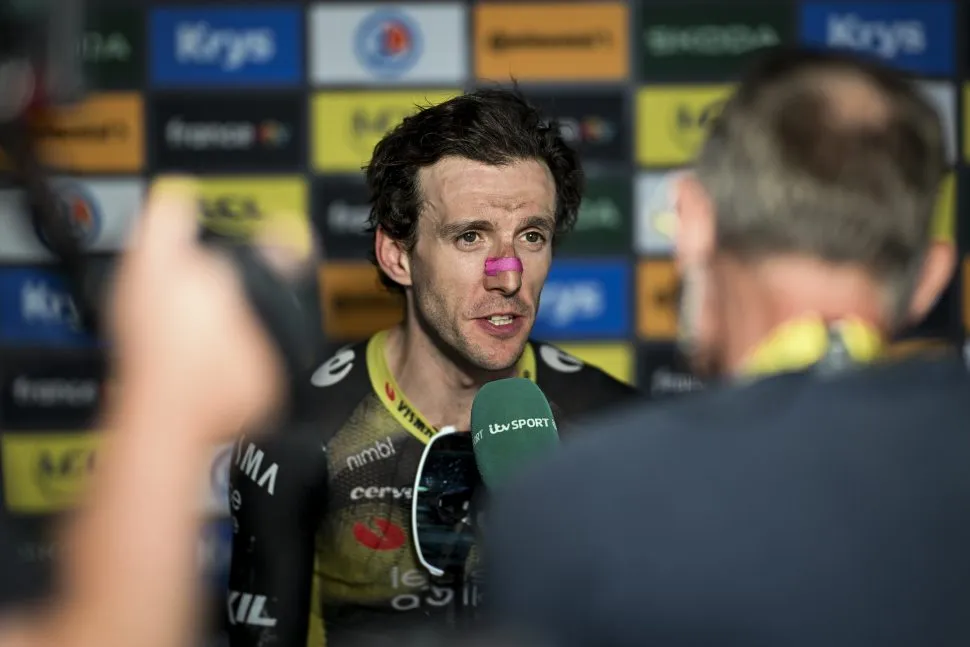
Then there’s the mysterious case of Simon Yates. The British rider left the squad suddenly in January despite featuring in the team’s pre-season press photos. He was also confirmed to have a full schedule planned out, which leads me to believe that the decision was communicated to team staff later than imagined.
Regardless, the team have balanced out these losses with their weakest set of incomers in over five years. Bruno Armirail is the biggest name to join the bees, with Davide Piganzoli the most notorious youngster added to the roster. Instead of their usual big bucks signings of years gone by, the transfer window was far more modest than normal. They scouted riders from the second and third divisions, while scooping up talent from their in-house development structure. In other words, cheaper signings.
Weakened GC prospects
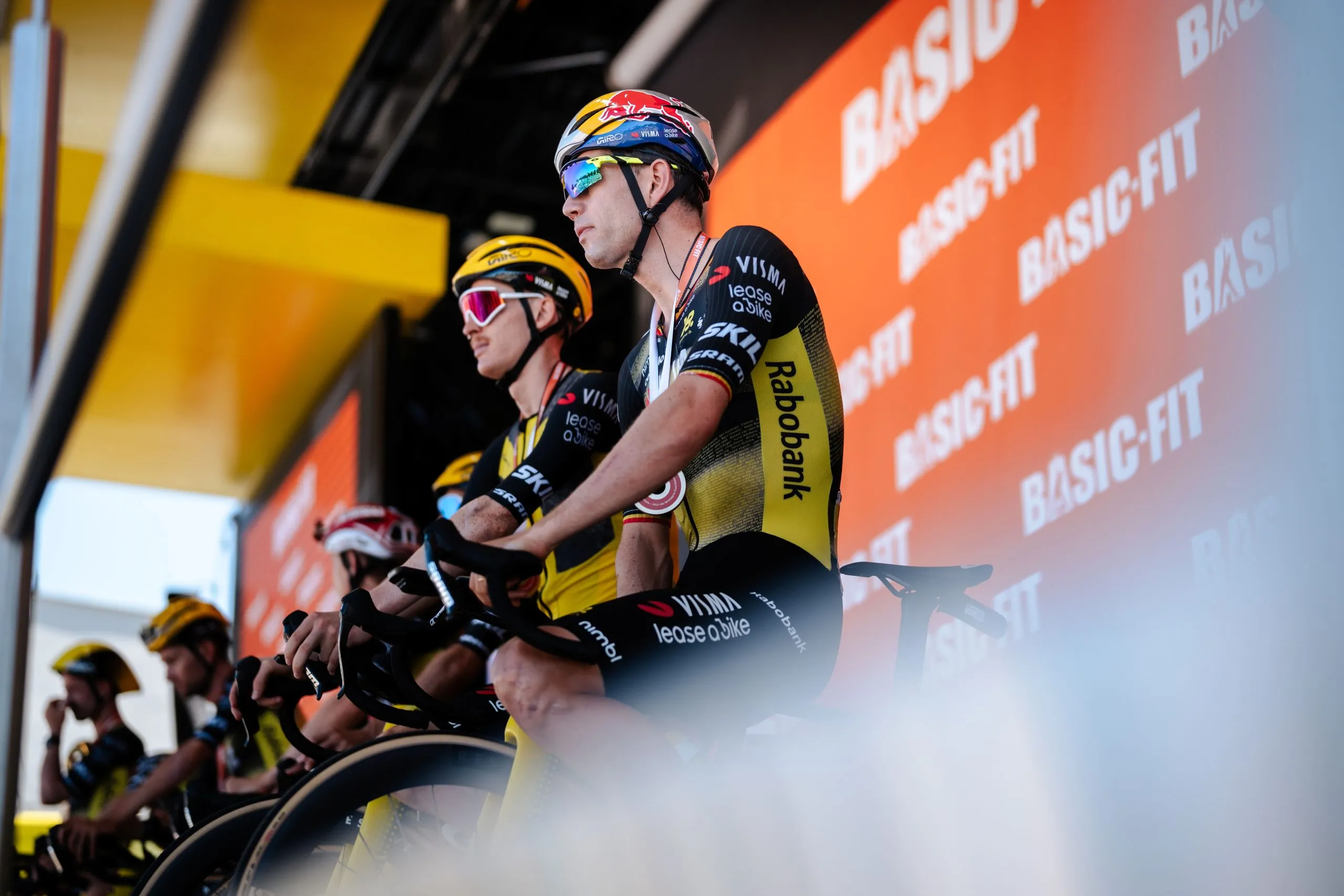
While cycling’s about more than just the GC, Visma-Lease a Bike’s approach over the past few seasons has been centred on stage races and Grand Tours. This is what they do best, having won eight Grand Tours since 2020.
At the team’s press camp in January, Visma unveiled the schedules for their top riders ahead of the 2026 season. There, we received confirmation of the team’s Grand Tour leaders. Vingegaard will compete at both the Giro and Tour, while the Vuelta offers up a chance for Wout van Aert and Matt Brennan to hunt stages. Interestingly, Matteo Jorgenson will only ride the Tour de France, despite hinting at a potential bid at the Vuelta in December.
This leaves the team without a dedicated GC leader for the Vuelta, given the absence of Vingegaard and Jorgenson from the team’s prospective roster. This will be the first time that Visma enter a Grand Tour without a GC leader since the 2022 Giro d’Italia.
Between the departures and rider schedule announcements, the team is left with a much weaker Grand Tour roster than before. Yates and Benoot were integral players in Visma’s Tour de France setup last year, with the latter playing a key role in Vingegaard’s two victories in 2022 and 2023. The pressure will now be on to increase their resources to rival the opposition at the Tour de France, but other Grand Tours too, especially now that Red Bull have at least five genuine leaders for three week races.
More widely, this GC contraction will be felt in other stage races too. Without Yates and Uijtdebroeks, the team have a bigger vacuum in the leadership department. Plus, with Jorgenson now vying for the Ardennes Classics, the team will be left without podium contenders in a packed spring schedule of stage races.
The search for looser purse strings
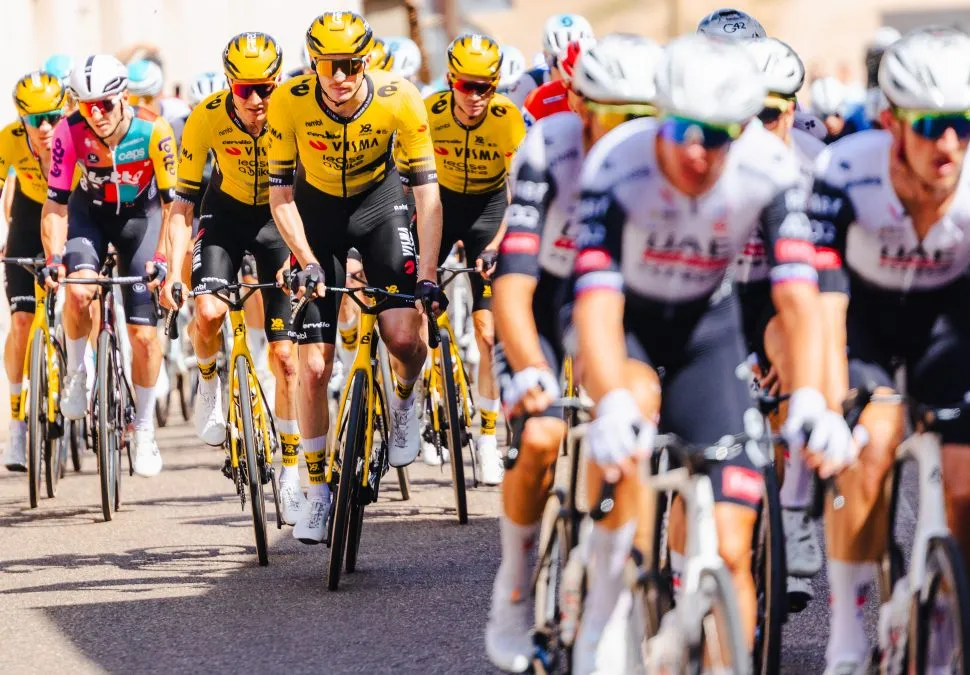
Wielerflits reported this morning that Visma-Lease a Bike’s honchos are ‘actively seeking a new title sponsor’ as Norwegian firm Visma look to take a step back. The Dutch newspaper claims this will be in order to ‘secure top five status’ among the sport’s biggest teams, in an attempt to mirror the budgets of superteams such as UAE Team Emirates XRG, Red Bull-Bora-Hansgrohe and Ineos Grenadiers, who are expected to take on the TotalEnergies name next season. This decision is not due to any financial hardships at Visma the company, as they are expected to remain a sponsor, but in the form of ‘a more measured financial commitment’.
This news comes a month after Visma-Lease a Bike’s CEO Richard Plugge went on record to say that the sport of cycling was in a ‘downward spiral’, telling the press that ‘the urgency becomes bigger and bigger every day. Not only for teams, but also to the point, a lot of relatively big teams are getting in trouble and also organisers are getting in trouble.’
While he pleaded for wider change within the sport, Visma’s decision raises concerns about return on investment. As more teams lean on state-backed sponsors, like UAE and Bahrain Victorious, or petrochemical and consumer giants, like Ineos, Red Bull and Decathlon, Visma-Lease a Bike may have to rethink their financial strategy going forward if they hope to retain riders like Wout van Aert and Jonas Vingegaard – even if the former has already penned a lifetime contract with the squad.
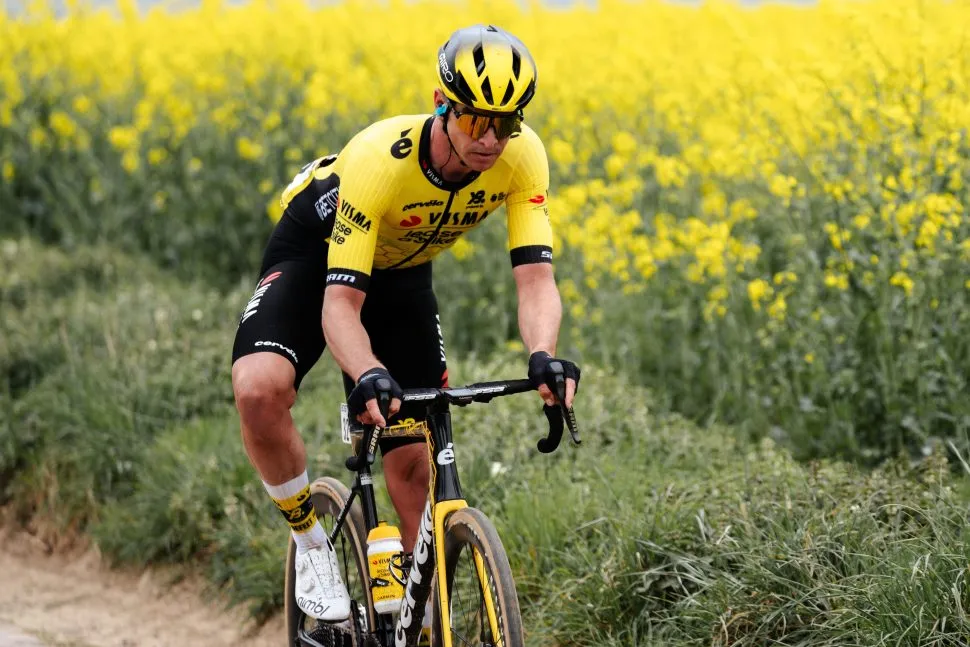
Currently, the team is co-sponsored by the company Lease a Bike, which is owned by corporate giant Pon Holdings, a conglomerate with yearly revenue around the €10 billion mark. The firm has been closely involved in the team in recent years, supplying sponsorship deals with Pon-owned Reserve wheels, Cervélo bikes and Nimbl clothing and shoes. It’s likely that one of these firms steps up to the role of title sponsor, most likely Cervélo, as the Canadian brand has previously backed teams.
Alternatively, the team was previously reported to be in talks with Saudi-backed Neom City, the infrastructure programme behind the infamous Line project. Plugge was also closely linked to the Middle Eastern state’s upper echelons during the planning process behind the foiled OneCycling deal, which was bubbling under the surface between 2023 and early 2025. This might be an avenue to explore if Visma-Lease a Bike want to keep hold of their top five spot in the UCI rankings.
‘The team is missing a bit of individualism’
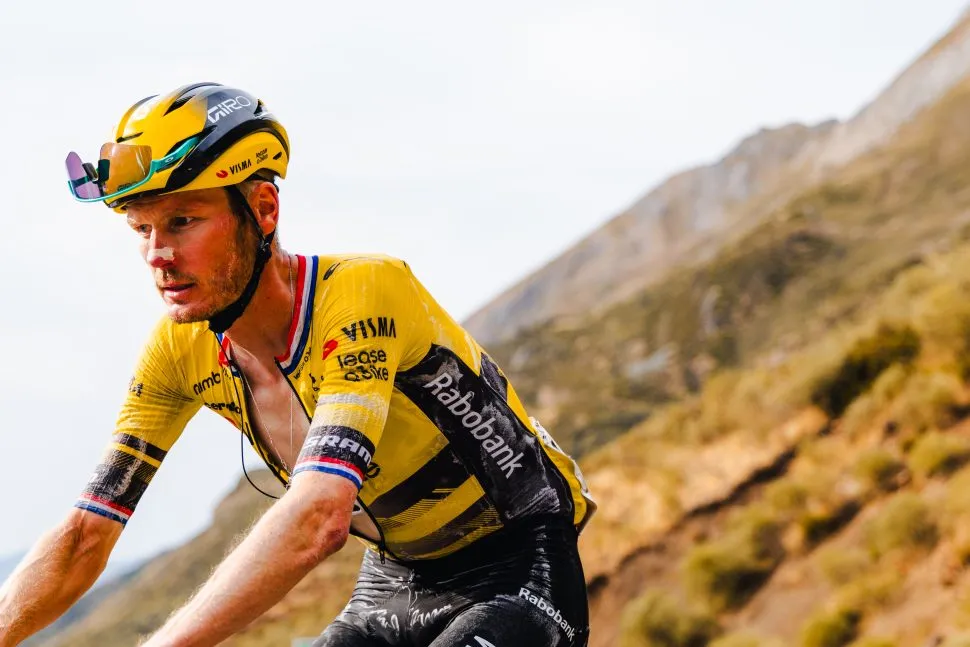
On top of the structural cracks appearing in Visma’s facade, a pair of outgoing riders have been open about their struggles with Visma’s training, nutrition and philosophical approach.
Paris-Roubaix 2022 champion Dylan van Baarle has been particularly outspoken about Visma-Lease a Bike since leaving the squad in the winter. In an interview with Wielerrevue last month, the Dutchman said his structure at his new team QuickStep is ‘freer than what [he] was used to’. In another discussion with Daniel Benson, Van Baarle suggested that Visma’s ways may have also influenced the early retirement of Simon Yates.
‘[Yates] may have wanted to do a bit more of his own thing,’ Van Baarle said. ‘For me, I didn’t have the feeling it was working, and if you have that feeling, then for him it results in retirement, and for me it resulted in a good opportunity here [at Soudal-QuickStep]. If you can’t feel comfortable with what you’re doing, then it’s not going to work.’
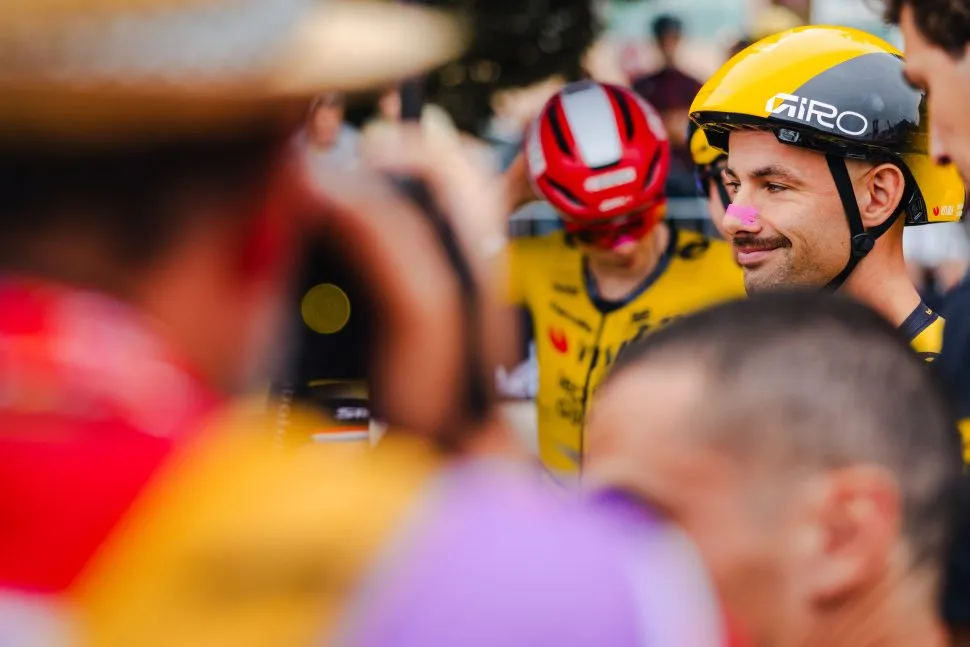
Similarly, Hungarian rider Attila Valter expressed some of his own malaise with Visma’s approach, telling Cyclingnews last month that ‘the lines were too narrow’ at his former team. He cited a change of direction after the departure of Merijn Zeeman, the team’s long-term sports director.
‘When Merijn left, it changed, and the team also felt a lot of pressure from outside, that we wanted to get back to the top, but we weren’t at the top,’ Valter said. ‘We were not the best team in 2025. The more you force it, the more you start to burn your hand. At least I and certainly [some] other riders in Visma definitely felt it. It’s not about they didn’t listen to us. They listened, but they didn’t know how to change. I think the team is missing a bit of individualism.’
He believes the faults in Visma’s system were down to a broad-brush approach. He went on to say that the team applied the same philosophy and training to all its riders, regardless of age. Valter believed this wasn’t the best approach for riders above the age of 30, which includes Van Baarle and Yates.
Similar criticisms were made of Team Sky during the 2010s, when riders felt they couldn’t fit into the ‘marginal gains’ approach that benefited the likes of Chris Froome and Bradley Wiggins. As the sport progresses, perhaps the secret to success has changed around them. UAE and Red Bull, for instance, have been able to adapt and grow the strength of the roster regardless of age. Some speculate this flexibility is the key behind their recent success, which is starting to eclipse that of Visma-Lease a Bike.
Staff exits
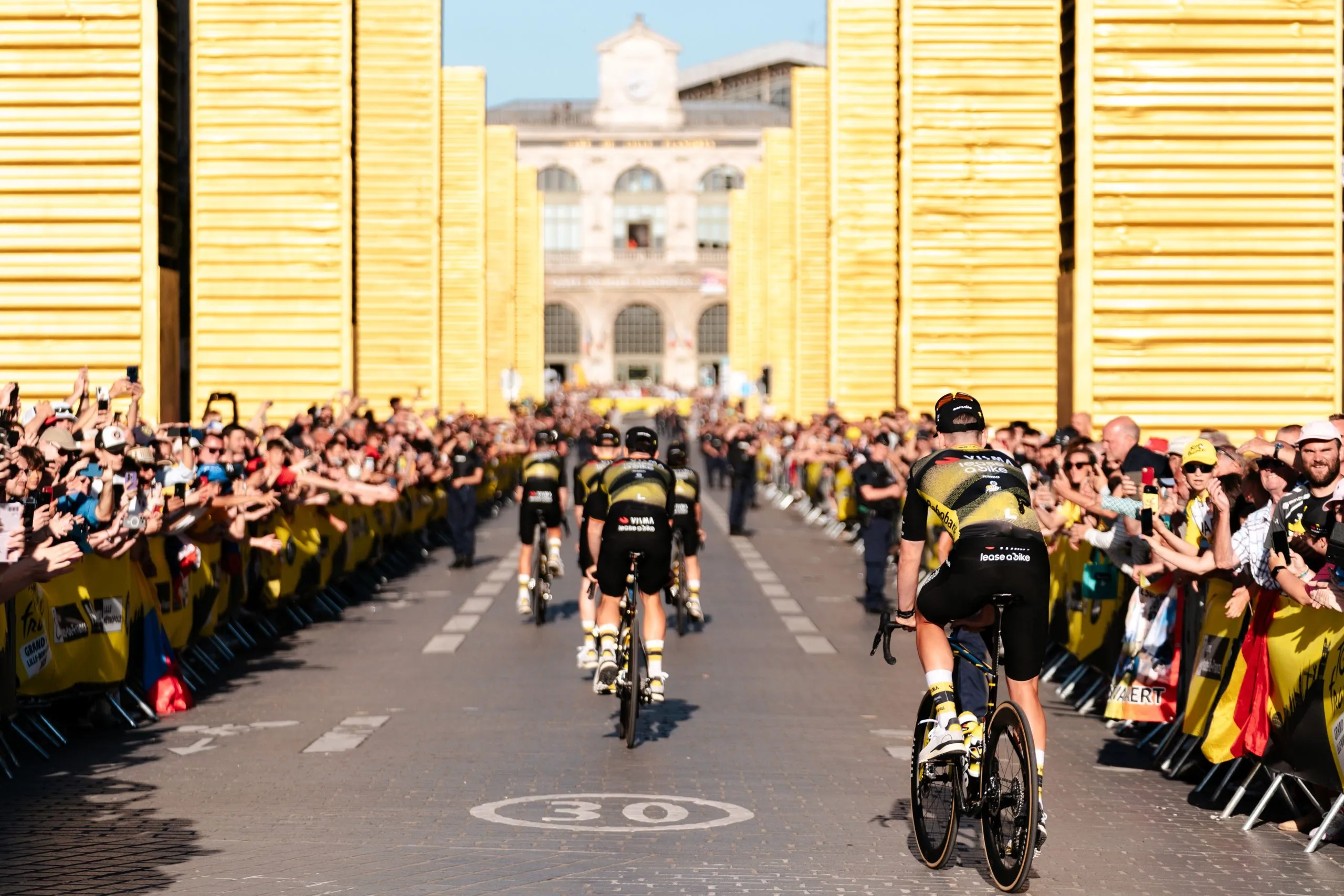
At the beginning of last week, it was confirmed that performance coach Tim Heemskerk will leave the team after eight years. Many have credited him with the team’s GC success given his coaching relationship with Vingegaard. With the Dane’s reshuffled schedule and last-minute swerve from the UAE Tour, the decision has been considered a major loss for the team as they navigate a pivotal year.
Visma’s performance chief Mathieu Heijboer told the press that ‘over the past period, I have had many conversations with Tim, and I believe this is the best outcome’. However, Heemskerk took to Instagram to say that his ‘creativity and passion have had too little room in my daily work’.
Given his choice of words, we could perceive this decision as an insight into the denouement behind the scenes. The squeezing out of creativity mentioned echoes the sentiment shared by both Valter and Vasn Baarle, who criticised the rigid regime of life at Visma.
What’s next for Visma-Lease a Bike?
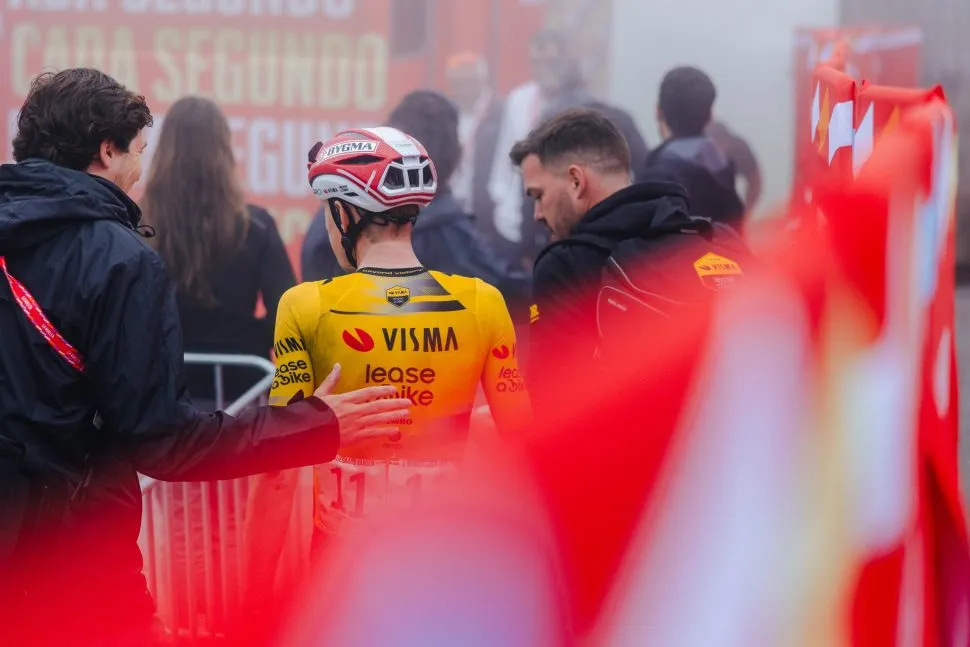
As Visma-Lease a Bike enter the new season, results have been disappointing when compared to their usual standards. Unfavourably, talk is now centred on crisis rather than victories, as commentators discuss the future of the flailing superteam whose heyday seems to be fading into the rearview mirror.
The Giro will be make or break this year. In theory, Vingegaard should win it with ease, but nothing is guaranteed. It’s a big gamble for the Dane to target both the Tour de France and Giro d’Italia in the same year, especially when the Tour will have a beefed-up startlist including the two Red Bull leaders, Juan Ayuso and Isaac del Toro. With the fatigue of the Giro in his legs, a podium finish isn’t a given in France, especially with a reduced group of domestiques.
The hunt for sponsors will prove critical. Will investors still consider Visma to be a horse worth betting on, or a deteriorating asset? For me, I think it should be easy for them to find a new backer. Cervélo feels like a natural choice, Rabobank even returned to the team on a low level last year, but the Saudi links may need to be explored again if they want the budget of UAE. As we’ve seen with Bahrain Victorious, these state backers seem less bothered by short-term success, instead favouring the exposure provided by a pro sports team.
Perhaps that increase in finance will help secure some support riders to support Vingegaard going forward though. More often now riders are choosing UAE and Red Bull over Visma, but bigger bids could keep riders incentivised to pull on Visma yellow. That not only goes for riders, but also for team staff. It seems rival teams, notably Red Bull and Decathlon, are making bigger recruitment pushes in recent years. Maybe some new personnel will help the team break its habits and bring in fresh perspective. Though they might be opponents, Visma need to start pinching from UAE and Red Bull as much as possible, whether that be staff, riders or performance intel.