
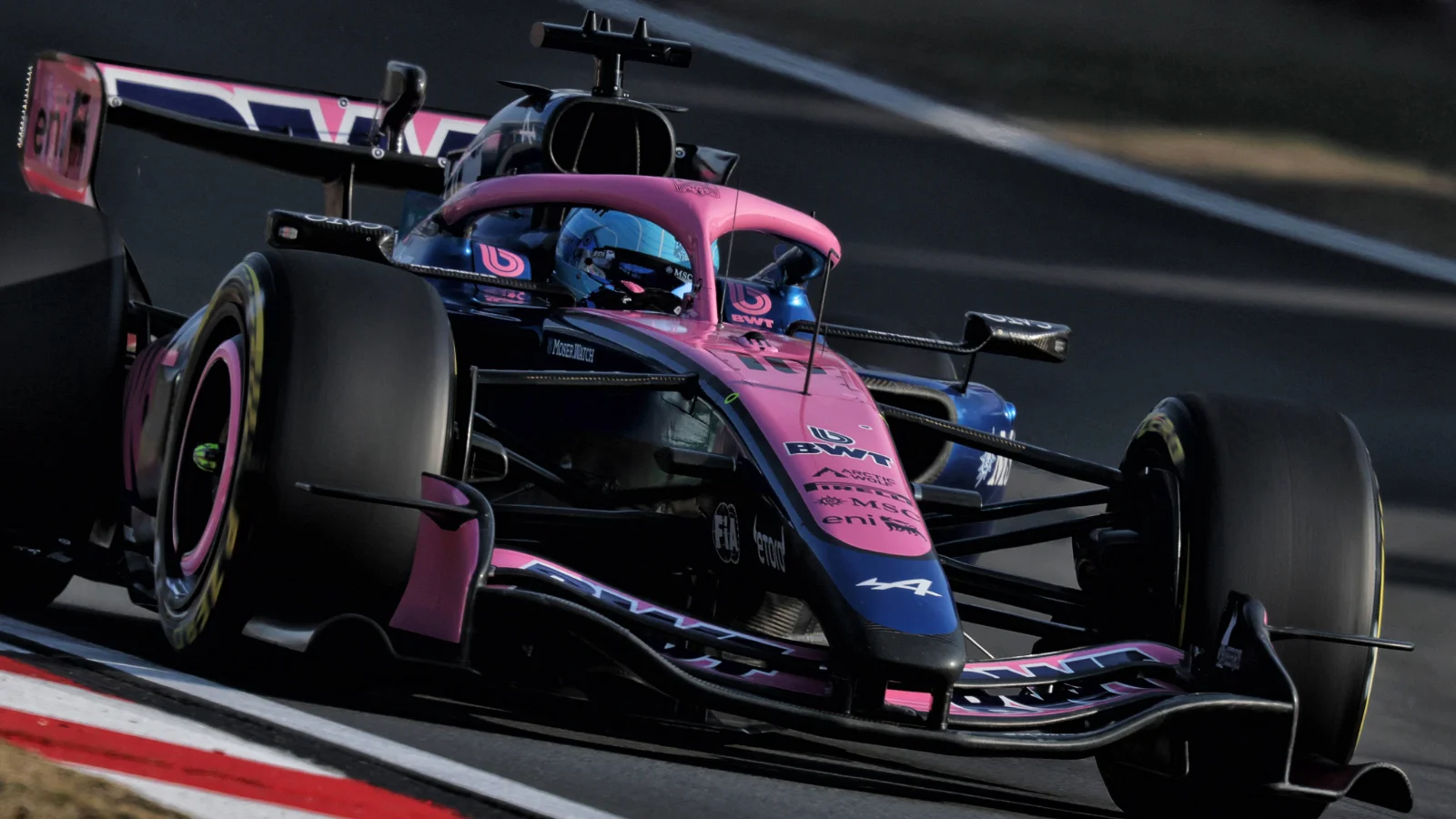
With reports that Toto Wolff is spearheading a bid for a 24 per cent stake in Alpine, Motorsport Week asks what that could do to relationships with Alpine’s other Formula 1 PU customers.
Toto Wolff is a man who could be easily described with two adjectives: intelligent and ambitious.
Christian Horner could describe him with five other words: A, pain, in, the, and neck.
It is believed that the Austrian is eyeing a bid for a 24 per cent stake in the Enstone-based squad, the same stake that a Horner-led group is keen on purchasing himself.
For the headline-writers and those whose resting pulse is raised by the mere thought of an episode of Drive to Survive, it is an exciting thought.
But what might be going through the heads of those at the top of both its other power unit customers – Williams and McLaren?
For both teams, the 2026 season has not got off to the finest of starts. In Williams’ case, it has partly been down to having a chassis that is at risk of being fat-shamed by the most low-rent weight-loss TV programme, but it has also questioned just how differently the factory team is utilising its engine settings. The chasm in speed differential on the straights is not just down to an overweight car.
There is much jiggery-pokery that goes on underneath the engine cover to manage the energy deployment, details that us mere mortals will struggle to understand. As do Mercedes customer teams, as it happens, and this is where McLaren has come unstuck, and what is so threatening about a potential stake in Alpine from Mercedes.
Factory vs Customer grumbles
Engine parity in F1 is quite literally the law. If an engine manufacturer provides one of its engines to a rival, it must have the same power output and available modes. For the last several years, McLaren has exploited this, given the stability of the regulations of the 1.6 turbo hybrids in place since 2014.
McLaren proved in the latter years of the last engine rules that a customer team could win over its factory counterparts. It has, in no uncertain terms, been embarrassing Mercedes week in, week out since mid 2023, in much the same way a mother can embarrass a child by saying how she loves him in front of his friends.
The reason for this was quite simple: McLaren had a grasp of the ground-effect cars that Mercedes never managed. The power unit, while a critical component, was subservient to the chassis.
But now, a new reality has hit in 2026. While the engines are indeed the same, and on parity, the added complexity of battery deployment has thrown a spanner in the works of McLaren’s success and Williams’ recovery.
The critical importance of energy management with these new power units cannot be overstated. McLaren and Williams are now on the back foot, unable to unlock performance. Both teams have said they are losing multiple tenths of a second on the straights alone.
Mercedes is under no obligation to reveal where this time is being lost – and given its current crushing advantage, why would Wolff reveal this? But with talks ongoing from Wolff to get involved in Alpine, could Mercedes have another team on the grid?
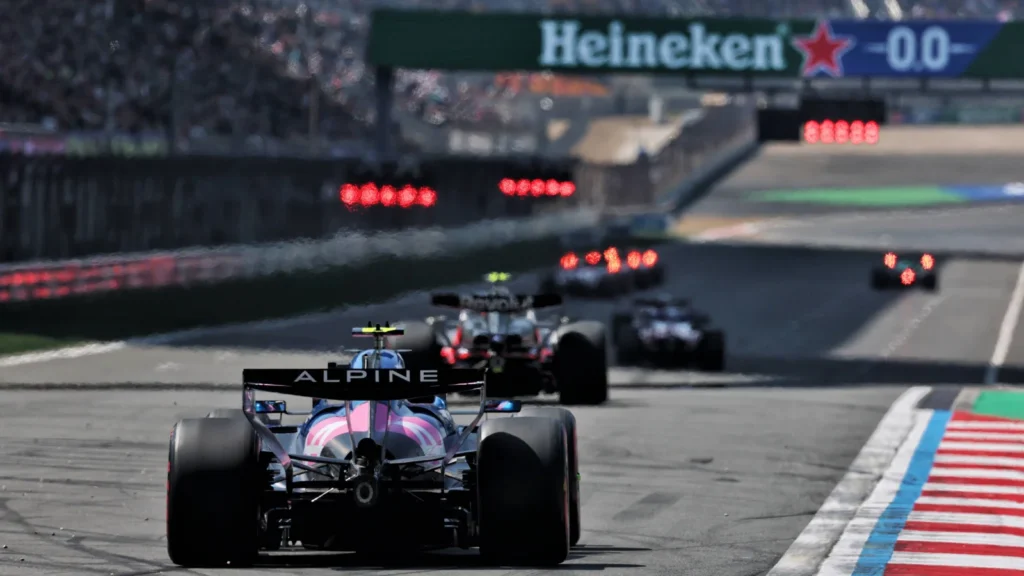
Alpine to become Mercedes’ favourite team?
To take David Croft’s terrible sweet analogy from over the Chinese GP weekend, Alpine could soon be given access to Mercedes’s sweet shop of goodies. But rather than the front of the shop, Alpine could be taken around the back to see the really good stuff – the kind your mother would strictly forbid if she was the one buying it.
This particular anecdote is what has got the likes of McLaren so wound up; Mercedes could effectively keep its customers in the dark, while giving all the help to its potential “junior” team. Against the spirit of competition? Yes. Against the rules? Absolutely not, Red Bull has played a similar game since 2006, the various guises of the Faenza team known now as Racing Bulls.
It has become a proving ground for young drivers, and rightly or wrongly has launched as well as killed the careers of many (anyone remember Brendon Hartley?). Mercedes has looked at this mode of operation and wants to implement a similar solution.
On paper, this makes absolute sense. Mercedes’ driver roster is littered with several who missed out on F1 seats due to circumstances, never seeing the grid, relegated to the world of reserve drivers.
Take Fredrick Vesti as an example. Runner-up in Formula 2 in 2023, he had huge momentum behind him. Yet, there was nowhere to place him. George Russell had made the second seat Mercedes seat his own, while Lewis Hamilton had yet to get itchy feet. A placement would have been the next logical option, but Williams (the team that had Russell on placement) opted for patience with Logan Sargeant. In short: no room at the inn. And that was the end of his F1 career, now too old to make his debut, yet still a third driver.
Had a Racing Bulls-style seat been available for the Dane, he would be on the grid without question. This, in essence, is what Alpine would likely become if Wolff wins the bidding war.
The grid would inevitably react negatively to another “B Team” on the grid. These are not a new concept: they existed in the early 2000s. Super Aguri was one for the Honda works team in the 2000s, albeit not a good one. The FIA has even gone as far as restricting the collaboration between so-called “Partner Teams”.
But as ever, F1 teams care only about one thing: themselves. Self-interest takes precedence above all else, and Wolff has spotted a golden opportunity to get one over on Red Bull and Ferrari by adding a potential ally team to its roster.
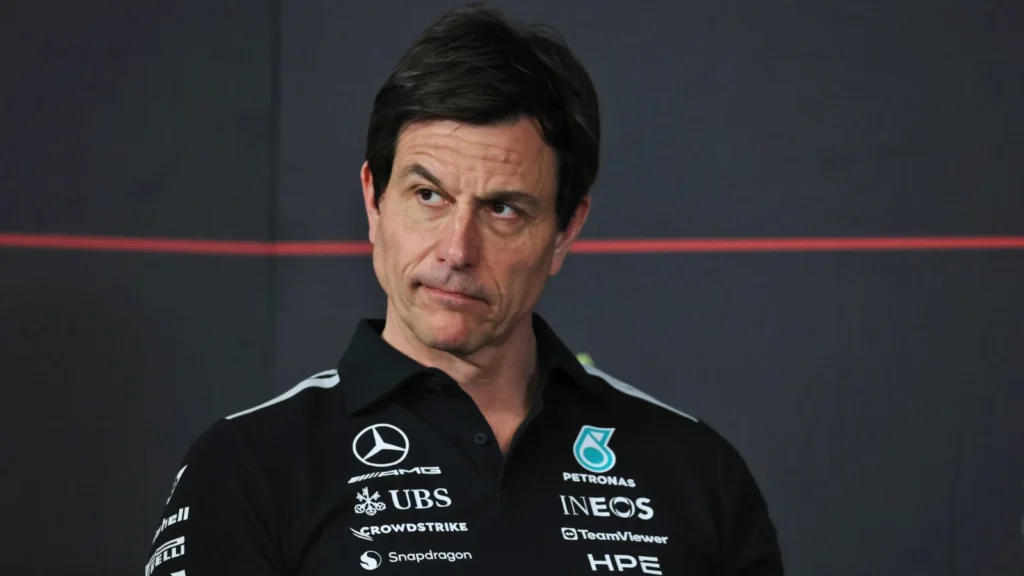
McLaren and Williams left out in the cold?
However, McLaren and Williams would also be affected by Mercedes owning a minority stake in Alpine, and quite badly.
Everyone at some point in their life has been a “third wheel” to a couple. Watching them enjoy all the fun and emotional happiness that comes with true love and the growth it brings, from the sidelines. You share a friendship, a common denominator, and are able to enjoy their company. But you are not the priority; the partner (rightly) is. Most of the time, you can accept this, but there are days you feel left out and betrayed.
As customer teams, McLaren and Williams could face a similar fate. Both will benefit from enjoying Mercedes’ power, still the best power unit on the grid, but will be unable to extract the full potential, as Mercedes keeps the luxurious sweets away from its prying eyes.
But Alpine would likely get access to everything, including the apparent battery deployment advantage Mercedes is enjoying. Sharing that with a customer team would be a no-no strategically, but with a team operating as a “B Team”, it would lead to more grid position being occupied.
Imagine being in McLaren’s and Williams shoes in that situation. Having access to the best power unit on the grid, but having to work out its intricacies with minimal help from your assigned technicians. It would be the biggest example of third wheeling since that time you gate-crashed your friend’s date as a teenager: powerless to do anything about the situation, and unable to raise anything as you grin and bear it.
While Christian Horner’s potential description of Wolff is accurate, Zak Brown and James Vowles may have more expletive versions of it in the coming months. Alpine could be about to pull off a major coup to secure its future.
Mercedes and Renault working together would be a turn-up for the books. Still, stranger couples have existed. Whether Mercedes treats its third wheelers in the relationship with dignity is a question that can only be answered with time.
READ MORE: Fernando Alonso reveals Aston Martin attribute with joke at F1’s ‘battery World Championship’