
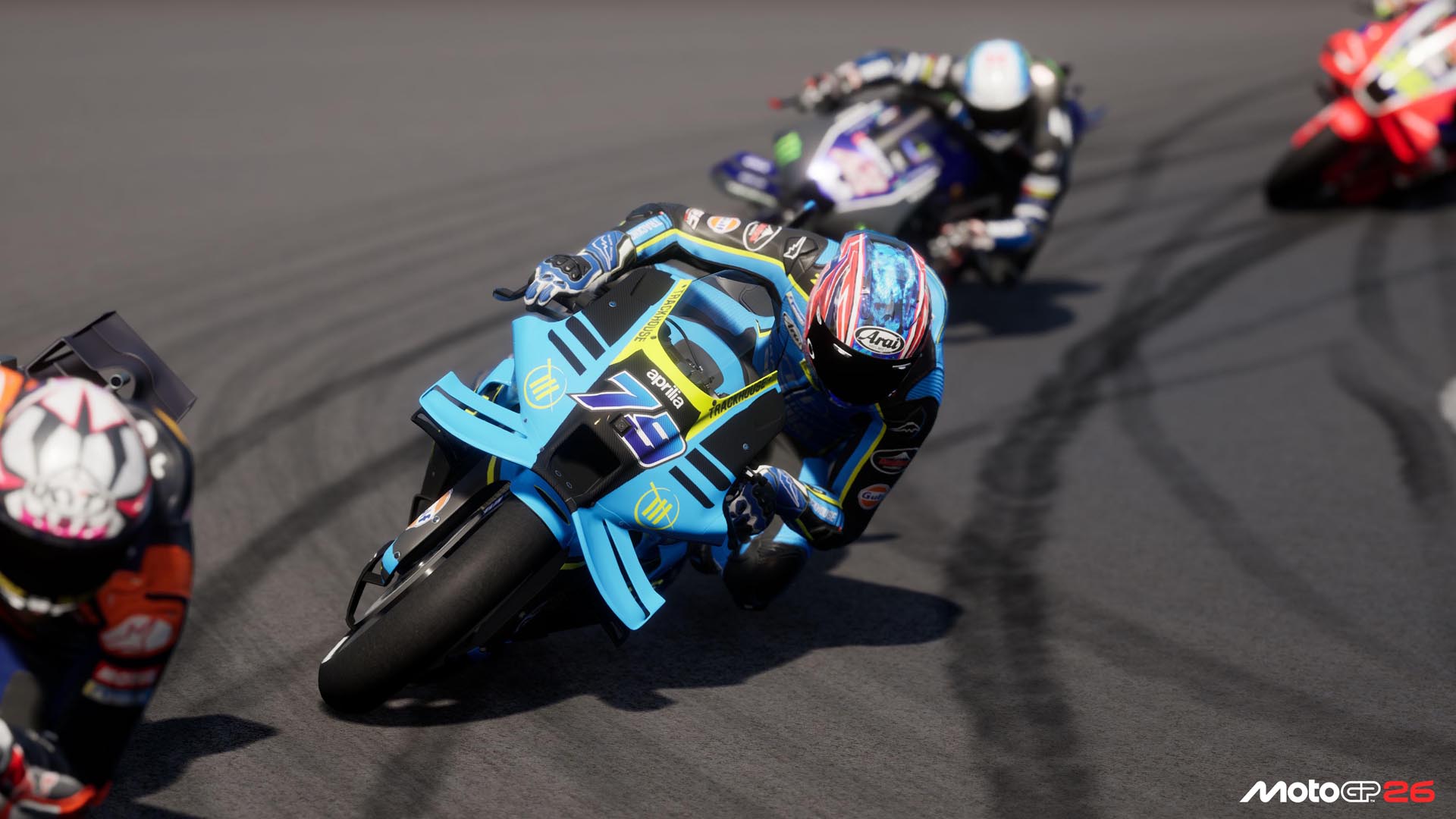
The yearly MotoGP games seem iterative, and MotoGP 26, on the face of it, doesn’t seem like a revolutionary change. But, dig a little deeper, and its vehicle dynamics are noticeably new.
“A more authentic and immersive riding experience,” reads the MotoGP 26 game’s website, but what does that actually mean?
According to its developer, Milestone, all-new physics. Which is a big undertaking and a bold claim, especially for a gaming series which hasn’t exactly implemented sweeping changes in recent years.
Dubbed ‘Rider Based Handling Technology’ – bordering on Electronic Arts’ levels of unnecessary buzzwords there – the change is only for those who venture into the ‘Pro Experience’ physics option.
In simple terms, past instalments move the bike with the left stick, with a rider animation following suit to create an illusion of their weight adjusting your line.
For ‘26, your input moves the rider first, which in turn alters the trajectory of your motorcycle.
“Rider Based Handling is a complete overhaul of our physics engine,” says Stefano Talarico, Lead Game Designer at the Italian team, to Traxion.
“What we did in the past [MotoGP] games was [the player] riding the bike and the pilot on it was basically an appendix. [The rider] was something that was put on the bike and moved with the bike.
“Now, everything has changed, and you’re controlling the actual rider – their physique and movement.”
Without testing it for ourselves, we must take this claim with a pinch of salt, although it is clear from the recently released gameplay footage that there are visible changes to the rider animations.
“You can feel through the pad that you are moving the rider and the bike is coming along where you take it with the rider,” continues Talarico.
“[The change] is pretty huge and it’s a step closer to reality because, of course, when you’re riding a real bike, you’re shifting your body and your weight to change the direction of the bike.
“Gameplay-wise, it’s 1775329497 easier to understand when you’re reaching the limit because in the past iterations, you were moving the bike and it was always tricky to understand where the limit was. Now the feedback is clearer, you feel more in control and it’s also easier to understand how to make a good lap.”

Yet, something bugs Talarico about the word ‘easier’. After all, this change of physics implementation is only in the Pro mode, and if the Pro mode is more forgiving, isn’t there less to differentiate it between Arcade? If so, the purists won’t be happy…
“It’s kind of easier, but it’s not ‘easy’ per se,” he clarifies.
“The bike is more responsive and the input is more direct, which provides a lot more feedback. It’s easier to learn and harder to master.
“It’s way more engaging to keep on running and keep improving because you have the sensation of having the bike in your hand at every moment. You understand easily where to improve and when you lost it.”
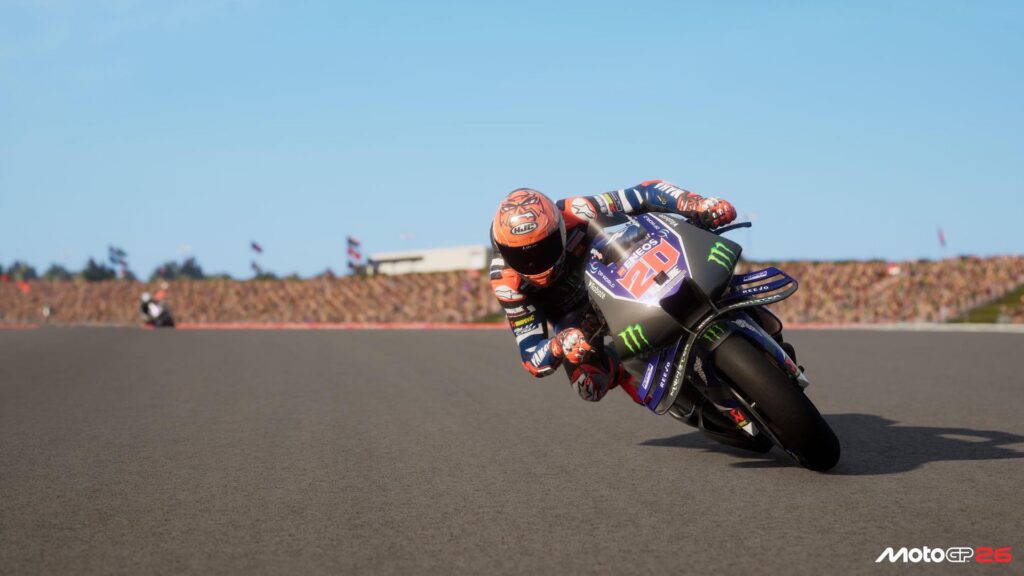
The more pliant ‘Arcade Experience’ (first introduced in MotoGP 25) has also been revised.
“I think the arcade experience is a lot easier this year,” highlights Matteo Pezzotti, MotoGP Game Director of the MotoGP franchise, to Traxion.
“We made the first step in last year’s game and I think that for MotoGP 26, we went further in that direction, [also considering] for sure Switch 2.”
It all makes sense in theory, and on video, but the real test will be when we hit the (virtual) track at the end of this month, when MotoGP 26 releases on 29th April.