
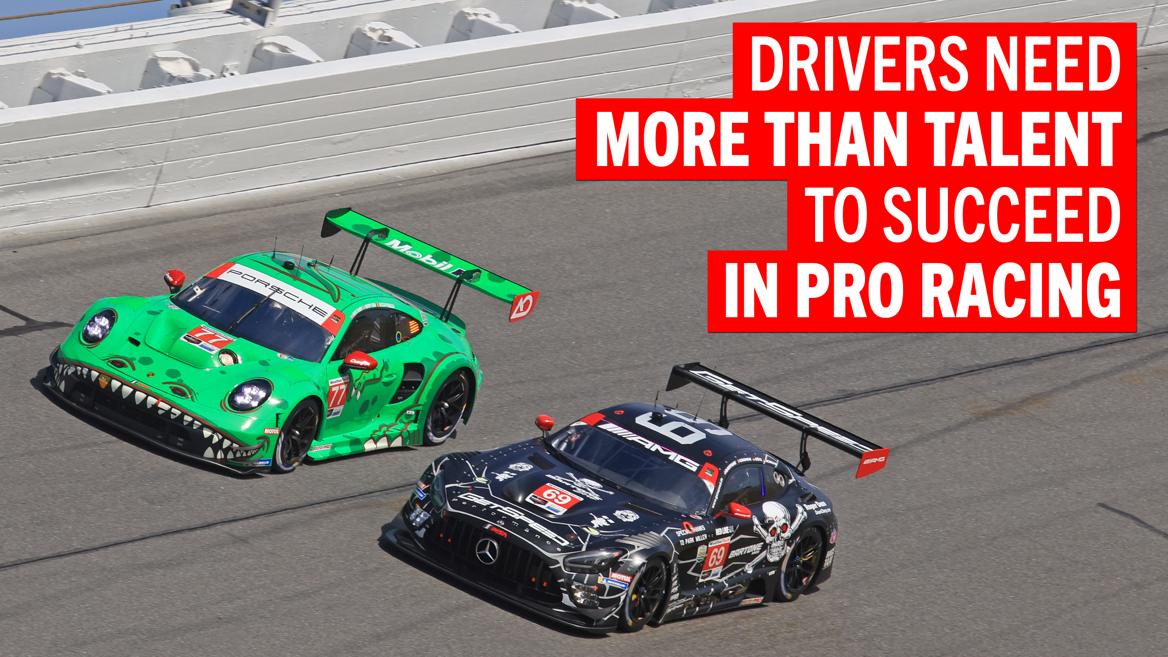
I had a thought while watching the Rolex 24 this year–and maybe it was because I took an Ambien and didn’t go to bed immediately–but anyway, see if you can follow along with my reasoning here: Big-time sports car racing is not as much of a true sport as the big stick-and-ball sports because there’s no way for it to economically support itself.
Okay, stick with me here: All of our major sports leagues–I’m talking NFL, MLB, NBA, NHL–have revenue-sharing systems in place that pool league-wide income and use those dollars to support the teams.
In the case of mega-powerhouse leagues like the NFL, revenue sharing accounts for as much as 60% of team income, with another 15 to 20% coming from ticket and suite sales, and around 10% of team income coming from ancillary sales like concessions, parking and team merch.
In other words, the final primary consumer of the NFL product, the fan, directly supplements the salary of the players and coaches on the field. When you buy a ticket, or have a TV contract purchased on your behalf, or buy a beer or a jersey at the stadium, part of the money you spend goes in the pocket of the quarterback.
Sports car racing? Even the kind you see on the major networks? Yeah, not so much.
Fans pay to attend or watch a race, while teams … pay to participate. The sport supports itself by bringing in outside money in the form of corporate partnerships or even personal cash.
Yes, the NFL has corporate partnerships, but if you stripped all those away, the average team valuation would probably drop from its current level of about $7.5 billion to around $6 billion. Strip the corporate and personal money from sports car racing, and it would disappear quicker than David Copperfield at the Great Wall of China.
Now, I get it, this model gives sports car racing a level of flexibility that other sports don’t have. Sports car teams have no real charter and can come and go as they (and their financial supporters) please, but you can’t just start up a new MLB franchise on a whim after you hit the Powerball.
The result of this model is that the barriers to entry for motorsport become more resource-driven, while the barriers to more traditional sports are still talent-driven. Yes, I know that a kid whose parents can pay for stuff like private coaching and travel ball and showcase tournaments is going to have an easier time getting seen. But for kids without those resources who are relying purely on ability, there is still a path to the highest echelons of stick-and-ball sports through publicly funded school system athletic programs.
On the racing side, sure, talent matters, but at some point that talent will have to include not only driving but providing the major resource that all race cars need to succeed: money.
If I had the financial resources available, I could purchase my way into competing at the highest level of sports car racing in the world. In a year or two, I could work my way into a Le Mans or Daytona start if there were enough zeros to the left of the decimal in my bank balance. But I could never buy my way onto an NFL roster. Okay, maybe the Jets, but not a real team.
So, what’s my point here? I don’t know. Maybe this was all just a zolpidem-fueled hallucination. Part of me really appreciates that the whole point of big-time sports car racing is that it kind of is just an elaborate version of the hobby level that you and I participate at. In some regards, all racing is club racing, so it makes watching “professional” sports car racing very relatable.
On the other hand, it is kind of a bummer knowing that we may never get to see the most naturally gifted driver in the world compete on the biggest stage because at some point they lacked the resources to continue–or even begin–their journey.
I think about this a little bit when I see elite athletes from other sports go racing, like Walter Payton, or even elite performers from other disciplines, like Paul Newman.
What if a one-time NFL rushing leader had focused his physical gifts on racing instead of football from a young age? What if an Oscar and Golden Globe winner had put that performance focus on track instead of the stage where they started as early as 7 years old?
I guess we’ll never know, but it’s fun to think about. Or maybe next time I should just go right to bed.
Comments
View all comments on the GRM forums
You’ll need to log in to post.