
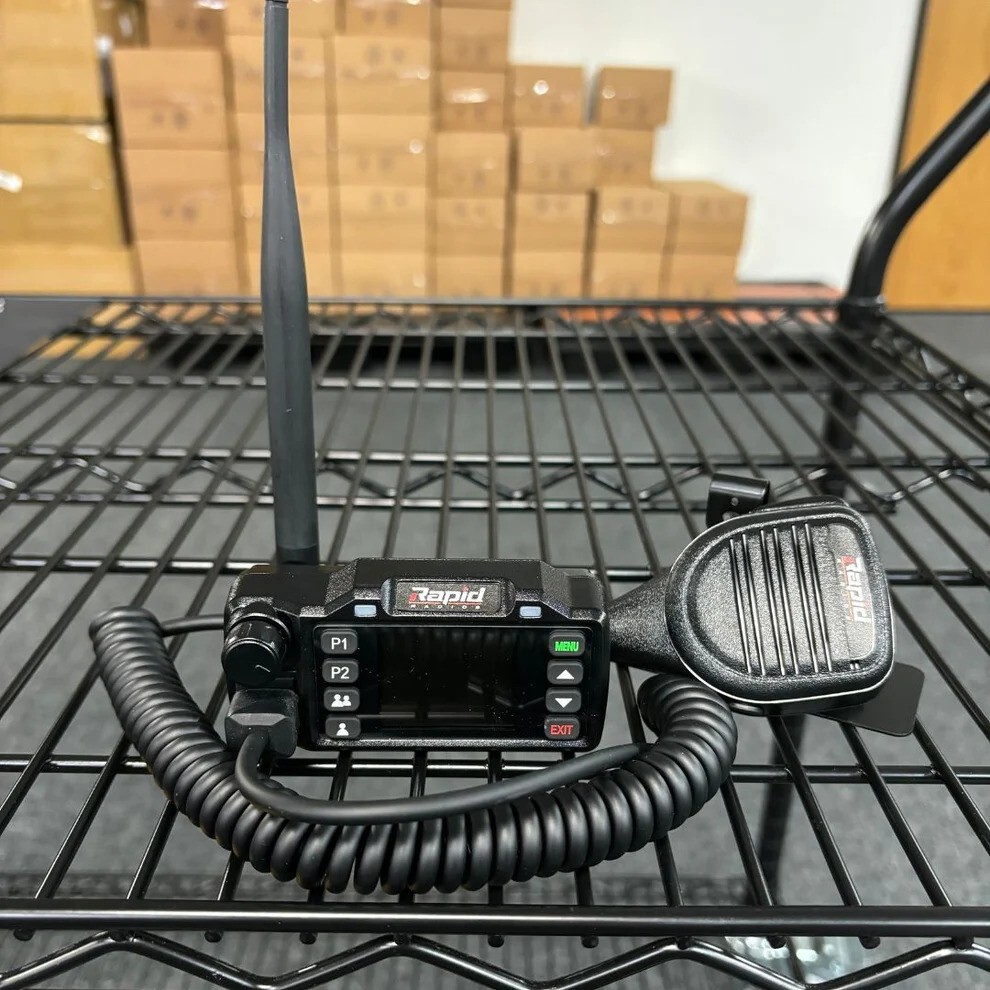
The cell phone fails where the walkie talkie survives.
You’re on a job site. Or in the middle of a storm response. Maybe it’s an event crowd getting out of hand. You reach for your phone to call backup—and nothing. No bars. No response. Just buffering frustration.
Meanwhile, across the site, your coworker presses a button and gets through in a second.
This is where the walkie talkie earns its keep.
In a world dominated by apps and smartphones, the humble two-way radio might seem like a relic. But when the pressure’s on and infrastructure falters, it’s still the go-to for instant, reliable communication.
One-Button, No-Dial Communication
Speed is the first advantage. Walkie talkies don’t require unlocking, searching contacts, or waiting for rings. You press a button, you talk, you’re heard—instantly.
This push-to-talk (PTT) feature isn’t just a convenience; it’s a safety tool. In high-stakes environments like:
- Emergency response
- Security operations
- Construction sites
- Outdoor expeditions
- Logistics and trucking
…the fewer steps between thinking and speaking, the better the outcome.
Network-Free Operation When It Matters Most
Cell phones rely on a complex web of towers, satellites, and power-hungry infrastructure. All of which are prone to:
- Congestion during disasters or large events
- Signal blackouts in rural or underground areas
- Outages caused by storms, earthquakes, or even localized power loss
Walkie talkies? They bypass all of that. Most operate on radio frequencies that don’t depend on external towers. Whether you’re deep in a basement, halfway up a mountain, or in the middle of a hurricane zone—you’re still connected.
And for extended coverage needs, modern models use nationwide PTT capabilities that blend traditional radio benefits with wide-area reach, without relying solely on a fragile mobile network.
Group Communication, Simplified
Try this with your phone: call five people at once, in real time, without lag or group call setup.
Walkie talkies allow you to broadcast a message to your entire team simultaneously. No missed calls. No dialing. No app permissions. One voice reaches everyone who needs to hear it.
In critical scenarios—like coordinating medical evacuations, tracking multiple teams in the field, or managing security perimeters—that ability to instantly share updates can be the difference between organized response and operational chaos.
Rugged, Reliable, and Built for Abuse
Let’s be honest: smartphones are fragile. Drop one on concrete or splash it in the rain, and you’re headed to a repair shop.
Walkie talkies are built for hard use:
- Durable, shock-resistant casings
- Weatherproof and dustproof designs
- Long battery life (some exceeding 12–24 hours of continuous use)
- Clear audio in noisy environments
They’re designed to work where phones break.
No Distractions. Just Communication.
You won’t find games, notifications, or email alerts on a walkie talkie. That’s the point.
In critical situations, distraction is danger. Two-way radios strip the communication experience down to what really matters: transmitting your voice clearly and efficiently, with zero friction.
This makes them invaluable not just for fieldwork—but for any context where attention needs to stay on the task, not on a screen.
In an Emergency, Dependability Wins
Cell phones are great—until they’re not. And when they’re not, you want a communication method that just works.
Walkie talkies provide:
- Instant connection
- Network independence
- Built-in group chat functionality
- Rugged durability
- Noise-canceling audio
In moments when clarity, speed, and reach matter most, they outperform smartphones every time.
Because in a crisis, the last thing you should be doing… is waiting for signal.