
We talk a lot about gathering and analyzing data to help you go faster, but there’s something related that we rarely touch on: how to actually internalize that data on the way to turning it into an action plan.
Like, we tend to skip from the “Here’s what the data shows” part to the “Here’s what you need to do about it” part, but the reality is that there’s an infinitely wide chasm between the two containing your entire personality and the sum of your emotional existence.
[How to decipher on-track data for faster lap times]
How you bridge that divide and turn those squiggles into an action plan will have a direct effect on the effectiveness of that action plan.
Y’all who know me probably know I also spend a lot of time on stages as well as behind the wheel. For like 35 years, I’ve been performing and teaching improv as well as doing standup and sketch comedy for audiences of fives or even tens–sometimes even more. Occasionally I even get paid in fabric softener coupons or shiny shells or pebbles.
Photograph by Chris Tropea
But my point here is the mindset on stage is very similar to the mindset on track. To function at your peak, you really have to function entirely in the moment.
[Motorsports is a mental game, too]
Your conscious brain retreats–it’s too slow and scattered to help you now anyway–and your instinct and skill takes over. Improvement in your craft is a matter of strengthening those instincts and skills so that when they take over, they’re more effective.
The complication here is that for most of us, that flow state–being in the zone–is not a particularly emotionless and dispassionate place. In the moment it may not seem like it, but operating at such a high level in any craft, for most of us, is a fairly euphoric experience. It releases a similar flavor of endorphin cocktail to sex, and it’s a mental state that does not always lend itself to cold, dispassionate self-reflection.
We also face the additional challenge that, for most of us, we’re doing these activities for fun, not for survival. The stakes are low, and we risk only what we bring into the game.
So, how do we improve if there’s nothing at stake and our brains are constantly drunk on happy sauce from doing a super fun activity with several of our friends?
Yeah, it’s a hard question, and I’m not your shrink, your priest or your bartender, so I don’t have a lot of solid answers here, but it’s an important wall to push through on the way to improvement.
One of the difficult hurdles you’ll need to overcome is exactly how you internalize your own criticism, whether it comes from self-analysis, a coach or cold, hard data.
[How to master the driving self-critique]
Remember when I said that a track session can be a highly euphoric and emotional experience? Yeah, well those same emotions are the ones that make it difficult to not take any criticism of that activity personally.
Photograph by Dave Green
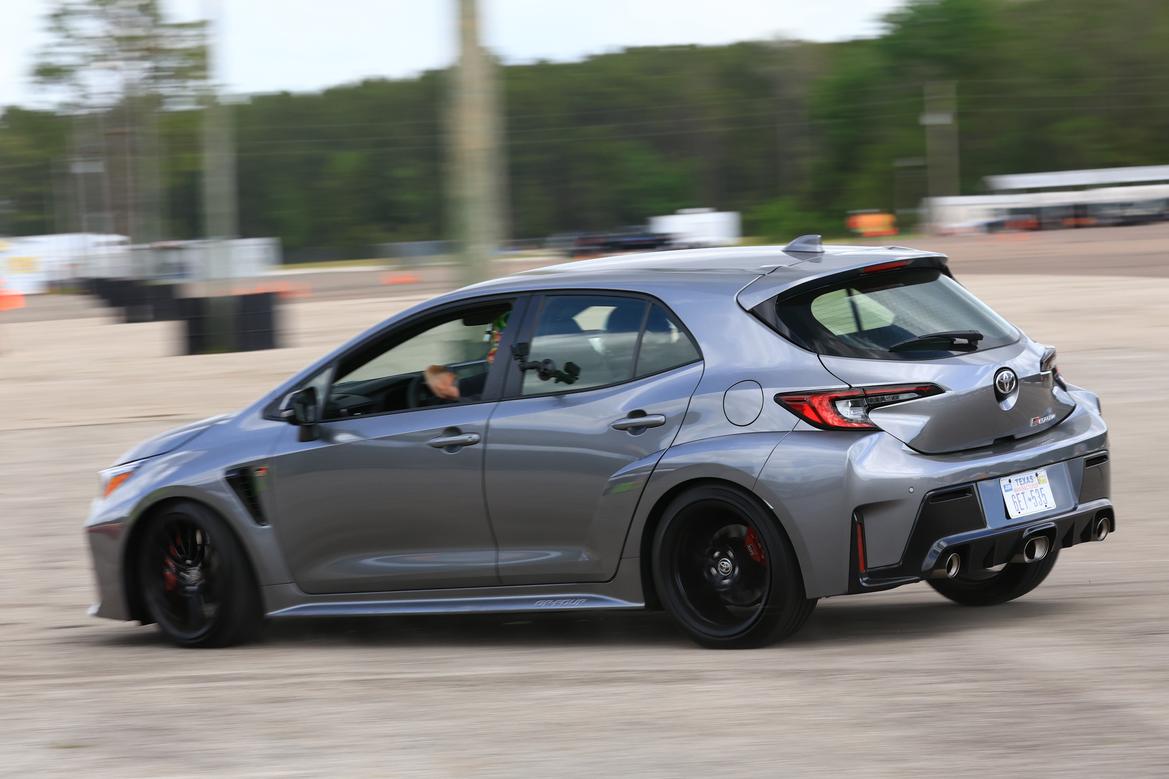
Too many of us draw a line, whether consciously or subconsciously, from “I did Turn 6 wrong” to “I’m a bad person,” and while not entirely constructive, that’s a perfect human response.
Remember, we’re doing this for fun, so the emotional component is a huge part of the appeal. But that emotional component also tends to come with built-in baggage that can make progression a little more complicated.
On stage, it’s actually harder. Yes, after shows we always sit around and break down performances and jokes and technique, but that type of criticism tends to be entirely subjective. And because performing tends to be such a raw display of emotions and vulnerability, it’s nearly impossible to separate criticism of performance from criticism of personality. If you’ve ever wondered why most actors and comics are neurotic basket cases, there you go.
And it’s not much different in the car. We put ourselves in a vulnerable spot, push through it, and then are expected to dispassionately assess how it went when the entire act itself was extraordinarily passionate.
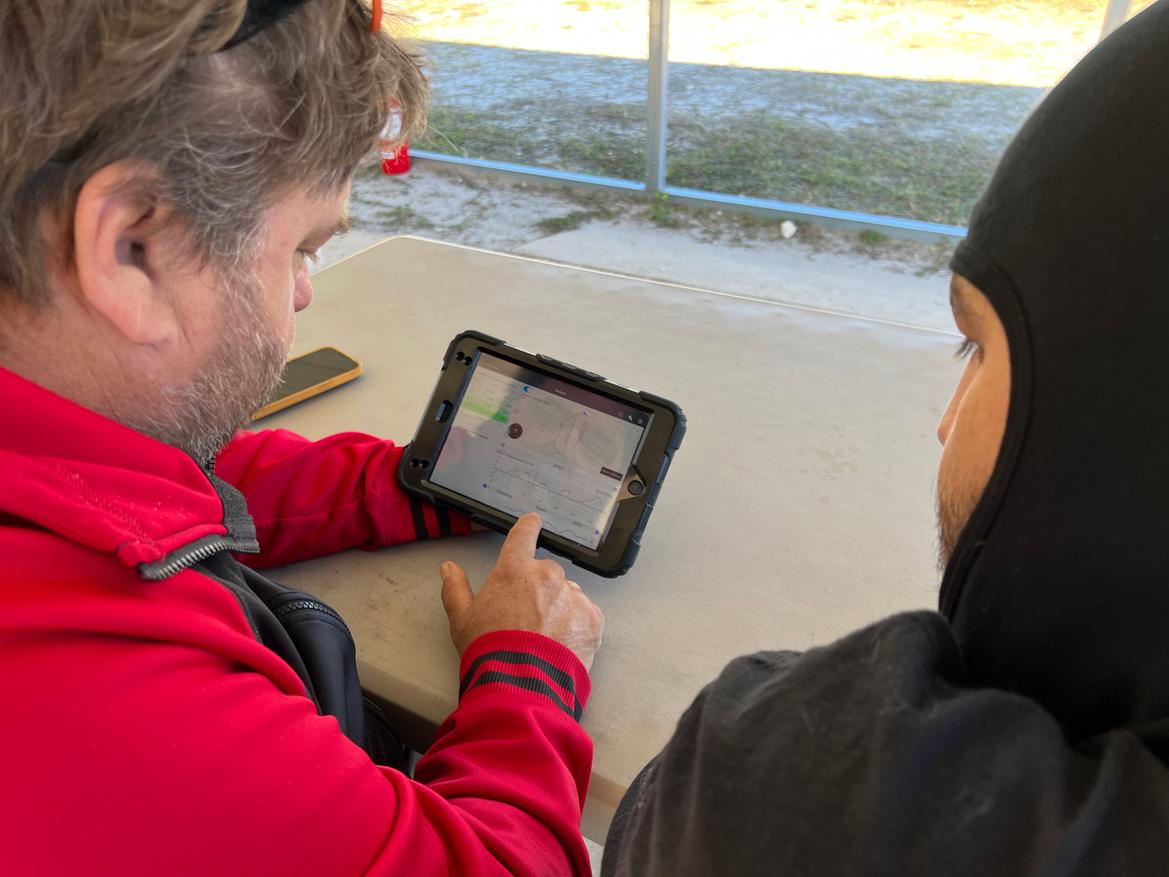
On track, though, we do have one advantage, and that’s data–which not only doesn’t care about your feelings but doesn’t even know they exist. And yes, it’s still occasionally tough to look at a sloppy data trace and not think, “Wow, I’m a piece of crap,” but it’s nice to remember that the accelerometer is not there to judge, just to report. Man, I need a VBox for jokes.
Photograph by Chris Tropea
So look, I don’t want the message you take away from this to be, “I need to turn myself into an emotionless robot to improve.” I’ll say it again, louder for the cheap seats: WE ARE DOING THIS FOR FUN.
Embrace the emotional component because it’s one of the biggest rewards this sport can give any of us. If you’re reading this, chances are if you finish 11th at your next race, your family will still love you, you’ll still be able to pay your bills, and your neighbor still won’t understand why you ripped the interior out of that perfectly good Audi and put all those tubes in it. It’s all meaningless stuff we invented to make us happy, so don’t be afraid to let it make you happy.
But still, we’re all driven to improve. So we have to find healthy ways through those psychological barriers to allow us to place some import on the improvement process without internalizing it in an unhealthy way.
Yeah, that one is gonna be up to you, because each one of us is likely to have our own psychological triggers and mnemonics we use to bridge that gap where we have to temper our joy long enough to actually plan to improve.
For me, it’s been an embrace of data. I’ve gotten to where I just adore browsing through speed traces, and even when I’m just feeling nostalgic for a certain track or certain car, there’s every chance I’ll pull up an old data chart before I pull up the in-car video.
It’s like reading sheet music, just looking at the elemental bits of execution that make up a lap and being able to see graphically how they fit together and flow into one another. That’s exciting for me.
And at the track, being able to envision the chart I want to draw with the car, then going out and doing it–or even coming close enough that I know I COULD do it eventually–is immensely satisfying.
For me, the data gives that kind of non-emotional feedback that I still get a very emotional satisfaction from examining, and if the chart looks like hot garbage, I know that I can just go out and try to draw a better one, not that I’m a loser. I have plenty of other metrics in this vast universe to tell me that.
I don’t know what your path through that gap between activity and improvement is, but I do know I want you to find a way through that doesn’t prevent you from embracing the joy of the sport.
This isn’t math class. This is fun. But we have to remember: The process of improving our skills is also part of that fun, not where it stops and becomes work.
Comments

Tom1200
UltimaDork
12/2/25 1:40 p.m.
As someone without real data beyond the predictive lap timer (I’ve used it in someone else’s car) I rely heavily on video and the Red Neck Motec (Tach).
I treat my video like I would reviewing anyone who posted here looking for improvement; I am totally honest with myself.
My other gauge is consistency; are may lap times consistent? Example my last session of this weekends time trial, laps 2 trough 6 were from 2:19.653 to 2:19.731.
My fastest lap at Buttonwillow is 2 seconds faster than any other lap I’ve turned there; I on the backstretch I literally managed to stay with a 3 car train most of the way and because it was gusty we actually got a tail wind that was timed perfectly.
My point being try and find out why, fast or slow, those outlier laps are happening. Oh and whatever you do, don’t try and analyze anything if the tires are done………..that data is useless.
My being keenly aware of my ADD is what motivates me to focus.
Finally as an aside once did an open mic night eons ago; it was fun and I actually did well. I even got asked if I would try it again, to which I said no. I think stand up is a horrible way to make a living…….if you can make a living at it.

My biggest problem is finding an instructor who doesn’t constantly lie. I hate to be Conspiracy Guy, but they ALL do it.
”You could have braked later.”
”You missed the apex.”
”Roll on the throttle earlier here.”
And so on.
I’m not emotional and am completely analytical, so why can’t I find someone honest enough to tell me how GREAT I AM behind the wheel?!?
Maybe I should just get a dog.

Edit: thanks for the article; it’s a good read.

Coniglio Rampante said:
I’m not emotional and am completely analytical, so why can’t I find someone honest enough to tell me how GREAT I AM behind the wheel?!?
I like the idea: A “yes man,” but it’s a driver coach.
(Even better if you can make it a widget that you can plug into your car)

I love it!
Fun fact: This concept can be successfully applied to every aspect of your life!

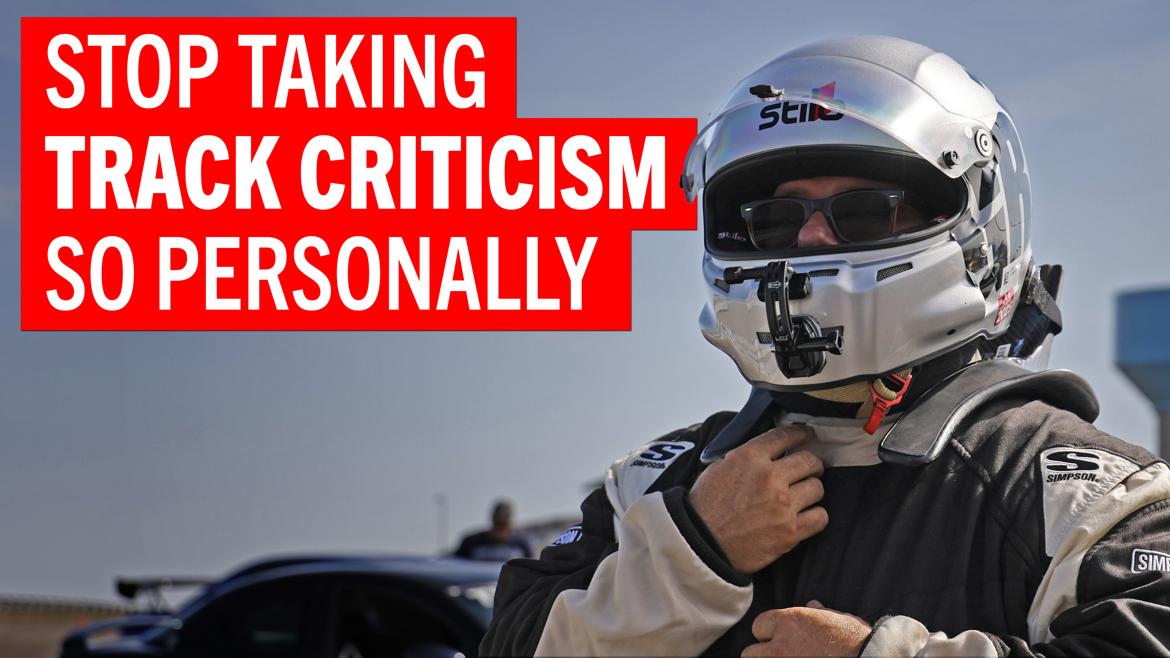
Side note: At my last track day of the year, a location where my usual externally-mounted camera setup always gets a lot of scrutiny, they finally told me I just couldn’t run it, so in a rush I tried sticking the camera to the front of the helmet much like in the header image, just a little lower so that the top of the camera would be flush with the bottom of the eyeport. Even though I’m tall enough to approach the headroom limits of small sports cars, the perspective that camera got was this:
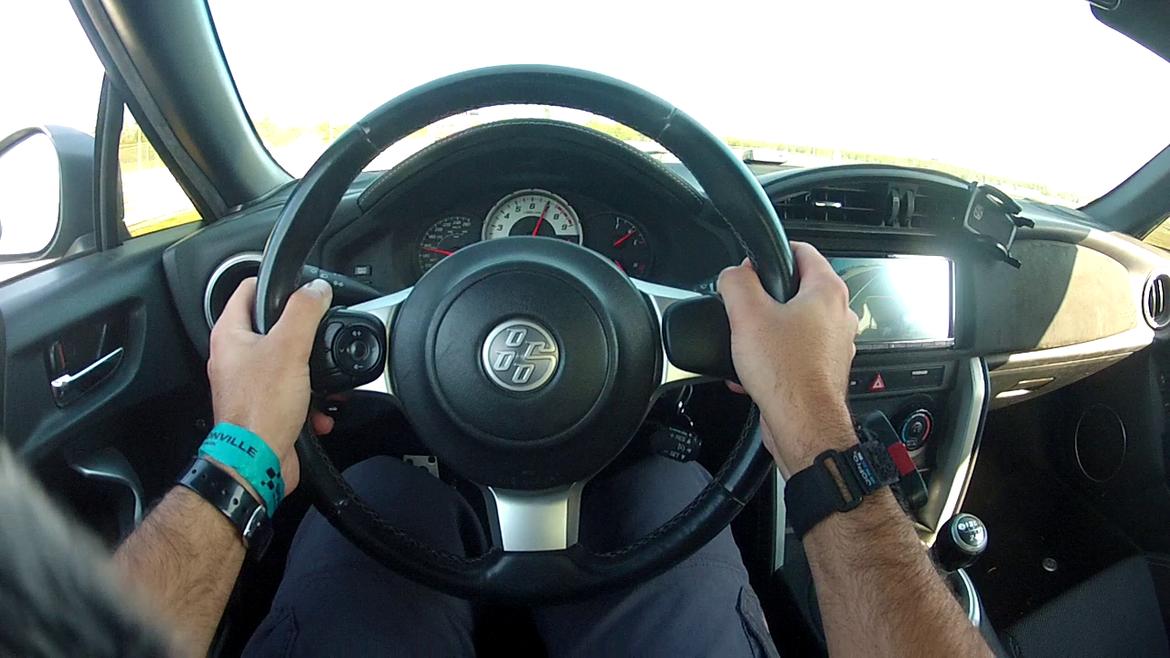
Next time I’m at that track I’ll stick it to the side of the helmet at eye level.
Displaying 1-5 of 5 commentsView all comments on the GRM forums
You’ll need to log in to post.