
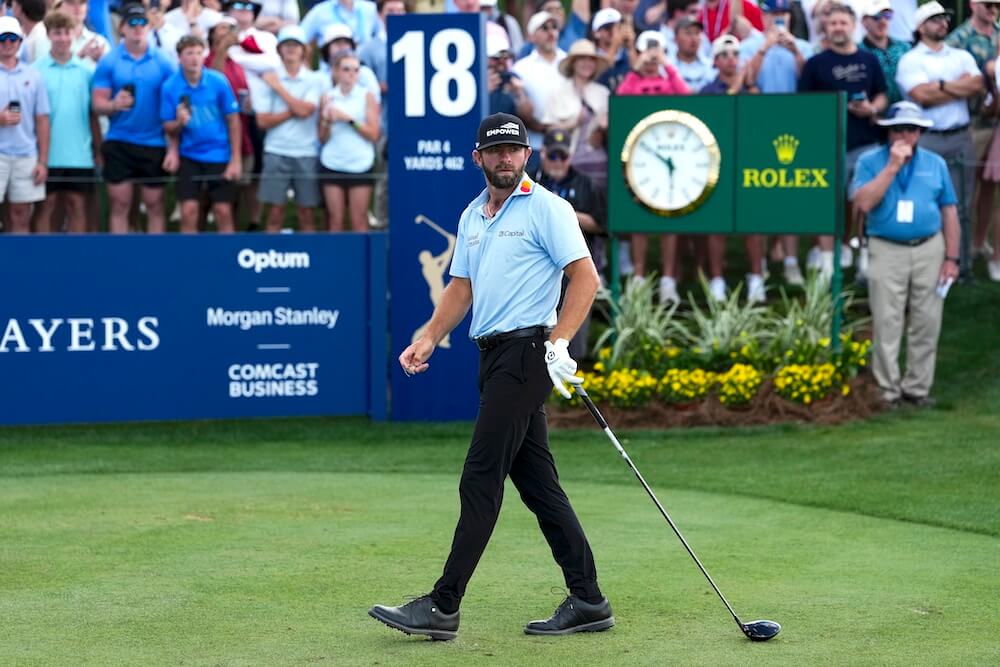
There had been a sense of inevitability around Cameron Young for a while, a waiting-for-the-moment anticipation that went deeper than the eye test, an almost organic understanding that he can go places few other golfers can.
Getting there, as every special player does, is the most individual part of the process. No two paths are the same.
Tiger Woods and Rory McIlroy arrived as gifted stars. Scottie Scheffler gradually ground greatness out of the dirt.
Some get lost on the way.
In Young’s case, his victory in the Players Championship Sunday was not a surprise, at least not in the macro sense. It required some pretzel twists along the way by others – Ludvig Åberg in particular – but Young has seemed destined to put his name on something special.

Not to rush past this one but Young is the kind of player who teases the question of what comes next. It’s an abrupt bend in the narrative considering on the Fourth of July last year, Young had still not won a PGA Tour event and was seen by some as having mastered the art of finishing second.
Now, he’s seen as perhaps the player most likely to challenge Scheffler and McIlroy at the game’s peak. Tommy Fleetwood is there and we’re still waiting for Åberg to get there but Young is fully ascendent.
When Young won the Wyndham Championship in a walkaway late last summer, he said he hadn’t considered his seven runner-up finishes to be a burden. His final-round scoring average in those seven events was 66.7 so it wasn’t as if Young was backing up on Sundays.
Winning, he said, was just something he hadn’t done.
Now, Young has won two of his last 11 starts and was the best player on the American Ryder Cup team at Bethpage Black in September.
Not everyone has to be as emotive as Jordan Spieth or Rory McIlroy. Bryson DeChambeau thrives on attention. Young is content to go quietly about his business.
What changed?
It coincides with Young asking his former Wake Forest teammate Kyle Sterbinsky to be his caddie at the Truist Championship last May. There was an instant comfort level and Sterbinsky has helped Young on the greens.
In 2024, Young ranked 145th on tour in strokes gained putting. Last year, he ranked seventh. He’s 48th this year but was seventh at the Stadium Course.
One more numbers comparison: Young ranked 169th in putting inside 10 feet in 2024. He was 30th last year.
Few things bolster confidence like seeing the ball go in the hole.
“He’s great at reading greens. He’s got a great mind for golf. So I knew he would be a good fit before I hired him,” Young said.
It goes both ways. Young is introverted, especially on the course where he rarely smiles and, on the rare occasions when he does, it’s not a big, toothy grin. It’s who he is and how he is.
Young understands how he comes across to people outside the ropes and doesn’t apologize for it.
“I think just generally you’re not going to get a ton out of me,” Young said in his winner’s press conference Sunday night.
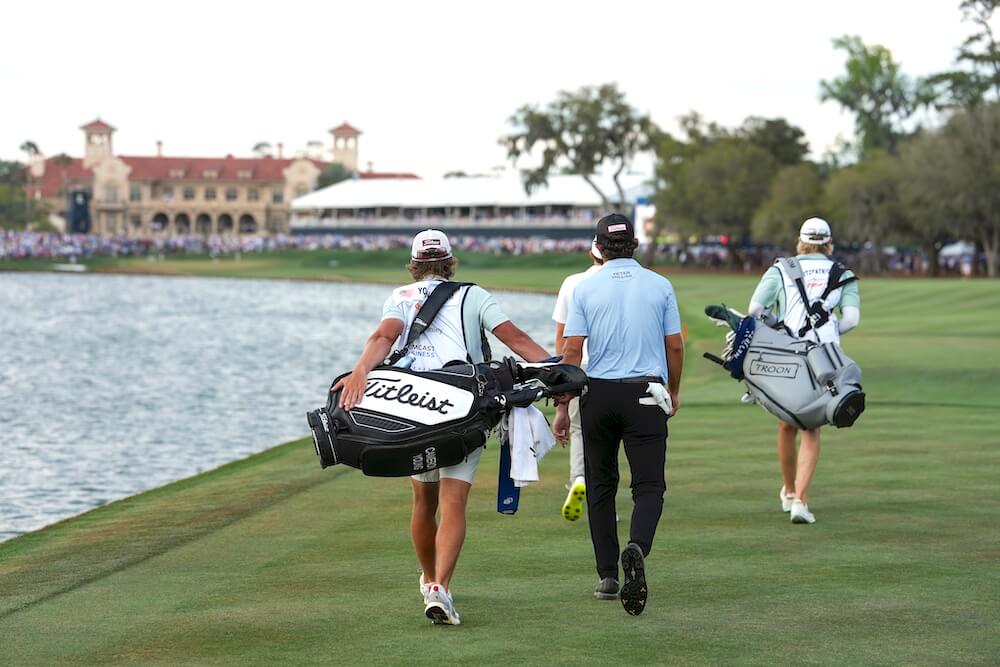
Not everyone has to be as emotive as Jordan Spieth or Rory McIlroy. Bryson DeChambeau thrives on attention. Young is content to go quietly about his business.
No golfer considers himself a finished product and Young is still evolving, especially in how he deals with things beyond the swings he makes. He’s not alone in confessing how hard he can be on himself – it’s a trait that pulses like blood through most golfers – and he’s learning how to be better managing his own expectations.
“I think a lot of people that are good at what they do expect a lot of themselves. So I think that while it might not be the best thing for performing at your highest level, those expectations are also something that drives you to be good,” Young said.
“I kind of am starting to learn to maybe let go of them a little bit, and kind of just focus on where my feet are.”
That’s straight out of sports psychology 101. Dwelling on poor shots doesn’t help. Thinking too far ahead has its own dangers.
Sitting on a three-stroke lead Saturday night, Åberg admitted that he thinks about winning when he’s in contention. No sense ignoring the obvious.
Unlike many of his contemporaries, the 28-year-old Young said he does not set specific goals. He operates with a more holistic approach, allowing that being ready for the Masters in three weeks is front of mind.
Two strokes ahead with eight holes remaining Sunday, Aberg made two bad swings and one bad decision (hitting driver on the short par-4 12th) and found himself guilty of letting everything speed up, a tendency he’s aware of and, obviously, still trying to harness.
When Young found himself making up no ground on the front nine Sunday, he fought back the frustration, reminding himself that one emotional decision could cost him a chance to win at the end.
That, Young said, is what he’s learned in recent months.
“If anything, it is just things I’ve learned over time and not necessarily from any one of those individual instances of being near the lead. I think we’ve made a lot of progress on my attitude and my approach to golf, and I feel like that is where I’ve improved and I think what allowed me to stay in it all day,” Young said.
Unlike many of his contemporaries, the 28-year-old Young said he does not set specific goals. He operates with a more holistic approach, allowing that being ready for the Masters in three weeks is front of mind.
“My goal is to be prepared to be playing late on Sunday at Augusta,” Young said.
“It’s not necessarily to win, it’s not to do any certain number of things; it’s to be ready and comfortable when that moment comes.”
As it did Sunday at the Players Championship.
© 2026 Global Golf Post LLC