
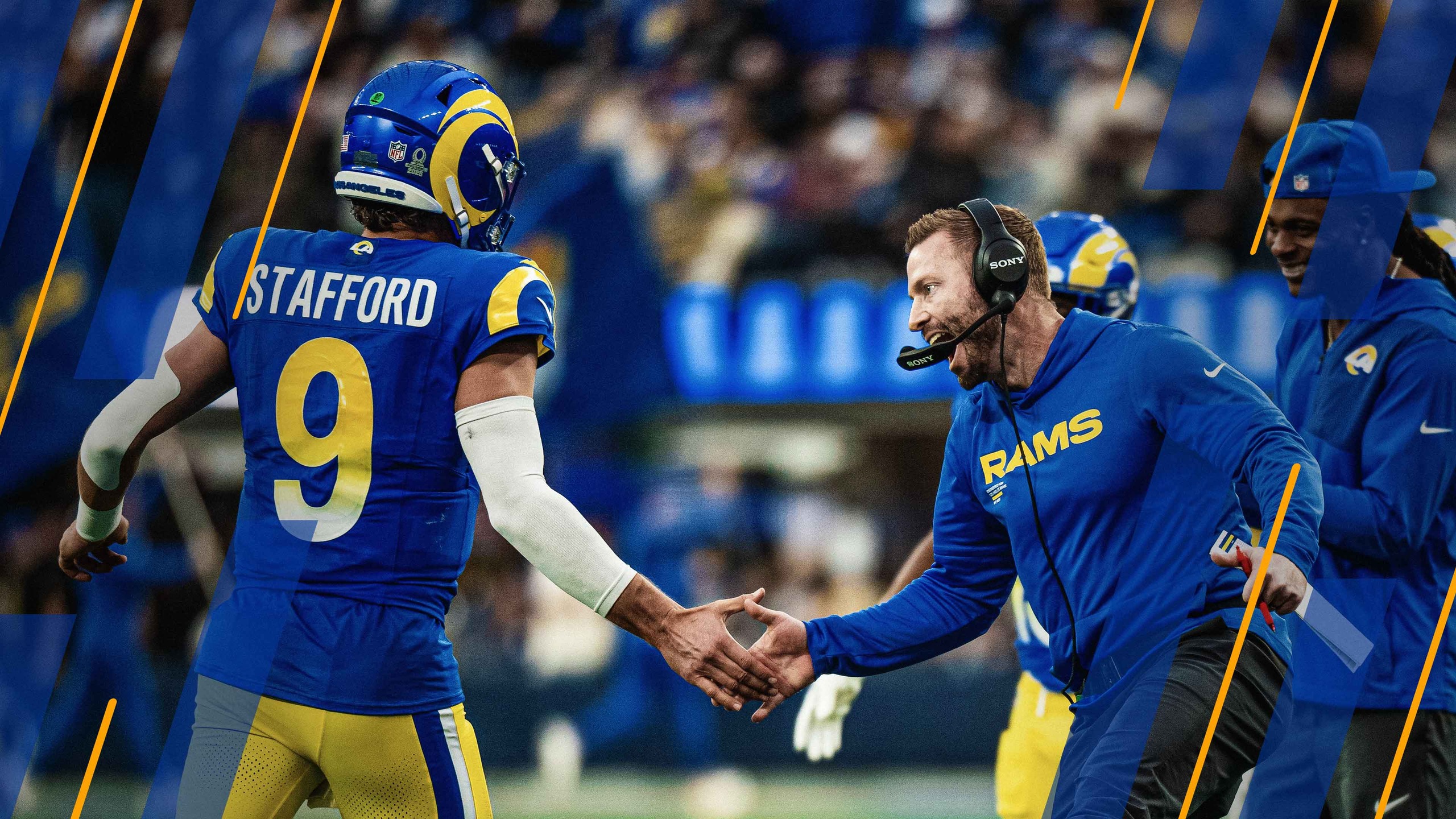
- Matthew Stafford headlines the regression list for the third consecutive year: His 2025 interception total came in nearly seven picks below expectation, extending a run of historically unusual positive variance that will very likely revert in 2026.
- Two of the top eight are quarterbacks entering their second NFL season: Cam Ward and Jaxson Dart finished 2025 with interception totals well below what league-average conversion rates would normally produce.
- Dak Prescott and Baker Mayfield each threw roughly three fewer interceptions than expected: Despite finishing with “good” interception totals, the underlying process suggests both were beneficiaries of positive variance that has historically not carried over to the following season.
One year ago, Chicago Bears quarterback Caleb Williams appeared on this list. His 2024 rookie season generated a net-luck score of +5.7, meaning his six interceptions came in nearly six picks below the number we would normally expect at league-average conversion rates. Williams sat at No. 8 on the 2025 regression leaderboard. The numbers pointed toward regression as 2025 approached. The correction arrived almost exactly on cue.
In 2025, Williams’ turnover-worthy-play-to-interception rate jumped from 26.7% to 45.0%, and his interception total doubled from six to 12. It was a clean example of how quickly interception totals can shift once luck regresses toward the mean. The quarterback process barely changed. The box score looked dramatically different.
The same dynamic is coming for someone on this list. Probably more than one.
TL;DR
Yesterday, we published a study examining how interception luck shapes quarterbacks’ stat lines and how much those outcomes vary from season to season. The study looked at every throw by a quarterback from 2016 to 2025.
Put simply, each quarterback’s interception total breaks into two components: interceptions on turnover-worthy throws and interceptions on non-turnover-worthy throws. The league-average interception rate on turnover-worthy throws from 2016 to 2025 was 49.09%. On non-turnover-worthy throws, it was 0.79% of attempts.
Net luck measures the gap between what those rates would normally produce and what actually happened. A positive figure means a quarterback’s interception total ran below expectation. From 209 consecutive-season pairs, roughly 88% of that deviation disappears the following year.
1. Matthew Stafford, Los Angeles Rams
At this point, Stafford’s relationship with positive interception variance has become a story of its own. His 2024 season ranks as the luckiest in the entire 10-year dataset (+7.3 net luck), while his 2025 season ranks third (+6.8). Producing two consecutive seasons at the extreme top of the interception-luck leaderboard is already highly unusual. A third straight year would be virtually unprecedented based on the historical data, which offers little evidence that this type of variance is sustainable.
The numbers make the regression case difficult to ignore. Stafford generated 21 turnover-worthy throws in 2025, a total that would normally translate to just over 10 interceptions at league-average conversion rates. Only eight were intercepted, while defenders dropped nine additional would-be picks.
He also threw just one interception on 695 non-turnover-worthy attempts, despite league-average outcomes projecting closer to five or six. Altogether, Stafford finished with only nine interceptions on a passing profile that league-average variance would typically push closer to the 15- or 16-interception range.