
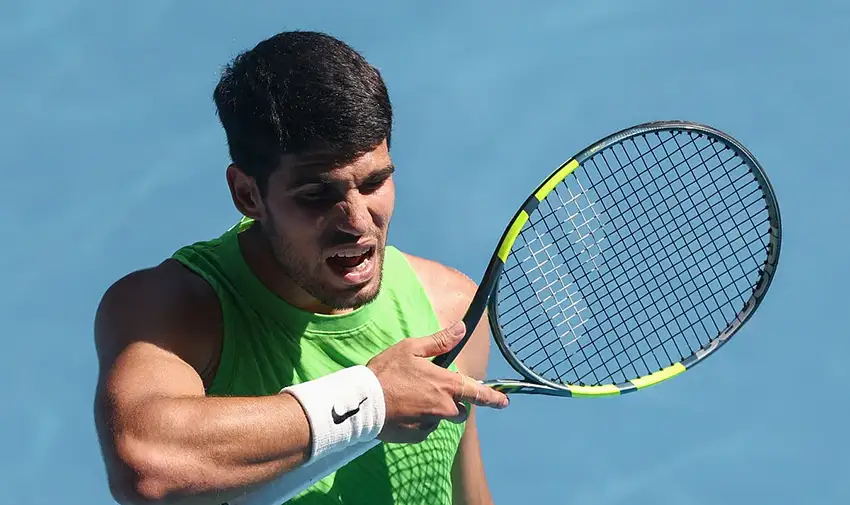
In a welcoming move among players, the French Open will permit players to use connected devices to collect biometric data during the 2026 tournament – a first for Grand Slam tennis.
Roland-Garros tournament director Amélie Mauresmo announced on Thursday that players competing across all 24 events at the 2026 French Open will be allowed to use wearables and connected devices during matches. The pilot program marks a significant shift in Grand Slam policy and will extend to Wimbledon and the US Open later this year.
“We want to provide the players with the best possible experience and we listen to their requests,” Mauresmo said during the pre-tournament press conference. “Once again, the aim is to improve players performance.”
A Grand Slam First
The trial allows players to use devices listed on the World Tennis-approved “Player Analysis Tennis” register to collect biometric data. These wearables, which include popular brands like Whoop, track metrics such as heart rate, heart rate variability, sleep quality, recovery status and physical strain.
The decision represents a major policy change for tennis’s most prestigious tournaments. Just three months ago at the 2026 Australian Open, stars including Carlos Alcaraz, Jannik Sinner, and Aryna Sabalenka were required to remove their Whoop bands before matches under existing Grand Slam regulations.
While wearables have been approved by the International Tennis Federation (ITF) and permitted at regular ATP and WTA tour events since mid-2024, the Grand Slams have operated under separate, more restrictive rules – until now.
What Players Can Track
The approved devices provide players with valuable insights into their physical performance and recovery throughout the tournament’s grueling two-week schedule. Key data points include:
- Heart rate and heart rate variability (HRV) – Indicators of physical strain and recovery readiness
- Sleep quality and staging – Tracking light, deep, and REM sleep cycles
- Recovery metrics – Assessing nervous system readiness and fatigue levels
- Training load – Quantifying workout intensity and cumulative stress
- Resting heart rate and oxygen saturation – Baseline health monitoring
This information helps players and their teams make informed decisions about training intensity, recovery protocols, and match preparation – critical factors during a Grand Slam where matches can be played on consecutive days.
Wearables will be allowed at Roland-Garros for the first time.#RolandGarros pic.twitter.com/D6nxSCjP3F
— Roland-Garros (@rolandgarros) April 16, 2026
Industry Response
Whoop, a leading wearable fitness tracker and official WTA sponsor, welcomed the decision. “The decision by the French Tennis Federation (FFT) to allow wearables at this year’s French Open is an important milestone,” the company said in a statement.
“Data is not steroids. Access to accurate, non-invasive insights does not undermine competition. It strengthens the sport and supports players.”
The company has significant backing in professional sports, with investors including two-time Golf Masters champion Rory McIlroy, who has been an outspoken advocate for wearable technology in elite athletics.
Extending Beyond Paris
Spokespeople for both Wimbledon and the US Open have confirmed they will participate in the trial, meaning three of the four Grand Slams will allow wearables in 2026. This coordinated approach suggests the governing bodies are seriously considering permanent adoption of the technology.
Tennis Australia, organizers of the Australian Open, stated in January they were “in ongoing discussions” about allowing wearables in future editions, indicating the possibility of all four majors eventually permitting the devices.
Performance vs. Tradition
The debate over wearables in tennis reflects a broader tension between technological advancement and the sport’s traditional values. Supporters argue that biometric data helps players optimize performance, prevent injury and make smarter training decisions, all without providing any competitive advantage during actual play.
Critics, however, have raised concerns about the visual aesthetics of players wearing devices during matches and whether technology could eventually distract from the pure athletic contest. The Grand Slams have historically been the most conservative about adopting new technologies, maintaining strict equipment and attire regulations.
Looking at the response from fans on social media, most seem to be in favour of accepting this new tech and many are wondering why they were banned in the first place.
What This Means for Players
The matches across the Roland-Garros 2026 event will now serve as the largest-ever test of wearable technology at a Grand Slam. Players can wear their devices during practice sessions, warm-ups and actual matches, giving them continuous data collection throughout the tournament.
For players managing chronic injuries, monitoring recovery between matches or simply optimising their physical preparation, the change represents a significant upgrade in available resources. The French Open’s demanding clay court surface and best-of-five format for men make recovery monitoring particularly valuable.
What is your opinion on the new tech devices in pro tennis? Let us know in the comments.