
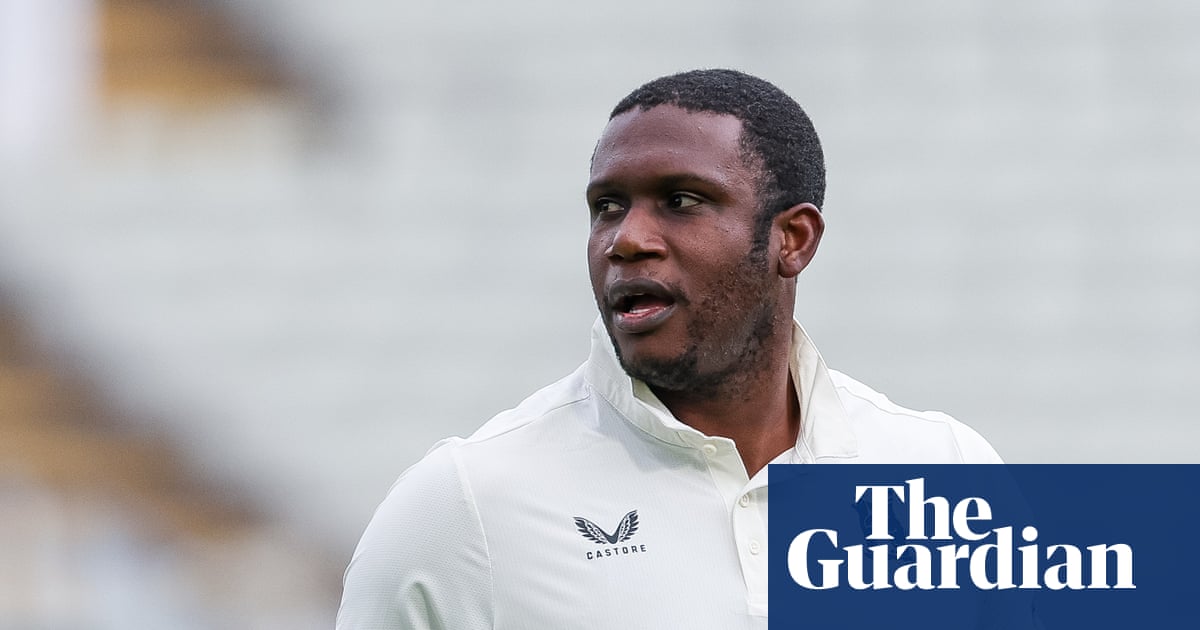
1. Abell triumphs in ding-dong battle
It’s easy if you think there is no room for sentiment in professional sport. Specialist coaches are driven by data; players execute skills; and teams are projects. But is it wrong to hope that sport can remain an enclave of truthful emotion in a cynical world?
Tom Abell has played for many teams around the world, as any moderately successful cricketer will these days, but he made his first-class debut for Somerset in 2014 and has never played for another county. He captained the team at the age of 23 and served seven seasons under a fierce, if local, spotlight, having the cojones to drop himself in those early days and come back stronger. He has a name and a record that suggests he would fit into the 1920s as easily as he fits into the 2020s.
In a match that swung this way and that, and allowed Hampshire’s Sonny Baker and the visitors’ James Rew to enhance their cases for Test call-ups, Somerset were 52 for 3 when their former captain joined his wicketkeeper at the crease, with 235 required and plenty of time to get them – a classic case of “where’s your money?”
Useful runs were added by Will Smeed and Lewis Gregory, but it was Jack Leach – who knows a bit about these things – who was at the other end, eight down, when Abell hit the runs that raised his century, won the match and sent his team to the top of Division One. He might not have had a tear in his eye, but I rather hope he did. Plenty of supporters in the ground and watching at home found a speck or two of dust they needed to wipe away.
2. Barker bites
I am delighted, if a little surprised, to be writing more warm words about Keith Barker. Back at Warwickshire after a few years at Hampshire, the burly left-armer appears to have played no cricket over the winter and lists no franchise teams at all on his CV.
Barker’s strength has always been his ability to affect a match. He is a player whose impact is not fully captured by the stats. He provided a perfect example at Edgbaston when Essex, needing 195 on the fourth day with all 10 wickets in hand, faced up to his first over. Barker took three wickets in six deliveries, dismissing Dean Elgar, Sam Cook and Charlie Allison.
Essex provided some stiff late-order resistance, but the game had been broken open by the old stager setting the tone early on and they fell 42 runs short. Warwickshire go second and the 39-year-old all-rounder’s contract is already justified.
3. Thanks to Jennings
Having drawn with Northamptonshire in their first match of the season, Lancashire have put back-to-back wins together against Derbyshire and Gloucestershire to make the early running in Division Two.
At the Seat Unique Stadium (which feels a tad oversold with that name), Miles Hammond and James Bracey built a partnership of 148 runs – the largest of the match by some distance – and set the visitors a target of 202, decidedly tricky territory. Having top scored in Lancashire’s first innings with 70, Keaton Jennings marked his season’s bow by batting for more than four hours, anti-Bazballing his way to 78 not out, and guiding his team to a win by four wickets.
The left-hander played the last of his 17 Tests seven years ago, but he is still only 33 and has proven remarkably consistent during turbulent times at Old Trafford. His name is sometimes whispered before a subcontinental tour; could England use his calm, level-headed approach this summer?
4. A want of boldness at Wantage Road
Another former England opener who plays the role in the traditional manner secured a draw for Middlesex as the match at Wantage Road fizzled out in poor light. Sam Robson batted for more than six hours for his 162, nearly matching the 164 that James Sales scored for Northamptonshire, but neither side should be happy with the stalemate.
The fourth day had started with Middlesex 48 in front with nine second-innings wickets in hand. After an hour or so without a breakthrough, and mindful of the overs already lost in the game, could the coaches not have concocted a chase after lunch, say 270 in two sessions?
It’s wins that matter in Division Two, as falling short of third place by one point gets you pretty much the same reward as falling short by 50 come the end of the season. So why not take a chance, even if it’s not the done thing?
5. Who’s winning?
If you are of a certain age, you will have grown up watching the last event of the Olympics track and field competition to the soundtrack of an almost permanently breathless David Coleman warning us not to make any judgments “until the stagger has wound out”. So don’t write off Kriss Akabusi, Roger Black and co in the relay just yet!
The County Championship is in its stagger phase now, the tables tricky to assess given that some teams did not play last weekend and some will not play this weekend. Giving players a week away from the grind is understandable, but perhaps it would be better for the narrative if Division One fixtures were suspended one week and Division Two matches the next. That would also allow the spotlight to fall exclusively on lower-level matches for a round, which could provide an opportunity to smaller counties with a bit of imaginative marketing.
6. Bowling along in the fast lane
Seven bowlers have delivered 99.5 or more overs in the Championship so far, including Kyle Abbott (38 years old), Harry Conway (33), Ben Sanderson (37), Ryan Higgins (31) and James Anderson (43). It’s too early to draw any conclusions, and there are multiple factors involved, but, with much talk of managing workloads, one wonders why thirtysomethings can do the job that breaks twentysomethings.
With all the sports science available these days, it is surprising to see so many young bowlers – whose fitness has been managed by professionals since their early teens – protected from doing the one thing we know creates strong, fit bowlers: bowling.
I’d better stop now before I turn into Fred Trueman. Until next week, I’ll sithee.