
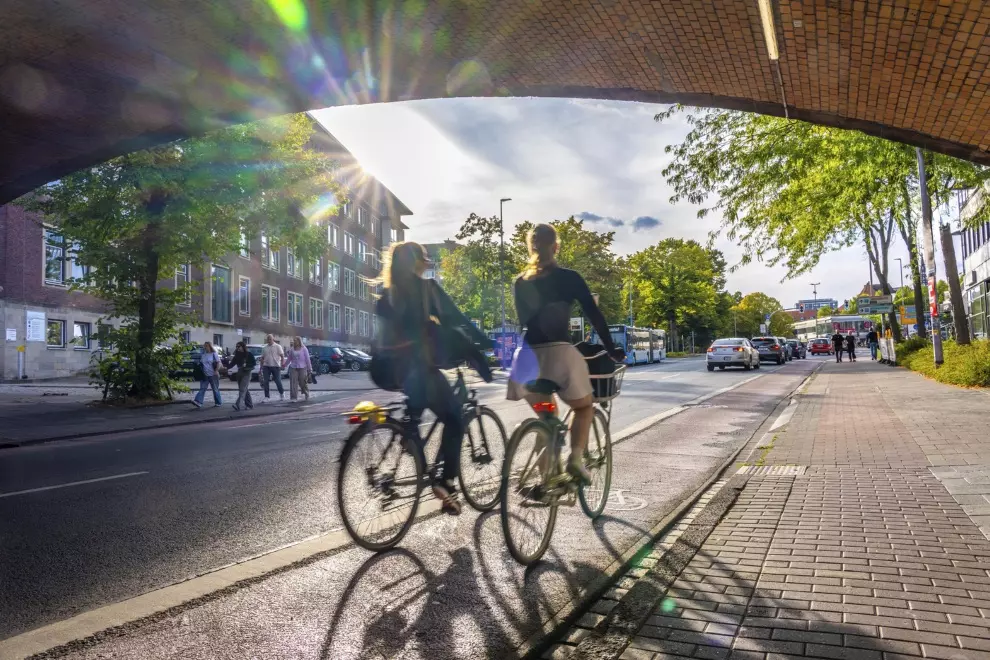
Cyclists don’t.
Cyclists treat riding the same way they treat walking somewhere, making tea, or brushing their teeth. It’s not special. It’s not dramatic. It’s just part of the day.
The difference between a person who rides a bike and a cyclist isn’t fitness, speed, or kilometres. It’s an identity shift. And once that shift happens, consistency stops being a struggle.
TL;DR: How to make cycling part of everyday life
To make cycling part of everyday life, stop treating rides as training sessions and start treating them as transport, routine, or mental reset. Short rides of 10–30 minutes still count, normal clothes are often enough, and consistency matters more than distance. The key shift is identity: cyclists don’t wait for perfect conditions — they build cycling into daily life by default.
(No problem, Google. You’re welcome.)
The real shift: Cyclist vs person who rides a bike
A person who rides a bike constantly negotiates with themselves. Do I have time for a proper ride? Is it worth getting changed? Does this even count if it’s short?
A cyclist asks one simpler question: can I do this by bike?
That single question removes friction. It turns cycling from a scheduled activity into a default option. And defaults are powerful.
Cyclists don’t rely on motivation. They rely on making cycling the easiest choice available.
Reframing rides: Not training, just movement
If every ride has to feel like training, most rides will never happen. Training implies structure, effort, and outcome. Everyday cycling works better when it’s reframed as movement.
Sometimes cycling is simply transport. Getting to work, to school, to the shop, or to meet someone. The purpose isn’t fitness, but movement happens anyway.
Sometimes cycling is escape. A short spin before dinner, a loop to clear your head, or ten quiet minutes riding nowhere in particular. No numbers required.
Sometimes cycling is routine. The same route, the same time, the same expectations. Routine may not be glamorous, but it’s how cycling becomes sustainable over years rather than weeks.
Once rides stop needing to justify themselves, they start happening more often.
Clothing mindset: You don’t always need “kit”
One of the biggest hidden barriers to everyday cycling is the belief that riding requires full cycling kit. Bib shorts, specific shoes, layered jerseys, and post-ride laundry quickly turn a simple decision into a logistical problem.
For many everyday rides, normal clothes are enough. Trainers work. A jacket you already own works. The less preparation required, the more likely the ride happens.
Frequent cyclists don’t always look like cyclists. They look like people who arrived by bike because it was the easiest option.
Save full kit for rides where it adds comfort or performance. Don’t make it a prerequisite.
Short rides still count
This deserves to be stated clearly. Short rides count.
A ten-minute ride counts. A fifteen-minute ride counts. Riding around the block counts.
Short rides reinforce habit, maintain movement, and keep cycling mentally close. They reduce the psychological distance between rides, which is often more important than fitness itself.
Consistency is built in minutes, not just kilometres. Cyclists accumulate movement quietly, day after day, without waiting for the perfect window.
Build the identity, not the schedule
Trying to “fit in” cycling usually fails. Life expands to fill the space around it.
Instead of asking when you will train, ask where cycling fits today. Replacing a car trip, choosing the bike by default, or adding a small loop is often enough.
Once cycling becomes normal, fitness follows without being forced.
Stop waiting for the right ride
Cycling doesn’t become part of your life because you ride more. You ride more because cycling becomes part of who you are. Start choosing the bike for ordinary moments.
That’s how cyclists are made.
FAQs
Do short rides really make a difference?
Yes. Short rides build habit, maintain baseline fitness, and keep cycling accessible. Over time, they often lead naturally to longer rides.
Do I need to wear cycling kit every time?
No. For short, easy rides, normal clothes are usually sufficient. Removing the kit barrier increases how often people ride.
Is riding for transport still “proper” cycling?
Yes. Transport riding increases frequency and embeds cycling into daily life, which matters more than occasional long rides.
How often should I ride to feel like a cyclist?
There is no fixed number. Many people feel the shift once cycling becomes a default option several times per week, even if the rides are short.