
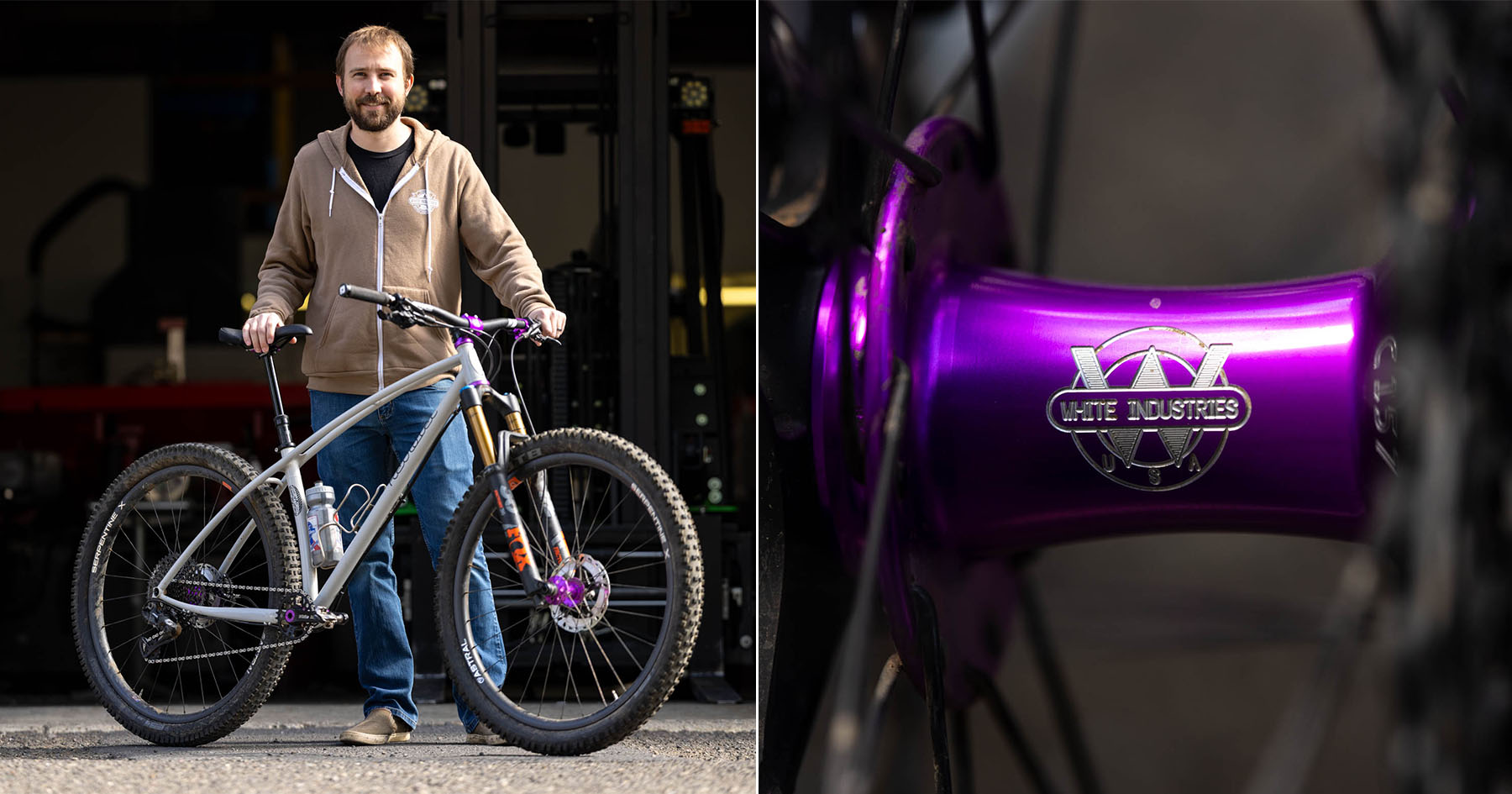
White Industries is a precision bicycle component manufacturer based in Sonoma County, California. Best known for its iconic polished cranks, White Industries is just a couple of years away from its 50th anniversary, an impressive milestone few companies of its size have reached. Miles spent a few days exploring the shop, getting to know the people, and learning about their strategies to keep relevant and productive. Find a massive gallery from his visit and learn all about White Industries here…
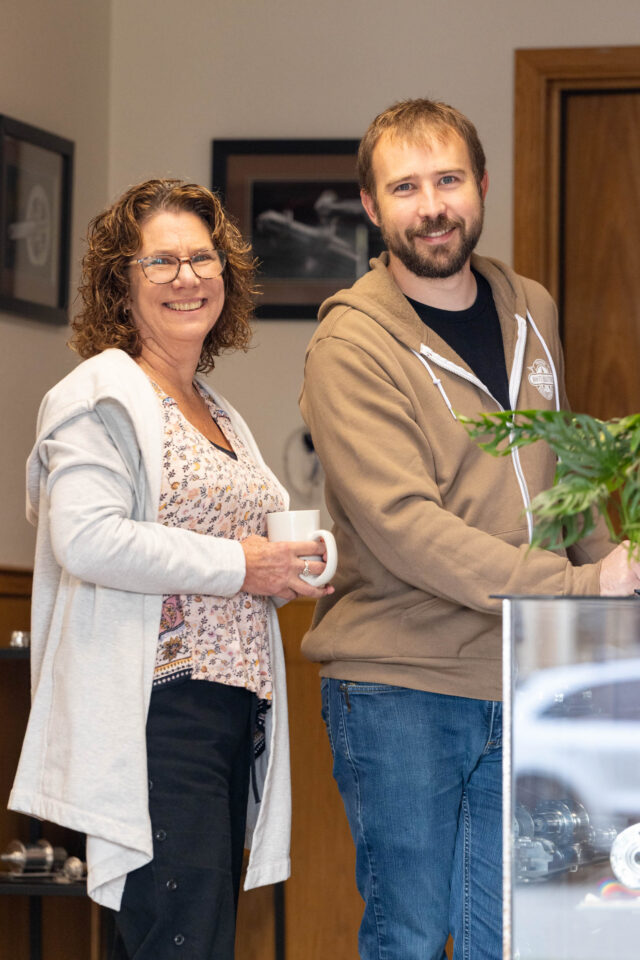
White Industries has always approached business with a people-first attitude, which I believe has played an important role in their success. Today, if you had an order or technical question, you could call their office and speak with someone deeply involved in the design and fabrication of their components. Take Lynette, also known as Wonder Woman. Lynette has been with White Industries for over 35 years and is the key to operations and management, but she has such in-depth knowledge of the product line that she can rattle off hub specs and answer compatibility questions without hesitation.
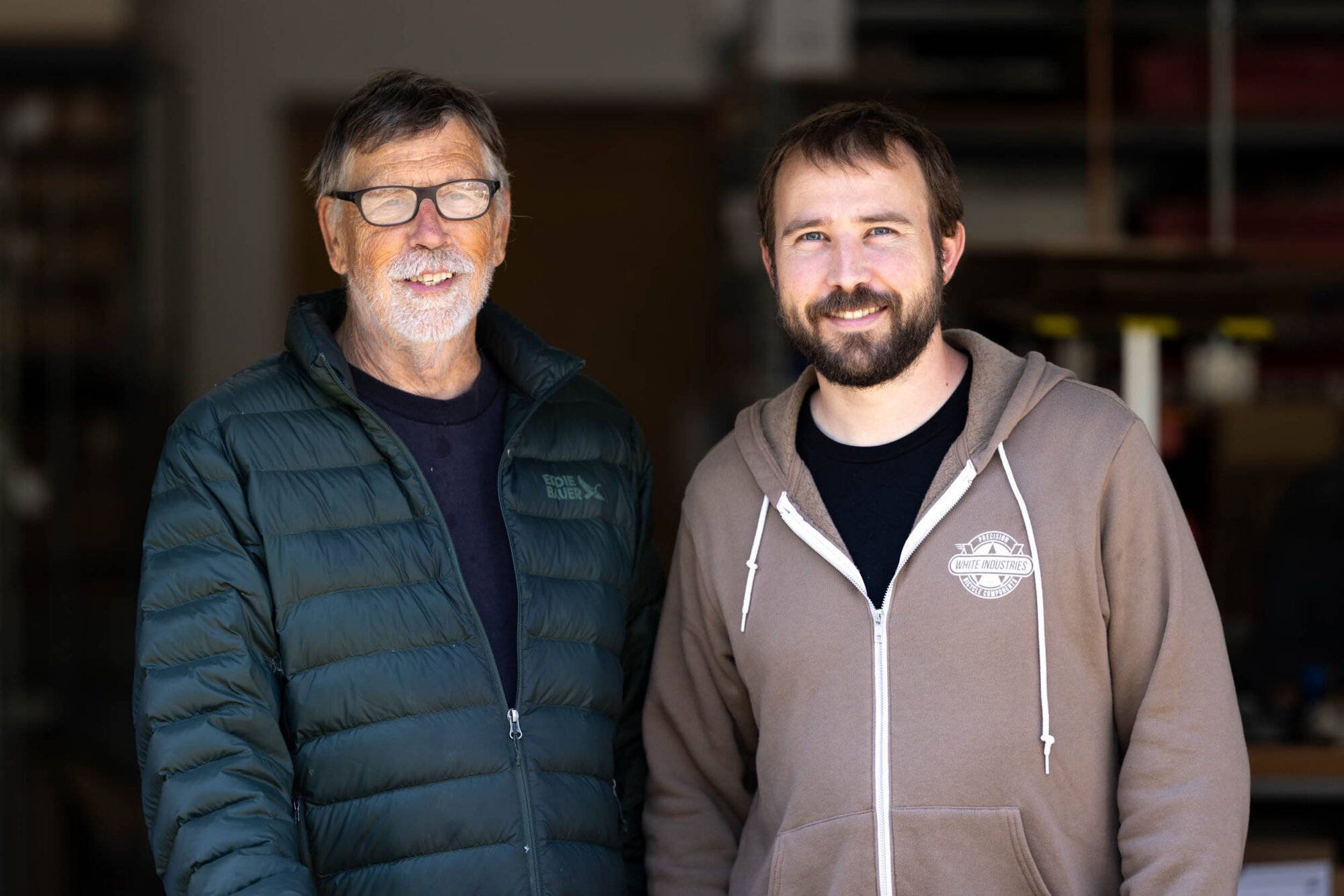
Doug White founded White Industries back in 1978, and although he’s technically retired, he continues to put decades of experience to use by programming and fixing machines. While I was visiting, Doug came in to compare some e-bike cranks to lock in a possible future design. From the short time I spent with Doug, it’s clear he’s a tinkerer, his sense of humor is dry, and he prefers to hide from the camera. Doug’s son, Alec White, has been working in the shop since he was four years old. He’s the company’s CEO, designer, and engineer, and he brings an infectious passion and obsession for details that seems to trickle down to everyone on the team. These days, there are over 20 employees working inside their shop, split between administrative and management, machining and production, and assembly and finishing.
Heather McFadden is the latest addition to the team, handling all of White Industries’ marketing, and is the person I spent most of my time with during my time in Sonoma County. Heather brings decades of experience in the cycling industry, but more importantly, she’s incredibly kind, goofy, and went out of her way to ensure I enjoyed my visit. Aside from hours spent touring the shop and production floor, Heather also took me for a ride in Annadel Park and provided information about poison oak (and a shower) after I carelessly tried to get the cool angle while shooting some photos. The entire team cares, and it shows.
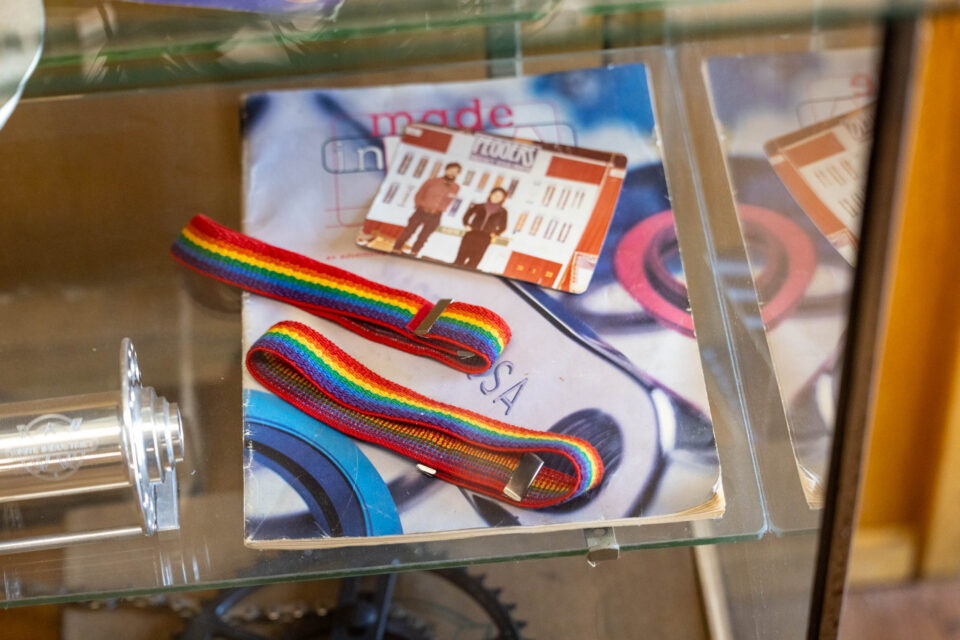
White Industries’ first official product, Peggers, was a multi-colored elastic band with Velcro to keep your right pant leg from getting stuck in your chain or marked up with grease. Doug apparently sold thousands of Peggers, and for 10 years, that was White Industries’ only product. In 1987, Doug’s daughter was born, and selling Peggers wasn’t going to cut it. In the late 1980s, White Industries really started to make their mark in the mountain bike world with their first sealed-bearing titanium spindle bottom bracket, a crank spider that allowed riders to bolt on a (then) readily available 18-23T Suntour freewheel cog to their cranks for lower gearing, and in the early 1990s, they released the Ti Cassette rear hub and Tracker front hub. The rear hub was the lightest on the market, and the front hub featured an oversized design to compete with the era’s notoriously flexible suspension forks.

The second time White Industries could have failed, aside from reinventing the brand after Peggers, was during what White Industries lovingly refers to as the “CNC craze” in the 1990s. CNC parts were everywhere, leading to fierce competition, but Doug refused to stay stagnant or give up. He kept pushing forward with several innovative product launches, one of the most notable being the LMDS (Linear Motion Derailleur System) drivetrain, which used a motorcycle-inspired push/pull cable system and a twist-style shifter. Many of the brands that just jumped on the CNC bandwagon faded away, and Doug was forced to adapt once again. With singlespeed riding on the rise, he designed the iconic singlespeed ENO freewheel and ENO eccentric singlespeed hub.
Doug refused to let White Industries fail, and as the business grew, the number of employees who relied on a paycheck increased, putting pressure on him to maintain a healthy, profitable business. With help from Alec, White Industries continued to refine and upgrade the product line. Today, the brand has a massive collection of hubs, cranks, chainrings, bottom brackets, headsets, freewheels, cogs, small parts, and more. In 2023, White Industries acquired its “sister” wheel companies, Rolf Prima and Astral Cycling, of Eugene, Oregon. While Astral and Rolf Prima continue to make their USA-built rims in Oregon and operate as separate brands, the three are technically all owned by the same people who built White Industries into what it is today.
Adapt or Die
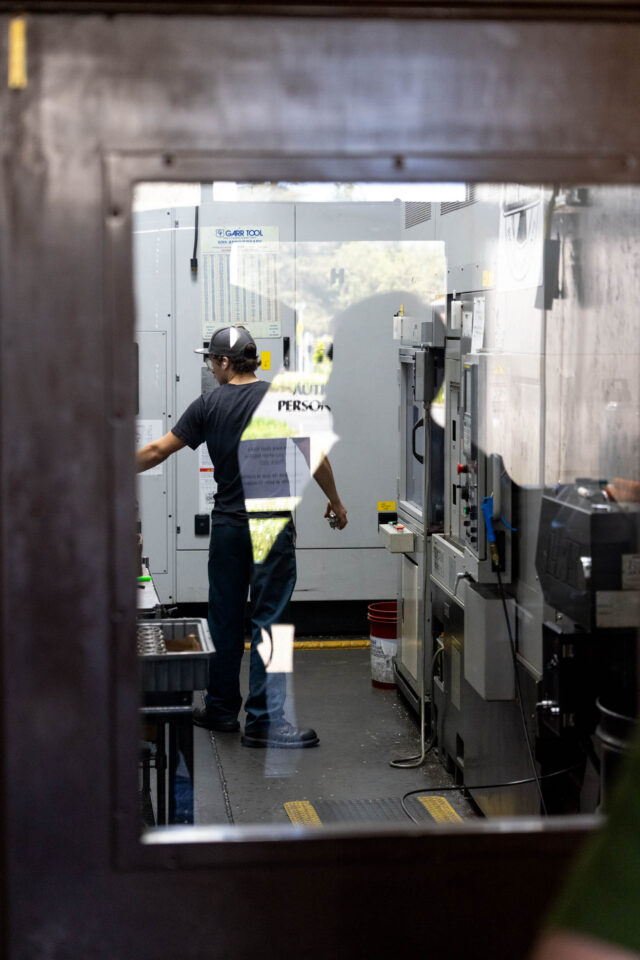
As we walked through the endless maze of massive machines that fabricate all their parts, Alec echoed his father’s vision. “Adapt or die,” is how he explained it. If White Industries doesn’t find ways to improve processes and increase efficiency, then it won’t be able to remain competitive or take on new opportunities. Alec sees their ability to step into product categories they aren’t currently in as what sets them apart from other US-based component manufacturers. A recent example of being open to taking on new projects is the White Industries x Moots Titanium Cranks and the limited batch of top caps.
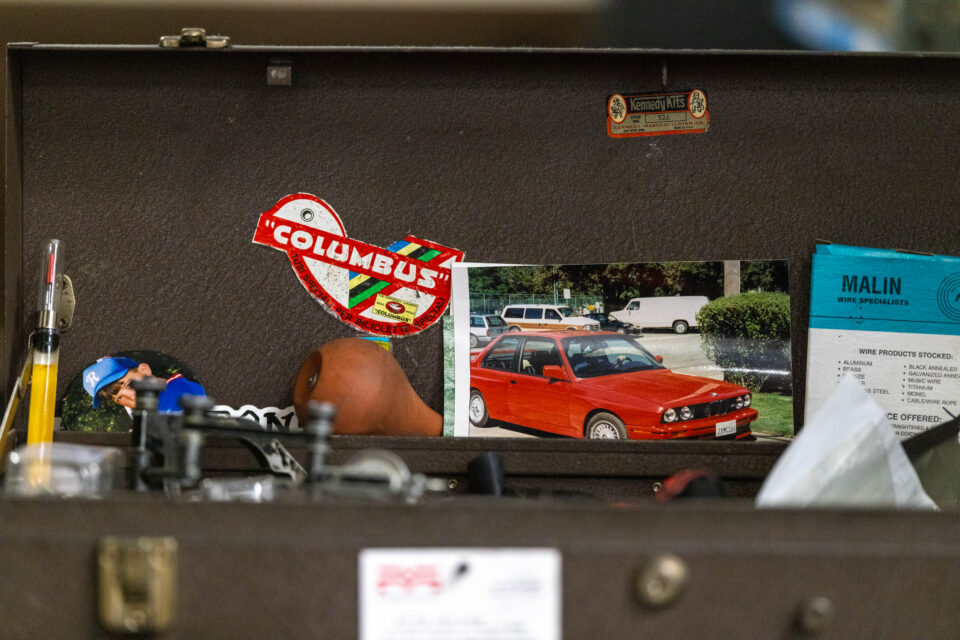
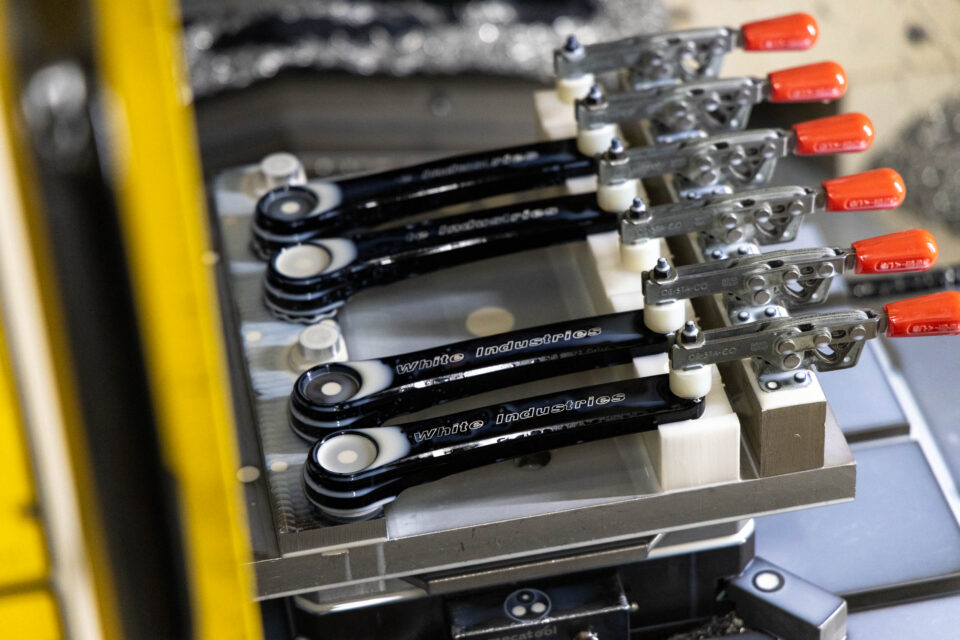
Alec credited his dad for his desire to keep pushing things forward and for being a “huge machine nerd.” Doug still gets excited when he learns about new machines and the features they offer, such as robot arms and built-in conveyors. Alec pointed at a massive machine, “Fifteen years later, and that machine is still here, drilling and engraving all of our hub shells, bottom brackets, and all kinds of stuff. Frankly, without it, we wouldn’t be where we are today.”
Before they buy any machines, they take a good look at their current processes, scrutinize everything, see what the new machine can offer, and also consider what they might lose. There has been some trial and error as well, as they learn about new technologies and which machines are best suited. As the business itself has evolved, so has Alec and Doug’s understanding of modern machining and fabrication. They’ve grown alongside each other.
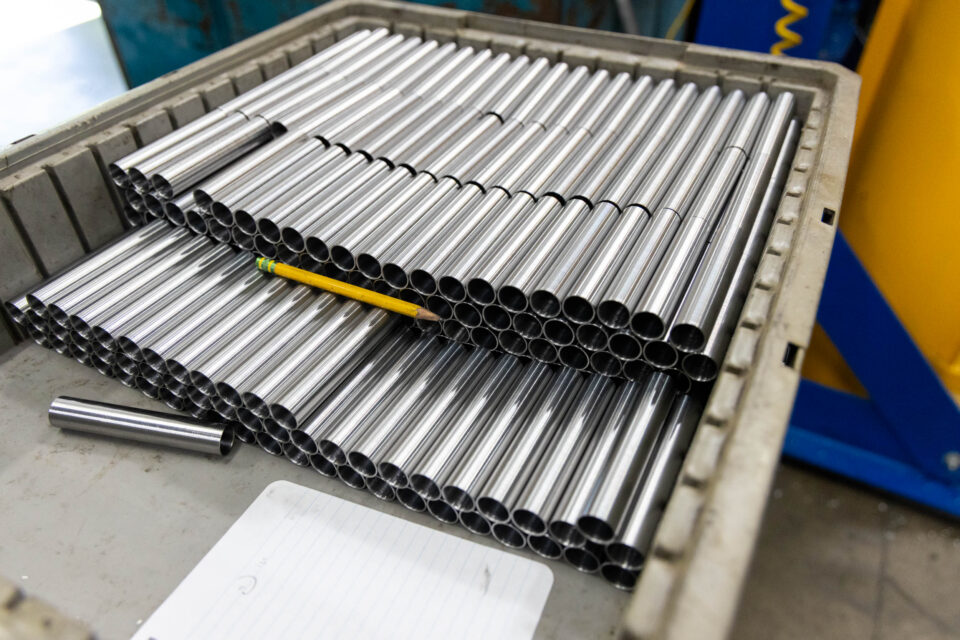
One example of increasing efficiency is reducing the number of operations, or steps, to fabricate a component. The freehub bodies used to move through four machines, but they’ve been able to reduce that to just one. Square-taper spindles used to require five or six operations due to multiple flips to machine both ends and the center section, but now they require only two machines. Narrow-wide chainrings will soon be reduced from three to two machines. All anodized White Industries’ parts are machined in-house, sent out for anodization, and then returned to the shop for engraving, which Alec explains adds some complexity and additional steps.
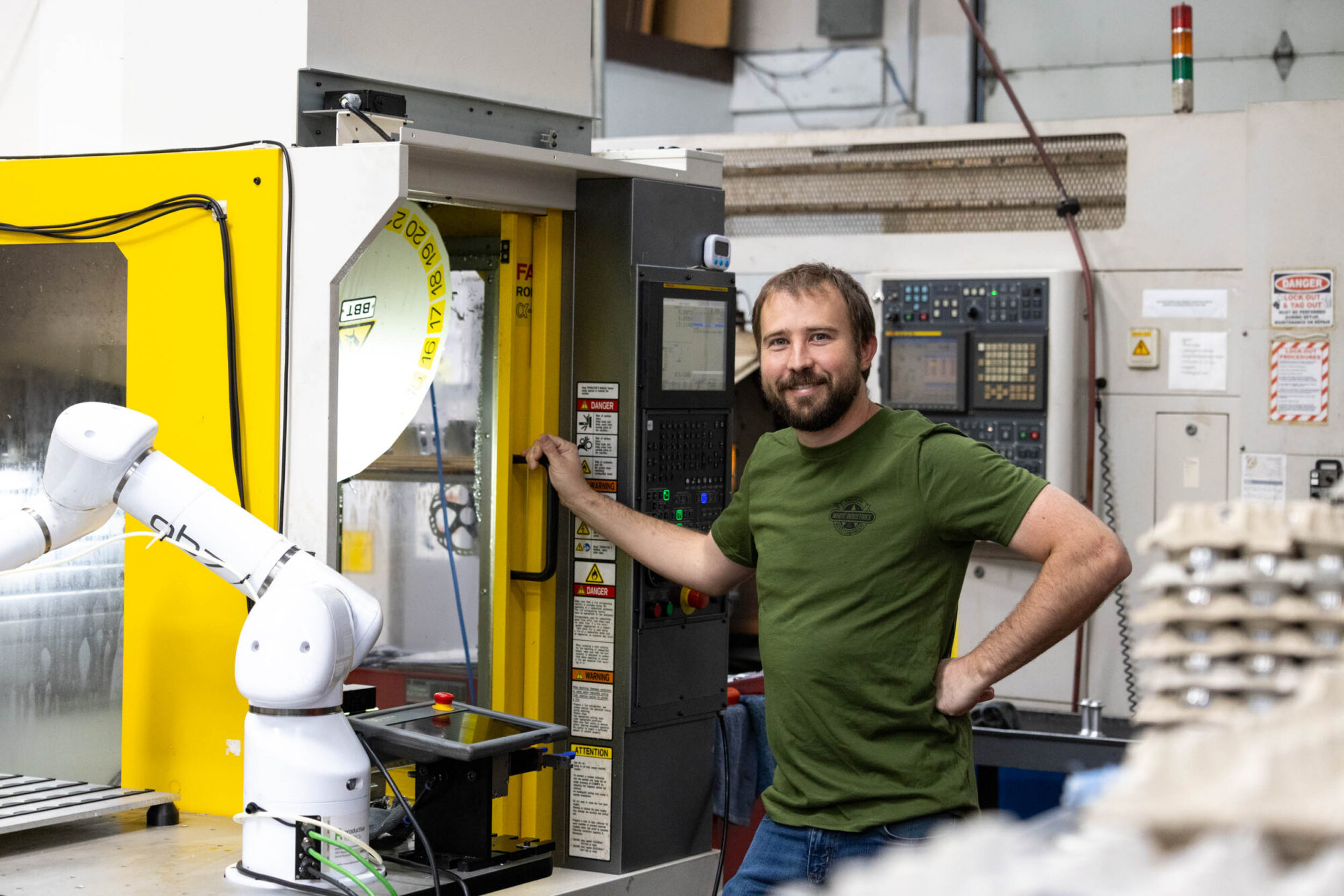
They’ve brought on these NASA-looking robot arms, programmed to assist with repetitive tasks like loading and unloading parts into various machines. Tam, one of the employees on the production side has a day job in machine operations and programming, and was programming the robot to pick up a bottom bracket shell, open the door to the CNC mill, pick up the finished part (it has two hands), place the part that’s ready to be machined, close the sliding door, and then, no lie, press the human-sized green GO button to start the machine. My first thought was that the robot was taking away a human’s job, but Alec explained that adding specific automated processes just allows their employees to focus on more important, less repetitive tasks, rather than replacing someone. The addition of robots doesn’t necessarily mean lower prices for the end consumer, but it does mean they don’t have to increase their prices and that their employees have better, more enjoyable jobs.
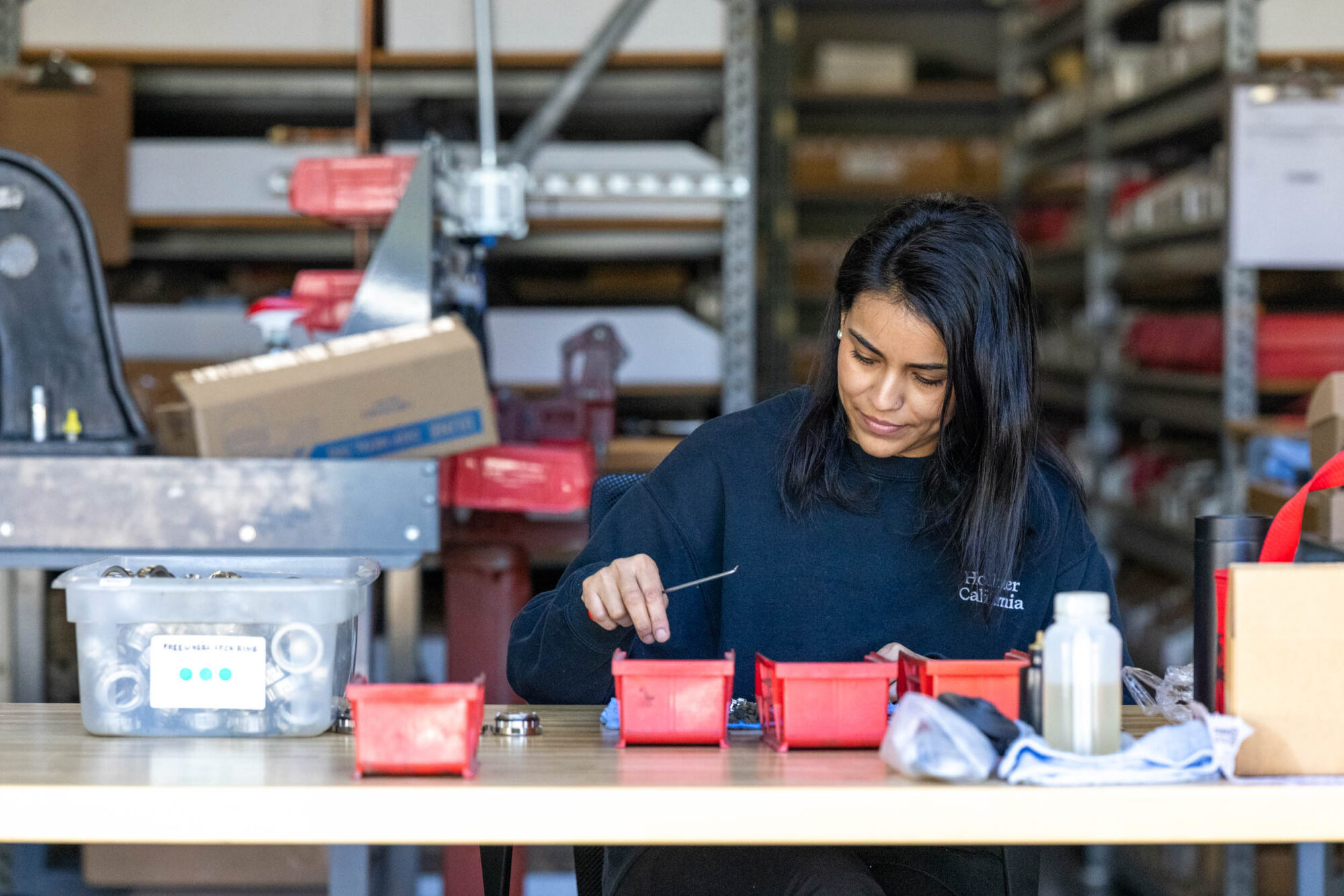
I asked Alec where artificial intelligence fits into the business, and he explained there are places where it makes sense to use AI and places where it doesn’t. Where it does make sense, in Alec’s eyes, is on the programming side, which can reduce the monotonous clicking and copying that are part of writing programs for the machines. “It’s like creating a rough draft, and then you go through and take out a bunch of dumb shit it said.” There are new programs coming out that have the potential to help them jump ahead by aiding with tool selection, evaluating the geometry of the part, and catching any impossible design elements. Alec has a hard “no” when it comes to using AI for customer service. “People should be talking to people, particularly when they have a problem and need help.”
Something that surprised me was White Industries’ Kanban inventory management system, or a just-in-time (JIT) system, which means they don’t have a live, digital inventory in a computer somewhere to tell them how many hubs or chainrings they have left. A Kanban system, similar to what Uriel at Austere Manufacturing uses and preaches, uses visual signals (often cards) that notify the business to replenish stock when needed, essentially reducing waste and overproduction.
Instead of a “push” system where you forecast demand and produce a specific number of products, Alec has embraced a “pull” system that determines production based on past sales. For example, “We sold 50 chainrings, so let’s make some more.” They sometimes run out of inventory, but it’s usually caused by two dealers ordering large quantities at the same time. They have a system in place to prioritize what’s needed in the production schedule.

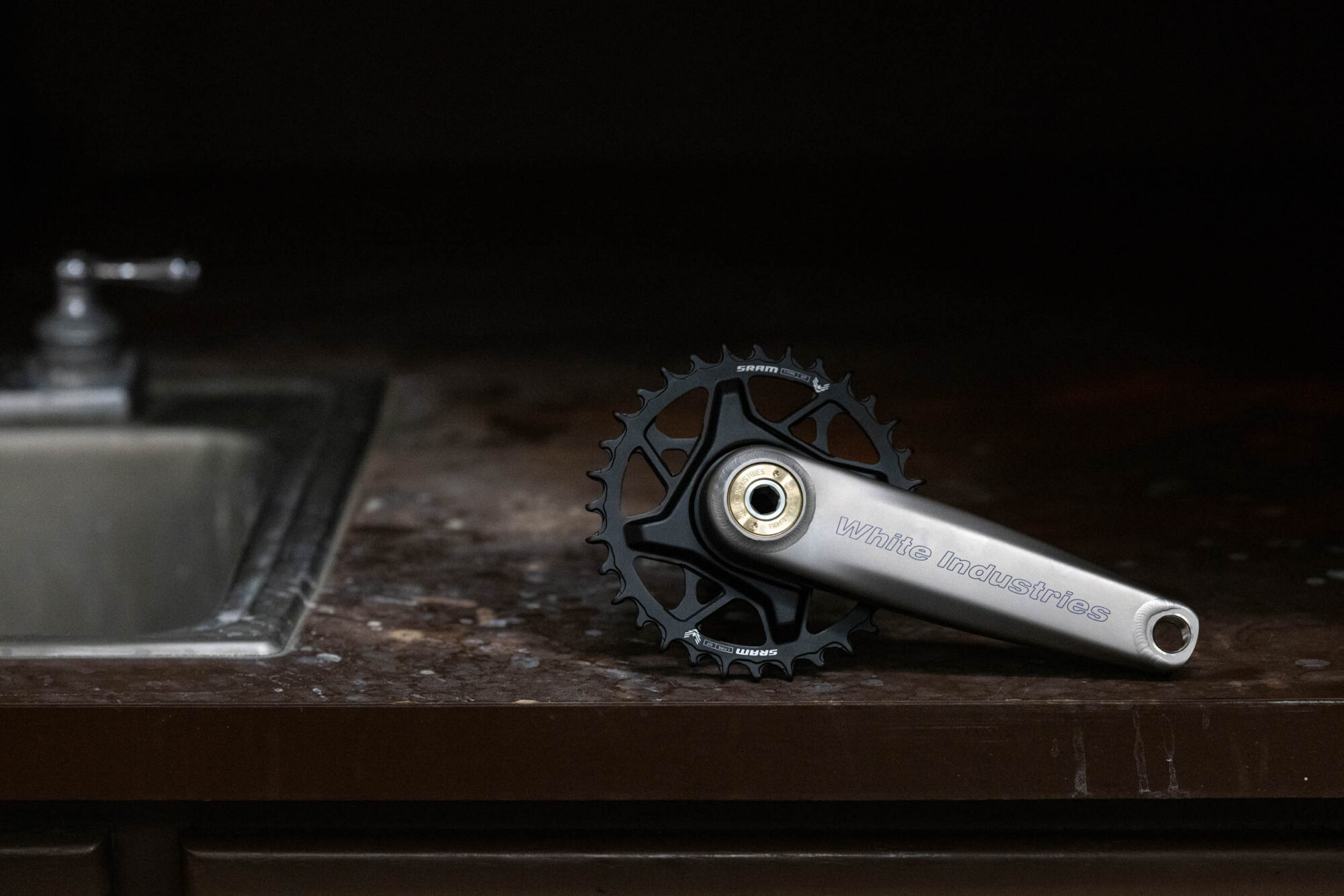
Right before the 2026 Sea Otter Classic, White Industries released its first titanium crankset, designed and fabricated in the United States as a collaboration among three US-based manufacturing specialists: Brunk Industries, White Industries, and Moots. I wondered how challenging it was to release a product that relies on three different shops, instead of doing everything in-house, which is how they are used to doing things.
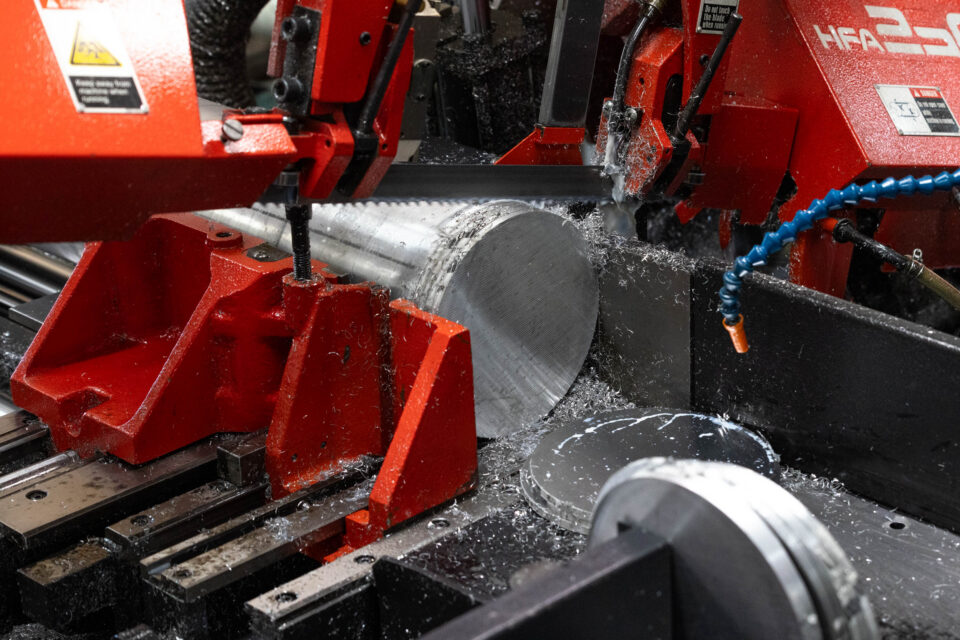
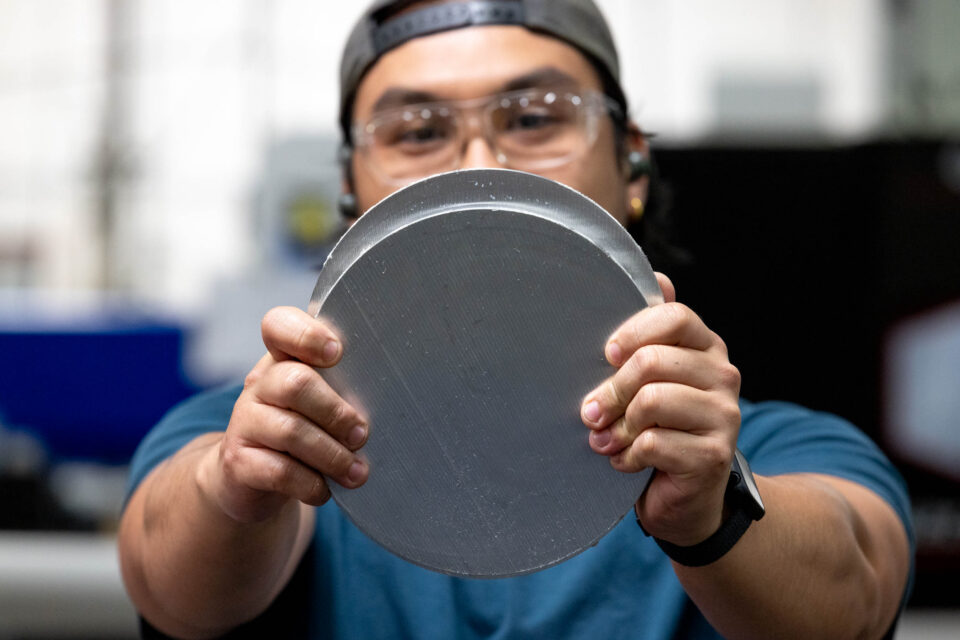
Alec explained they learned a lot about titanium as a material, including the purity of welds and how the material reacts and changes after welding. Titanium has to be cleaned thoroughly, so they made sure they did their part by providing Moots with highly clean machined components to improve overall efficiency.
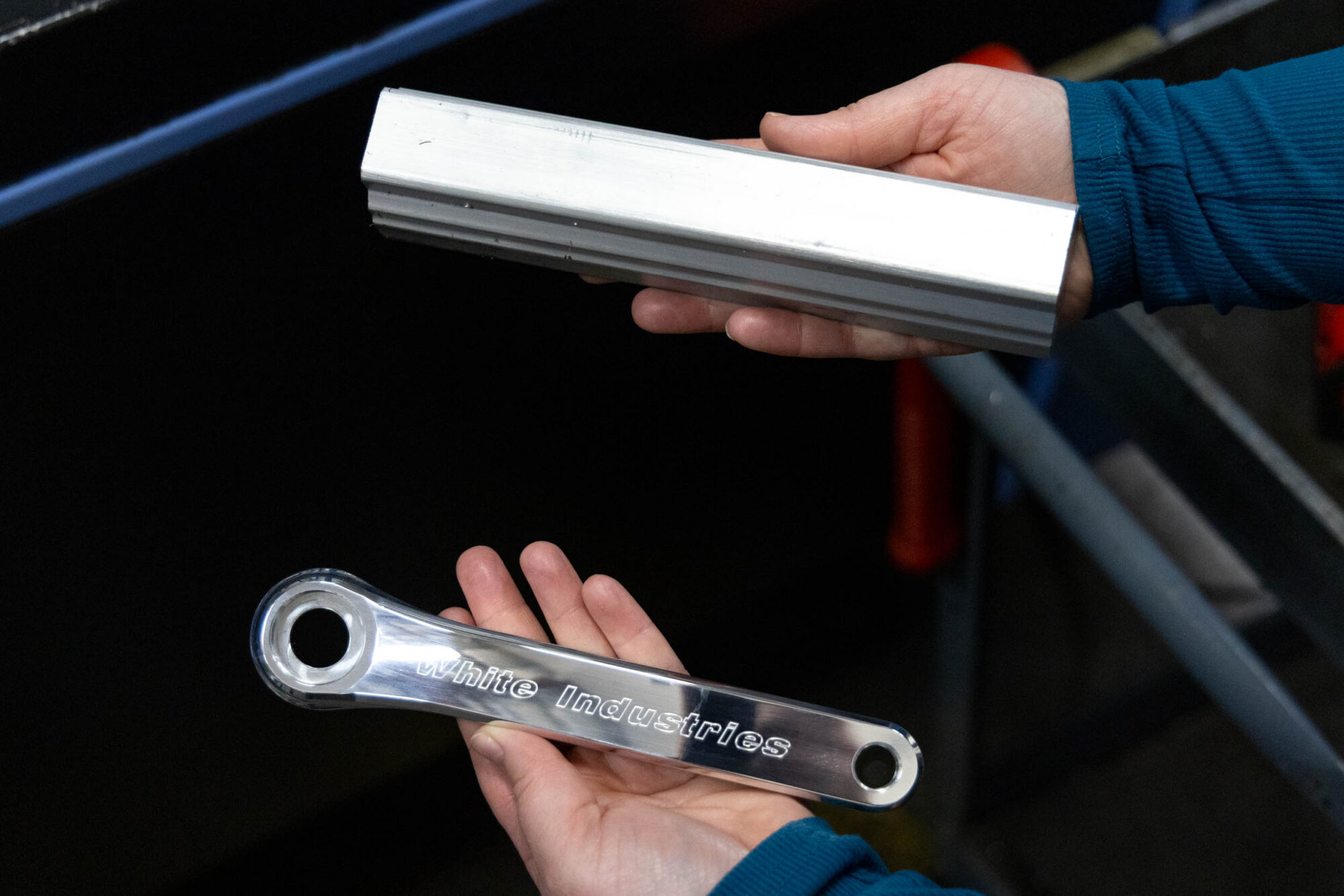
There’s also the customer expectations piece: normally, if a project takes a few weeks longer, it was probably their decision, but now, if they delay, that impacts Moots and Brunk Industries, and that trickles down to the customer. The White Industries x Moots Titanium crankset costs $1,349 and is available to purchase directly from White Industries or Moots in a variety of configurations, crank lengths, and axle sizes. I already shared my first look at the cranks, which you can find here.
It Takes a Team
Something that stood out during my visit was the general positive vibe and camaraderie in the workshop. Despite being a pretty serious operation, with extremely expensive machines producing extremely high-end bicycle components, Alec and Doug (and the rest of the team) have created an enjoyable, inclusive atmosphere that celebrates their employees’ strengths and differences.
There were signs of personalized work stations, including “Karen’s area” showcasing artwork from her daughter and a basket of treats for everyone, and most of the machines have their own goofy names, like Marisa Tomei, Sugami Sr. and Sugami Jr., Buffy the polishing machine (which came pre-named from the previous owner), and another massive polishing machine named Wall-E, who’s nearly the size of a two car garage. I appreciate some playfulness and silliness in what can sometimes feel like an overly serious industry full of big bikes, big jumps, big beers, and bros. White Industries is anything but bro-y.
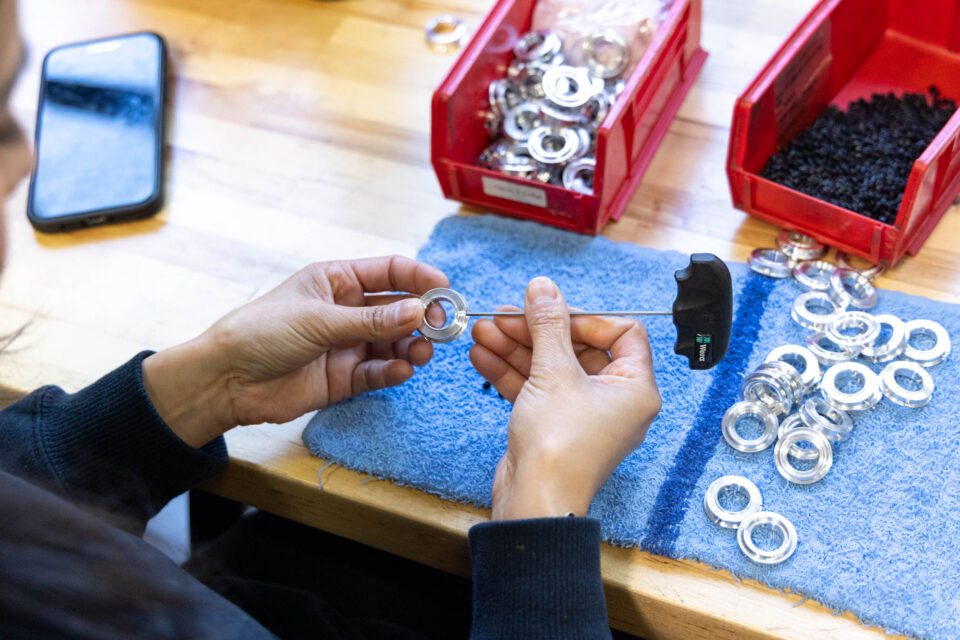

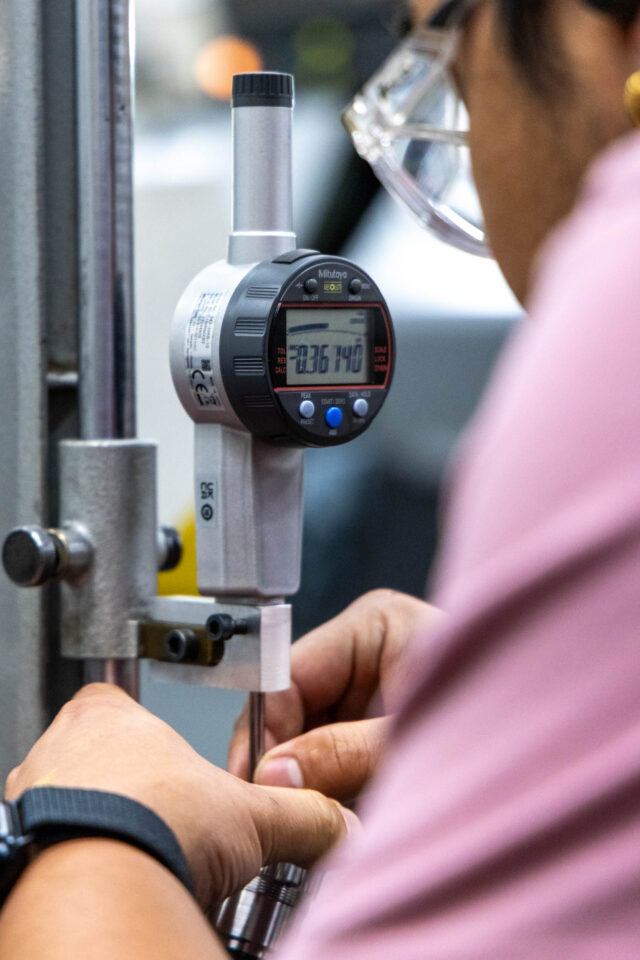
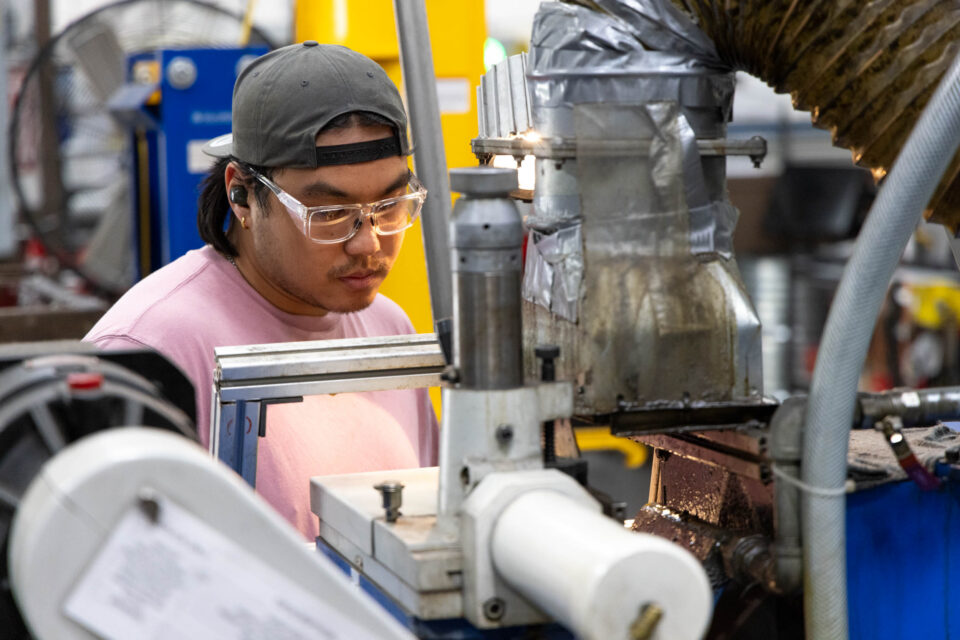
Instead of finding bike people who understand the industry, Alec and Doug have found a passionate, committed group of employees eager to learn. RJ, an employee at White Industries, is a perfect example of this. Before his current role, he installed air conditioners, which he described as hard, sometimes dangerous work, with an interesting work environment. Before that, RJ worked at a hardware store, which felt mellow in comparison, but although there has been some crossover, most of what he does now has been taught by Alec.
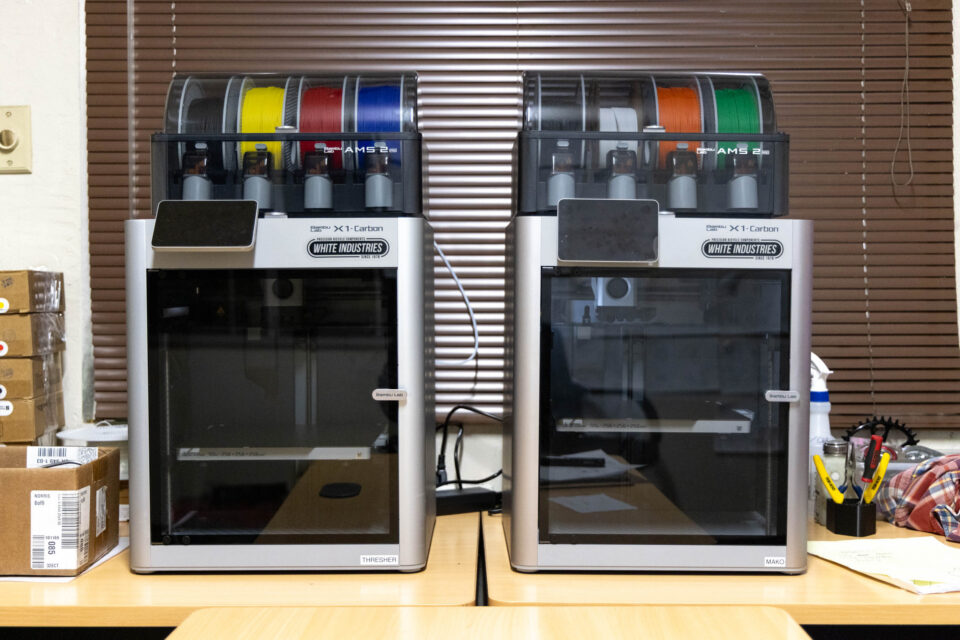
RJ is a true jack of all trades. He is in charge of research and development and quality control; he runs the laser, CAD work, and a few machines out on the floor. He has also been doing a lot of rapid prototyping with their 3D printers, designing and producing mock-ups, fixtures for around the shop, and useful bits and bobs. RJ said he was initially apprehensive about using SolidWorks, a popular program for creating 3D product designs, because he had no idea what he was doing. After a lot of practice and repetition, he eventually got the hang of it, and he’s now at the point where if he can imagine something, he can create it. “You know, if I hadn’t got this job, I probably would have never even thought of learning it,” RJ explained.

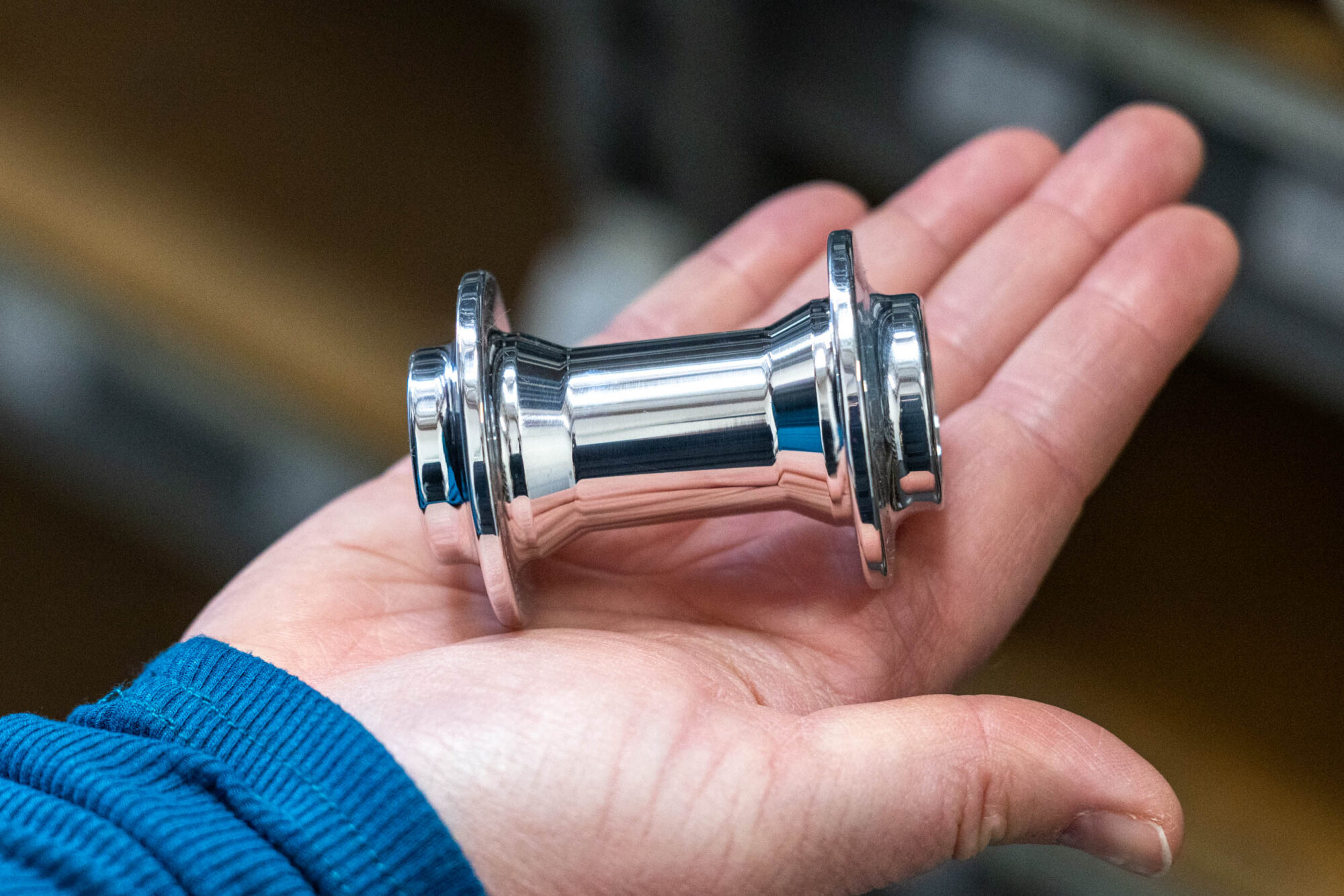
RJ mentioned how unique 3D printing is, because unlike subtractive manufacturing, which starts with a large block of material and removes material to get the desired item, 3D printing is additive. Instead of removing material, 3D printing builds it from nothing, forcing RJ to think in reverse. RJ has been working with White Industries for almost five years now, and Heather fondly explained they “hit the jackpot with RJ. He has one of those minds where he can just look at it and then go make it. It’s really impressive.”
Alec’s Retrotec
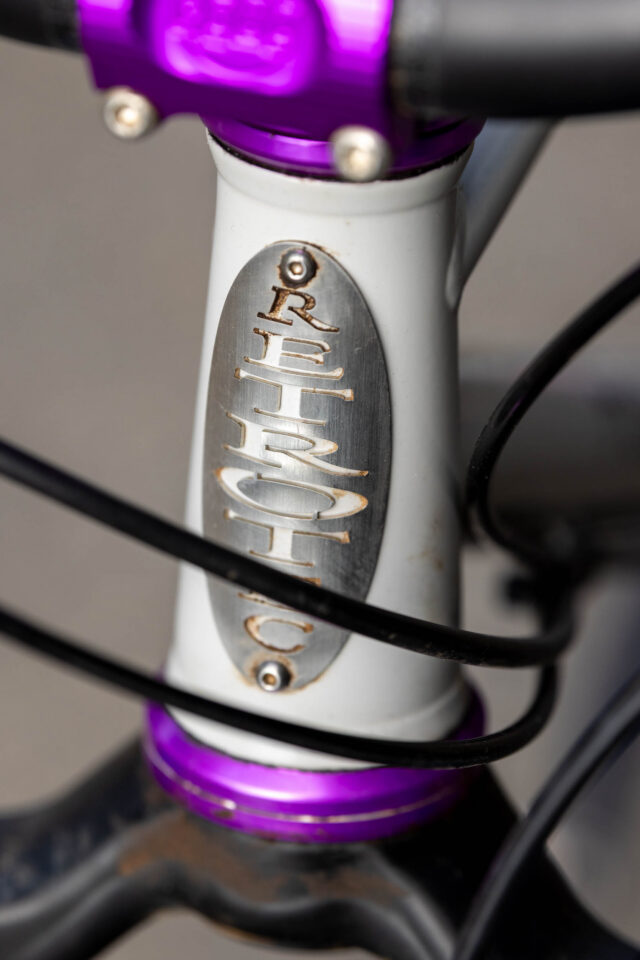
Alec’s Retrotec was built by Curtis Inglis in Napa, California, in spring 2020. It was partially made for the ENVE foundation wheels launch, but mostly because Alec’s other hardtail felt outdated (72.5° head angle), and he had been invited on a MTB trip with a few framebuilder friends to Sedona. When I asked Alec what he primarily uses it for, he responded, “For me, it is just a mountain bike, and I haven’t really used it for anything else. I mostly ride it either at Helen Putnam Park here in Petaluma or at Annadel State Park in Santa Rosa.”
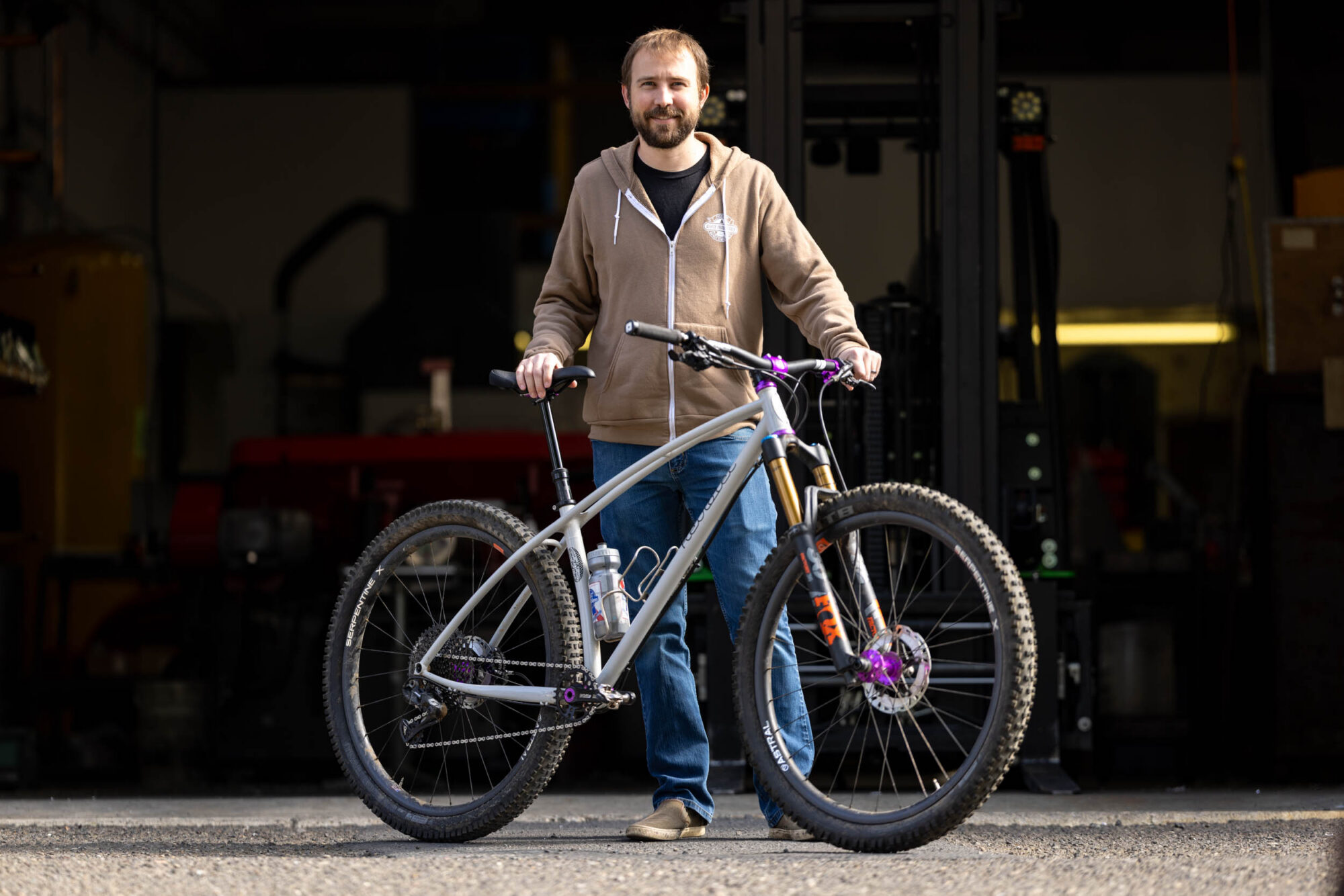
When Curtis was building the bike, they referenced the full-suspension bike Alec had (and still has) to get the fit and geometry pretty similar. Alec got along well with that bike, so having a comparable fit was a huge bonus. The only problem is when he’s riding this bike, “the front sometimes writes a check the back can’t cash,” as Alec puts it. As expected, it’s kitted out with basically all the White Industries parts they offered at the time: cranks, headset, hubs, and bottom bracket.

Ed’s Retrotec
Ed is White Industries’ shop manager, a machinist, and programmer. He joined the team in 2015 after working for a company that made parts for multi-million-dollar diaper-making machines. Someone’s gotta do it, right? His personal Retrotec matches his personality perfectly: quirky, fun, and colorful. In fact, Heather said his nickname at the shop is “Sprinkles,” which explains why he reached for the sprinkled donut I delivered for the crew and why his Retrotec is so vibrant.
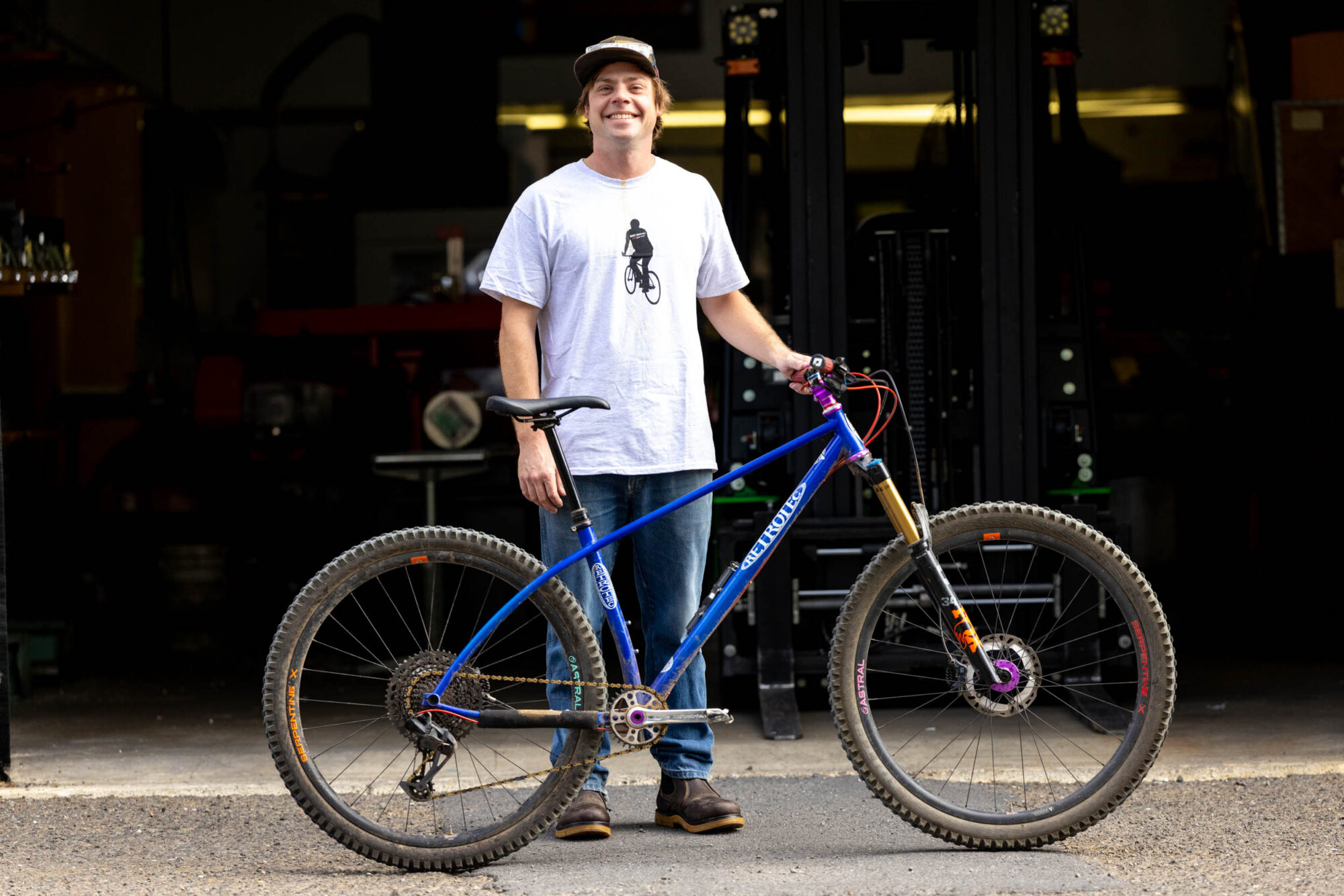
Ed’s Retrotec features every color imaginable, with mismatched White Industries parts, a rainbow of vibrant hues, and what is otherwise a pretty standard build. It’s built up around a mechanical SRAM Eagle drivetrain, Shimano SLX brakes, Astral Serpentine rims, and a Paul stem. White Industries parts include the cranks, hubs, headset, and bottom bracket. The now-faded hubs are a telltale sign that Ed rides his bikes, and the dizzying assortment of decal colors and anodized bits reminds us that this should be fun.
Doug’s Inglis E-Road Bike
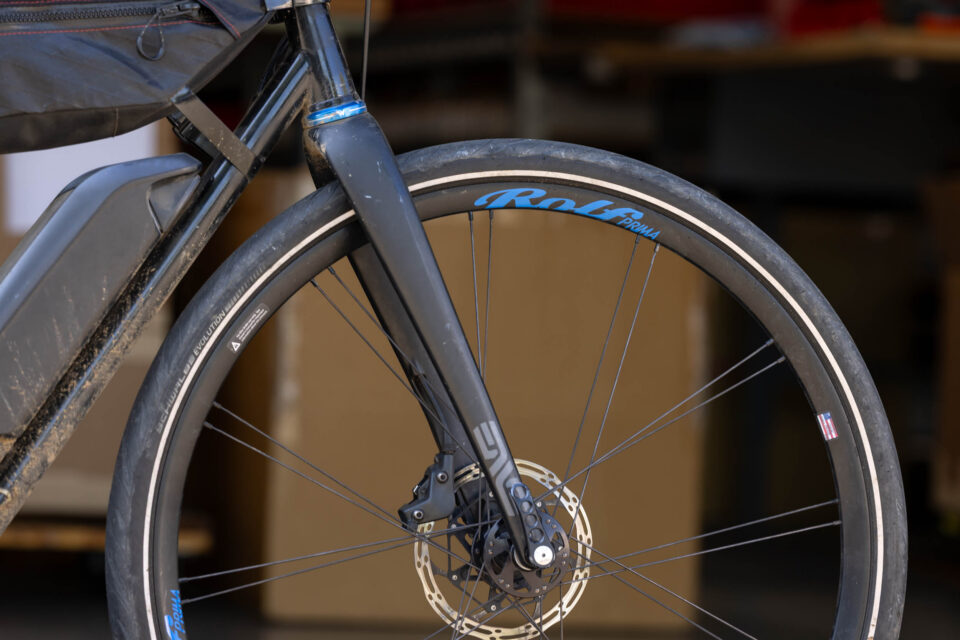
Doug’s electric-assist road bike is the second e-bike he’s commissioned from Curtis Inglis. The first one used a Shimano STEPS drive unit, but he wanted the higher speed for his 50-mile commute to the shop, so this bike uses a Bosch system. When Doug was younger, he was super fit and could hammer out long rides, but as he has gotten older, doing that has become less fun. Introducing electric-assist has re-ignited that spark, and he wants to ride again. Doug explained, “Generally, I try to ride my 50-mile commute once a week. Plus fun road rides in the area. It has great handling, a smooth ride, and it allows me to ride at the speeds I was accustomed to when I was in my 20s and 30s!”
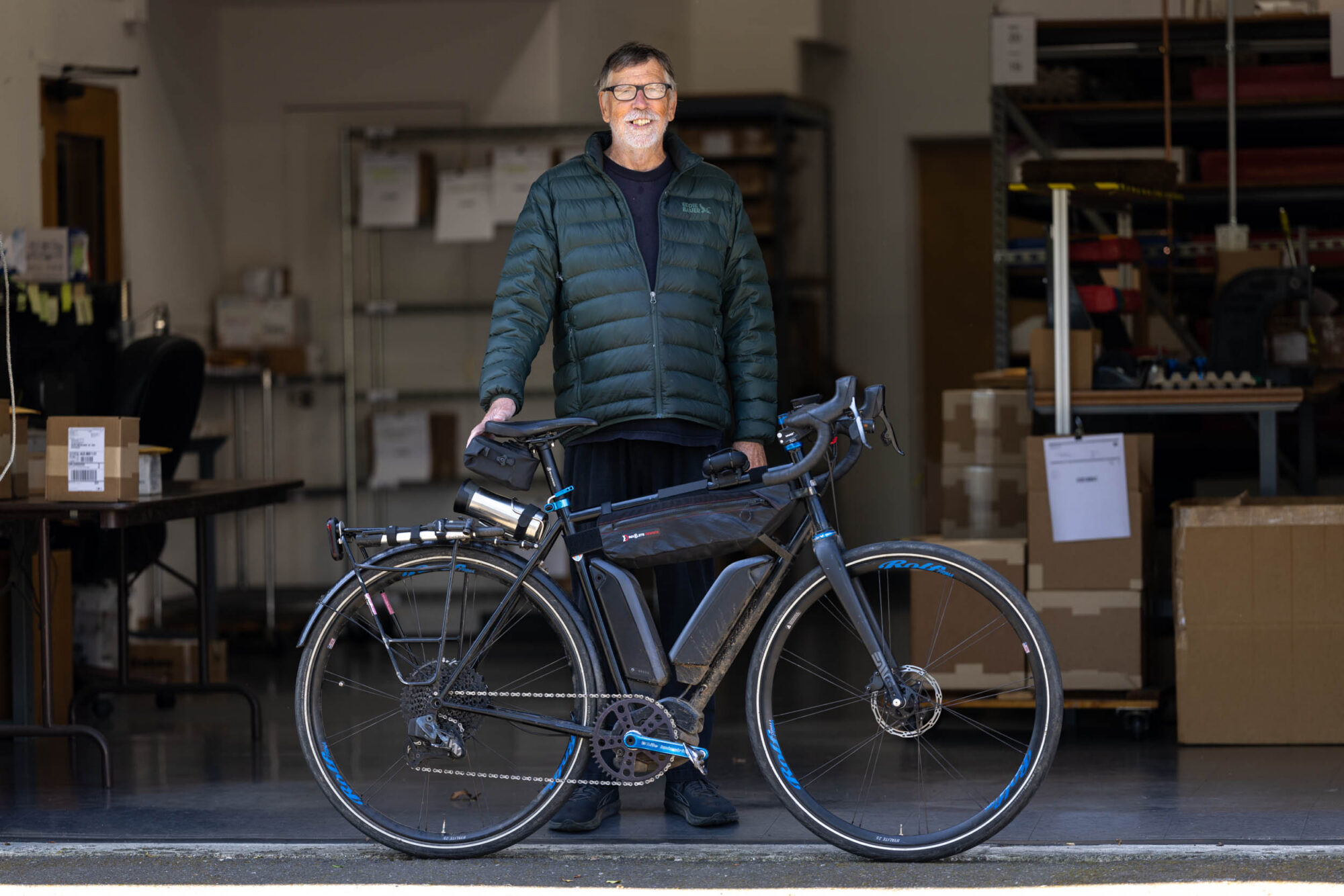
Since it was originally built for the canceled 2020 North American Handmade Bicycle Show (NAHBS), the bike has as many White Industries parts as possible. It features some special White Industries cranks they made years ago to accommodate the different motor covers and tolerances of aftermarket e-bike cranks. Doug’s blue cranks fit tight and keep the distance between the pedals in check. The cranks aren’t available right now, but it sounds like that could potentially change.
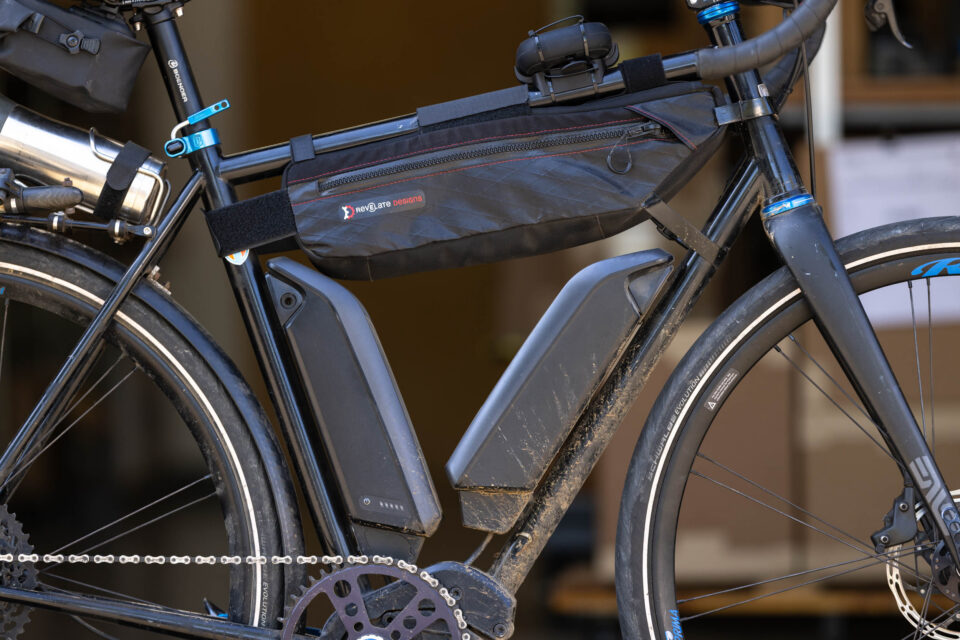
Doug pointed out the clip-on Garmin radar unit on the back of his rack, saying it has been a game-changer to alert him when vehicles are approaching from behind. “I won’t ride without it,” he said. He has thousands of songs cued up on his phone as well, and said, “I can’t ride without my boomer tunes, man.”
Doug’s Homemade 1975 20″ MTB
Covered in rust and dust, Doug made his peculiar-looking 20-inch mountain bike in 1975. He was a framebuilder at the time and had been riding trails in his backyard for a couple of years. The cool bikes at the time were the soon-to-be-famous klunker setups. Doug thought they were way too klunky and heavy, and designed his own bike instead.
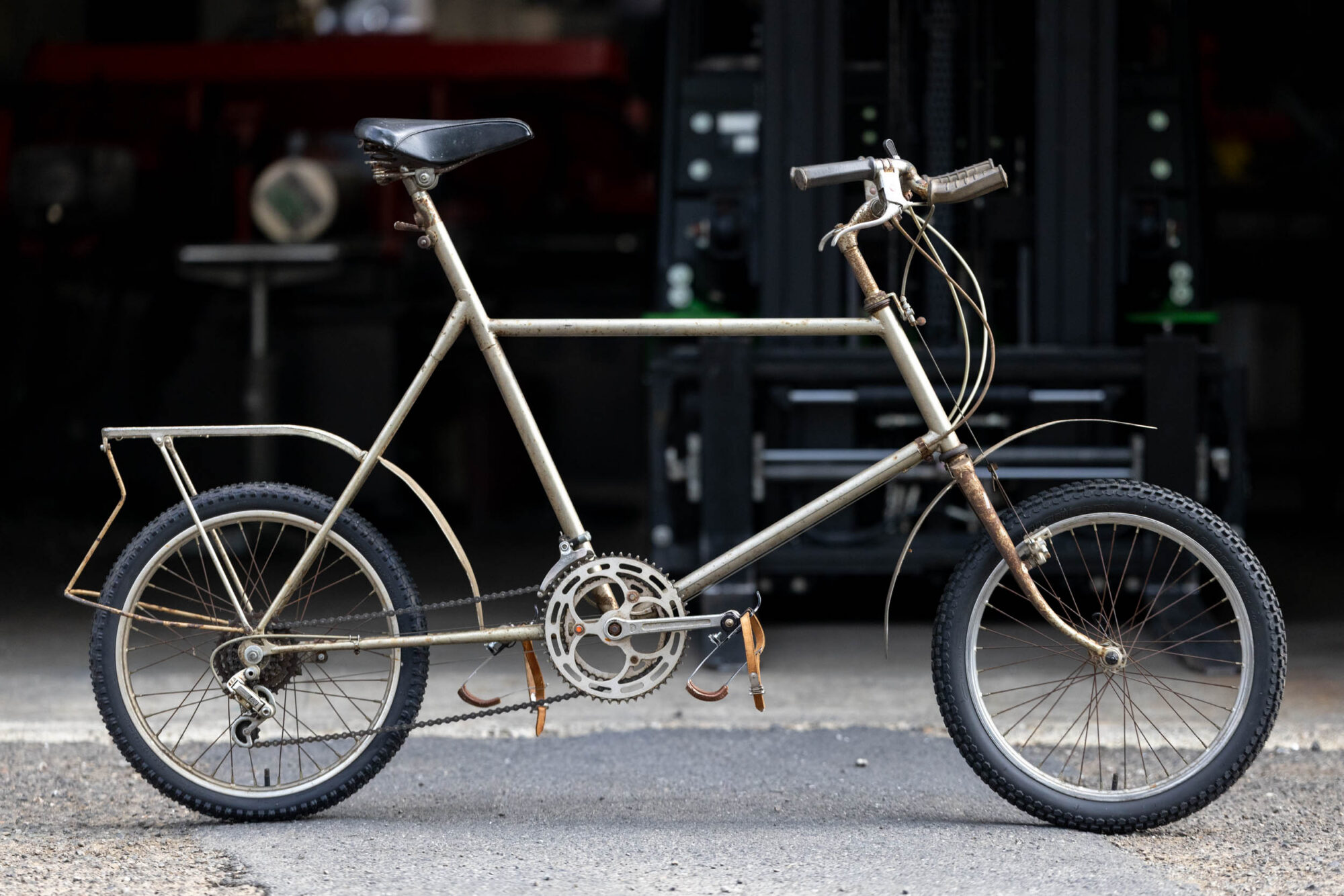
He grabbed a tubeset and got to work. The result is a unique 20-inch-wheeled bike with a super long wheelbase and slack head tube and seat tube. He landed on 20-inch wheels because they were the only alloy rims available at the time. He rode this setup for a number of years on California’s coast.
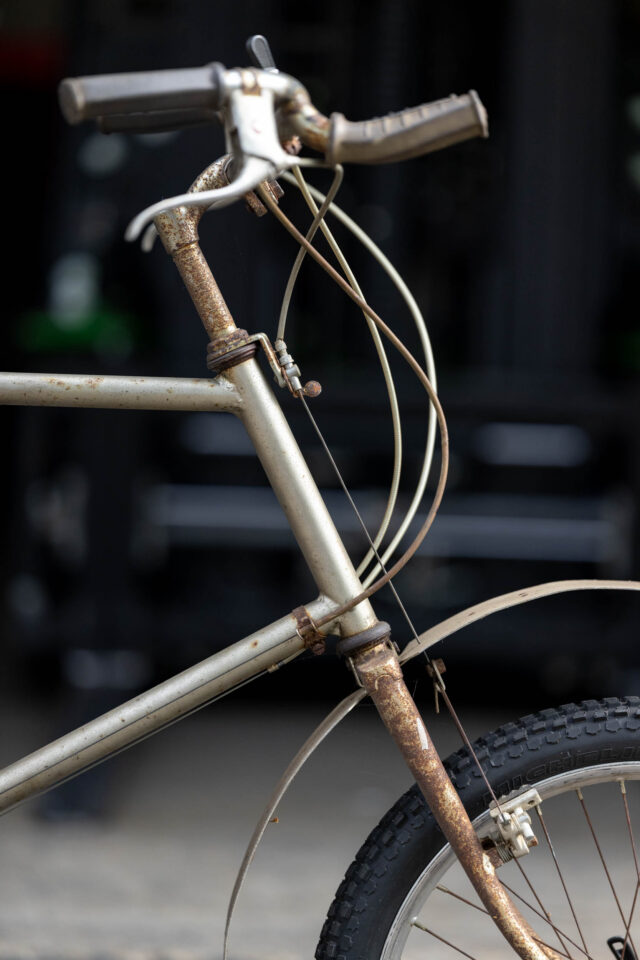

The bike has plenty of interesting details, such as the swept-back handlebars with integrated inner bar ends, the ultra-clean rear rack, fenders, and massive chainstays. Before my visit, I didn’t know about Doug’s framebuilding past. In 1973, he teamed up with Phil Brown to make bikes under the Brown & White Cycles name. Doug was the builder and made 30-35 frames over a few years before calling it quits after a “particularly needy customer.” It was after this that Peggers was born.
Still Moving Forward
Much of White Industries’ success is built on its ability to pivot and adapt. The only evidence of the CNC-crazed bike component era are now-collectible, mostly faded, aluminum bike parts, but White Industries is as vibrant as ever. Doug’s persistence and creativity, coupled with Alec’s willingness to carry the torch, is a true bike industry success story. They didn’t get to where they are today, approaching 50 years of business, with a massive marketing budget or plan. Instead, they’ve honed their products with such precision and attention to detail that they’ve left no room for failure. The small team is dedicated and committed to their craft, and despite their success, they haven’t let it get to their heads.
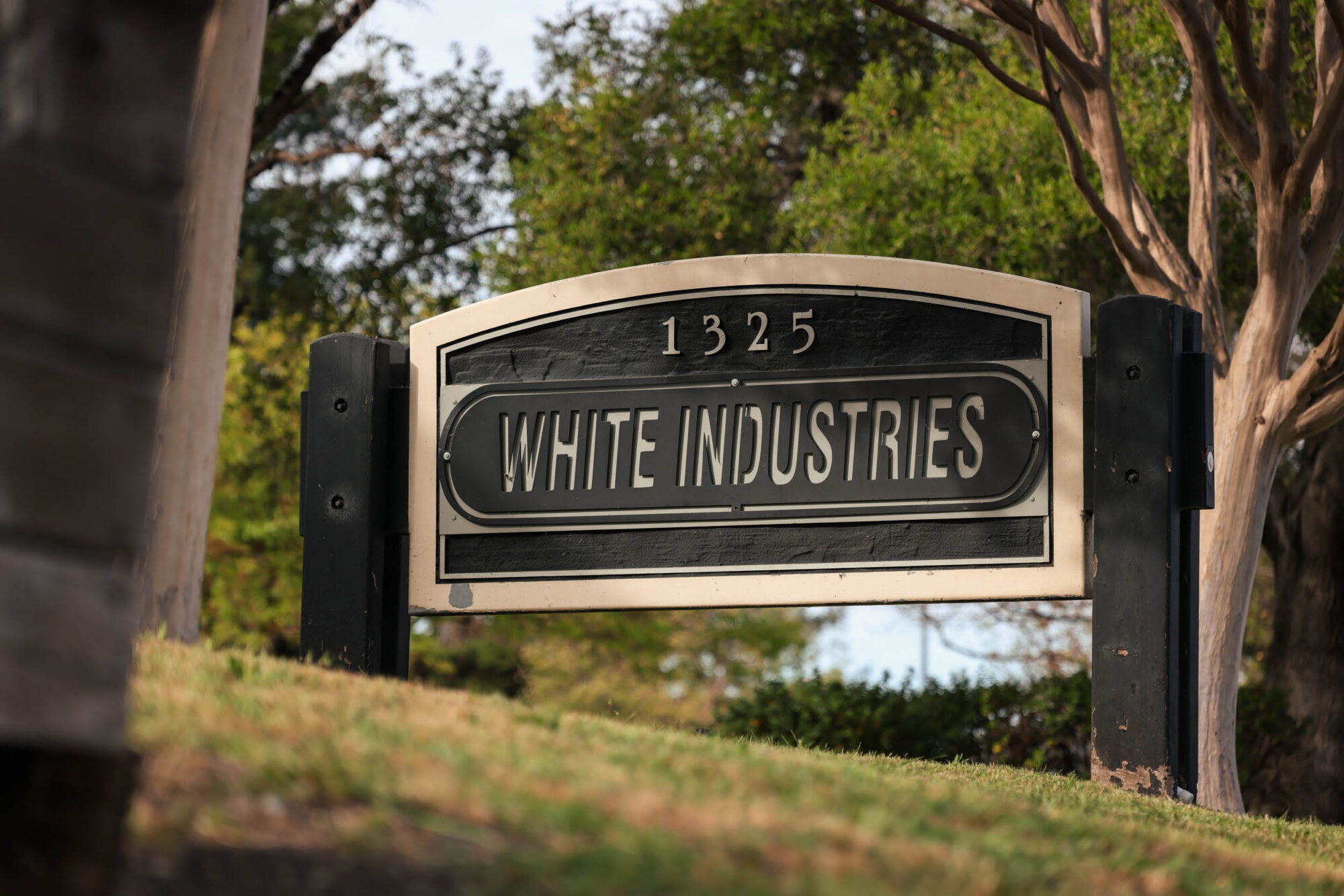
I asked Alec where he sees White Industries heading over the next decade, and here’s what he had to say: “I see White Industries still at 1325 Ross St, Petaluma, California, in five to ten years. This is a little tongue-in-cheek, but it’s real. We have a great team, and I want us to keep focusing on learning and improving. Not only our products but also our people, manufacturing processes, and communication. I don’t know what new products we will have or if we will have taken over the world by then, but if we are still here making things, that is a win for me.”
Now that we know more about the people behind their products, you can shop all of White Industries’ offerings at WhiteInd.com. A reminder that Bikepacking Collective members have access to 20% off their entire catalog!
Further Reading
Make sure to dig into these related articles for more info…
Please keep the conversation civil, constructive, and inclusive, or your comment will be removed.