
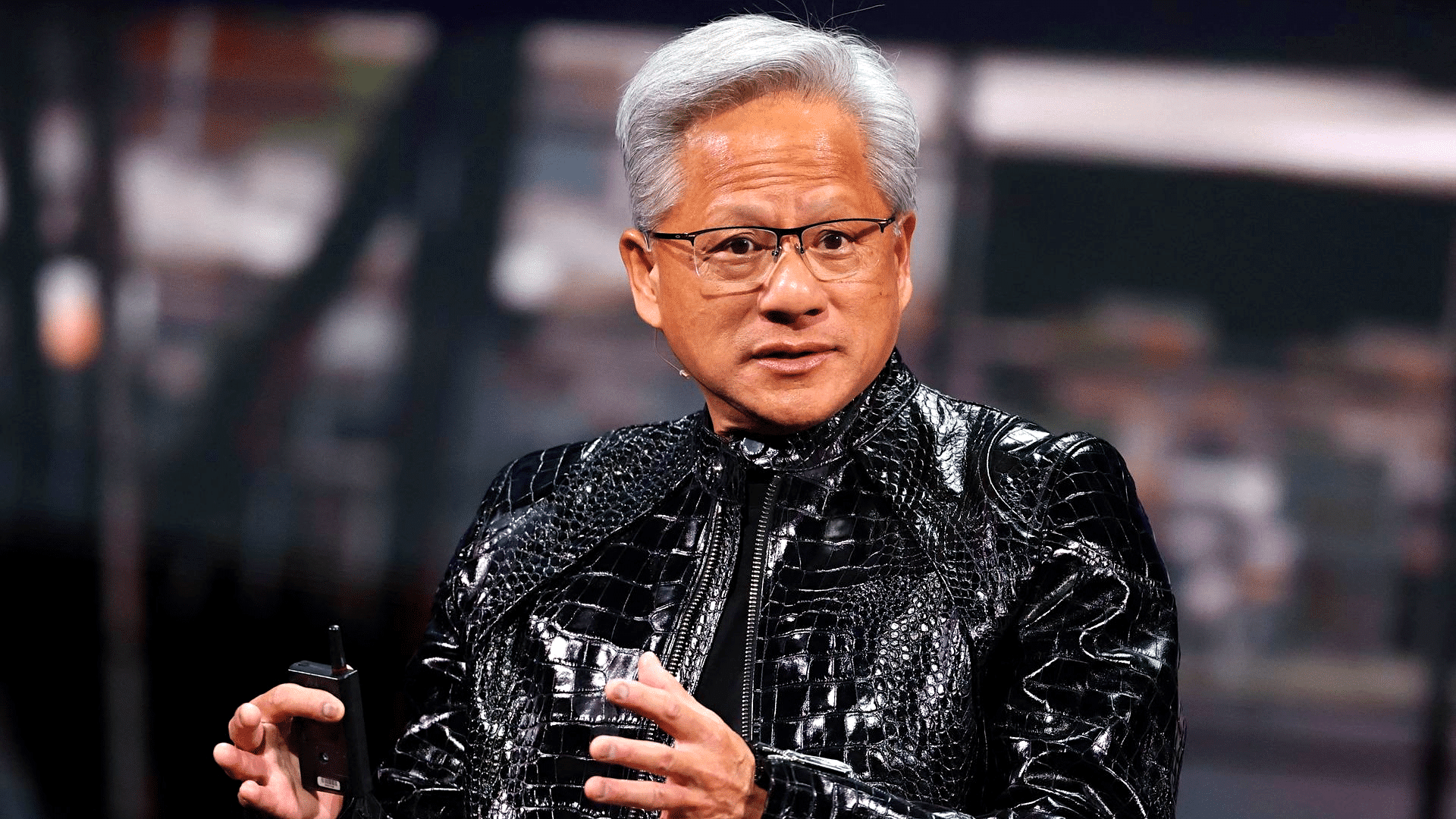
Nvidia CEO Jensen Huang compares the old prices of older AI graphics cards to fine wine – and CoreWeave confirms: Even older chips are getting more expensive every quarter.
Nvidia CEO Jensen Huang has an unusual comparison when it comes to the price trends of older AI accelerators—because, much like “our” gaming GPUs, prices are also rising in this sector.
Specifically, Huang stated, according to »TheTranscript,” Huang commented as follows during an investor call:
GPU demand is skyrocketing—even chips we sold four or five years ago are rising in price faster than fine wine.
AI Supercycle: Why Even Old Server GPUs Know No Rest
The term “Fine Wine” has its own history in the GPU world. Its roots lie in the AMD Vega era: Back then, it referred to graphics cards whose performance continuously improved over time through driver updates.
Nvidia is turning the tables, so to speak: With its AI accelerators, it’s not the performance that matures—but the price.
CoreWeave also confirms the trend. According to the cloud provider specializing in AI infrastructure, average prices for older Nvidia chips (including the A100, H100, H200, and L40) have risen quarter-over-quarter.
$CRWV CoreWeave CEO: Pricing for older GPUs is rising
“As a result, demand is accelerating across the board. Average pricing for the A100s, H100s, H200s, and L40s all increased quarter-over-quarter, and we remain largely sold out for near-term capacity across our fleet. This…
— The Transcript (@TheTranscript_) May 11, 2026
The backdrop is the so-called “AI supercycle.” This refers to the industry-wide, unprecedented demand for computing capacity for artificial intelligence.
- After all, every data center that uses AI in any way relies on such GPUs as its primary computing unit—which is why even regular high-end graphics cards are hard to come by at “regular” prices.
- At the same time, the resulting GPU shortage is putting both manufacturers and suppliers under pressure to increase production and meet delivery demands. The result is a shift toward older AI accelerators, which in turn are also becoming more expensive.
No End to the Shortage in Sight
The chips Huang refers to in his wine analogy are largely from the Hopper generation—namely the H100 and H200, accelerators developed four to five years ago.
Despite their age, the older generations are still considered competitive for AI and data center workloads because Nvidia continuously improves the chips through regular driver and software updates.
In addition, newer alternatives like Blackwell are still not available in sufficient quantities—much like what we’re currently seeing in the gaming market.