
How I used to fuel on the bike
I’ve never done a road race before, and it showed in my fuelling on the bike. I knew what to do in theory, but it just never felt necessary for my riding style. I rode my road bike mainly to explore, go on adventures with my girlfriend or try to get a KOM on segments here and there. All of these rides allowed for opportunities to stop at a café or a store to replenish snacks and refuel, or they weren’t so long or intense that proper fuelling truly mattered.
I would usually take a banana and maybe a few flapjacks in my jersey, and that was it. I wasn’t particularly worried about how many grams of carbs per hour I was getting. I preferred drinking water to any sweet drinks, so I was almost untouched by cycling-specific nutrition.
When I signed up for l’Étape early this year, I realised I needed to change this dramatically. I’m expected to go hard from the start and keep it up for more or less 4 hours. If I just relied on a banana and a few flapjacks, I would probably run out of energy in about 2 hours or sooner.
I’ve been working on improving
I decided to focus on improving three things about my on-bike fuelling:
- Start using a carb mix on any ride longer than 90 minutes. By carb mix, I mean a powder that contains carbs and electrolytes, which you can mix with water to get around 60 g of carbs in your 500 ml bidon.
- Practice taking in 60 g of carbs per hour on the bike from a combination of drinking carb mix and eating solid foods.
- Introduce carb gels and experiment with caffeine gels. This would give me an option for a big energy boost later in the race.
The main goal was to get my digestion used to this and also to see how it affects my endurance and ability to hold a high pace without running out of energy.
Introducing the carb mix was a success. I really like how easy it is to get in a lot of carbs just by drinking. My digestion has accepted it without major issues. I mainly appreciated not having to deal with handling and unpacking solid foods during intense group rides where there wasn’t much downtime. So far, I think this will make up the bulk of my race-day fuelling strategy.
Taking in 60 g of carbs per hour also wasn’t as hard as I thought, mainly thanks to the carb mix. It also helped to set up reminders on my Garmin Edge to drink and eat. I’m still not perfect when it comes to rides of 3+ hours, but hopefully, I can practice more in the last month before the race. I’m also going to try to push it to 70-80 g per hour to see if that’s possible for my digestion. I’m not planning to go for 90 g+ because at those quantities, the risk of digestive issues rises exponentially, and the incremental performance benefits get smaller and smaller, especially for an amateur like me.
I haven’t been able to introduce gels yet. I prefer solid food in combination with the carb mix. But I still plan to give a caffeine gel a try in the last month of training.
My fuelling and hydration plan on the bike
The goal for me is to take in a minimum of 60 g of carbs and 750 ml of fluids per hour during the race. My rough estimate for the race duration is 4 hours, which means I will need to take in roughly 4 full bidons (750 ml) of fluids and 240 g of carbs. Here’s how I’m planning to achieve that:
- 2 bidons (750 ml) with 90 g of carbs in each = 180 g
- 2 gels with 40 g of carbs each = 80 g
- 1 bidon refill with 50 g of carbs and 750 ml of fluids
- 1 bidon refill with 750 ml of water
This plan adds up to 310 g of carbs, which would be about 77 g of carbs per hour if I manage to eat it all. But even without the second gel, I will be at 270 g, which is more than my minimum of 60 g per hour.
I’m opting for 750 ml bidons because they might allow me to only stop once to refill my bidons and keep going otherwise. If my calculations are correct, the feed station, which comes roughly after 47 km, will be where I’m almost empty in both my bidons. The feed stations offer an assortment of dried and fresh fruit, sweets, and salty snacks, but hopefully, I won’t need any of that. I want to be efficient and only refill one bidon with water and the other with Isostar Hydrate and Perform, which is an electrolyte drink that will be offered there and has about 50g of carbs per 750 ml.
Schedule for race day
The goal for race day is to have my glycogen stores topped up when the race starts. That means eating a carb-rich meal the night before to set myself up well. Then, on race day, the recommendation is to eat 3-4 g of carbs per kg of body weight if your start time is more than 4 hours from your usual wake-up time. This should replenish the glycogen you burn during sleep and during your waking hours while getting to the start line.
I’m aiming to get to 3 g of carbs per kg of body weight, which adds up to around 228 g of carbs in total for me. Breakfast should give me roughly 150 g of carbs and also good sources of protein. I’m avoiding significant sources of fat and fibre, as those could slow down digestion. The remaining carbs will come from snacking. Here is my rough time plan.
Wake up (07:30)
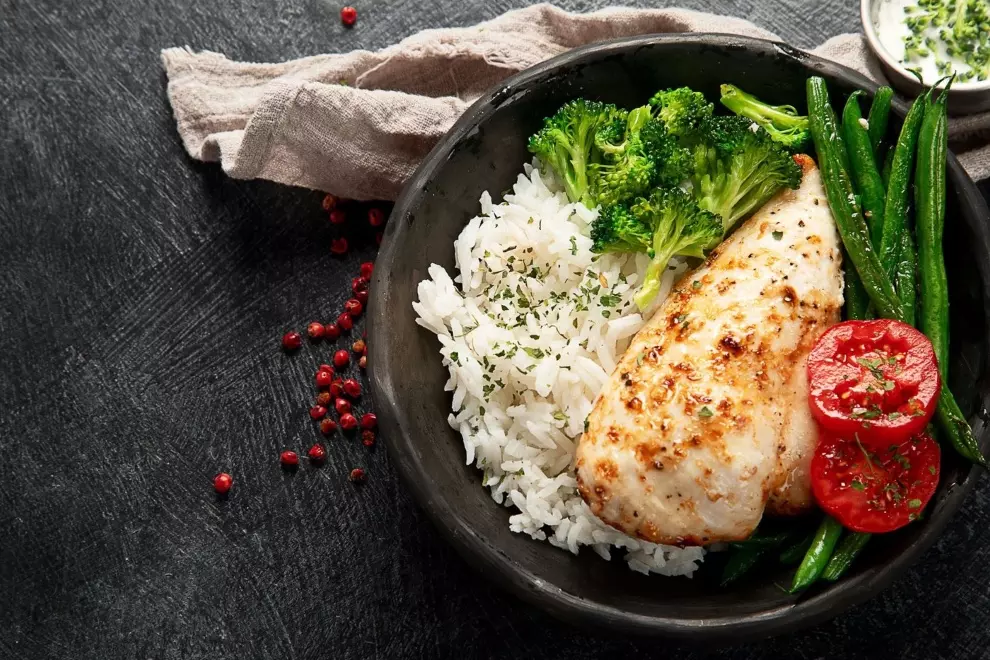
Breakfast (08:30): 70 g slice of bread with hummus, 40 g of skinless chicken breast, 2 eggs, 200 g of rice with 10 g of maple syrup, a large banana, grapefruit
Snacks (10:00-11:00): 70 g of oat cookies, 300 ml orange juice
Start of the race (12:00)
It feels good to see the numbers and have a specific plan for race-day nutrition and fuelling on the bike. But let’s face it, the chances are relatively high that not everything will go to plan on race day. That’s why I’ve been practising my breakfasts and fuelling on the bike, and why I studied the course to know all of the feed stations in case I need to improvise.
Next time, I will talk a bit more about the course itself, how I’m planning to attack it, and what gear I will be taking with me.