

Last fall, Emily Bei Cheng attempted the 2,300-kilometer Japanese Odyssey bikepacking event, which the organizers call “the most scenic yet punishing ride you’ll ever attempt.” In this heartfelt piece, she reflects on the experience and how hearing voice notes from friends back home shaped her ride and her broader perspective. Read it and find a set of 35mm film photos here…
Two thousand three hundred kilometers long, maybe more. Forty-six thousand meters of ascent. Guaranteed. Three hundred twenty-four hours to complete. The Japanese Odyssey leads with numbers front and center on its website. The next line feels like a dare: “Be prepared for the most scenic yet punishing ride you’ll ever attempt.”
On October 3, 2025, 84 cyclists from 24 countries departed from the base of Sakurajima volcano in southern Japan. There was no fixed route and no support. Over the next 13.5 days, each rider would chart their own path north to Matsumoto, linking 20 mandatory checkpoints across the country’s most remote and mountainous terrain.

The theme of the 2025 Japanese Odyssey was “The Forgotten Tōge.” The forgotten mountain pass. There is a dreamlike quality to the official route description:
“Your adventure begins at the foot of Sakurajima volcano, nestled in Kagoshima Bay. Soon, you’ll leave the main roads behind and venture into the lush, humid forests of Kyushu. Next, board a ferry to Shikoku and explore the island’s most secluded forest roads. From there, journey through Nara and Mie prefectures, where you’ll have the chance to experience the breathtaking autumn colors these regions are famous for. Take a quick ferry to Ise, then continue northward, culminating your journey deep in the heart of the Japanese Alps.”
It is a romantic paragraph. It does not mention crying on a bidet at three in the morning. Or the chewed-up tires and dented rims. The unrelenting rain. The roads torn open by typhoons. The fetal-position naps on the side of the road.
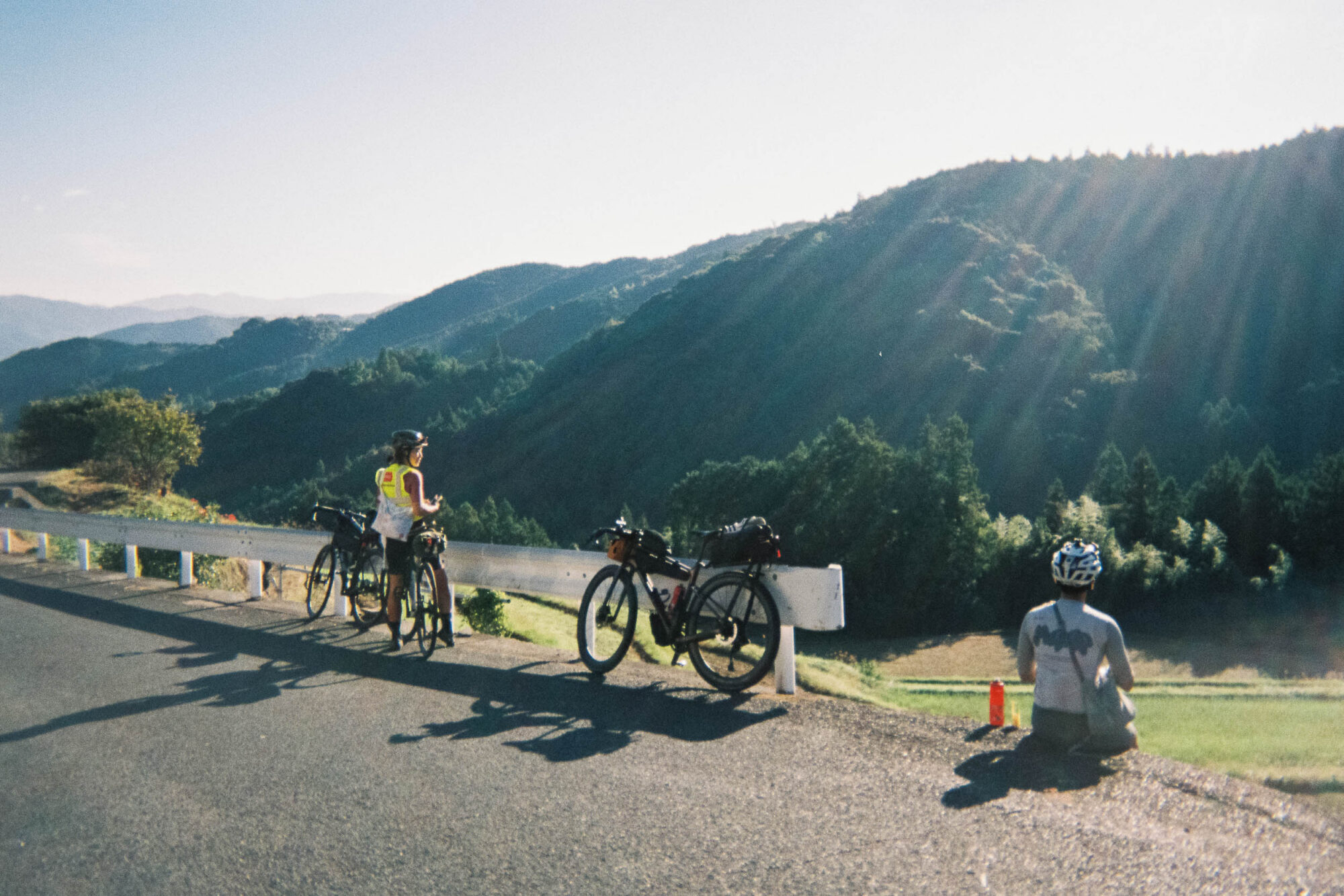
Bikepacking ultra events promise suffering. Japan softens the edges just a little. Konbini are open around the clock, which means a rider can roll into a convenience store at 2 a.m., soaked to the bone, and be revived by a hot meal, hot coffee, and a fresh pair of Family Mart-branded socks. Local sentō offer a chance to rinse off that second skin of salt and dirt. Internet cafes offer a place to sleep by the hour. Vending machines appear on the loneliest of roads. But when the clock doesn’t stop, relief is only temporary.
Day Five
The room pulsed red under my headlamp. Ten tired bodies creaked against their sleeping pads. Salt-crusted bike kits hung from every chair. Charging cables fanned out from every outlet into knots of blinking lights and bike computers. I squinted at a screen: 2:40 a.m.
It was unusual for this many Odyssey riders to converge in one place. We naturally drifted apart by the first day. But earlier that night, a small circle of headlamps had formed at the top of Shikano Col, checkpoint seven, debating whether to push forward or turn around. A rider who had retraced his steps warned us against the gravel descent. “Don’t go this way…unless you want to hike your bike for hours.”
Two riders dared to send it anyway. The rest of us weren’t quite so hardcore. We retreated 35 kilometers to the nearest hotel in Uwajima. There was one vacant room and nine of us. The hotel manager, a man in his 60s with a kind smile and infinite patience, unlocked a small conference room and told us we could sleep there. The two riders who pressed on eventually bailed and showed up at the same hotel a few hours later.
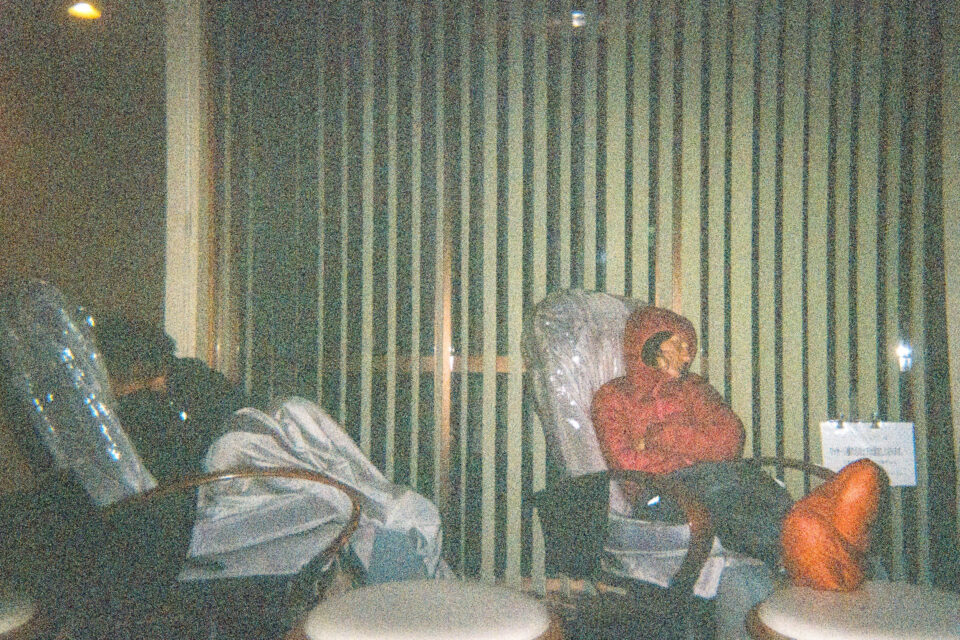

I barely slept. Once I woke up, there was no going back. My restless mind was already calculating my next steps. Could I make it across all of Shikoku Island to the next port in Tokushima in the next two days? It would mean climbing well over 10,000 meters of elevation on three hours of sleep.
I crept into the bathroom and sat on the toilet to think, since all the chairs were piled with other riders’ gear. The bidet seat was warm, and my phone glowed in my hand. Then a thought hit me: today’s suffering was inevitable, and when I cracked, I wanted a voice. A real one. Not the one in my head telling me to stop pedaling. I drafted a text to California.
Today is going to be rough. I’ve been asking friends for voice memos anywhere from 2 to 30 min long to listen to. Please text me one if you feel inspired! Longer the better. They’ve been giving me life.
This time range was intentionally loose. Just long enough to share one thought or long enough to get lost in one. I sent the same text to everyone. When I finally glanced up, massaging my stiff neck, half an hour had already disappeared.


If I was going to survive those 10,000 meters of climbing, it was time to move. I gathered my gear and slipped out without waking the others. Outside, the hotel manager was smoking a cigarette and studying the moon. I was surprised to see him up so late at night (or so early in the morning). I supposed that distinction didn’t matter much to hotel managers and ultra cyclists alike. Without saying a word, he pressed a few snacks into my hands. I choked out an arigatou gozaimasu.

The world felt suspended at 4 a.m. I cracked open the first of three cans of coffee, clipped into my pedals, and let the silence settle around me. The harvest moon lit my way along the Iwamatsu River before slipping behind the trees, as the road tilted up into the shadows of a long forest climb. One hour passed. A white cat darted into my headlight beam and ran ahead like a guiding spirit. Two hours in, my phone began vibrating with voice memos from across the Pacific.
Choreography to Chaos
Four hours in, I hadn’t seen a soul besides my cat friend. Above me, giant wind turbines traced slow circles across the pale dawn sky. It felt like the world had been stripped down to the forest, the wind, and the voices of my friends.
They told me they were proud of me. They reminded me: “Don’t die.” But mostly, they told me about their lives: a night out in Berlin, a protest in Los Angeles, a wedding in Santa Cruz. Hearing about their lives steadied mine. One friend had befriended a neighborhood restaurant owner, a Syrian immigrant who gave up his engineering career to build a future for his children in the United States. The mountain I climbed felt uncomplicated next to his.
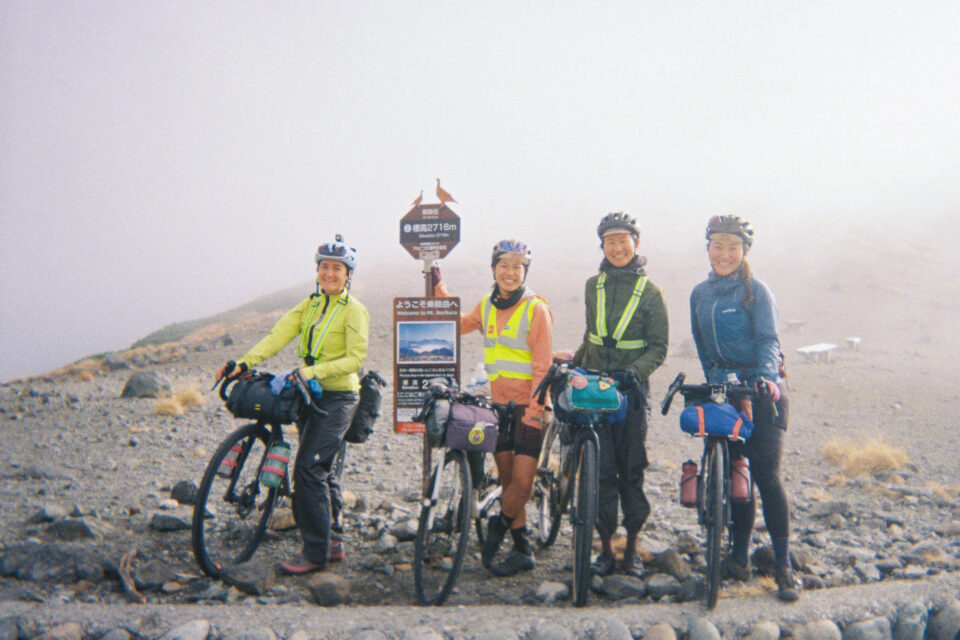
When I crested Sasayama Pass and saw the summit was just 300 meters higher, I felt pulled to it. After all, an ultra is just a pilgrimage between GPS coordinates someone put in a manual. The question “Why?” is answered with “Why not?” It felt in the spirit of things to set my bike down and hike up the steep, rooted trail. Reaching the top of Mount Sasayama felt sacred, with all of Shikoku Island stretched before me. I grinned stupidly. I did this. With my bike. My body. My dumb stubbornness.


This was not how I started. I entered the Odyssey believing it was a test of discipline and grit: how little you could sleep and how much you could endure. On day one, I was a disciple of efficiency. Even my konbini stops followed a precise choreography:
Step 1: Do a perimeter sweep for an outlet and charge devices
Step 2: Purchase snacks and hydration
Step 3: Eat while refilling bottles (always multitask!)
Step 4: Unplug and go
I even left my digital camera at home in the name of efficiency (it felt like cutting off a limb), packing a disposable camera eight times lighter instead. But something shifted on day three, on the ferry from Kyushu to Shikoku. I boarded with my usual choreography:
Step 1: Take a wet wipe “bath” in the ferry restroom
Step 2: Wash cycling bibs in the sink
Step 3: Plug in devices and hang bibs to dry
Step 4: Plan the next stretch of riding
Step 5: Nap until the ferry docks
I marched with purpose, damp bibs in one hand, charging cords in the other, when the sound of laughter stopped me. It pulled me down the hallway like a siren song to Kristen, Nola, and Yuko, belly laughing over stories of shared suffering. I hesitated for a second, then abandoned my plan and joined them. The sleep debt would stack up. I’d pay for it later. In the moment, I was laughing too hard to care.


This shift carried me into a different kind of Odyssey. I detoured to the Totoro Bus Stop for a photo. Stopped to watch a kagura performance. Ate reckless amounts of soft serve. I burned through one disposable camera, then another, then another… six in total, which I carried all the way to Matsumoto. By day five, climbing Mount Sasayama for no reason other than curiosity felt inevitable. Every day, I chose a few unstrategic joys, knowing the debt would come due in painful nighttime miles.
Voice Memos from the Forgotten Toge
From the top of Sasayama, the only way was down. The descent dropped fast into lush forest parted by the glinting blue of the Matsuda River. I was feeling good on time until segment eight turned to dirt, and my 30mm tires sank deep. I walked through muddy puddles, finding comfort in the tire tracks ahead of me. Other riders were somewhere, not so far away.
Voice memos provided a similar reassurance. Jake told tales from his last ultra. Guru improvised a song. Jimmy’s message moved me to tears. Gaby shared gossip that made me gasp out loud. Kasia sent 15 recordings in a row. Peter sent memos every day. And when Cindy described holding her sick dog for the last time, I cried so hard that every bodily pain faded into the background.

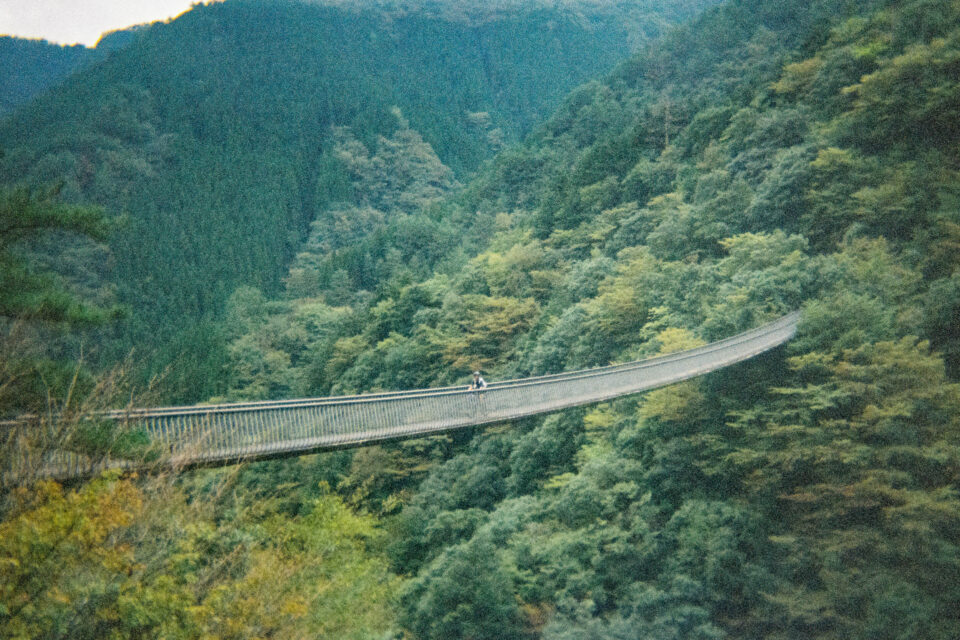
Two hours later, I was swearing my way through a mess of brambles when Anthony’s memo came through. “I hope you’re not suffering…” he began. I had to laugh at the timing. He told stories about his grandmother growing up in the Philippines and the sacrifices she’d made. She was turning 100 the next month.
Anthony’s story pulled me back to the start of the Odyssey, to a conversation with another rider I had met on day one. Stuart had shared that his brother and sister-in-law were expecting their first child. The news would come any minute now. Stuart’s niece would be zero; Anthony’s grandmother was about to be 100. And here I was, somewhere in between newborn and centenarian, pedaling 2,300 kilometers across Japan.

Solo to Social
Maybe I was caught in some enchanted forest time warp. When segment eight finally spat me out the other side, only 85 kilometers into the day, my legs felt like they had ridden double that. I stuck my head into a tiny waterfall just off the side of the road, screamed as the cold exploded against my face, and felt reborn.
When I lifted my head, Phuc was standing right there, kitted up in pink from head to toe. We had met just a few days earlier. Phuc with his easy Aussie humor. Phuc with a drone stuffed in his seatpack, untouched. I thought about the disposable cameras rattling around in my own bags and laughed at our shared optimism: the belief that we would have time to capture it all. We were the same kind of delusional.
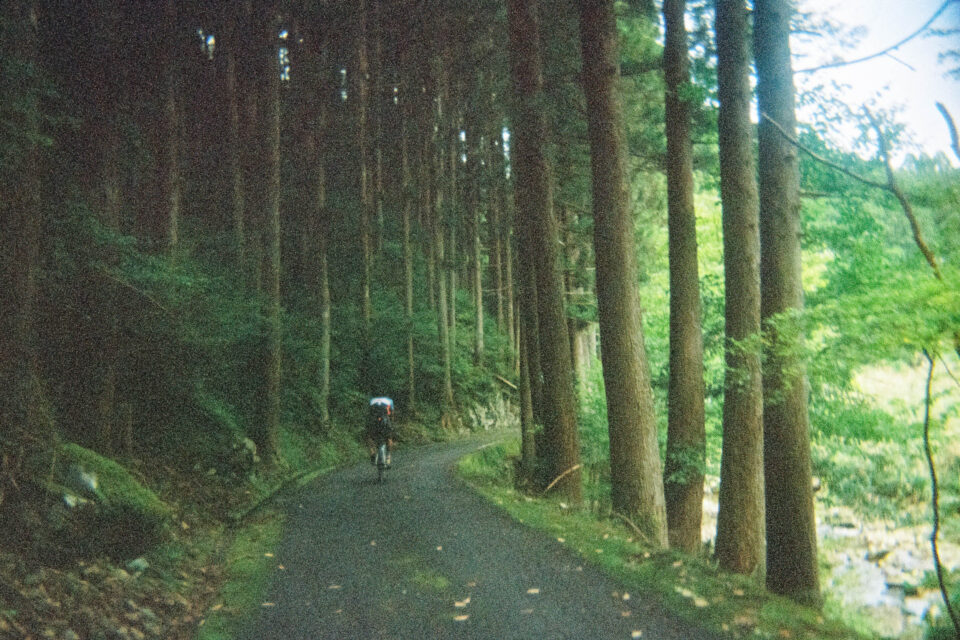

Phuc taught me some Australian slang: “We’re not here to fuck spiders.” Translation: let’s get moving. The Japanese Odyssey emphasized it was not a race, and participants were allowed to ride together and help each other. So we picked out an onsen hotel 100 kilometers ahead and began pedaling toward it together.
Day to Night
As we rode, the air thickened with mist and the forest blurred at the edges like a watercolor painting. The mist slowly turned to rain. Then rain fused with darkness until the world beyond my headlamp ceased to exist. That narrow beam lit up a nighttime ecosystem of cellar spiders and tiny frogs tucked into the rotting leaves. Something moved sideways. A crab. Actually, dozens of crabs. I looked in disbelief as their tiny armored bodies scuttled across my path.


Welcome to the night shift. No one chose to be up here at this hour, but this was one of the gifts of ultras: seeing a version of the mountain few ever will. When my legs were on fire, I kept returning to this thought. It was hellish, but also so special.
Suddenly, a yell cut through my inner thoughts. Phuc had flatted. “Go!” he shouted. “You might still make check-in for us.”
As I became acutely aware of the clock, the zen interior I had cultivated began to crumble. My wet phone screen was impossible to navigate. Rain streamed into my eyes. Leaves on the ground blurred into rocks blurred into shadows. Panic set in. I cursed the rain. I cursed our luxuriously long lunch stop. I cursed myself for stopping to look at the crabs. Minutes kept ticking, and the road kept forking, and I had no idea where I was going.

The road got worse the higher I went. Pavement crumbled into gravel into stone and twig. No buildings in sight. The mountain felt haunted. I tried to picture the onsen hotel at the end of this claustrophobic maze. I couldn’t.
At 8:29 p.m., I made it, toes numb and lungs on fire. The hotel was real after all.
“No rooms left.”
Of course not.
Monters to Moss
Phuc showed up 30 minutes later with cling wrap bulging out of his tire like a hernia. Desperation called for creativity. I thought back to the time I plugged a sidewall puncture with a chewed-up Clif Shot Block. I’ve even heard of an ultracyclist who unthreaded their jersey to sew up a torn tire. For once, though, I had the actual solution. I gave Phuc a tire boot, and it held.
We had feared bears, wild boars, and giant hornets. What actually got us? Rocks, metal grates, and moss-slick pavement. I watched the Odyssey group chat fill with updates about stitches and broken collarbones. The real monsters of Japan were inanimate.

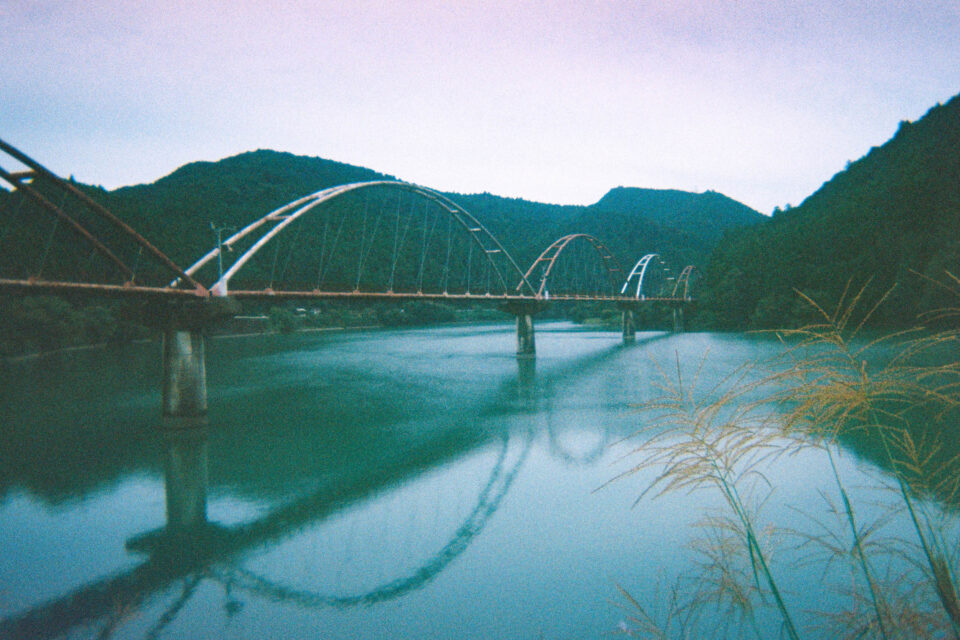
The tire held, but the question of sleep remained. Phuc and I decided to bivy for an hour or two and then keep moving. Sleeping on concrete was cursed anyway. I closed my eyes and drifted off for maybe an hour, but lay there longer, procrastinating until it was time to pack up and go.
Somewhere in that blurred seam between late night and early morning, Phuc flatted again on an empty farm road. The mosquitoes were delighted. Worse, Phuc discovered he had left his multi-tool at the onsen hotel. I was itching to keep moving, but there was no version of this where I abandoned a friend. I handed him my multi-tool. Then, to shield myself from the bugs, I sealed into my bivy and curled up on the ground. My shallow breathing was deafening inside my nylon cocoon. Even still, I could tell Phuc was struggling outside it. Too tired to help, too itchy to sleep, I lost track of time.

Eventually, two locals pulled up, looked us over, and left. A third arrived on a motorcycle. We fumbled with translation apps. He nodded and left, returning 20 minutes later in a small car with tools and a floor pump. That did the job. My body slumped with relief. I asked the man for his name. He spoke into his phone and showed us the screen: My name is Iori. I used to race bikes too.
Hills to Flats
At last, we were moving again. The hours that followed blurred into a wash of pale skies, steep hills, and Phuc’s electronic music blasting from his phone speaker. Songs like “I’m an Albatraoz” were so wrong they were right. That’s to say, they were so incongruous with the idyllic Japanese mountains that it was perfect nonsense for our sleep-deprived delirium. I steadied myself with a promise: it’s mostly downhill from the top of segment nine. Relief was right there.
Wrong. I was so damn wrong, again. We dropped 900 meters and rode straight into the gates of hell. Heat pooled in the town of Ochi. The midday sun beat down on us in a new kind of suffering. I needed a distraction to interrupt my spiral. I tapped play on a voice memo. Derek came in hot with a roast. “Emily, you want a 20-minute voice note? On a work week?” I laughed in spite of myself. Then he softened, cheering me on and offering some perspective. “On your next climb, when things get tough, picture me sitting in front of two monitors.” It was humbling to remember this basic truth: ordinary days were unfolding in parallel to mine.

On paper, it was just 30 flat kilometers to Kochi, a big city with plenty of hotel options. But the flats were crueler than the hills. Traffic flew past too close for comfort. My skin prickled from heat rash. No shade. No beauty. I stopped at a vending machine and shoved a can of Coke down my shirt as an ice pack. I yelled something obscene. “You okay there?” Phuc asked.
“I’m losing it,” I confessed.
Two hundred eighty-eight kilometers and 5,850 meters of elevation gain later, we finally reached Kochi. The next questions already loomed over me as we stumbled into our hostel. I needed to make a strategy for the next ferry. I needed to restock on calories. I needed to do laundry. I needed… first, I needed sleep. I threw everything onto the floor, a problem for later. Curling under the covers, alarm set, I closed my eyes, grateful to have softness beneath me. The rest could wait.
Fifty-three Dispatches from Friends
This was one snapshot of my 13.5 days on the Japanese Odyssey. In the end, I made it to Matsumoto before the cut-off time and completed 18 of the 20 checkpoints. Only nine percent of riders completed all 20. Organizers Emmanuel Bastian and Guillaume Schaeffer later called it the hardest edition they had ever held in the event’s 10-year history. I’ll take my A minus. Did I ask myself if I could have pushed harder? Of course. Could I have skipped my three summit hikes and carried six fewer cameras? Of course. But I know what those hours cost me, and I know what they gave me.


Reduce distractions. Shed excess. Ultra-cycling demands that you carry only what moves you forward. Somewhere around day five, I loosened my grip on that doctrine. My friends’ voice memos reminded me that tenderness can coexist with effort.


Along quiet stretches of road and in the thick of exhaustion, I listened. Their voices reminded me that the Japanese Odyssey was just life, and that lives kept unfolding elsewhere. Someone was washing dishes while I screamed into a mountain. Someone was feeding their baby. Someone was at the office. Or falling in love. Or saying goodbye. Meanwhile, I pedaled for 13.5 days, moving further from Kagoshima and closer to Matsumoto, moving further from zero and closer to 100 years old. I carried 53 voice memos from my friends. Luckily, they weighed nothing at all.
Further Reading
Make sure to dig into these related articles for more info…
Please keep the conversation civil, constructive, and inclusive, or your comment will be removed.