The stretch of Mediterranean coastline that runs from Valencia south through the Costa Blanca to Alicante is, quietly, a great place to drive around and play tennis. The weather is good most times of the year, the infrastructure is rich, the food is great and the culture is Spanish clay at its most authentic. Within a few hours drive of Alicante or Valencia airport you have everything from historic city clubs, smaller clay court community clubs and one of the most famous academies in professional tennis.
Whether you are visiting for some days and want to find a decent club for a few sessions, planning a proper tennis holiday, or looking to combine professional match watching with your own game, this region delivers.
We visited the area in May of 2026 and tried a few clay courts, below we’ll review those and also list a bunch of other places of interest.
Valencia City
First let’s look at what clubs you’ll find in the city of Valencia, near the city centre.
Club de Tenis Valencia
The oldest and most prestigious tennis club in Valencia, and one of the oldest in Spain. Founded in 1905 under the name Sporting Club, it was the first tennis club established in Valencia and the fourth in all of Spain. You’ll find it in the leafy La Saidia district, a quiet residential neighbourhood just north of the old city, a short walk from the Jardines del Real.
The facilities today include 12 clay courts and one fast court spread across 10k square metres of landscaped gardens. The club has over 5,500 members, a full coaching school with around 600 students, a swimming pool, gym and an exclusive terrace restaurant overlooking the courts. The history is extraordinary: the club has hosted Davis Cup ties, the 1995 Fed Cup Final, and has been home to three world number ones: Juan Carlos Ferrero (ATP), Marat Safin (ATP), and Dinara Safina (WTA).
It’s a private members club, but apparently they offer visitors to play at certain times, contact the club directly for these options.
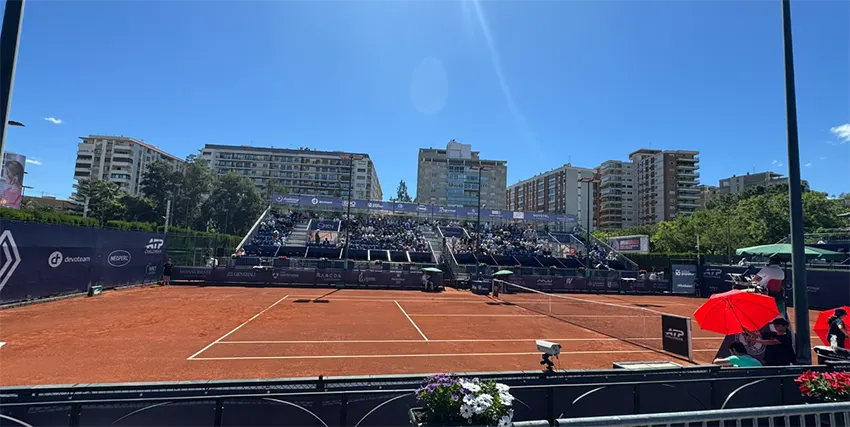
The Copa Faulconbridge (Valencia’s ATP Challenger event) is played here every year (see more further down).
Sporting Club de Tenis (Sporting Tennis Valencia)
Avenida de la Plata, Valencia
The second of Valencia’s major clubs and arguably the most internationally oriented. Sporting Tennis Valencia has an impressive facility: 27,000 square metres, eight clay courts, three grass courts, six padel courts, a pool and gym/spa. It hosted the Open Internacional de Valencia WTA 125 tournament from 2021 to 2025, making it the city’s main WTA venue and a familiar name to professional players passing through.
CM Valencia Tennis Center
Malvarrosa / Patacona area, Valencia
A newer, more accessible option for visitors looking for straightforward clay court time near the beach. Located in the Malvarrosa neighbourhood close to Patacona beach, the centre has eight clay courts and seven padel courts. Court fees are very affordable and it’s easy to book.
Club de Tenis Collao
Turia Natural Park, Valencia
For a different kind of tennis experience entirely, this small club sits inside the Turia Natural Park – the 9km linear park created from the diverted Turia riverbed that runs through the heart of Valencia. Eight clay courts, an outdoor summer swimming pool, and a BBQ area, surrounded by the green of the park. It has a genuinely family-run, community feel.
The Copa Faulconbridge: Valencia’s Professional Tennis Tournament
The Club de Tenis Valencia is the home of the Copa Faulconbridge (Valencia Challenger), one of the oldest tennis tournaments in Spain and, since 2026, one of the most significant Challenger events in Europe.
The tournament was first played in 1933, named after Alfred Faulconbridge, the club president who created it. After a long period without being held, it was revived in 2022 and has grown rapidly. In 2026 it was upgraded to Challenger 175 status (the highest tier on the ATP Challenger circuit) making it one of only six such events in the world, all scheduled to overlap with Masters 1000 events to attract players eliminated in the first week.
The 2026 edition ran in May and we visited the tournament for a day and managed to see players such as Miomir Kecmanovic (who later won the event), Pedro Martinez, Daniel Merida, Matteo Berrettini, Aleksandar Kovacevic and many more including young Spanish talent Alejo Sanchez Quilez.
Some serves from the Valencia Challenger 2026. Aleksandar Kovacevic, Alejo Sanchez Quilez, Pedro Martinez, Roberto Bautista Agut and Daniel Merida. pic.twitter.com/62xPGpGCCS
— Tennisnerd.net (@Tennisnerdnet) May 20, 2026
Tickets are very cheap for Challenger tournaments and there are also affordable VIP ticket options that include lunch and drinks apart from seats just near the court.
South Towards Alicante: The Costa Blanca Corridor
The journey from Valencia south along the N-332 and AP-7 takes you through a string of towns and coastal communities where tennis courts and communities are very common. The warm climate makes this one of the most naturally suited regions in Europe for year-round outdoor play.
We headed to the town called Denia where we immediately found a few clubs nearby. This is a really nice town btw, not too touristy and with A LOT of restaurants to try out.
We visited Club de Tennis Denia which is located centrally and the most known club around.
Established in 1973, the club has a great range of amenities and courts, a big gym and a popular social area which is basically the heart of the community here. Good quality clay courts here and a few hard-courts. make sure to book before as they have a lot of activities and training sessions here.
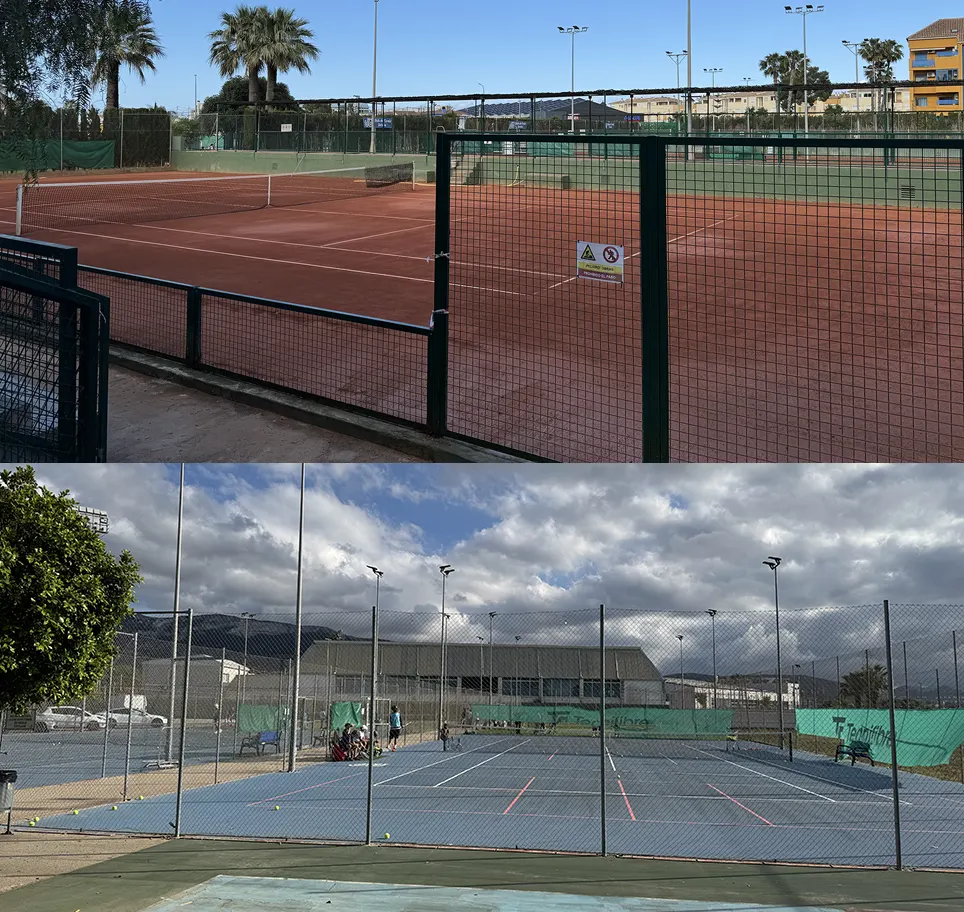
There are also several smaller clubs and single courts available. Most of them you can book easily via the Playtomic or MATCHi app.
We were supposed to play at the La Sella Tenis y Padel but we had one day with rain all day long and had to cancel that one unfortunately.
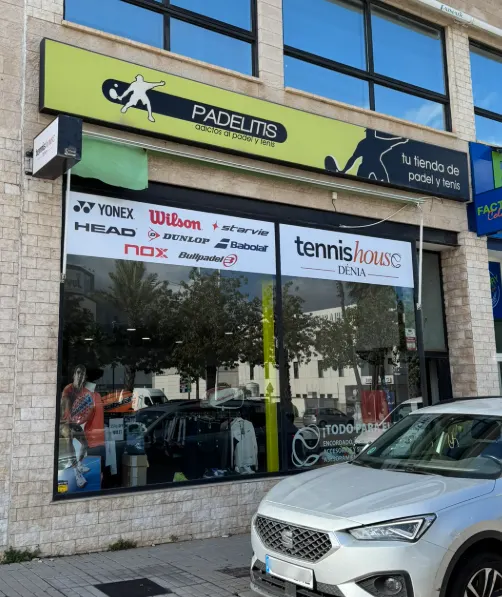
Tennis shop in Denia
If you’re in need of stringing or any new gear, we strongly recommend the Tennis House Denia where you will get great help.
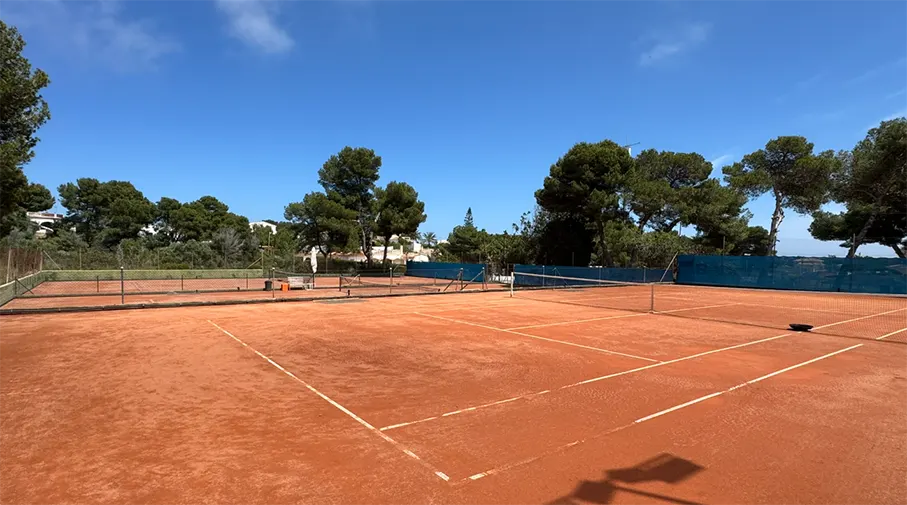
Slightly further south, along the coast, we played at the Los Pinos Tennis Club which we had heard good things about. The club house area was nothing special to be honest but the clay court was one of the best ones we ever played. Make sure to book a session here if you’re in the area.
The quality of the clay courts vary a lot among the clubs in this region and I wish more clubs could keep this high standard as we found at Los Pinos.
Altea
We went on to visit the town of Altea which is slightly more touristy but with a lot of nice areas surrounding it, and several tennis clubs.
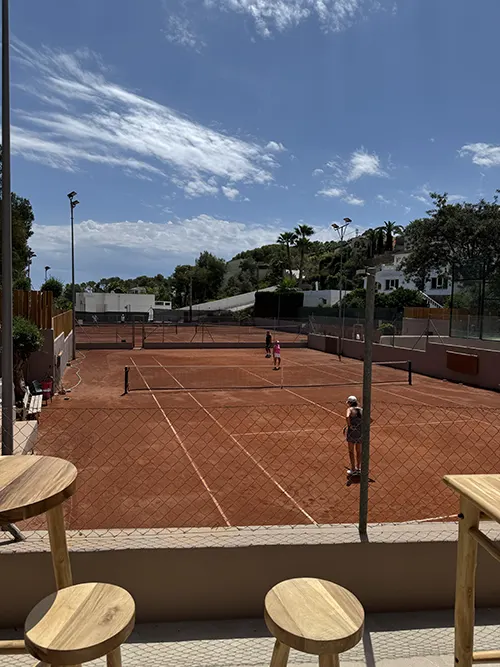
We played a long session at the beautiful Altea Hills Tennis Club, which offer four clay courts and a nice clubhouse with a bar, equipment rental, racket restringing and more.
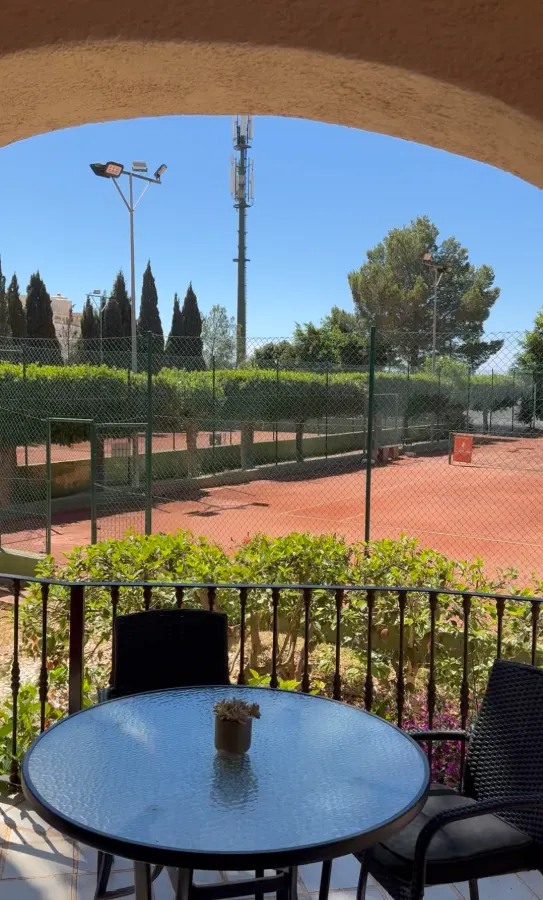
We played at these three clay court clubs in the Alicante/Valencia region on Spain’s east coast. ??? More info to come on pic.twitter.com/aw02oxItLi
— Tennisnerd.net (@Tennisnerdnet) May 26, 2026
Between the towns of Altea and Denia we also found the Buenavista Tennis Club which offered six clay courts and two padel courts. The facilities here were brand new, courts were decent and well worth a visit for a session.
So, what else can be found in this region?
Ferrero Tennis Academy
Paraje Casas del Menor 44, Villena, Alicante
There is no more significant tennis address in the entire region. The Ferrero Tennis Academy was founded in 1990 by coach Antonio Martínez Cascales, who began training Ferrero here at age ten. It is the place where the 2003 Roland Garros champion developed his game. It is also where Carlos Alcaraz grew up as a player. A court at the academy is named after him.
The complex has expanded substantially since those early days. The current facility covers 120,000 square metres outside the town of Villena, about 30 minutes by car from Alicante airport. It has over 20 courts across clay, hard, and indoor surfaces, a rural hotel and restaurant, pool, gym, physiotherapy, and a padel section. Numerous professional players use it for pre-season training and winter camps, and the level of activity on the courts at any given time is a spectacle in itself.
A few other clubs worth checking out:
IQL Sports (El Albir/Benidorm): An internationally-focused club bordering the Sierra Helada Natural Park, featuring 6 hard courts, 4 clay courts, 2 padel courts, a gym, and an indoor pool. Its a popular spot for both local leagues and international visitors.
Finca Guila (Alfaz del Pi/Benidorm): A quiet, private-feeling club situated in a rural setting, offering 5 tennis courts (mostly clay) and 3 panoramic padel courts. It is ideal for players seeking a relaxed, scenic atmosphere away from larger resort complexes.
Club Atlético Montemar (Albufereta, Alicante): The province’s premier facility, offering 21 tennis courts (17 clay and 4 synthetic) and 10 padel courts alongside an Olympic-sized pool and gym. A major hub for professional training and junior development, with extensive amenities available to members and visitors.
Hotel Albahia Tennis Club (Alicante): A coastal hotel property featuring 9 tennis courts with Mediterranean views. It is a highly practical choice for casual players or tourists, offering easy court booking without the need for club membership.
Torrevieja Tennis Club: Six clay and two hard courts in the Los Balcones residential area south of Alicante. A compact, friendly club with a community atmosphere, serving the large expat population in this part of the province. Affordable court rates.
A Few Practical Notes
Weather: The Valencia–Alicante corridor has over 300 days of sunshine a year. The season for comfortable all-day outdoor tennis is essentially year-round: winters are mild (15–20°C in February), spring and autumn are ideal, and summer mornings and evenings are perfectly playable even in July and August when midday temperatures reach the high 30s.
Getting around: Car hire is by far the most practical way to move between Valencia, the coastal towns and inland locations.
Gear: Decathlon stores are widespread throughout the region and stock everything you need for clay court tennis. Specialist tennis shops exist in both Valencia and a few of the smaller towns. Clay court shoes are strongly recommended around here as most clubs only offer this surface.
Language: English is widely spoken in the tourist areas and at most of the clubs. At the older city clubs and parts of Valencia, some Spanish is helpful.