
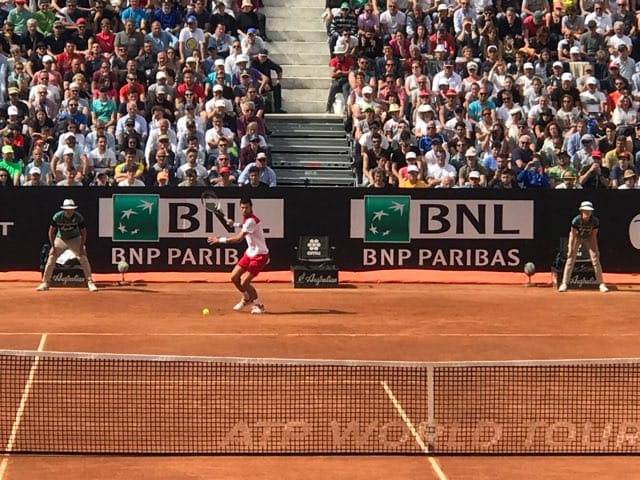
There is a moment in every great tennis match – easy to miss if you blink – when the outcome is quietly decided. Not by a winner struck at full stretch or an ace down the T, but by a choice. A split-second calculation that separates the player who wins from the one who almost does. This is the domain of tennis IQ, and it remains one of the most underappreciated dimensions of the sport.
More Than Muscle and Speed
Modern tennis broadcasts devote enormous attention to power: ball speed, serve percentages, forehand RPMs. These numbers are compelling, and they are not irrelevant, but they tell only part of the story.
Carlos Alcaraz, the Spanish phenom who reshaped the sport’s hierarchy within just a few seasons, is routinely praised for his physical gifts. Yet any coach who studies him closely will point first to something else: the way he reads his opponent’s body language before the ball is even struck. He does not simply react – he anticipates. That is not merely athleticism; it is intelligence applied at extraordinary speed.
The same was often said of Roger Federer, whose serve speed rarely ranked among the tour’s elite, yet whose ability to construct points made his delivery one of the most dangerous weapons in tennis history. He understood court geometry the way a chess grand master understands the board – not just the current position, but the positions three moves ahead.
Pattern Recognition: The Hidden Skill
Every professional tennis player has spent thousands of hours on court. What separates the elite from the merely very good is not the volume of experience, but what they extract from it.
Pattern recognition – the ability to identify tendencies, exploit habits, and anticipate under pressure – is developed through deliberate observation as much as physical repetition. Novak Djokovic, perhaps the greatest tactician of the Open Era, has spoken candidly about studying opponents almost forensically: tracking where a player looks before a crucial shot, what grip adjustments they make under pressure, and how their toss changes on a tense second serve.
These are the details that rarely appear in highlight reels. Yet they are often what decide the sport’s most memorable matches.
The Importance of the Non-Obvious Shot
One of the clearest signs of a high tennis IQ is the willingness – and ability – to play the non-obvious shot at the right moment.
Most club players, and even some professionals, gravitate toward familiar patterns under pressure: cross-court to the backhand, deep to the corner, safe and predictable. A tactically intelligent player understands that predictability, however reliable in isolation, becomes a weakness over the course of a match. An opponent who knows what is coming can prepare for it. The brain moves faster than the body when it has advance warning.
The drop shot is perhaps the perfect example. Played poorly or at the wrong moment, it becomes a gift – a short ball inviting punishment. Executed with precision just as an opponent settles into a deep baseline rhythm, however, it can be devastating. The difference is not technical ability. It is the ability to read the match correctly.
Why Surfaces Change the Conversation
Tactical intelligence in tennis is never context-free. The same strategy that wins a point on clay may fail on grass because the bounce, pace, and geometry of the game all change.
Clay courts reward patience and endurance. A player with a high tennis IQ on clay understands when to construct points patiently and when to accelerate. They use heavy topspin to push opponents deep behind the baseline before disrupting rhythm with a slice or a sudden net approach. Clay rewards those who can think several shots ahead while maintaining physical intensity.
Grass courts reward decisiveness. On faster surfaces, extended rallies become more dangerous than strategic. Intelligent grass-court players attack short balls early, move forward aggressively, and prevent opponents from establishing rhythm. This is why the transition from clay season to Wimbledon has always separated adaptable players from surface specialists – it tests whether a player can rewire their tactical instincts within days.
Hard courts sit somewhere between the two extremes, which is precisely why they often produce the sport’s most varied tactical battles. Because the surface does not strongly favor one style, adaptability and intelligence frequently determine the outcome.
The Return of Serve: Tennis’s Most Underrated Skill
If you want to evaluate a player’s tennis IQ quickly, watch their return of serve – not whether they win the point, but how they prepare for it.
A return begins before the ball is struck. The returner studies the server’s stance, toss, and shoulder alignment. They adjust positioning based on the score, previous patterns, and the tendencies they have observed throughout the match.
Djokovic’s return game is widely regarded as the greatest in tennis history, not because he is necessarily the fastest mover or possesses the sharpest reflexes, but because he makes fewer incorrect predictions. He positions himself fractionally better, anticipates fractionally earlier, and creates time that seems impossible to manufacture.
Following the Modern Game Intelligently
For fans who love tennis not only as entertainment but as a discipline worth understanding deeply, following the tour across different surfaces and formats can be incredibly rewarding. Tactical dynamics shift with every tournament, matchup, and surface transition.
Fans who also enjoy analyzing matches and making predictions often seek deeper statistical and tactical insights. NetBet offers extensive tennis coverage across major tournaments, providing resources for those who want to engage with the sport beyond simply watching it.
What the Next Generation Is Learning
Perhaps the most exciting aspect of the current era is the tactical evolution taking place in both the men’s and women’s games.
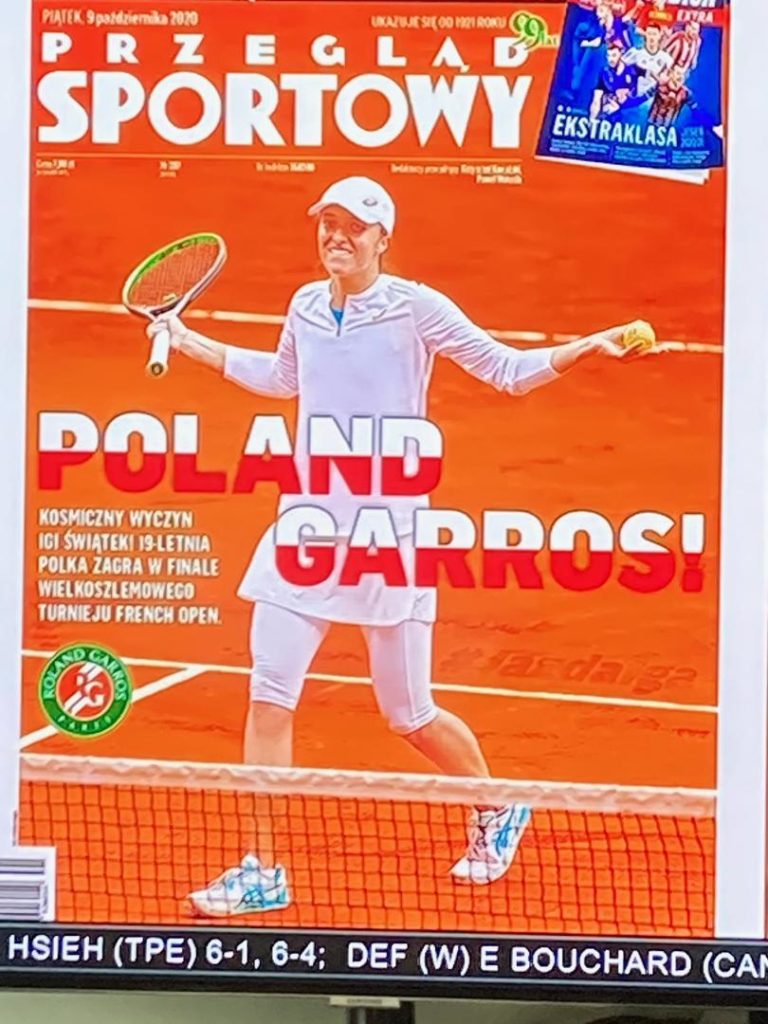
Players like Jannik Sinner and Iga Świątek are not only powerful – they are strategically sophisticated in ways that seem remarkable for their age. Świątek’s use of the forehand into the backhand corner, her ability to redirect pace from defense to offense, and her awareness of when to slow down or accelerate the tempo of a match all reflect qualities developed through intelligent study, not just repetitive practice.
The next generation of champions will not simply be faster or stronger than their predecessors. They will understand the game more completely. Fans who appreciate that dimension are watching something richer than pure athletic competition – they are witnessing intelligence applied under extraordinary pressure.
That, ultimately, is what makes tennis feel more like prose than poetry. It is structured, deliberate, and deeply thoughtful. And it rewards those who pay close enough attention.
French Open · Jannik Sinner · Novak Djokovic · Roland Garros