
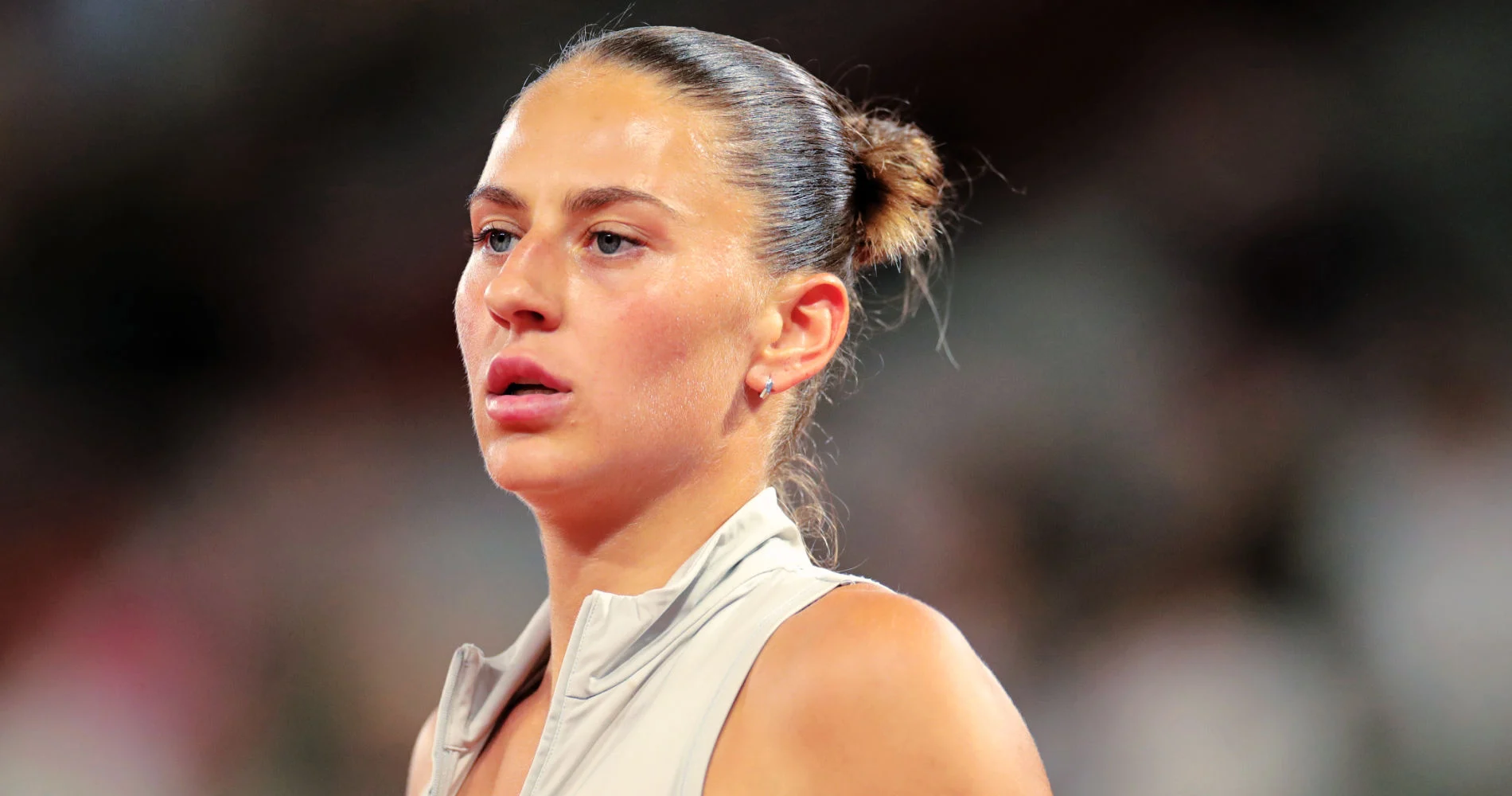
Marta Kostyuk delivered her most pointed remarks yet on Russian players’ reluctance to condemn the war, after reaching her first Grand Slam semi-final at Roland-Garros.
Asked about peers who deflect questions on the conflict by saying they play “against the ball,” not an opponent, the Ukrainian said she did not find it frustrating but saw it as a choice with consequences. “They’re all grown-ups,” she said. “They have phones, they have Instagram, they have news – they are clearly aware of what’s going on. This is something they want to avoid talking about. They have to live with this, not me.”
She went further on those who stay silent. “I wish there was some more clear stance on what’s going on,” she said, “especially when your country is killing other people. I don’t know how you can sleep at night peacefully when you know this is going on and you have nothing to say about.”
I know Russians who left everything behind because they don’t agree with what their country is doing. That’s their way of protesting.
Pressed on whether she could understand that Russian players might fear repercussions at home, Kostyuk pointed to those who had chosen to act. “I know some people who left Russia the moment the war began, who sold all their business, who left everything behind because they don’t agree with what their country is doing,” she said. “That’s their way of protesting.”
She cited Daria Kasatkina, now an Australian, whom she beat earlier in the fortnight, as proof it can be done despite intimidation. Kostyuk suggested that when Kasatkina spoke out, people came to her parents’ apartment to frighten them, but it had not stopped her from changing nationality and leaving the country. “The majority of players don’t live in Russia,” she said. “There is nothing stopping you if this is something you don’t believe in. Clearly they’re not thinking like this, and after four years they’ve made it very clear whose side they’re on.”
“You cannot be neutral”
Kostyuk’s remarks are consistent with a stance she has held since the early months of the war. She has declined to shake hands with Russian and Belarusian opponents since 2022, from Victoria Azarenka and Varvara Gracheva to Anastasia Potapova (Austrian citizen since then), and has been blunter still about the players who call for peace without condemning the invasion. “You cannot be neutral in this,” she said in 2024 of their “no war” statements. “They hurt me because they have no substance.”
That long-running role as one of the sport’s most outspoken Ukrainian voices is one Kostyuk has described as a weight as much as a duty, and which she has spoken this season of stepping back from. Yet she returned to it again in Paris, framing the press conference itself as a form of contribution. “The biggest thing I can do is sit here and talk about it,” she said, “so more people” hear it.
She returned to the same closing thought: “This is their burden to carry, and this is what they live with – not me.”