
So many clubs have come and gone in the English top-flight. Here we list who they were, how they did and where they have gone…
Margaret Thatcher won an election, John McEnroe was fined for misconduct. Nothing too unusual there. But in other ways, 1987 was a year of change, writes Alex Spink.
Ronald Reagan challenged Mikhail Gorbachev to “tear down” the Berlin Wall, paving the way for its dismantling two years later. Europe won a Ryder Cup on US soil for the first time. In few places did the wind of change blow fiercer than rugby union, where the sport’s amateur status came under such pressure that the establishment bowed to progressives as never before.
Read more: Your remaining Premiership fixtures and how to watch…
First came the inaugural Rugby World Cup, then England’s first nationwide league system, the Courage Clubs Championship. National Division One became the forerunner to the PREM of today.
Almost 40 years on, England’s elite is well established. Leicester, Bath and Gloucester have been ever-present. Harlequins, Saracens, Northampton and Sale have more than 30 campaigns under their belt.
There has been no new name at the top table since London Welsh in 2012 and, with the top flight moving to a franchise-style, closed league from next season, that is that, at least for the foreseeable future.
So what of the clubs that came and went, the 18 that reached the top flight but have since ceased to exist or dropped back down the ladder? We chart the rise and fall of the top-tier clubs that time forgot…
Read more: Who are the last five English Prem winners?
Chapter 1 1987-96: A time of change
The inaugural National Division One comprised 12 clubs, six of whom no longer grace the top tier. The Midlands is today represented by Leicester and Northampton; in 1987-88 there was also Coventry, Moseley and Nottingham.
These days Sale fly the flag for the North-West, back then there was also Orrell and Waterloo. Wasps were a huge force, alas no more.
At first, the idea was for each club to play one match against each of the other 11. But there was no fixture list, teams arranged games among themselves. Leicester were crowned champions despite playing only ten times. Sale and Coventry completed their fixtures, for all the good it did them. Both were relegated.
Read more: PWR fixtures
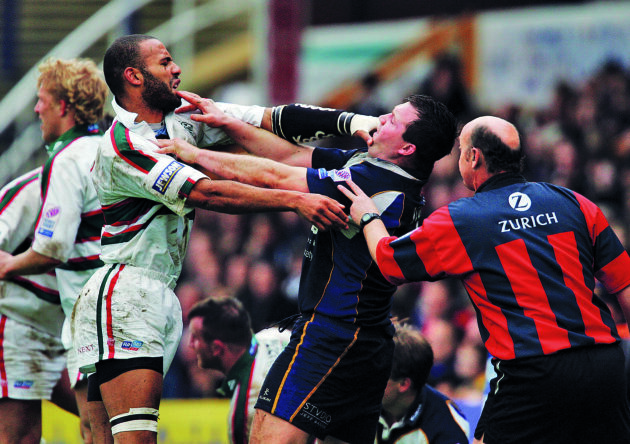
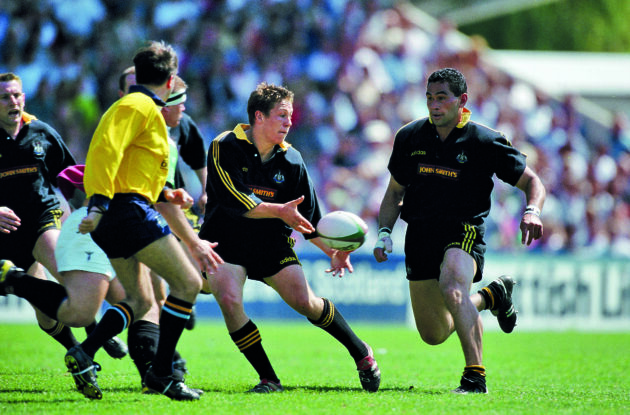
James Ager of Rosslyn Park passes the ball during a match against Bath. (Allsport UK /Allsport)
Nottingham
5 seasons: 1987-92 Placings: 8-4-6-8-12
The dawn of league rugby came at a good time for Nottingham. Brian Moore would go on to play for England and the Lions. Back then ‘Pitbull’ was a pup, just out of university in the city.
He recalls: “My arrival coincided with that of Gary Rees, Simon Hodgkinson, Rob Andrew and Chris Oti, all of whom would go on to play for England. We were young and unknown and over two or three years, guided by Alan Davies, a brilliant coach who later got the Wales job, we rose from obscurity to national prominence.
“Nottingham was never a club with massive support because it’s a relatively small city which also has Test cricket and two football clubs. We punched above our weight. We played decent rugby and enjoyed ourselves.
“We were also a bit different. We’d sing in a lot of bars but never rugby songs. There were strict rules. Take Can’t Take My Eyes Off You and the bit where everyone shouts ‘I love you, baby!’ If you yelled that line you’d get fined.”
Nottingham came eighth in that first year, then fourth the next. They dropped out of the division in 1992, never to return.
Read more: Rugby’s amateur internationals
Waterloo
2 seasons: 1987-89 Placings: 10-11
A breeding ground for England stars, Waterloo’s colours were worn by future stars Paul Grayson, Austin Healey, Ben Kay, Will Greenwood, Kyran Bracken and Gill Burns. The Merseyside outfit endured two seasons in the top flight, finishing tenth of 12 in the first season before being relegated with only one win the next year.
“The fondest of fond memories,” says Greenwood, whose dad Dick coached the club before becoming president. “The most beautiful pitch ever, near the beach in Crosby. So sandy it never froze and if it chucked it down with rain it drained well.”
The high points for Waterloo came either side of Greenwood jnr’s time at the club. They reached the RFU knockout cup final in 1977, losing to Gosforth, and reached the last eight in 1993, famously beating Bath.
“Dad moved me to Waterloo from Preston Grasshoppers as part of my progression,” he recalls. “I used to drive the 142 miles back from Durham, where I was at university, for training on Thursday nights.
“My fly-half was Ian Aitchison, whose daughter, Holly, won the World Cup with the Red Roses. He looked after me. Between us we probably made two tackles. Recently I persuaded Holly to do some kicking at Maidenhead, where I coach. A nice closing of the loop.”
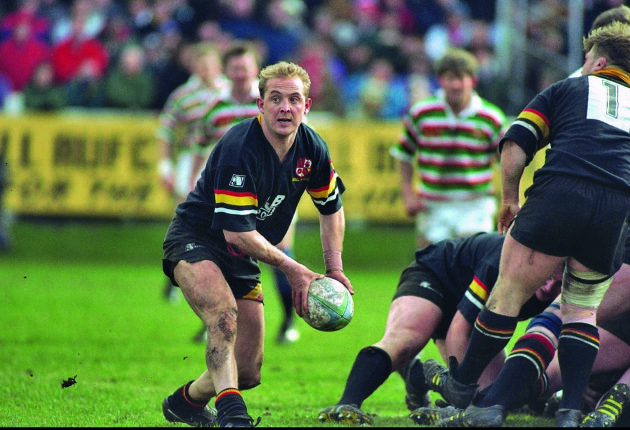
Dewi Morris (left) the scrum-half of Orrell passes the ball during the Pilkington Cup semi-final match against Leicester in England. Leicester won the match 31-18. (Dave Rogers/Allsport)
Orrell
10 seasons: 1987-97 Placings: 6-5-8-5-2-9-7-5-7-12
Of all the teams to come and go, none made more of an impression than Orrell, a union club battling the odds in league heartland in the shadow of Wigan Warriors. Orrell built their reputation on giving more fashionable clubs a bloody nose.
They went from being described as a “lay-by on the M6” by a snotty Harlequins committee member to RFU president Peter Yarrington hailing them as “one of the greatest clubs in the world”. That was in 1992, the season they lost out on the title to Bath by a point.
It came down to the last kick of a game against Wasps. With Orrell ahead, Huw Davies dropped a goal from a different postcode. “It saw itself as as a very good team but also a community club,” says Austin Healey, who followed England’s Dewi Morris and Nigel Heslop into the team from 1994-96.
“Pretty much everyone had a bigger stadium but not a better team. Orrell prided itself on the quality of players and the amount of fun they had. It was a great place to play, with lots of good people.”
The pro era changed everything. Orrell were quickly mired in debt and relegated. Hope was rekindled when Wigan RLFC chairman Dave Whelan took over, buying the Edge Hall Road ground.
But the promises he made came to nothing and his withdrawal of funding killed them off as a pro team. They now reside in level nine of the RFU pyramid. “So many of the clubs that went in the early days of professionalism were taken over by a benefactor looking to benefit from the land,” says Healey.
“If the RFU had a most wanted list, I’d put those guys’ faces on it. Guys who told the clubs they loved them but what they actually meant was, ‘I want to make money off the back of your pitches and stop your kids having a place to play and watch rugby’.”
Read more: Wasps demise
Wasps
35 seasons: 1987-2023 Placings: 2-3-1-2-7-2-3-3-4-1- 9-5-7-2-7-2-2-2-4-5-2-7-5- 9-11-8-7-6-3-1-3-8-2-8-9
The biggest casualty of professionalism, Wasps won 12 major titles before folding in 2022. They won the English title six times and the European Cup twice.
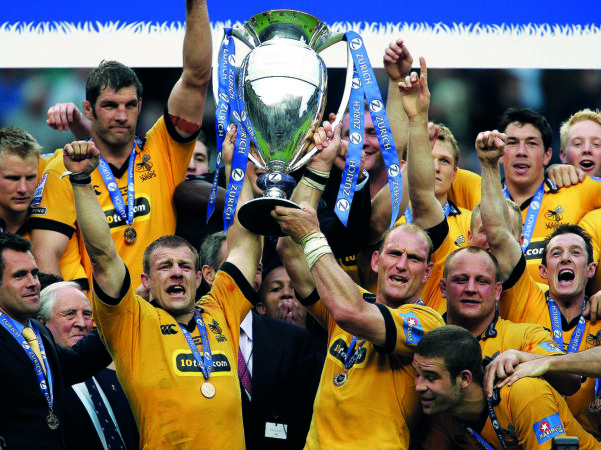
Lawrence Dallaglio and Paul Volley of Wasps lift the Zurich Premiership Cup (Photo by Shaun Botterill/Getty Images)
Coventry
1 season: 1987-88 Placing: 11
The club of David Duckham, and later Richard Cockerill and Danny Grewcock, had one year at the top.
Moseley
4 seasons: 1987-91 Placings: 7-10-11-12
Reached three RFU knockout cup finals and survived four top-flight seasons before being forced to sell their home to property developers.
Rosslyn Park
4 seasons: 1988-92 Placings: 9-10-7-13
A rugby league legend, Martin Offiah says he’d have been nothing without union, and the club where it all began for him, Rosslyn Park. “Rugby union is my mother because it gave birth to me,” he says. “Without union there would have been no rugby league.”
‘Chariots’ hadn’t played rugby before going to Woolverstone Hall School in Suffolk. Inspired by Cedric Carr, who played for the first XV and then joined Park, he followed him to South-West London and then took his place in the team.
“I turned up, Cedric vouched for me and they stuck me in the fifth XV. That was September. By December I was in the first team.
“I was different but I learned that if you score tries, it doesn’t matter what else you do, you become successful, you help win games.” Offiah moved north just as union introduced leagues. Promoted in 1988, Rosslyn Park spent four seasons in National Division One.
Read more: How France have mastered rugby
Liverpool St Helens
2 seasons: 1988-89, 1990-91 Placings: 12, 13
Two seasons, one win and two last-place finishes for the club that gave us England great Mike Slemen.
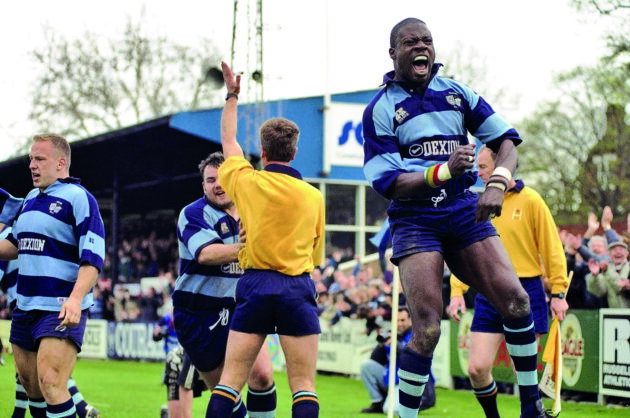
Martin Offiah of Bedford celebrates his try (John Gichigi /Allsport)
Bedford Blues
3 seasons: 1989-90, 1998-00 Placings: 12, 13-12
Bought by boxing promoter Frank Warren in 1996, they failed to make professionalism work. They were saved by a local consortium and are thriving in the second tier.
Rugby Lions
2 seasons: 1991-93 Placings: 11-13
By 1991-92, Leicester Tigers were left flying the flag for the Midlands along with Rugby Lions, who had been promoted with two Mapletofts in the side: 17-year old Mark and No 8 dad Neal.
Mark says: “I was on Coventry City’s books for two years but turned down an apprenticeship. Dad was at Rugby and I started playing there in 1989 whilst still at school.
“A special memory is playing together in the win over Newcastle Gosforth that sealed promotion. We survived the first season by two points but not the second. I moved to Gloucester after local paper reporter John Wilkinson advised an England 18s coach who lived in the town to take a look at me.”
Read more: London Irish demise
London Irish
28 seasons: 1991-94, 1996-2016, 2017-18, 2019-23 Placings: 9-7-9. 10-11-7-8-8-4-9-8-10-3-6-7-3-6-6-7-9-10-10-12R. 12. 10-9-8-5
Reached European Challenge Cup final in 2006 and PREM final three years later. They went bust after finishing fifth in 2023.
London Scottish
2 seasons: 1992-93, 1998-99 Placings: 10, 12
Four years after their maiden top-flight season, they were bought by Tony Tiarks, who forced through a groundshare with Quins at The Stoop, then lost interest. The Exiles were condemned to administration.
West Hartlepool
5 seasons: 1992-93. 1994-97, 1998-89 Placings: 12. 9-10-11 14
Another club to sell its ground to try to survive in the professional era. Relegated in three of their five seasons in the top flight.
Falcons fly half Jonny Wilkinson off loads to forward Pat Lam (r) during a Allied Dunbar Premiership match between Harlequins and Newcastle Falcons Falcons at The Stoop on May 17, 1998 in London, England. (Photo by Jamie McDonald/Allsport/Getty Images)
Read more: W6N 2027 details
Chapter 2 1995-96 The birth of professionalism
Richmond
2 seasons: 1997-99 Placings: 5-9
Professionalism got the green light in August 1995 and changes were implemented for the start of the next season, with new money men coming aboard. Sir John Hall bought Newcastle Gosforth, who became champions three years later, Ashley Levett purchased Richmond and made Ben Clarke rugby’s first £1 million signing.
Tony Tiarks took over London Scottish for £500,000 and boxing promoter Frank Warren bought a 90% stake in Bedford. All four bailed out in 1999. “I remember meeting Frank at a boxing fight,” says Offiah.
“He understood what star power was about. He was like, ‘I want you to play for my club. Whatever you’re on at Wigan, I’ll pay you the same.’
“We had eight pro players and the rest were amateur. We trained all day, then trained again in the evening with the amateur boys.”
Moore, who ended his playing days at Richmond, recalls: “At that time too many people rushed into rugby and threw money at it. I had a two-year contract but played as an amateur. I was a partner in a law firm and didn’t cash the cheque they gave me. I wish I had now.
“It didn’t take a genius to realise we were never going to get planning permission for a stadium when one of the views is of the pagoda at Kew Gardens. Moving to Reading took away the soul of the club and the losses mounted up.”
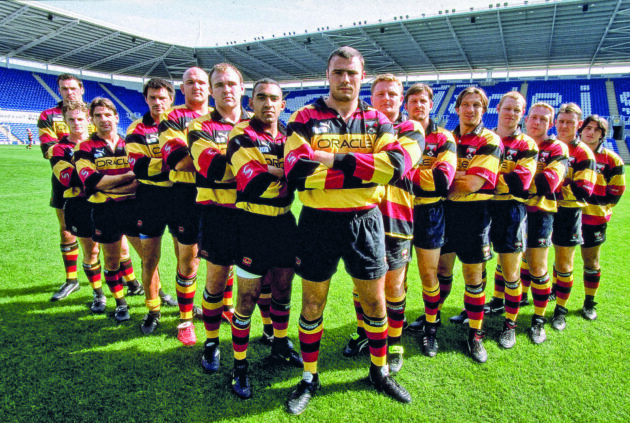
A team picture of the Richmond FC squad at Reading,England. (David Rogers /Allsport)
Read more: 2027 Rugby World Cup information
Chapter 3 2000-26: A new century dawns
The 21st century brought to the top tier two Yorkshire clubs in Rotherham and Leeds. It wasn’t a joyful experience, with five relegations between them from 2000-11. But Leeds did win the Powergen Cup in 2005.
Rotherham
2 seasons: 2000-01, 2003-04 Placings: 12. 12
David Strettle and Lee Blackett were in the same year at Sheffield Hallam University when opportunity knocked for them at Clifton Lane. Strettle later played for England, Blackett now coaches their attack.
“Rotherham entered the league system in 1987 and had seven promotions between ’89 and 2000,” recalls Strettle. “They got up, went straight down, then the owner (Mike Yarlett) withdrew his backing and the club went into administration.
“I remember being in the changing room before a game when the senior players said they couldn’t play as contracts weren’t in place, so they weren’t insured.
“That’s when the club fell into administration, the council had to step in and I moved up to the first team. I was lucky, I was at uni. It must have been so difficult for those with families.”
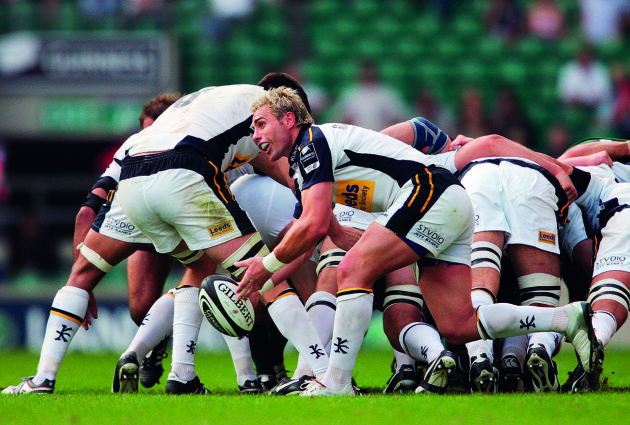
Justin Marshall of Leeds passs the ball during the Guinness Premiership match between Leeds Tykes and London Irish at Twickenham on September 3, 2005 in Twickenham, London, England. (Photo by Jamie McDonald/Getty Images)
Related: When did the Prem last have relegation?
Leeds
8 seasons: 2001-06, 07-08, 09-11 Placings: 12-5-11-8-12. 12. 10-12
A year before winning the World Cup with England, Mark Regan was told there was no future for him at Bath. Joining Leeds was an act of desperation to get game time.
He said: “The missus and kids cried all the way there as they didn’t want to leave the West Country. But they ended up loving it. At the end of my contract, Leeds basically offered my a blank cheque to stay. I said I needed to end my career at Bristol.
“I loved the culture at Leeds. They played for the name on the front of the jersey, not the back. We were in it together, working hard. We were unfashionable, it was fight or flight.
“We used Rhinos’ changing room; the league boys must have thought ‘who the f**k are these lot?’ By the time I left we’d earned the respect of the Sinfields and McGuires. They all came to support us at Twickenham. What a day that was.”
Download the digital edition of Rugby World straight to your tablet or subscribe to the print edition to get the magazine delivered to your door.