
Welcome to “Big Ten offseason at a glance,” a team-by-team look at the conference at the start of the summer. We’ll examine roster movement for each Big Ten roster and give an early outlook for each Big Ten program for the 2026-27 season.
Today: Oregon (12-20 overall in 2025-26, 5-15 in Big Ten play)
Previously: Penn State, Rutgers, Minnesota, Northwestern, Washington, Wisconsin, Iowa, Maryland
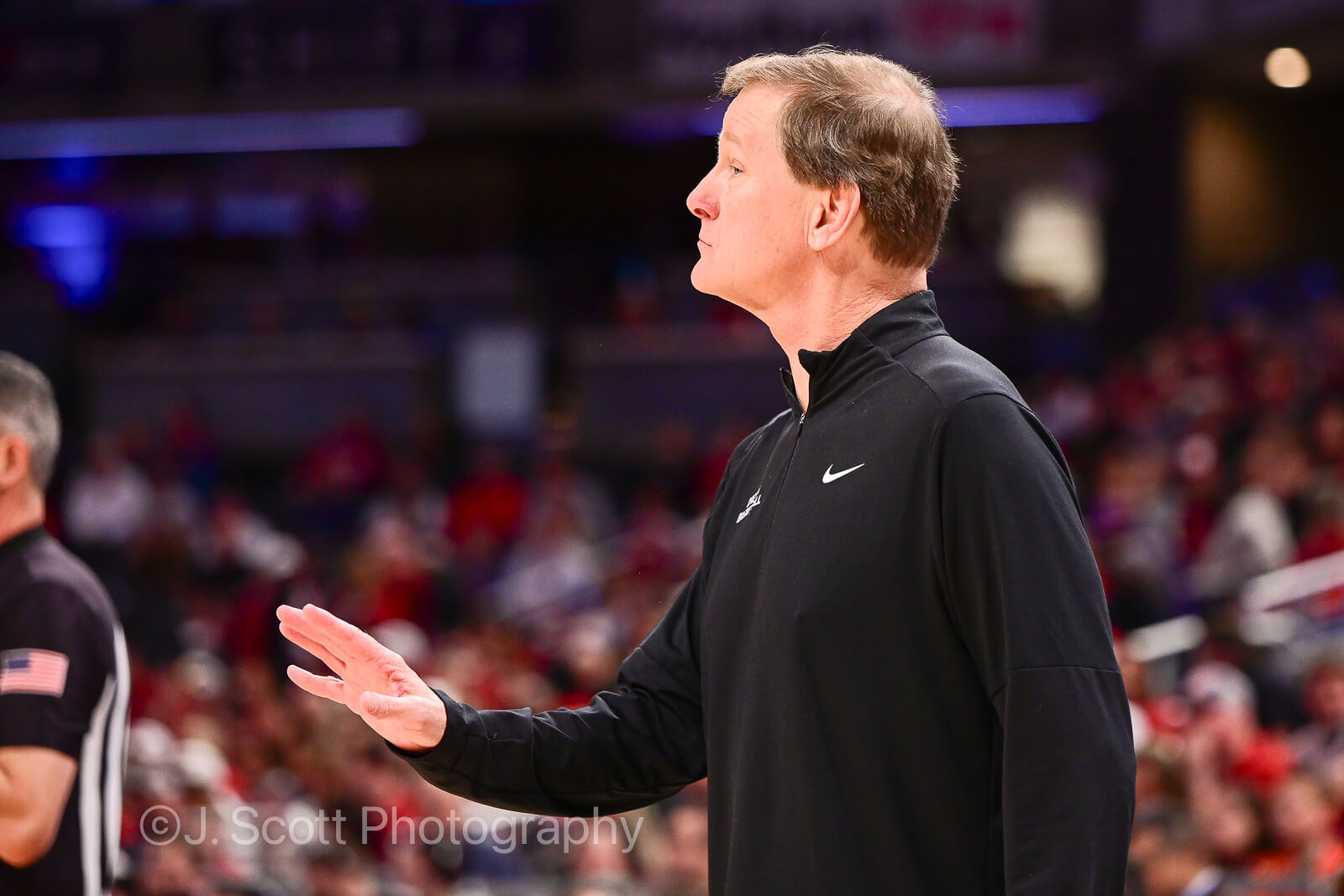
Picked to finish fifth in the Big Ten in the preseason, the 2025-26 season was a disaster for veteran coach Dana Altman at Oregon.
Injuries were a significant issue for the Ducks, as point guard Jackson Shelstad appeared in just 12 games and big man Nate Bittle missed seven, including five in Big Ten play.
Oregon lost 10 consecutive games in conference play before finishing 4-4 over its final eight games. The 12-20 finish was the first time Altman finished under .500 and the first time he failed to reach the 20-win plateau in Eugene.
Altman, who turns 68 this summer, will return for his 17th season at Oregon with a rebuilt roster and pressure to improve on last season’s underwhelming performance.
Oregon roster movement
Players returning with eligibility: Sean Stewart
Players departing due to exhausted eligibility: Nate Bittle, TK Simpkins, Oleksandr Kobzystyi
Players who departed via transfer portal: Devon Pryor (to Texas-Rio Grande Valley), Dezdrick Lindsay (to Kansas State), Efe Vatan (to Stony Brook), Ege Demir (to Duquesne), Jackson Shelstad (to Louisville), Jamari Phillips (to Washington State), JJ Frakes (to Buffalo), Kwame Evans Jr. (to Villanova), Wei Lin
Players arriving via transfer portal: Tyrone Riley IV (from San Francisco), Andrew Meadow (from Boise State), Pharaoh Compton (from San Diego State), Jasper Johnson (from Kentucky), Taylor Bol Bowen (from Alabama), Jerry Easter II (from USC), Fred Payne (from Boston College), Dwayne Aristode (from Arizona)
Players arriving from high school/overseas: Tajh Ariza, Kendre Harrison, Seven Spurlock
Oregon is essentially starting over next season as Stewart, who had previous stops at Duke and Ohio State, is the only returning scholarship player on the roster.
However, outside of Shelstad, Bittle and Evans Jr., Oregon didn’t lose much of consequence as last season’s roster wasn’t equipped to compete in the Big Ten.
The question for Oregon is whether a roster with less star power but more overall balance will be enough to climb out of the Big Ten cellar. The Ducks added several productive pieces but will rely on many of them to take on bigger roles to improve on last season’s dreadful finish.
What to like about Oregon
The overall talent and balance of the 2026-27 roster are better than a season ago. The Ducks don’t have the star power that Shelstad and Bittle brought, but that strength was negated last winter as both players battled injuries.
Johnson, a former five-star guard who played last season at Kentucky, joins the backcourt, as does Aristode, a five-star forward who only played sparingly last season at Arizona. Oregon is hopeful that both players can produce with more regular playing time.
Johnson will likely be joined in the starting backcourt by Payne, who averaged 15.8 points last season at Boston College and Riley IV, a 6-foot-6 wing who averaged 12.2 points last season at San Francisco.
Up front, Stewart will bring experience and stability at the five alongside Aristode, a potential breakout candidate. Bol Bowen, who averaged 6.4 points and 4.2 rebounds last season at Alabama, will give Altman another option at the five.
In addition to these newcomers, Compton, a 6-foot-8 forward, was productive in a reserve role last season at San Diego State, as was Meadow, a 6-foot-7 transfer from Boise State who started 32 games and averaged 12.1 points. Ariza, a 6-foot-7 freshman, is also a potential impact piece and was the No. 33 player nationally in the final 247Sports Composite rankings.
What to question with Oregon
The lack of star power and go-to scorers is a question mark. Payne averaged nearly 16 points last season, but was a part of a really bad team at Boston College. Riley IV and Meadow averaged in double figures, but those numbers weren’t put up at the power-four level.
Beyond that, Oregon will be counting on Johnson and Aristode to live up to their lofty high school rankings after limited roles last season.
Overall, the lack of continuity bears watching as the Ducks have only Stewart returning, and it will be a significant challenge for Altman to build a winning team with so many transfer portal additions.
Oregon’s outlook for the 2026-27 season
Here’s the Oregon Big Ten schedule for next season:
Home: Illinois, Indiana, Maryland, Nebraska, Northwestern, Purdue, Rutgers
Away: Iowa, Michigan, Michigan State, Minnesota, Ohio State, Penn State, Wisconsin
Home/Away: UCLA, USC, Washington
Oregon finished 101st in KenPom last season and Bart Torvik is projecting major improvement in Eugene next season. The Ducks are currently just outside the top 40 in Torvik’s projections for next season.
Given Altman’s coaching chops and his long history of success, it will be a surprise if Oregon doesn’t bounce back next winter. Whether the pieces are in place to be an NCAA tournament team is an open question, but the Ducks will be far more competitive and should be capable of competing for middle-of-the-pack spots in the league standings at worst.
See More: Commentary, Oregon Ducks