
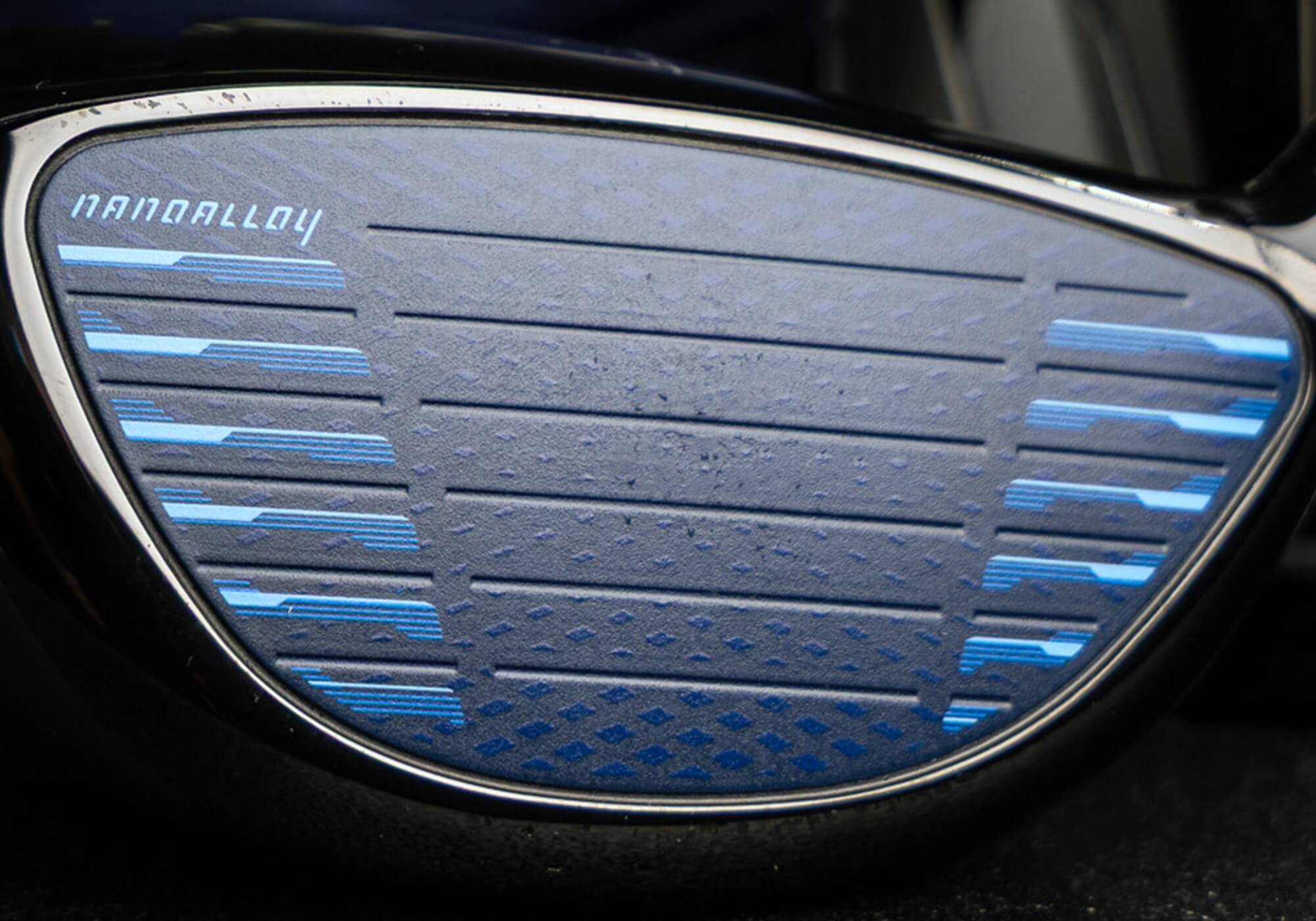
Mizuno is the first company to put a functional polymer layer in front of a driver face. The implications go well beyond ball speed.
For most of the history of golf, driver faces have been made from just two categories of material: wood and metal. On the metal side of the equation, steel was the standard (it still is for fairway woods) but largely gave way to titanium decades ago. TaylorMade’s Japanese-market Gloire was arguably the first departure, a carbon fiber face that, years later, would evolve into the global Stealth line. In those applications, carbon is the structural face material.
It replaces the titanium.
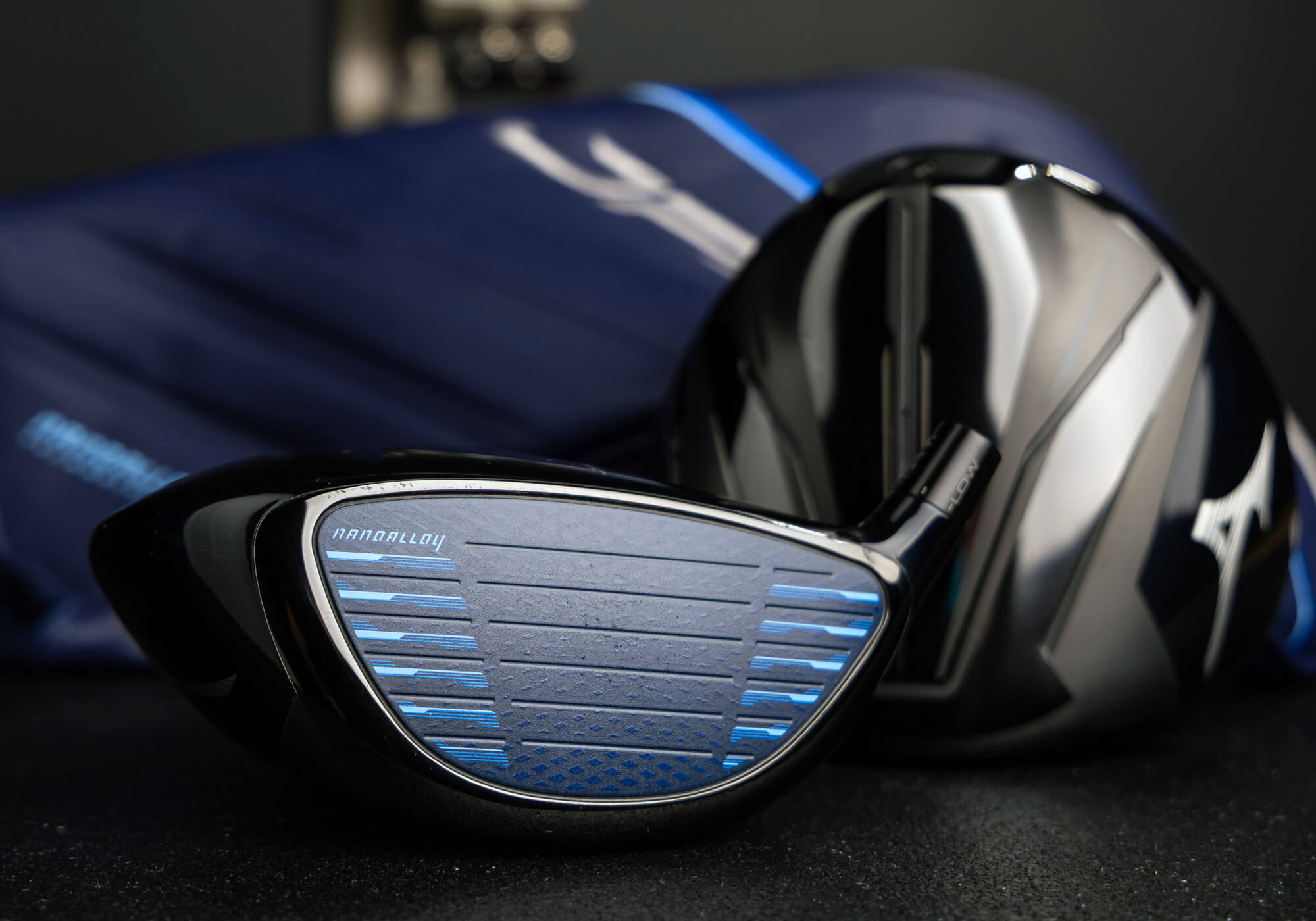
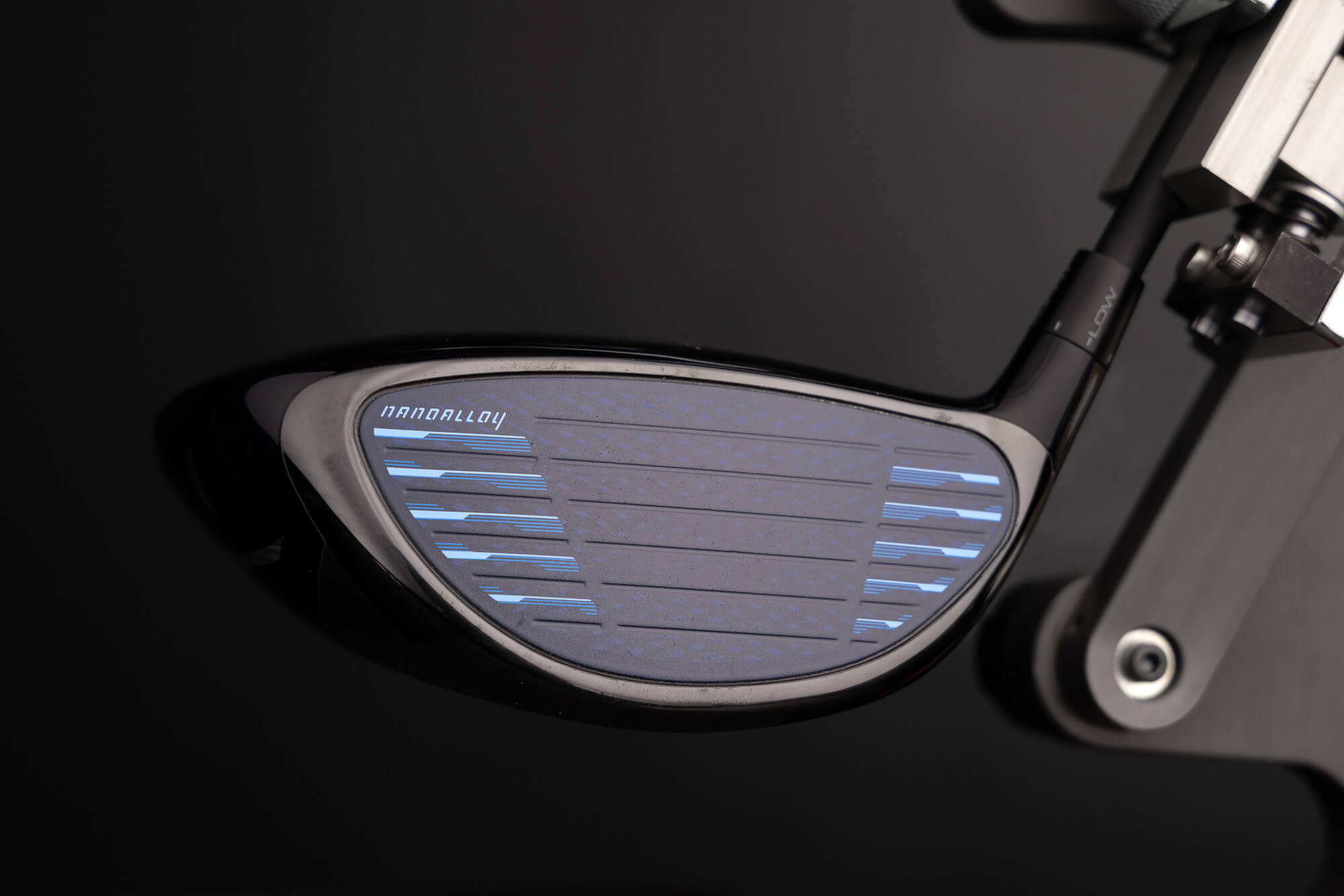
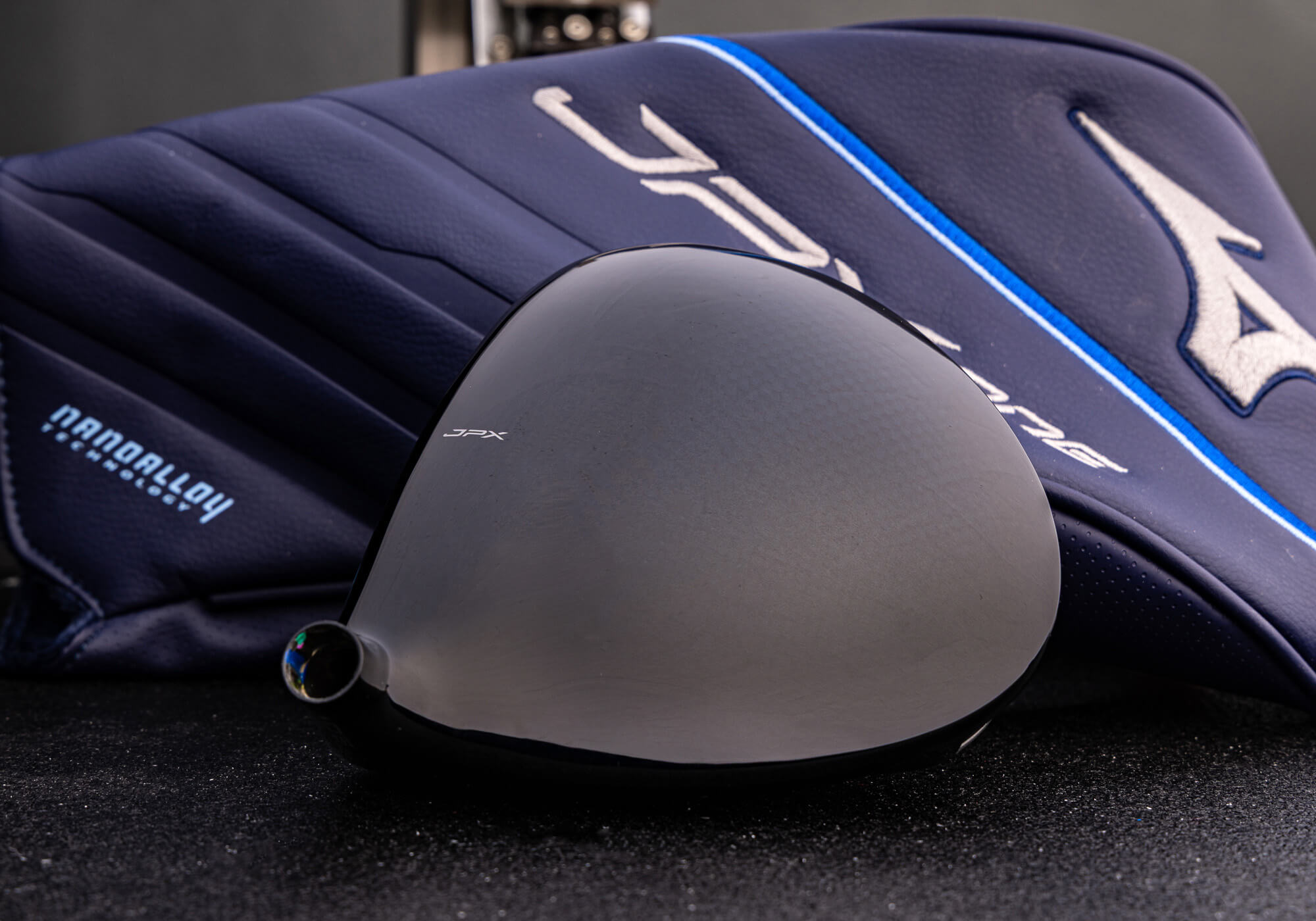
What Mizuno has done with Nanoalloy is something different entirely: a polymer layer bonded to the front of a titanium face, augmenting it rather than replacing it. It’s a distinction that matters more than you might think and it also helps explain why titanium is the material around which the governing bodies’ equipment rules were built.
And those rules—misunderstood though they may be—are the reason so many golfers believe it’s impossible for any new driver to be faster than what existed on the day the rules were written.
Read the comment section on any new driver post and you’ll find that many still cite the COR limit of .830, which—and some of you will be shocked to learn this—hasn’t been the testing standard since 2003.
What follows is a deeper look at how the USGA actually tests driver faces and why those tests may not fully capture what alternative face materials can do. If you’d rather skip the regulatory deep dive and get straight to the material science, jump ahead to “So what is Nanoalloy, exactly?” I won’t be offended. But if you enjoy the nerd shit—pendulums, correction factors, and other aspects of how the USGA and R&A decide what’s conforming—we’ve got you covered.
What the rules actually say (and why they might not say enough)
In 2003, the USGA swapped the cannon-based COR test for a pendulum-driven Characteristic Time (CT) test. The current limit sets CT at 239 microseconds with an 18-microsecond tolerance which means 257 technically is still conforming.
Here’s the key: that CT limit was extrapolated based on the relationship between COR and CT as it was understood at the time. Oh, and it was based on titanium faces. Again … at the time. Functionally, it’s a best guess and, by all accounts, a good one but at any given CT value, actual COR can vary by roughly .010. In real-world terms, that’s roughly four yards of carry distance hiding inside the tolerance of the test itself.
The CT test measures face behavior using a small pendulum swinging at roughly one meter per second. Your driver hits the ball at 30 to 54 meters per second. For titanium, the low-speed proxy works because titanium behaves more or less the same way at any speed. But materials with different viscoelastic properties (materials whose stiffness changes based on how fast you load them) interact with a pendulum differently than they interact with a golf ball at 160 mph of ball speed.
To attempt to close the loophole, the USGA has a correction factor for coatings. It’s impressive math built by very smart people but it doesn’t self-correct for every new thing.
The pertinent detail here is that Mizuno’s Nanoalloy sheet gets treated as a coating under the USGA’s protocol but the behavior is arguably closer to that of an insert.
By the numbers, the JPX ONE is comfortably conforming under CT. That’s not the issue. The issue is that what the CT test measures and what Nanoalloy actually does at impact may not be the same conversation. To understand why, you have to understand the material itself.
(Was that a lot? It felt like a lot. But stay with me because this is where it starts to matter.)
So what is Nanoalloy, exactly?
Ok, nerds:
Nanoalloy is a polymer technology developed by Toray Industries, a Japanese materials science company with more than 100 patents in the space. At its core, it’s a nylon-family alloy: Toray’s proprietary microstructure control technology combines two polymers at a nanometric scale, creating a material with properties neither has on its own.
The mechanism: one of those polymers, polyrotaxane (its molecular bonds slide in response to external force), is dispersed among 10-nanometer crystals of the other, PA6 (that’s Nylon 6 for the non-materials-scientists among us, which is to say nearly all of us). The structure was validated at SPring-8, one of the world’s largest synchrotron radiation facilities, which confirmed the material suppresses changes in PA6’s crystal structure under load.
Oof. Let’s try and simplify that more than a little bit.
All you really need to understand is that Nanoalloy is firm when it’s sitting still. At impact, it softens. Mizuno’s Director of Golf Chris Voshall offered what might be the most relatable analogy: “Remember the goop you used to play with in science class, made from cornstarch and water? It was a liquid until you’d smack it and then it would firm up. This is the exact opposite.”
The technical term is “non-linear material response.” Unlike titanium, the stiffness of the Nanoalloy material isn’t a fixed value. It changes based on how fast you load it. At rest, it behaves like a firm engineering plastic. Under the extreme force of a driver impact, it becomes highly elastic and flexible. And, critically, Mizuno says this behavior is consistent regardless of swing speed. Whether you’re a 75 mile-per-hour swinger or a 100 mile-per-hour swinger, the material responds the same way.
If this concept sounds at least a little familiar, that might be because it’s the same foundational physics behind Bridgestone’s REACTIV IQ urethane cover which uses impact modifiers (originally developed in Bridgestone’s tire division) to make the ball cover respond differently at different impact speeds: softer at wedge speeds for greenside spin, firmer at driver speeds for reduced spin and more ball speed. Same rate-dependent viscoelastic principle, opposite application. Bridgestone is tuning the ball. Mizuno is tuning the face.
From Japanese baseball to the JPX ONE
The concept didn’t start on a golf course. It started with a baseball bat.
Mizuno’s Japanese engineers drew inspiration from a bat called the Beyond Max, a Japanese-market product with a thick, soft coating on the barrel. The baseball itself isn’t particularly energy efficient (it deforms a lot at impact and doesn’t return that energy well) so the coating on the bat was engineered to absorb the deformation instead and return it far more efficiently than the ball could on its own. Mizuno has sold, by Voshall’s estimate, roughly a billion of those bats in Japan. They’re also, for what it’s worth, banned by pretty much every sanctioning body in the United States.
The leap to golf required some recalibration. A golf ball is more energy efficient than a baseball so the gains are more incremental but the principle is identical. If the face can absorb some of the deformation that would otherwise compress the ball, you reduce the energy lost in that compression.
Compression versus propulsion
This is the core of the Nanoalloy story.
Every driver impact is a collision governed by compression. The ball compresses against the face, the face flexes, and both return energy as the ball launches. But compression isn’t free. Not all of the energy that goes into deforming the ball comes back out. Some of it converts to heat, some to sound, some to internal friction within the ball’s layers. That’s why a lower-compression ball is slower: more deformation, more energy lost in directions that aren’t forward.
Mizuno says Nanoalloy reduces how much the ball deforms in the first place. Because the polymer layer softens under impact, it absorbs deformation that would otherwise go into compressing the ball. The ball, in effect, behaves as if it were higher-compression, maintaining more of its spherical shape through impact and losing less energy to deformation.
Voshall frames it as a shift from compression to propulsion. “Compression is built-in energy loss. If you can stop the compression and put all that energy straight to propulsion, you gain the energy that would’ve gone toward compression which ultimately leads to ball speed loss.”
The theoretical pinnacle? “Your ball plays like an infinite compression ball. Your ball compresses none. That’s the pie in the sky. Physics won’t let you get there. But that would be the ultimate execution. Energy goes straight from the driver to a fully spherical ball that stays in that state the entire way.”
You’re never going to eliminate ball compression entirely. But if you can reduce it, even by a few percent, you’re recapturing energy that other drivers in the market are losing. And you’re doing it without touching the face itself, without changing the ball, and without running afoul of any rule on the books. You’re just changing what happens in the fraction of a millisecond between the two.
What Nanoalloy does on a driver face
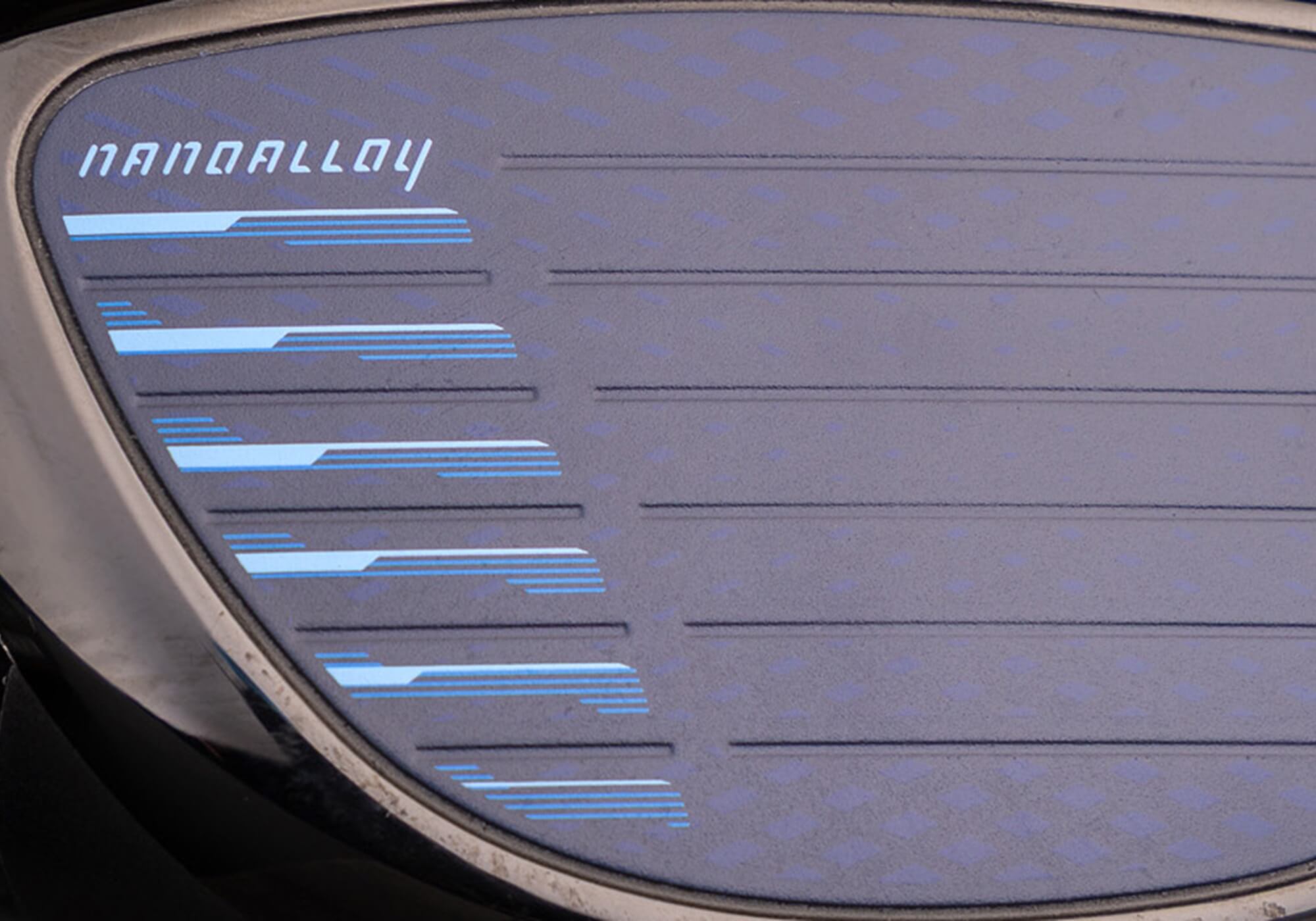
On the JPX ONE, Nanoalloy is applied as a roughly 0.4-millimeter polymer sheet bonded on top of a forged titanium face. That’s where the engineering gets interesting.
The Nanoalloy layer allows Mizuno to make the underlying titanium face roughly 10 percent thinner than the previous ST-MAX generation. The JPX ONE face ranges from 3.4mm at the center to 1.8mm at its thinnest points. That thinner titanium, combined with the Nanoalloy’s energy-return properties, expands what Mizuno calls the CORAREA (the high-speed rebound zone) by more than 15 percent compared to the ST-MAX.
Here’s a nuance that gets overlooked: titanium is plenty strong. A thin face isn’t going to fail on a single swing. Strength was never the question. Two other things are.
The first is the rulebook. Push a face thin enough to chase speed and it tends to come in over the COR limit. “The first sample of almost every driver we get always comes in at like 0.84 COR,” says Voshall. “It’s always too high. And then you’re like, where do I thicken this up to get it within the rules?”
The second is fatigue which is a different animal than strength. Strength is how a face survives one impact. Durability is how it survives 100,000 of them. A face can ace every speed test on day one and still develop micro-cracks months down the road. That’s the constraint that usually dictates how thin a manufacturer is willing to go.
The Nanoalloy layer acts as a stress shield, absorbing impact forces that would otherwise go directly into the titanium. That means the titanium flexes less, fewer micro-fractures over time, and less CT creep. That’s the gradual loosening of the face that all titanium drivers experience with use. Competitors have to start further from the CT ceiling to account for that creep. Mizuno says it can start tighter to the limit because the face isn’t degrading the same way.
And then there’s the weight. The thinner titanium plus the lightweight Nanoalloy sheet frees up discretionary mass which is what allows the JPX ONE and its lower-spinning sibling, the JPX ONE SELECT, to play genuinely different from one another rather than being subtle variations of the same theme.
Designing from the face forward
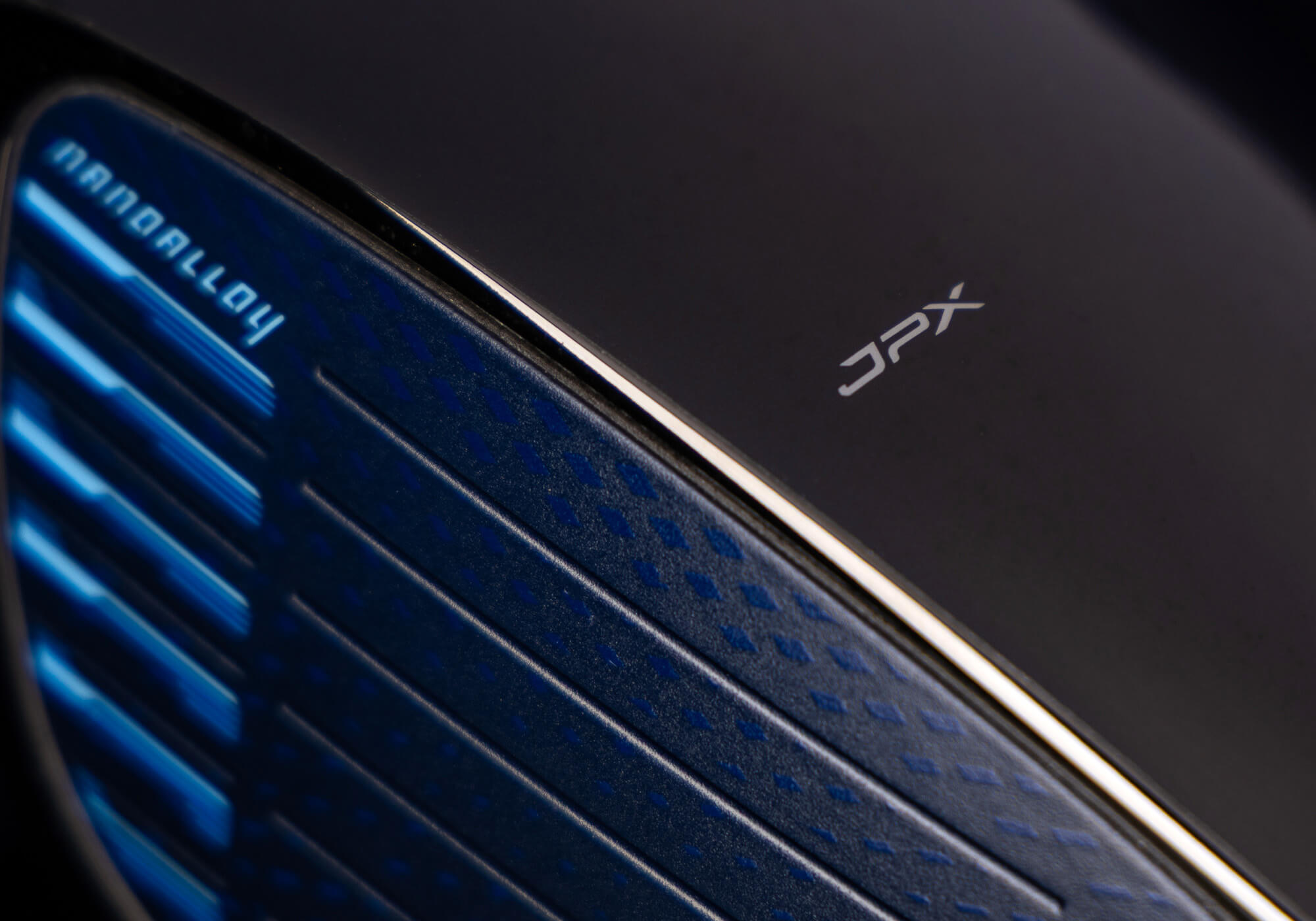
For decades, driver design has been a face-back exercise. You have a titanium face, constrained by the USGA’s CT limit, and all of your design work happens behind it. Internal weighting, sole geometry, carbon crown panels, adjustable hosels. Everything is about what’s behind the face because the face itself was effectively a fixed variable. You could vary thickness profiles and tweak the alloy but the fundamental material was always titanium and it was always bumping up against the same regulatory ceiling.
Nanoalloy changes that equation. For the first time, Mizuno can design from the face forward.
Voshall drove the point home: “When ball hits titanium, there’s so much that’s locked. By working on the opposite side of the titanium, by working in between, you’re changing more than you are if you’re working behind [the face].”
As is often the case with golf equipment, we’re talking sub-millimeters of opportunity here but in a category where manufacturers fight over fractions of a mile per hour, that’s enough to matter. The ability to manipulate what happens at the point of impact, before the energy even reaches the titanium, is a design frontier that simply didn’t exist before. Multi-thickness Nanoalloy layers, different material blends, additional coatings on top of the Nanoalloy. Mizuno is already exploring all of it.
And because the JPX ONE is conforming with room to spare, the runway for iteration exists within the rules. Mizuno doesn’t have to squeeze out marginal gains within a nearly tapped-out regulatory window. In theory, there’s space to push.
The current constraint isn’t speed or CT; it’s actually the USGA’s hardness rule. There has to be a firm, hard face at rest, and the USGA has a hardness measurement to enforce it. Mizuno tried going thicker with the Nanoalloy but it didn’t pass. So the next evolution isn’t just about making the Nanoalloy thicker. It’s about finding ways to maintain static hardness while increasing the dynamic elasticity. And it’s only possible because Mizuno put something in front of the face.
What we found in the data
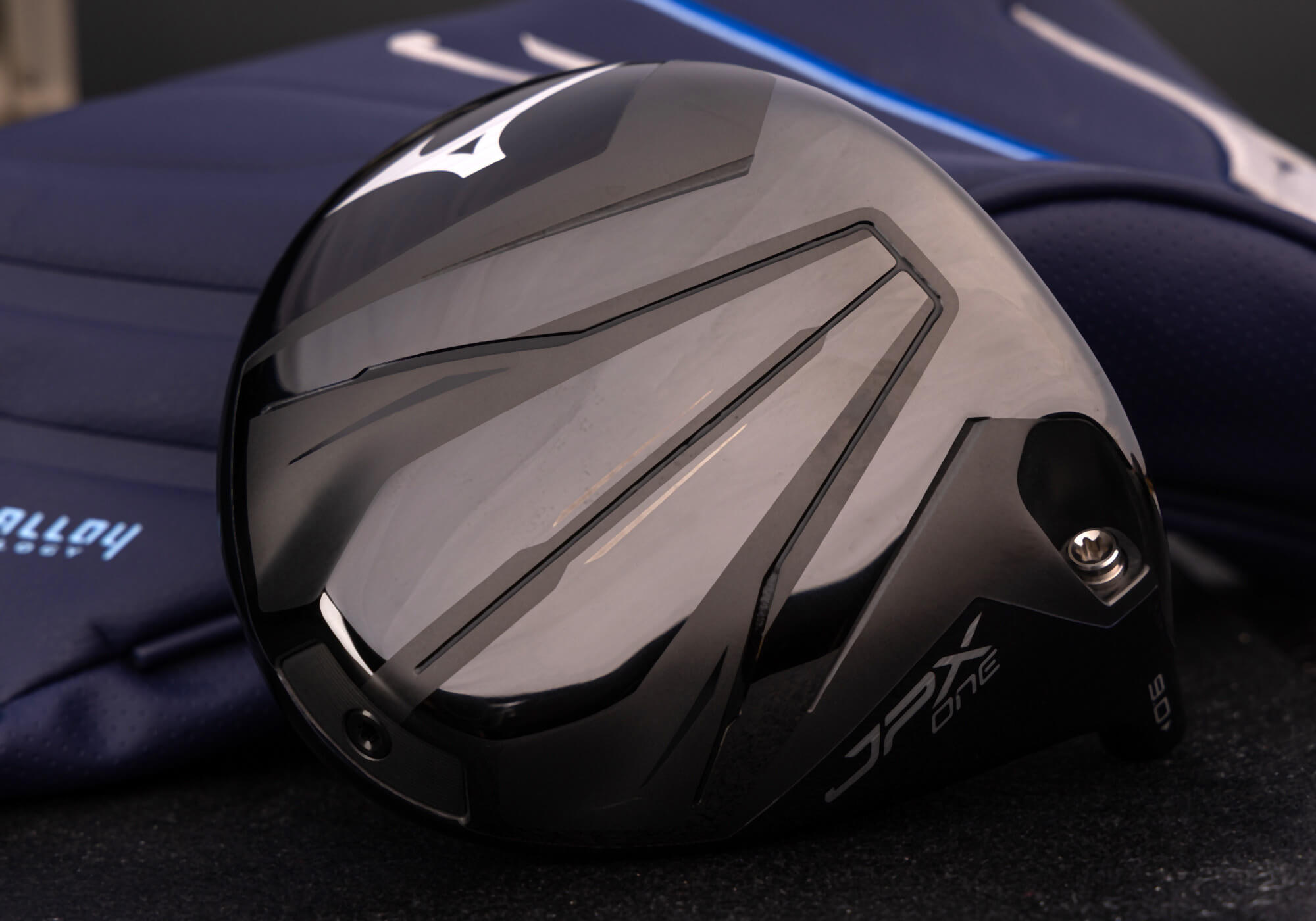
In our 2026 Most Wanted driver test, the JPX ONE ranked third out of 42 drivers for how much additional ball speed it generates per additional mph of swing speed. And the consistency of that conversion ranked fifth. In plain terms: the JPX ONE squeezes more ball speed out of your swing than almost anything else in the field and it does it consistently.
That shows up in how the club scales with speed. At 110 mph of club speed, the JPX ONE climbs to 10th in predicted ball speed. The faster you swing it, the more it separates from the field. Every extra mile per hour of swing speed pays off more with this club than with 39 others.
The combination of a strong energy transfer rate, consistent conversion and a head that helps you find the center paints a picture that’s consistent with what a face designed to reduce energy loss should do. The speed you give it goes further and the more you give, the more you get back.
Off the panel and into a fitting
A standardized panel test is one kind of truth. A fitting is another. So Mizuno fit two of us, Chris Nickel and me, for the JPX ONE and turned us loose against our gamers.
My fitting started where a lot of golfers wouldn’t expect: the Shaft Optimizer. Most people think of it as an iron-fitting tool but the same technology drives Mizuno’s metalwood fittings, too. Feed it your swing and it returns a recommended head, a recommended shaft and, if you let it, a recommended Mizuno golf ball.
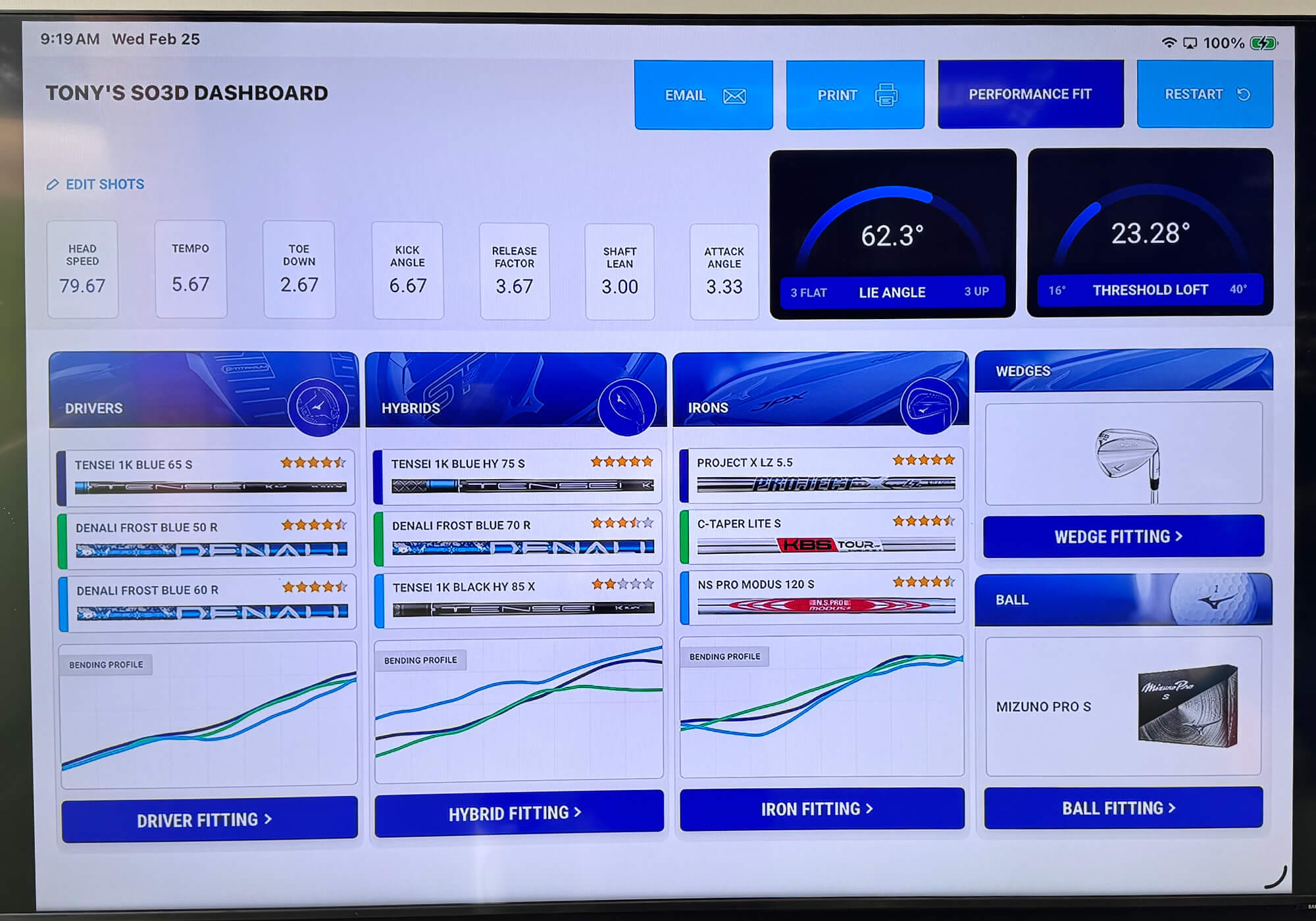
I did what I always do and second-guessed the machine. I talked my fitter into going off the list, worked through a handful of alternatives and then, much to my own annoyance, landed right back on the Optimizer’s No. 1 pick: the Tensei Blue. I won’t pretend the top recommendation is the right answer for every golfer. But with so many heads and shafts in play, a tool that reliably cuts through the sea of options and gets you to a good answer faster is worth more than people give it credit for. Mine just took the scenic route to the same destination.
As for the head-to-head, the speed is real. Against my gamer, ball speed was a dead heat. Chris saw the same thing against his. Both of us were playing Titleist GT3 at the time. There was enough overlap in our two sets of numbers that if you mixed them together, you’d never sort out whose was whose by speed alone. Whatever else you want to say about Nanoalloy, the speed showed up in the bay.
For me, the bigger surprise was the flight. The JPX ONE took the right side of the golf course out of play. The tee shots that normally flirt with trouble simply didn’t. And when you’ve got speed and a ball that reliably finds fairways, you’re able to start pulling additional levers.
There’s one number I’d still like to see come down. The JPX ONE spins a touch more than I’d ultimately want. That’s the opportunity, not the problem. When speed and dispersion are already on your side, the levers are everywhere: loft, shaft length, head weight, even the SELECT if your miss runs opposite mine. (The standard ONE erased my right side so its fade-biased sibling isn’t my answer but for a player who fights the left it might be the whole thing.) None of that is a knock. It’s a roadmap and for a brand that’s spent years as an afterthought in the driver category, it’s a genuinely compelling place to start.
And it’s worth remembering this is the first driver built around an entirely new face material or, I suppose, face coating. Rev 1 of something that works is never the final version. What I saw in my fitting, and subsequently on the course, wasn’t the ceiling. It was likely much closer to the floor.
It’s the reason why the JPX ONE is one of my favorite new drivers of 2026. I’ll concede I did not expect that.
What this could mean going forward
Mizuno isn’t claiming the JPX ONE dusts TaylorMade and Callaway for raw ball speed in Year One. Voshall is refreshingly candid about that. What Mizuno has done is introduce a fundamentally different approach to driver face design. One that changes the physics of the collision itself, opens up new design space in front of the face, reduces CT creep, frees up discretionary mass, and gives them a technological runway that working behind a titanium face alone can’t offer.
“Everything is not as optimized or as maximized as we’re led to believe in the golf industry,” Voshall said. “Everyone said 0.83 COR has been there forever. You can’t go beyond that. But 0.83 was driven by all of these known collision aspects. If you can change that collision, maybe you can change what 0.83 means and what you can get out of it.”
In a category where the gaps between the best drivers are measured in fractions of a mile per hour, the more interesting question isn’t who’s a hair faster this season. It’s who’s found a genuinely new way to get there. A company that’s figured out how to reduce what every other driver in the field is losing at impact is onto exactly that, and it’s the kind of thing a single test was never going to capture in full.
Golfers invariably latch onto speed. But behind almost every real leap forward is a material story. Wood gave way to steel. Steel gave way to titanium. Every time, the distance everyone was chasing moved because someone changed what the club was made of. Nanoalloy could be the next frontier. Whether it proves to be the answer or just the start of one, it’s the rarest thing in this category: a driver story that’s actually about something new.