
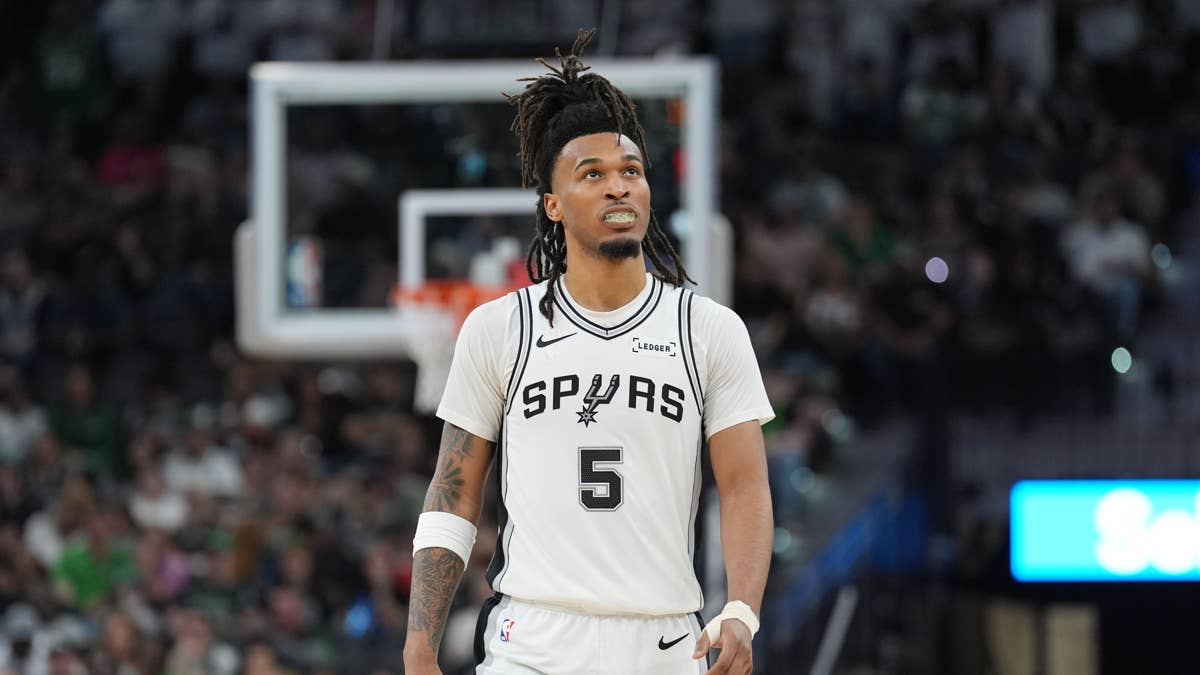
Everyone already knows which young guards are in good spots heading into 2026-27. That conversation is well underway. Several young guards appear ready for a breakout, with summer league performances, training camp battles, roster movement, and growing coaching trust creating legitimate breakout pathways across the league. Smart fantasy managers are already tracking names like Scoot Henderson, Reed Sheppard, Amen Thompson, and Stephon Castle.
But here is where most of the coverage stops. Knowing a guard has the most to gain in Fantasy Basketball 2026-27 is only half the picture. The real question is: what specifically has to happen for that gain to show up on your fantasy roster, and how likely is it? Without answering that question, you are just collecting hope, not building a strategy. This piece goes a step further. For each guard, we will identify the primary catalyst, assign a probability, and name the fallback production floor. Those three answers together tell you whether a player is worth drafting on upside or only worth rostering once the situation clears up.
The Catalyst Framework: What “Most to Gain” Actually Requires
Primary Catalyst, Probability, and Fallback Floor — the Three Questions Every Young Guard Case Needs
Every young guard evaluation in this piece runs through three questions.
First, the primary catalyst. This is the one specific event that unlocks a player’s upside. Not a vague bigger role, but something concrete and trackable. Second, the probability tier. Every guard here gets one of three labels: high probability, medium probability, or low probability, and each placement gets defended. Third, the fallback floor. This tells you what a player produces if the catalyst never fires.
The fallback floor is what most fantasy coverage skips. It matters enormously. The best buy window is usually before training camp hype peaks. Once beat writers start calling someone the clear favorite for a starting role, the value discount mostly disappears. That means you are often paying for the upside scenario before it is confirmed. A guard with a strong floor is safe to draft either way. A guard with no floor is a bet you can only make after the catalyst resolves. Knowing which is which saves you from wasting a mid-round pick on a player whose ADP already priced in a situation that never came together.
Timing matters too. The first round of the 2026 NBA Draft was held June 23, which means any catalyst tied to draft-night trades is already resolved. Free agency opens June 30, which is when role and competition catalysts settle for guards whose situations depend on veteran decisions. Some catalysts will not fully clear until training camp. The managers who know which guards fall into which category will move faster than the rest of the room when information lands. Check the young guards already positioned for bigger roles in 2026-27 for context on the baseline landscape.
Scoot Henderson (Portland Trail Blazers)
His primary catalyst is simple: Portland stops the veteran balancing act and hands him unquestioned offensive control. If Portland finally shifts completely away from veteran backcourt balancing and hands Henderson unquestioned offensive control, his fantasy ceiling changes dramatically, with flashes last season showing him capable of flirting with 22 points and eight assists nightly.
Probability Tier: Medium. Portland exercised Henderson’s team option for 2026-27, keeping him on the roster. But Portland is also actively pursuing a star via trade, with reported interest in Anthony Davis from Washington. Adding another high-usage player limits Henderson’s ceiling, not expands it. Through 151 games he is averaging 13.4 points, 5.0 assists, and 3.0 turnovers, and the turnovers remain the sticking point.
Fallback floor: Roughly 14 points and 4 assists as a starting guard. Draftable in rounds 9 to 11, not before.
Reed Sheppard (Houston Rockets)
His catalyst is Fred VanVleet’s player option. VanVleet is predicted to opt out of his $25 million player option and sign a new team-friendly deal. If he takes a reduced role or departs, Sheppard becomes a starter. Sheppard averaged 13.5 points, 3.4 assists, 1.5 steals, and 0.7 blocks while shooting 39.4 percent from three in 2025-26, a nine-point scoring jump from his rookie year.
Probability Tier: Medium-to-high. The financial logic favors a VanVleet pay cut, and Sheppard earned a bigger role. Even with VanVleet returning, Sheppard has earned significant playing time.
Fallback floor: 12 to 14 points with threes and steals off the bench. Draftable rounds 5 to 7 regardless of the outcome.
Amen Thompson (Houston Rockets)
Thompson does not need a breakout. He already had one. He averaged 18.3 points, 7.8 rebounds, 5.3 assists, and 1.5 steals across 79 regular-season games in 2025-26. His catalyst is VanVleet returning healthy and reclaiming the primary ballhandling role, moving Thompson back to his natural wing position. An off-ball position suits him best, as his shift to point guard last season cost him his second consecutive All-Defensive Team selection.
Probability Tier: High. VanVleet’s ACL recovery timeline puts him on track for opening night, and Thompson is the only near-untouchable player on the Houston roster.
Fallback floor: Elite. Even playing point forward, he delivers top-40 fantasy value.
Stephon Castle (San Antonio Spurs)
Castle is the clearest case here. No trade drama. No uncertain role. He averaged 16.6 points, 7.4 assists, 5.3 rebounds, 1.1 steals, and 1.2 threes over 30 minutes per game in 2025-26. His primary catalyst is Wembanyama staying healthy and drawing the defensive attention that creates space for Castle to operate.
Probability Tier: High. San Antonio exercised his option, he is 21, and the Spurs have no reason to reduce his role. Castle is a fifth- to sixth-round target in redraft leagues.
High-Probability Catalysts: The Young Guards Most Likely to Win Their Summer
Daniel Dunn-Imagn Images
Scoot Henderson, Stephon Castle, and the Cases With the Clearest Paths Forward
Scoot Henderson (Portland Trail Blazers)
Henderson’s primary catalyst is simple: Portland commits to him as the unquestioned lead guard, not just one option in a shared backcourt. Portland must avoid choosing dynamic lead playmakers who command high usage and split backcourt touches with Henderson. In keeper leagues, passing on a guard keeps his high-volume assist ceiling secure, while drafting a direct threat signals a drop in his team priority. Here is the good news. Portland does not have a pick in the 2026 Draft, which removes the single biggest threat to his role from the equation entirely. The young guards most threatened by the 2026 NBA Draft covered this risk extensively. Henderson avoided it. That is a meaningful catalyst check. The remaining question is whether Portland pursues a ball-dominant star via trade. Reports indicate the Blazers have been pursuing Anthony Davis from Washington, which would not directly threaten Henderson’s playmaking role the way a guard addition would. Through 151 career games, Henderson averages 13.4 points, 5.0 assists, and 3.0 turnovers. The turnovers are still the sticking point.
Probability tier: medium-to-high, now that the draft threat is gone.
Recommendation: Buy now in dynasty, wait until free agency closes in redraft. The draft threat is resolved, but a star trade could still arrive before opening night.
Stephon Castle (San Antonio Spurs)
The draft is done, and Castle came out clean. San Antonio picked Jayden Quaintance at No. 20 and Tarris Reed Jr. at No. 26. Quaintance is a 6-foot-10 forward projected as a defensive anchor and a future partner for Wembanyama up front, and Reed is a center. Zero guards. Castle’s primary catalyst was always San Antonio avoiding a direct guard competition, and that is exactly what happened. He averaged 16.6 points, 7.4 assists, 5.3 rebounds, 1.1 steals, and 1.2 threes over 30 minutes per game in 2025-26. Wembanyama drawing defensive attention helped clear the path for Castle as a secondary scoring option, and nothing about the 2026 Draft changes that dynamic. It reinforces it. Castle benefits from uninterrupted development in a stable San Antonio environment.
Probability tier: High.
Recommendation: Buy now. The catalyst was already resolved in Castle’s favor. His ADP at rounds 5 to 6 is fair, and waiting only means paying more after the consensus catches up.
Reed Sheppard (Houston Rockets)
Sheppard does not get discussed in the same breath as Henderson or Castle in most high-probability conversations, but the numbers say he should be. He averaged 13.5 points, 3.4 assists, 1.5 steals, and 0.7 blocks while shooting 39.4 percent from three in 2025-26. His catalyst is VanVleet’s player option, which resolves June 30. VanVleet is predicted to opt out of his $25 million player option and sign a new team-friendly deal with Houston. If that happens, Sheppard gets a starting role alongside Amen Thompson in a high-pace offense. Even with the crowded Houston backcourt, Thompson, Sheppard, and the returning VanVleet are the key competition for minutes. The key difference from Henderson is that Sheppard’s floor is real regardless of the outcome. He produced 13-plus points and 1.5 steals even in a secondary role.
Probability tier: Medium-to-high, with the catalyst resolving within days.
Recommendation: Buy after June 30. If VanVleet opts out or signs a reduced deal, the buy window closes fast. The one-week window between the option deadline and when ADP adjusts is where the value lives.
Medium and Lower-Probability Catalysts: The Guards Whose Summer Is Still Genuinely Uncertain
Kamil Krzaczynski-Imagn Images
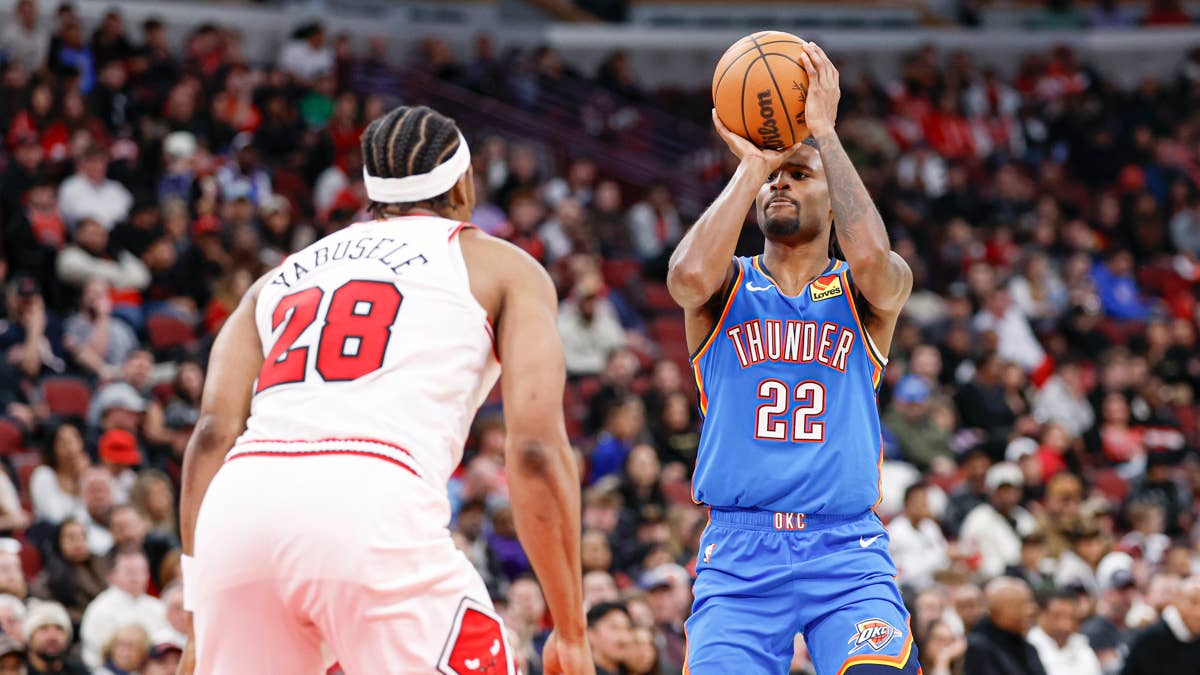
Cason Wallace, Oklahoma City Thunder
Wallace plays winning basketball on a championship team, but that is part of the problem. OKC’s backcourt is stacked. Alex Caruso, Luguentz Dort, Cason Wallace, and Jared McCain are all battling for playing time while Shai Gilgeous-Alexander runs the floor. His primary catalyst is locking down the secondary guard role outright and growing his three-point volume into reliable fantasy value. He averaged 8.6 points, 3.1 rebounds, 2.6 assists, and 1.9 steals across 77 games in 2025-26, making the All-Defensive Second Team. The steals and defense give him a real fantasy identity. The scoring does not yet.
Probability tier: Medium. OKC has too many credible options and rival executives expect the Thunder to exercise Luguentz Dort’s option and explore his trade value, which means the rotation could still shift. The position battles with the highest fantasy stakes heading into 2026-27 flagged this exact logjam.
Fallback floor: A steals-and-threes rotation guard on an elite team, which holds late-round value even if the catalyst stalls.
Keyonte George, Utah Jazz
George’s catalyst just took a hit, and managers need to adjust. His primary catalyst was Utah committing to him as the lead guard rather than running a rotation by committee. The 2026 Draft made that harder. Utah selected Darryn Peterson second overall, the exact kind of high-usage guard that the young guards most threatened by the 2026 NBA Draft piece warned about. Peterson is a dominant scorer who demands the ball, which will push George into secondary off-ball actions and could compromise his playing time down to roughly 26 to 28 minutes per game while dropping his usage rate by an estimated 5 percent. That said, George produced. He averaged 23.6 points, 3.7 rebounds, and 6.1 assists in 2025-26. Probability tier: medium-to-low. Some analysts see Peterson and George coexisting as complementary combo guards, but the touches have to come from somewhere.
Fallback floor: A high-volume scorer on a losing team, which generates counting stats with frustrating inconsistency. High variance, hard to trust without confirmation.
Reed Sheppard and Stephon Castle sit in a different tier. Their catalysts carry far more built-in confirmation. Castle’s draft threat already passed, since San Antonio took two bigs and zero guards. Sheppard’s catalyst resolves within days through VanVleet’s option. Both are closer to high probability than medium, and their draft priority reflects that. You draft them with confidence the other three do not yet earn.
Ranked Draft Board
- Amen Thompson
- Stephon Castle
- Reed Sheppard
- Cason Wallace
- Keyonte George
The ordering rewards certainty. Thompson and Castle have resolved or near-resolved situations. George has the loudest raw numbers but the murkiest path, which is why he ranks last despite scoring the most.
Keep Pace, Don’t Chase
Here is the thing about every young guard on your board: the work is always the same. Name the one catalyst that unlocks them, be honest about how likely it is, and know what they give you if it never happens. Do that before free agency settles these situations, and you can pounce within hours of the news, inside that brief window before prices move. Miss it, and you are just chasing.
Questions About Fantasy Basketball Breakout Outlooks, Answered
Which young NBA guards have the strongest fantasy basketball breakout outlook after the 2026 NBA Draft?
Amen Thompson, Stephon Castle, and Reed Sheppard have the strongest post-draft fantasy outlooks because their primary catalysts have either already resolved or are close to resolution. Thompson already provides top-40 production, Castle avoided new backcourt competition in the draft, and Sheppard could gain even more value depending on Fred VanVleet’s free-agency decision.
Why is Stephon Castle one of the safest young guards to draft for 2026-27 fantasy basketball?
Castle’s biggest offseason hurdle disappeared when San Antonio used its first-round picks on frontcourt players instead of adding another guard. His role remains secure alongside Victor Wembanyama, giving him one of the highest-probability breakout cases among young guards with both a dependable floor and upside.
Is Reed Sheppard a fantasy basketball sleeper for 2026-27?
Yes. Reed Sheppard already contributes efficient scoring, three-point shooting, and steals, and his fantasy ceiling rises considerably if Houston opens additional backcourt minutes through Fred VanVleet’s contract situation.
How should fantasy managers evaluate young NBA guards with uncertain roles?
Focus on three factors: the catalyst that unlocks additional opportunity, the probability that catalyst occurs, and the player’s production floor if nothing changes. Guards with both a strong floor and realistic catalyst are better draft values than players whose upside depends entirely on uncertain offseason developments.