
0

0
Read Time:2 Minute, 33 Second
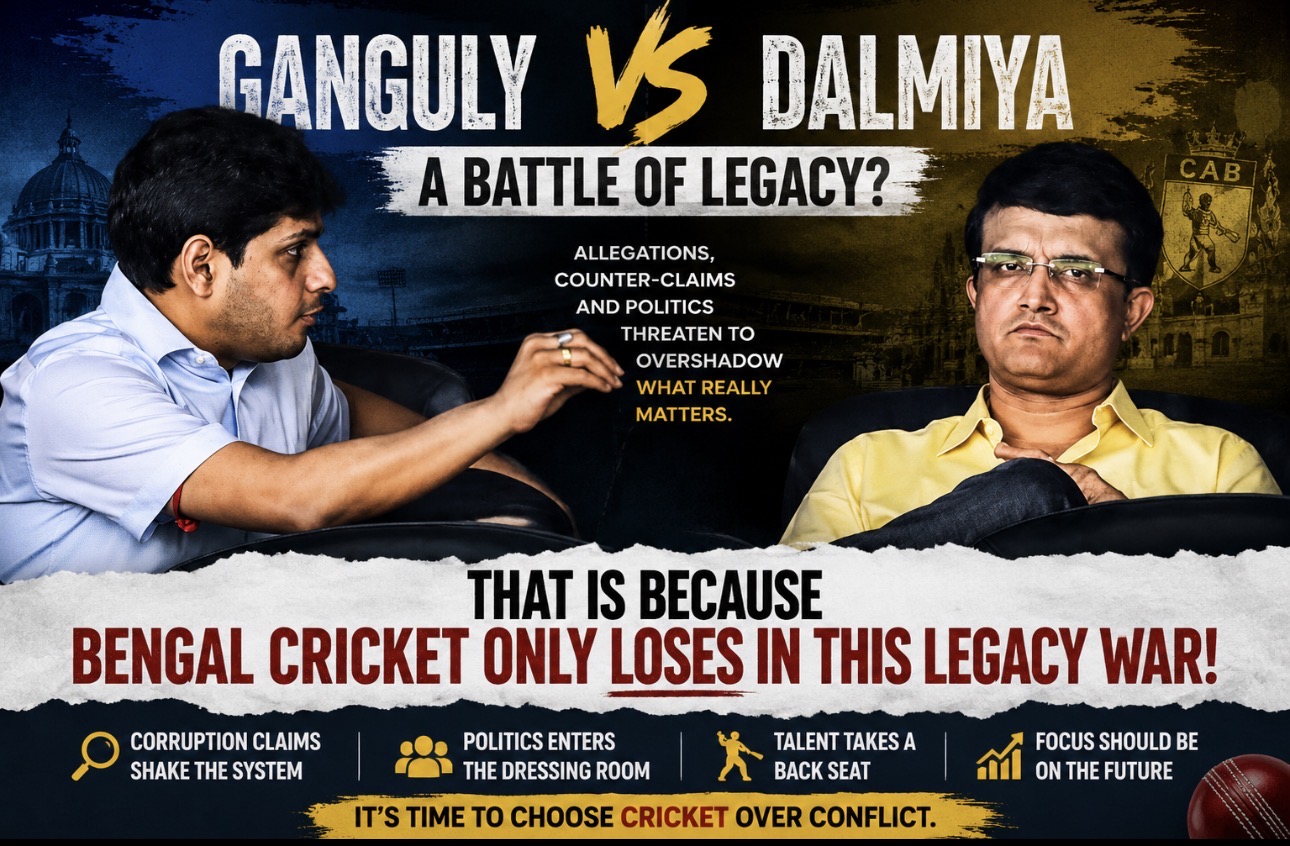
It increasingly appears to be a battle of legacy. Who has left a bigger imprint on Bengal cricket and Indian cricket as a whole — former Indian captain Sourav Ganguly or former BCCI chief Jagmohan Dalmiya?
Now that Jagmohan Dalmiya’s son, Abhishek Dalmiya, has come out openly alleging corruption in state cricket, the mud-slinging has only intensified. Neither side appears willing to back down, and many are left wondering why this battle for legacy is being fought in the first place.
What is the need for it?
In a state where politics often dominates public discourse, some believe cricket has inevitably become another battleground. But when the priority should be strengthening the system, improving governance, and producing more Test cricketers from Bengal, where is the room for this constant infighting?
The real question is not who owns the greater legacy. The real question is whether Bengal cricket can move forward while being distracted by a feud over the past.
What Abhishek is highlighting is not a problem confined to Bengal alone. As reported by CricBlogger over the past few weeks, several IPL players have allegedly been pressured to pay “cut money” to certain officials. Dalmiya has now alleged that some club representatives are charging hefty sums for opportunities to play in CAB league matches.
According to claims made by the current administration, one former CAB official — accused of being part of such a racket and allegedly taking as much as ₹1 crore to help a cricketer secure selection in the Ranji Trophy squad — was removed from the system by the present management. The same official is now said to be closely associated with Abhishek’s camp.
Until recently, the rift between the two factions was largely kept behind closed doors. However, it is understood that Abhishek has received enough backing from influential quarters within Bengal’s ruling establishment to raise these issues publicly and force a debate. That has led many observers to believe that a well-organised opposition within Bengal cricket is now taking shape.
Otherwise, how does one explain this dramatic face-off? It was only in 2019 that Abhishek openly backed Sourav Ganguly for the BCCI presidency, and the two shared a strong working relationship. When Ganguly was CAB president, Abhishek served as secretary. Later, when Abhishek became president, Ganguly’s elder brother, Snehasish Ganguly, held a key administrative role before eventually becoming president himself.
So, what changed so drastically Dalmiya is still young and has plenty of time to return to a position of influence in CAB. But a prolonged and bitter battle with Ganguly, marked by public mud-slinging, does little to enhance the image of Bengal cricket.
At a time when the focus should be on improving governance, curbing corruption and producing more cricketers for India, the need of the hour is collaboration, not confrontation. Bengal cricket will benefit far more if its leading power centres work together rather than turning the sport into another political battleground. That’s because Bengal cricket is the only real loser in this legacy war.

Happy
0 %

Sad
0 %

Excited
0 %

Sleepy
0 %

Angry
0 %

Surprise
0 %